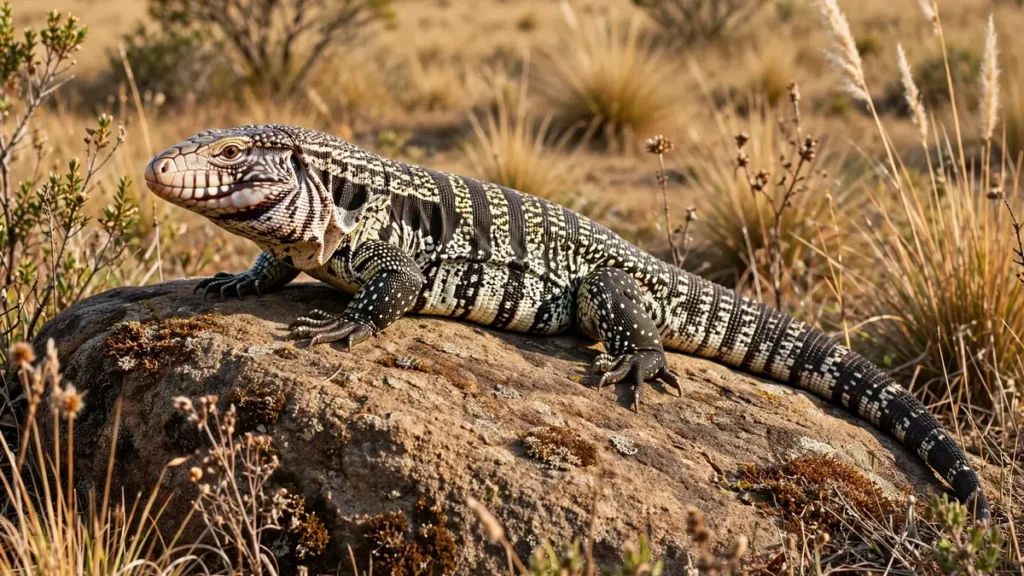
The Argentine tegu species is a single species, Salvator merianae, a large black and white lizard of South America that can grow to about 1.2 metres long and is famous for its intelligence, its appetite and its long winter sleep underground. If you are asking how many Argentine tegu species there are, the answer is one: there is just one Argentine tegu species, Salvator merianae, also called the Argentine black and white tegu.
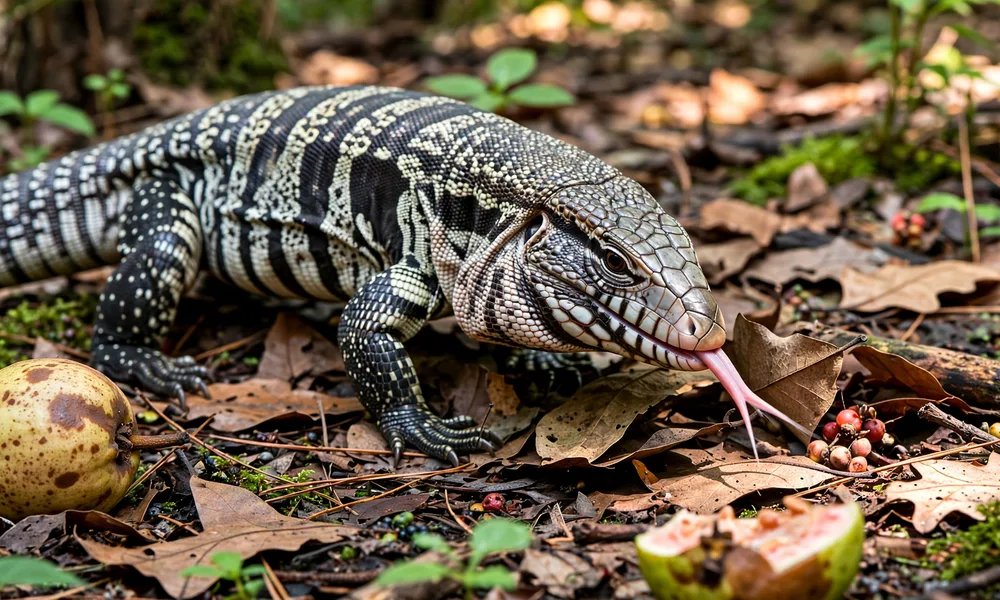
An Argentine tegu is a heavy-bodied, ground-dwelling lizard with bold black and white mottled scales, strong legs built for digging, and a long, powerful tail. It is an omnivore that eats fruit, eggs, insects and small animals.
Key takeaways
- There is one Argentine tegu species, Salvator merianae, also called the Argentine black and white tegu.
- Adults grow to about 1.2 to 1.4 metres long and weigh about 4 to 7 kilograms, with males larger than females.
- Argentine tegus are omnivores, eating fruit, eggs, insects, small animals and carrion.
- They spend the winter in a deep sleep called brumation, buried in a burrow for four to five months.
- The species is listed as Least Concern in its native South America, but it is invasive in Florida and Georgia.
What makes an Argentine tegu an Argentine tegu
An Argentine tegu is a large, thick-bodied lizard with black and white scales in a mottled, banded pattern across its back and tail, a broad head with powerful jaws, and strong, clawed legs. Adults reach about 1.2 to 1.4 metres from nose to tail tip and weigh about 4 to 7 kilograms, with males larger than females. Young tegus look different from adults: their heads carry a bright green colour that fades away in the first months of life.
The tegu is built for life on the ground. Its claws are made for digging burrows and for unearthing buried eggs, its long, forked tongue tastes the air for food, Like other Komodo dragons, which are also large, ground-dwelling lizards with powerful jaws, an Argentine tegu is an active, wide-ranging forager, but it is smaller and far more at home in grassland and scrub.
The Argentine tegu species and their relatives
There is one Argentine tegu species. It belongs to the family Teiidae, the whiptail lizards, a family of fast, ground-dwelling lizards found across the Americas, and its closest relatives are the other tegus of South America: the red tegu of Argentina, Bolivia and Paraguay, and the gold tegu of northern South America. It was once placed in the genus Tupinambis, and older books still call it Tupinambis merianae.
The best-known members of the family are the red tegu, the largest of the tegus and a rusty-red giant of the dry Chaco; the gold tegu, a smaller lizard of the forests and savannas of the north; the crocodile tegu of the Amazon, which hunts fish and frogs; the common ameiva, a small, quick lizard of open ground; and the six-lined racerunner of North America. The Argentine tegu is the best known of them all, because it is the most widely kept as a pet and the most widely established outside its native range.
| Type | Animal | Where it lives | Best-known food | Length or Weight |
|---|---|---|---|---|
| Family | Tegus (family Teiidae) | North, Central and South America | Insects, fruit and eggs | About 15 cm to 1.4 m long |
| Species | Argentine black and white tegu (Salvator merianae) | Argentina, Brazil, Paraguay and Uruguay | Fruit, eggs and small animals | About 1.2 to 1.4 m long, 4 to 7 kg |
| Species | Red tegu (Salvator rufescens) | Argentina, Bolivia and Paraguay | Fruit, insects and small animals | About 1 to 1.4 m long |
| Species | Gold tegu (Tupinambis teguixin) | Northern South America | Insects, fruit and eggs | About 60 to 90 cm long |
| Relative | Crocodile tegu (Crocodilurus amazonicus) | Amazon basin | Fish, frogs and crabs | About 60 to 100 cm long |
| Relative | Common ameiva (Ameiva ameiva) | Central and South America | Insects and spiders | About 30 to 50 cm long |
| Relative | Six-lined racerunner (Aspidoscelis sexlineatus) | North America | Insects and spiders | About 15 to 25 cm long |
How Argentine tegus live
Argentine tegus are diurnal, which means they are active by day and sleep at night in a burrow. A tegu spends its mornings basking in the sun to warm up, then forages widely through grassland and scrub, walking with its forked tongue flicking in and out, tasting the air for fruit, eggs and hidden prey. It digs with its strong front claws, turns over leaf litter, and raids the buried nests of ground-nesting birds, tortoises and caimans. Young tegus eat mostly insects, and as they grow their diet widens to fruit, eggs, small mammals, frogs and carrion.
The tegu’s year is ruled by the seasons. In autumn, as the days shorten, it digs a burrow, seals the entrance and settles into brumation, a deep, hibernation-like sleep that lasts four to five months through the southern winter, from about May to August. During brumation its metabolism slows greatly, and it lives off stored body fat. When spring comes, the tegu emerges hungry and ready to breed, and in the breeding season both males and females can warm their bodies several degrees above the air temperature, a rare ability in a lizard.
Breeding follows the spring emergence. The female builds a nest mound of plant litter inside a burrow, lays about 20 to 50 leathery eggs, and guards the nest until the eggs hatch after about two to two and a half months. The hatchlings are about 17 to 20 centimetres long and must fend for themselves at once. Argentine tegus are unusually intelligent for lizards, and captive animals are known to recognise the people who feed them. A wild tegu may live for about 15 years, and captive animals have lived for about 20 years.
Where Argentine tegus live
Argentine tegus are native to the cis-Andean lowlands of South America, across Argentina, Brazil, Paraguay, Uruguay and parts of Bolivia. They live in open savannas, grasslands, woodland edges and scrub, and they do well in disturbed landscapes, including farmland and the edges of towns, where fruit trees and chicken coops offer easy food. They need a burrow for the night and for the winter, so they favour ground with soft soil for digging,
Outside their native range, Argentine tegus have become an invasive species in the United States. Escaped or released pets have founded breeding populations in Florida, in Miami-Dade, Charlotte, Hillsborough and St. Lucie counties, and in southeastern Georgia, They threaten native wildlife because they eat the eggs of ground-nesting birds, sea turtles, gopher tortoises and American alligators. Florida now lists all tegus as prohibited species, which may only be kept with a permit.
In its native range the Argentine tegu is listed as Least Concern, because it is widespread and common, it is also hunted in parts of South America for its meat, fat and skin, but its numbers in the wild are not thought to be falling. The worry for conservation is not the tegu at home, but the tegu abroad, where a hardy, fast-breeding lizard with a taste for eggs can do real damage to wildlife that has never met it before.
Best seasons for Argentine tegu watching
The best time to look for Argentine tegus is the southern spring and summer, from about September to March, when the lizards are out of brumation and foraging hard. Warm, sunny mornings are best, when tegus bask on rocks, tracks and open ground to warm up before the day’s foraging, in winter there is little point in looking, because the lizards are asleep underground, and even on a warm winter day they rarely emerge.
Staying safe around Argentine tegus
An Argentine tegu is not venomous, but it is a large, powerful lizard with strong jaws, sharp claws and a tail that can lash, and an adult can give a painful bite if it is grabbed or cornered. Keep your distance, never try to pick one up. If you meet a tegu in Florida, do not feed it or release a pet, and report the sighting to the state wildlife authorities, because every escaped tegu can help found a new population. Wash your hands after touching anything a wild lizard has been on, because reptiles can carry salmonella.
Argentine tegu watching checklist
Pack for sun, dust and long quiet hours in the grassland.
- Sun protection and a hat, for standing in open grassland in the heat of the day.
- Binoculars, because tegus forage widely and are best watched from a distance.
- A camera with a zoom lens, for the black and white scales without getting close.
- Sturdy closed shoes, for walking through scrub and grassland where tegus dig.
- A plan to be out in the morning, when the lizards bask and forage most actively.
- Patience and silence, because a tegu that hears a noisy group will slip into cover.
- A field guide to South American reptiles, for telling an Argentine tegu from a red tegu at a glance.
Frequently asked questions
How many Argentine tegu species are there?
There is one Argentine tegu species, Salvator merianae, also called the Argentine black and white tegu. The wider tegu family holds several species, including the red tegu and the gold tegu, but only one of them is the Argentine tegu.
How big do Argentine tegus get?
Argentine tegus grow to about 1.2 to 1.4 metres long from nose to tail tip, and adults weigh about 4 to 7 kilograms. Males grow larger than females, and hatchlings start life at about 17 to 20 centimetres long.
What do Argentine tegus eat?
Argentine tegus are omnivores. Adults eat a wide diet of fruit, eggs, insects, small mammals, frogs and carrion, young tegus eat mostly insects, and tegus of all ages are keen egg raiders, digging up the buried nests of birds, tortoises and caimans.
Do Argentine tegus hibernate?
Yes, in a lizard version of hibernation called brumation. Argentine tegus dig a burrow in autumn, seal the entrance and sleep for four to five months through the southern winter, from about May to August, living off stored fat.
How is this guide different from the Ethiopian wolf species guide?
This guide covers the Argentine tegu, a single large lizard species, Salvator merianae, that eats fruit and eggs on the grasslands of South America and sleeps through winter underground, while our Ethiopian wolf species guide covers the Ethiopian wolf, a rare mammal that hunts giant mole-rats alone in the high moorlands of Ethiopia. The tegu is a cold-blooded reptile of warm lowlands, and the Ethiopian wolf is a warm-blooded carnivore of cold high mountains.
Are Argentine tegus dangerous?
Argentine tegus are not venomous and they are not usually dangerous to people, but a large adult has powerful jaws and sharp claws and can give a painful bite if grabbed or cornered. Their real danger is to wildlife: in Florida, where they are invasive, they eat the eggs of alligators, tortoises, sea turtles and ground-nesting birds.
Conclusion
The Argentine tegu species is a single, remarkable lizard: one species, Salvator merianae, up to about 1.4 metres of black and white muscle, an omnivore that eats fruit and eggs, a winter sleeper, and one of the cleverest lizards in the world.
If you go looking for one, go to the grasslands of South America in spring or summer, go early, go quietly, and watch the ground ahead of you. See a tegu bask on a rock, flick its forked tongue and dig for a buried nest, and you will understand why this big, bold lizard has earned its place as one of South America’s most famous reptiles.