Coyote species is a question with a surprisingly short answer, because there is only one coyote species in the world: the coyote, Canis latrans, a clever North American wild dog that yips and howls at dusk. If you are wondering how many coyote species there are, the answer is one single species, although it has around 19 recognised subspecies spread across North America, from the deserts of Mexico to the forests of Canada and the streets of big cities.
Key takeaways
- There is only one coyote species, Canis latrans, with around 19 recognised subspecies across North America.
- Coyotes are smaller than wolves, with pointed ears, a narrow muzzle, a bushy tail and a grey-brown coat.
- Coyotes expanded across North America as wolves declined, and now live in deserts, forests and cities.
- Coyotes are famous for their yips, barks and long howls, heard most often at dusk and during the night.
- Coyotes eat rabbits, mice, birds, fruit and carrion, and they hunt alone, in pairs or in small family groups.
What makes a coyote a coyote
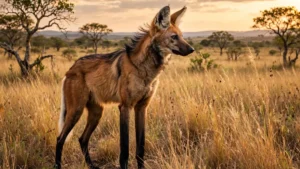
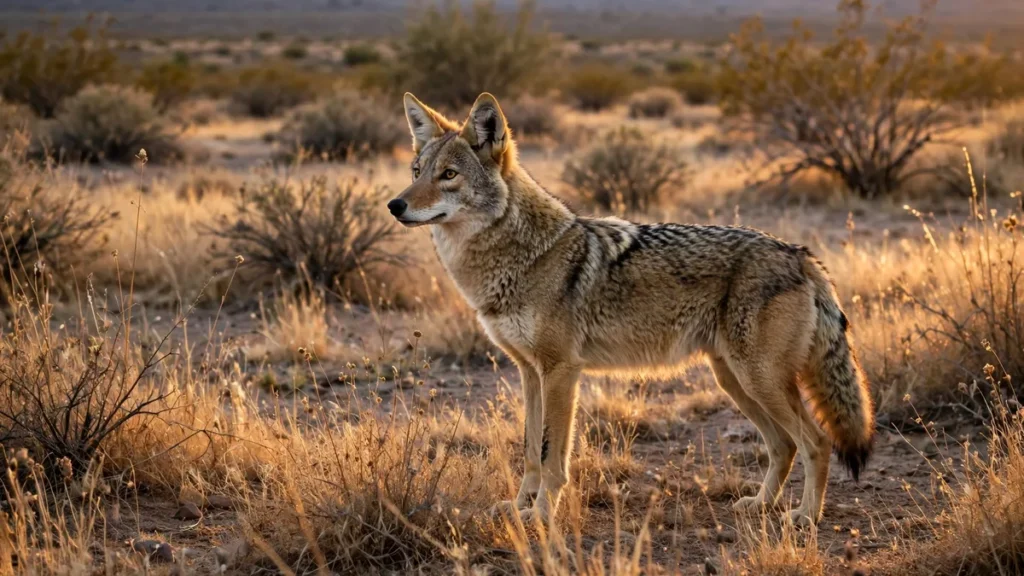
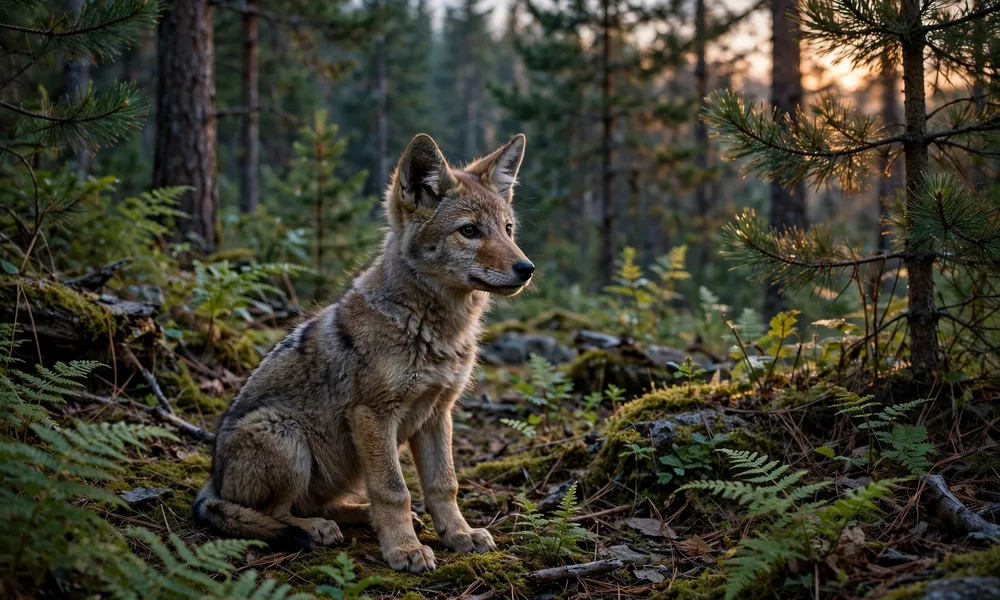
A coyote looks like a small, lean wolf crossed with a large fox, and that in-between shape is the key to recognising one. It stands about 60 centimetres tall at the shoulder and weighs roughly 9 to 23 kilograms, with long legs, pointed ears, a narrow muzzle and a bushy tail carried low. Its coat is grey-brown above and paler below, and northern animals are larger and paler than desert coyotes.
The coyote voice is its most famous feature. A call is a burst of sharp yips and barks that rises into a long, wavering howl, and a pair can sound like a whole pack because their voices overlap and echo. Coyotes call most often at dusk and during the night, while a wolf howl is deeper, longer and steadier.
The one coyote species and its many subspecies
There is only one coyote species, Canis latrans, named latrans for its barking voice, from the Latin word for barking. It belongs to the dog family, Canidae, alongside wolves, foxes, jackals and domestic dogs, and it has long been separate from the wolf, evolving on its own in North America. Coyotes are not wolves, not foxes and not dogs, although they can breed with wolves and domestic dogs where their ranges meet, producing hybrids known as coywolves and coydogs.
Within that one species there are around 19 recognised subspecies, each a regional form of the same animal. The eastern coyote is larger than the western coyote, partly because eastern animals carry some wolf ancestry, while desert coyotes are small and sandy, and northern coyotes are bigger and thicker coated. None of these forms is a separate species, and scientists do not always agree on the exact number, which is why it is given as around 19.
Coyote cousins: the wild dogs that are not coyotes
The coyote has many close relatives in the dog family, and some look enough like a coyote to cause confusion. The grey wolf is the largest, a big pack hunter that can weigh more than twice as much as a coyote. The red fox is much smaller, with a bright rust-red coat and a white-tipped tail. The fox species guide covers the whole fox family, from the red fox to the fennec fox of the Sahara.
The golden jackal is the coyote’s Old World lookalike, a medium-sized wild dog of Africa and Asia that fills much the same role as the coyote does in North America. The Arctic fox turns white in winter, the fennec fox is the tiny, huge-eared fox of the Sahara, the African wild dog hunts in packs on the savanna, and the dhole is the reddish pack hunter of Asian forests. None of these seven is a coyote, and none lives wild in North America.
How coyotes live: hunting, yipping and family life
Coyotes are hunters and scavengers, and they eat almost anything they can catch or find. Rabbits, hares and mice are their favourite prey, along with voles, birds and their eggs, lizards, snakes, insects and fruit, and carrion too. In towns and cities they may take rats, fallen fruit, pet food left outside and scraps from bins. A coyote hunting a mouse pounces high and lands with its front paws where it heard the rustle, a trick it shares with foxes.
Coyotes usually hunt alone or in pairs, although a family may hunt together. Unlike wolves, which bring down large prey in big packs, coyotes are built for small prey, and they rarely tackle animals larger than a deer fawn. They are fast runners, reaching around 65 kilometres per hour in a short burst, and they can trot for many kilometres in a night, guided by keen hearing, a good nose and night vision.
Family life is at the heart of coyote society. A mated pair usually stays together for life, and they raise their pups in a den, often a burrow in a bank, a hollow log or a space under a rock. The female gives birth in spring to around five or six pups, and both parents bring food to the den. The pups play outside in the evening light, and by autumn they leave to find a home range of their own. At dusk the pair yips and howls together, telling other coyotes that this ground is taken.
Where coyotes live
Coyotes live across almost the whole of North America, from Alaska and Canada through the United States to Mexico and into Central America. They are at home in deserts, grasslands, forests, mountains and wetlands, and in suburbs, parks and city centres as well. The desert animals of the south-west include coyotes that hunt kangaroo rats and jackrabbits among the cactus and scrub, while the urban animals of North American cities include coyotes that den in parks and golf courses. They are among the predator animals best adapted to a world shaped by people.
That wide range is recent, tied to the decline of the wolf. Two hundred years ago coyotes lived mainly in the open plains and deserts of the centre and west, where wolves ruled the forests and the north. As wolves were hunted out, coyotes moved into the empty ground, spreading east and north, then into the cities. Today there are coyotes in New York, Los Angeles, Chicago and Toronto, heard far more often than seen.
| Animal | Type | Where it lives | Size and note |
|---|---|---|---|
| Coyote | Species | North America, from Alaska to Mexico | 9 to 23 kilograms; yips and howls at dusk |
| Grey wolf | Close relative | North America, Europe and Asia | 20 to 50 kilograms; large pack hunter |
| Red fox | Close relative | North America, Europe, Asia and Australia | 3 to 7 kilograms; rust-red coat, white-tipped tail |
| Golden jackal | Close relative | Africa, the Middle East and Asia | 7 to 15 kilograms; sandy coat, Old World lookalike |
| Arctic fox | Close relative | Arctic tundra of the far north | 3 to 6 kilograms; white coat in winter |
| Fennec fox | Close relative | Sahara Desert of North Africa | 1 to 2 kilograms; huge ears, tiny desert fox |
| African wild dog | Close relative | Savannas of sub-Saharan Africa | 18 to 36 kilograms; tall pack hunter |
| Dhole | Close relative | Forests of Asia | 10 to 20 kilograms; reddish pack hunter |
Best seasons for coyote watching
Autumn and winter are the best seasons for coyote watching, when the leaves have fallen, the grass is short and a grey-brown coyote stands out against the pale ground. In the cold months coyotes are active for longer, and their tracks are easy to follow in snow or soft mud. Listen at dusk, when the yips and howls carry furthest.
Spring is also rewarding, because by early summer the pups play outside the den in the evening light, tumbling and chasing each other while a parent watches. Summer is harder, because long grass hides the animals and the heat keeps them resting in shade, so watch at dawn, when the air is cool.
Staying safe around coyotes
Coyotes are wild animals and they deserve respect, even though they are usually shy of people. Never feed a coyote, and never leave pet food, fallen fruit or open bins where a coyote can reach them, because a coyote that expects food from people loses its fear and can become a danger to pets and children. Keep cats indoors at night and dogs on a lead where coyotes live.
If you meet a coyote, stay calm and make yourself look big: stand tall, wave your arms, shout loudly and throw a small stone near, but not at, the animal until it moves away. Do not run, do not turn your back and do not try to touch or photograph a coyote at close range. Give the animal a clear path to leave, and report a coyote that follows people to the local wildlife authorities.
Coyote watching checklist
- Watch at dawn or dusk, and listen for yips and howls as the light fades.
- Look along the edges of fields and woodland, where coyotes hunt mice and rabbits.
- Use binoculars to watch from a distance, and never block a coyote’s path or corner it.
- Look for tracks in mud or snow: four toes and claw marks.
- Keep dogs on a lead and cats indoors at night where coyotes live.
- Never feed coyotes, and secure bins, pet food and fallen fruit.
- Leave no trace: take your rubbish home and keep to marked paths.
Frequently asked questions
How many coyote species are there?
There is only one coyote species, Canis latrans, with around 19 recognised subspecies across North America. The subspecies are regional forms of the same animal, not separate species.
How is this guide different from the wolf species guide?
This guide covers the coyote, a single, smaller North American canid, Canis latrans, that thrives in deserts, forests and cities and hunts small prey alone or in pairs. The wolf species guide covers wolves, larger pack hunters that bring down big prey together.
Why do coyotes yip and howl at dusk?
Coyotes yip and howl at dusk to mark their home ground and gather the family before hunting. A few voices can sound like a whole pack, because each coyote changes pitch as it calls.
Are coyotes dangerous to people?
Coyotes are usually shy of people and attacks are rare, but they are wild predators with sharp teeth, and a coyote that has been fed by people can lose its fear. Keep your distance, never feed them, and shout and look big if one comes close.
Do coyotes live in cities?
Yes, coyotes live in many North American cities, including New York, Los Angeles, Chicago and Toronto, where they den in parks and hunt rats, rabbits and mice at night. They are most often heard, not seen, and they usually avoid people.
What do coyotes eat?
Coyotes eat rabbits, mice, voles, birds, lizards, insects, fruit and carrion, and in towns they may take rats and scraps from bins. They hunt alone or in pairs, pouncing on small prey in the open.
Conclusion
The coyote species, just one of them, is one of the great success stories of North American wildlife: a single species, Canis latrans, with around 19 subspecies, that has spread from the western plains to the forests of the east, the deserts of Mexico and the parks of big cities, all on sharp ears, a clever mind and a voice full of yips and howls. It is smaller than a wolf and bolder than a fox, and it has thrived in a world that changed around it.
Stand at the edge of a field on a still evening, listen for the first yips rising at dusk, and remember that the animal calling is the only coyote species there is, a wild dog that has made a home of a whole continent.