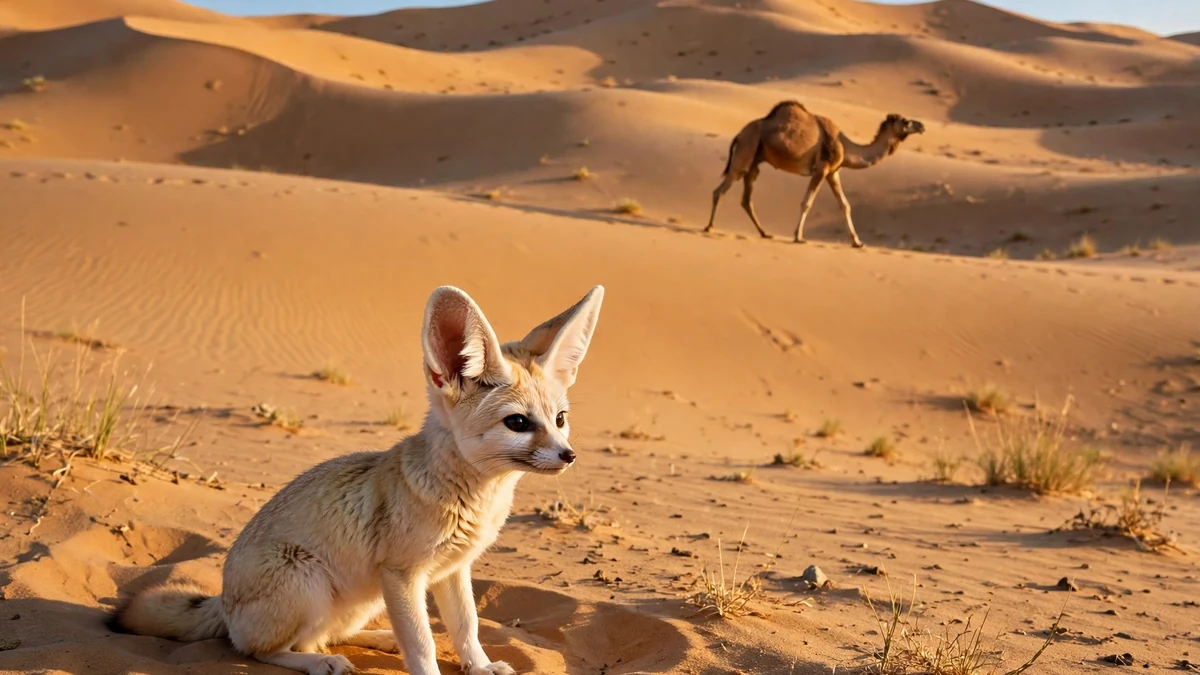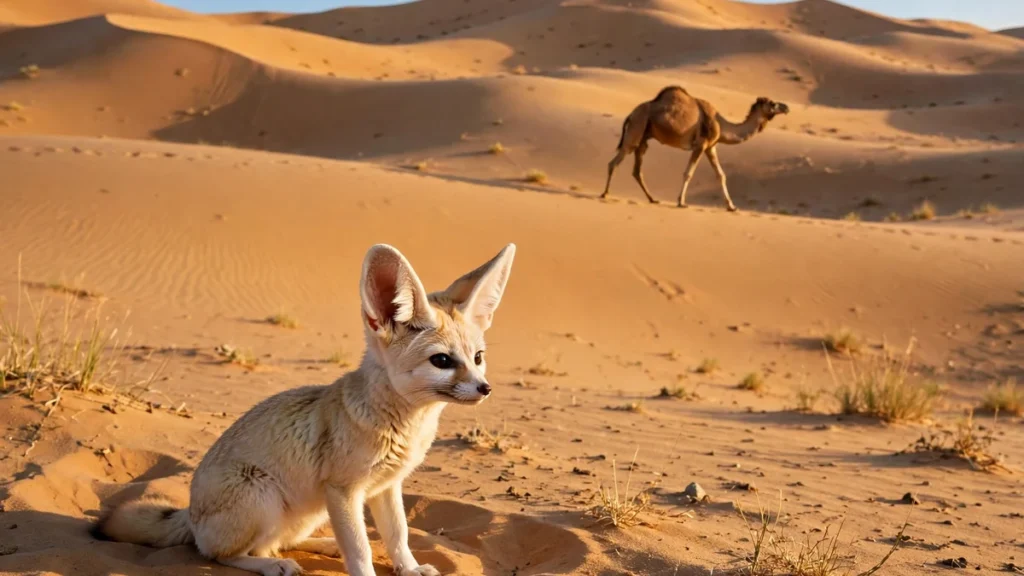
Desert animals are the creatures that make their home in the driest places on earth, from the dromedary camel of the Sahara to the fennec fox, the kangaroo rat and the sidewinder snake. If you are wondering how anything survives in the desert, the short answer is this: desert animals save water, avoid the midday heat, and use the cool of the night, with bodies shaped by life where rain may not fall for months at a time.
This guide covers the best-known desert animals.
Key takeaways
- Desert animals include camels, fennec foxes, kangaroo rats, sand cats, sidewinders and roadrunners.
- The dromedary camel can go for days without drinking, and its hump stores fat it can turn into energy and water.
- Many desert animals are active at night, when the sand is cool and the air is far less dry.
- The fennec fox has the largest ears of any fox, and it uses them to hear prey moving underground and to lose heat.
- The kangaroo rat may never drink water in its whole life, getting all the moisture it needs from the seeds it eats.
Large mammals of the desert
The dromedary camel is the most famous desert animal of all. It has a single hump, long legs that lift its body above the hot sand, and wide feet that spread its weight so it does not sink. Its hump stores fat, not water, and the camel can turn that fat into energy and a little water when food and drink are scarce. A camel can lose a large share of its body water, then drink a great deal at one water hole.
The Arabian oryx is a desert antelope with long, straight horns and a pale coat that reflects the sun. It can sense rain from far away and travel long distances to find fresh grazing, and it lets its body temperature rise by day so it loses less water. The addax, another desert antelope, is almost white in summer, and it gets most of its water from the plants it eats. Like the tundra animals of the far north, these mammals survive by matching their bodies to an extreme climate.
Desert bighorn sheep live in the rocky deserts of North America, climbing cliffs where few predators can follow. Their pale coats blend with the rock, and they can go for days without drinking, taking moisture from the plants they eat. In the Gobi Desert of Asia, the two-humped wild Bactrian camel survives bitterly cold winters as well as scorching summers.
Small desert specialists
The fennec fox is the smallest fox in the world, and one of the best loved desert animals. It lives in the Sahara, and its huge ears help it hear insects and small rodents moving under the sand. The ears also lose heat, keeping the fox cool, and its pale sandy coat reflects the sun. Fennec foxes live in family groups in burrows in the sand, coming out at night to hunt.
The kangaroo rat is a small rodent of the deserts of North America, and it may never drink water in its whole life. It gets all the moisture it needs from the dry seeds it eats, and its kidneys are so efficient that it loses almost no water in its urine. It hops on long hind legs like a tiny kangaroo, and it can leap clear of a striking snake. The jerboa of Asia and North Africa lives the same way, another long-legged jumper that rests in a burrow by day.
The sand cat is a small wild cat of the deserts of Africa and Asia, about the size of a house cat, with a pale coat, large ears and fur on the soles of its feet that protects it from hot sand and hides its tracks. It hunts at night, taking gerbils, birds and reptiles, and can go long periods without drinking. The desert rain frog is a tiny frog of the Namib Desert that lives in the sand near the coast, where sea fog gives it the moisture it needs.
Reptiles of the desert
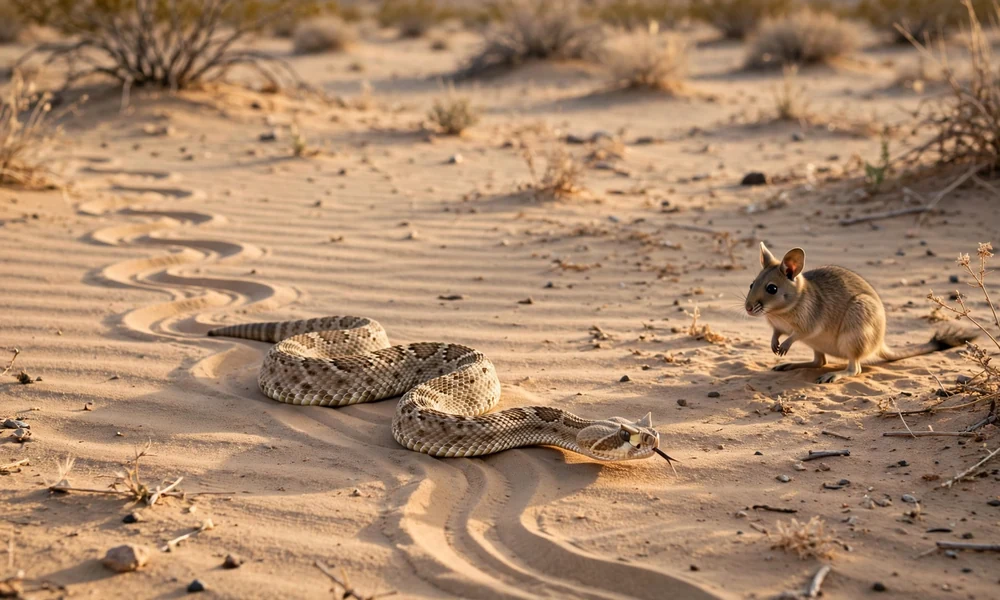
The sidewinder is a rattlesnake of the deserts of North America, famous for the way it moves. Instead of sliding straight ahead, it throws its body sideways in loops, leaving J-shaped tracks in the sand, and only a small part of its body touches the hot ground at any moment. It hunts at night, lying buried in the sand with only its head showing.
The Gila monster is a large, heavy lizard of the deserts of the south-western United States and Mexico, with a beaded skin of pink and black. It is one of the few venomous lizards in the world, and it spends most of its life in burrows, coming out to eat eggs, small mammals and nestling birds. It stores fat in its thick tail, and it can go for months without a meal. The thorny devil of Australia is a small lizard covered in spikes, with a false head on its neck to confuse predators, and it eats thousands of ants in a single meal.
Desert tortoises are slow, long-lived animals that dig burrows to escape the heat and store water in their bodies for months. The horned lizard, also known as the horned toad, is a flat, spiky lizard that can squirt blood from its eyes to startle a predator. Like the predator animals of other habitats, desert reptiles are patient hunters that wait for the right moment.
Birds of the desert
The roadrunner is a fast-running bird of the deserts of North America, famous for its speed on the ground rather than in the air. It can run at high speed to chase down lizards, snakes and insects, and it can even kill and eat rattlesnakes. Its long tail acts as a rudder as it turns.
The ostrich is the largest bird in the world, and it lives in the dry grasslands and deserts of Africa. It cannot fly, but it is the fastest running bird, and its long legs cover ground quickly when it needs to escape. Ostriches can go for days without drinking, getting moisture from the plants they eat.
Sandgrouse fly long distances each day to find water, then carry it back to their chicks in the specially shaped feathers of their bellies. The elf owl, the smallest owl in the world, lives in the deserts of North America and Mexico, nesting in holes in cacti and hunting insects and scorpions at night.
How desert animals survive
Water is the hardest problem in the desert, and every desert animal has an answer. Some, like the camel and the oryx, can go for days without drinking and then drink a great deal at once. Others, like the kangaroo rat, never drink at all, making all the water they need from their food. Many get their moisture from plants, seeds and the bodies of their prey, and lose almost none of it.
Heat is the second problem, and the answer is usually timing. Most desert animals are active at dawn, at dusk or at night, when the air is cooler, and they rest in burrows, in the shade of rocks or under bushes during the heat of the day. Burrows are cool and damp compared with the surface, pale coats reflect the sun, long legs lift bodies above the hot sand, and large ears lose heat.
Food in the desert is patchy, and desert animals are ready to travel or to wait. The Arabian oryx can sense rain from far away and walk for days to reach fresh grass, while the Gila monster can eat a huge meal and then live off it for months. Like the forest animals of wetter lands, desert animals depend on the plants and smaller animals around them, but here a missed meal matters more.
Desert animals and people
People have lived with desert animals for thousands of years. Camels were tamed long ago and still carry people and goods across the Sahara and Arabia, and they provide milk, meat and wool. The oryx and the addax were hunted for their meat and horns, and both became rare before breeding and release programmes brought them back to protected reserves.
Not every story is a recovery. Deserts are under pressure from grazing, mining, roads and towns, and from a warming climate that makes dry places drier. The wild Bactrian camel is one of the rarest large mammals in the world, and the addax is still in danger. Sand cats and fennec foxes are sometimes caught for the pet trade. Protecting desert animals means protecting the whole desert: the plants, the water holes and the open spaces they need to move through.
| Animal | Type | Where it lives | Best-known fact |
|---|---|---|---|
| Dromedary camel | Mammal | Sahara and Arabia | Goes days without drinking |
| Fennec fox | Mammal | Sahara | Largest ears of any fox |
| Kangaroo rat | Mammal | North American deserts | May never drink water |
| Sand cat | Mammal | Deserts of Africa and Asia | Fur on its feet hides its tracks |
| Sidewinder | Reptile | North American deserts | Moves sideways across sand |
| Gila monster | Reptile | South-western USA and Mexico | Venomous lizard, stores fat in its tail |
| Roadrunner | Bird | North American deserts | Runs down snakes and lizards |
| Desert rain frog | Amphibian | Namib Desert | Lives on sea fog, squeaks loudly |
Desert animals checklist
- Start with the giants: dromedary camel, Arabian oryx, addax and desert bighorn sheep.
- Remember the small specialists: fennec fox, kangaroo rat, jerboa and sand cat.
- Do not forget the reptiles: sidewinder, Gila monster, thorny devil and desert tortoise.
- Add the birds: roadrunner, ostrich, sandgrouse and elf owl.
- Check the facts: a camel’s hump stores fat, not water, and the kangaroo rat may never drink.
- Use this guide for quizzes, school projects and trips, and add your own favourites.
Frequently asked questions
What is the most famous desert animal?
The dromedary camel is the most famous desert animal. It has a single hump, wide feet for walking on sand, and it can go for days without drinking.
How do desert animals survive without water?
They save water in several ways. Some, like the camel, can go for days without drinking. Others, like the kangaroo rat, never drink at all and make all the water they need from the seeds they eat.
What animal lives in the Sahara Desert?
The Sahara is home to the dromedary camel, the fennec fox, the sand cat, the addax, the Arabian oryx and many lizards, snakes and birds. Most are active at night, when the sand is cool.
Why do fennec foxes have such big ears?
The fennec fox’s huge ears help it hear insects and small rodents moving under the sand, which is how it finds food at night. The large ears also lose heat, helping the fox stay cool.
Are there frogs in the desert?
Yes, though very few. The desert rain frog lives in the Namib Desert, where sea fog gives it the moisture it needs. It spends much of its time buried in the sand and comes out at night.
What is the fastest desert animal?
The ostrich is the fastest desert animal on land, and the roadrunner is one of the fastest running birds. The kangaroo rat can leap clear of a striking snake.
Conclusion
The desert looks empty, but it is full of animals that have solved the hardest problems in nature: finding water, beating the heat and making a living from very little. Pick a favourite, learn its story, and the desert will never look empty again.
Visit a desert at dawn or dusk, watch the tracks in the sand, and remember that beneath the quiet surface there is a world as busy as any forest.