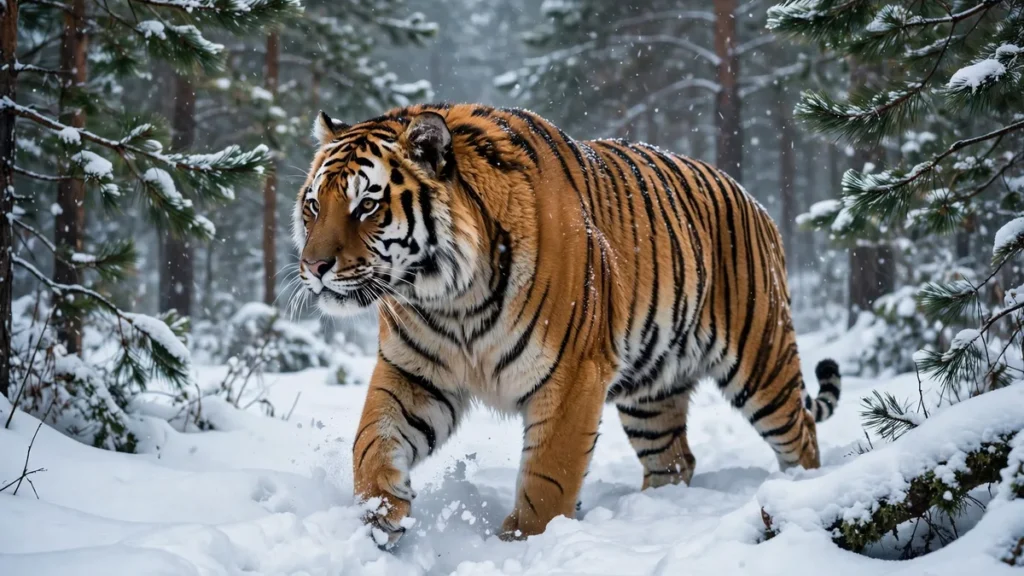
Siberia animals range from Amur tigers padding through the snows of the far east to Baikal seals resting on the ice of the world’s deepest lake, and the vast Russian north holds some of the toughest wildlife on Earth. If you are wondering which animals live in Siberia and where to see them, the short answer is this: Amur tigers, brown bears, grey wolves and reindeer roam the taiga and the tundra, snow leopards hunt in the mountains of the south, and Baikal seals live only in Lake Baikal.
Siberia is one of the most demanding places in the world for wildlife watching, because so much of it is still empty taiga, tundra and mountain. This guide covers the species you are most likely to meet, where each one lives and the best seasons to see them.
Key takeaways
- Siberia’s most iconic animals are the Amur tiger, snow leopard, brown bear, grey wolf and Baikal seal.
- The Amur tiger is the largest tiger in the world, and it lives only in the forests of the Russian Far East and north-eastern China.
- Lake Baikal is the deepest lake on Earth, and its seals are the only freshwater seals in the world.
- Most Siberian animals are hardest to see in winter, when the snow is deep and the temperatures fall below minus 40 degrees.
- June to September is the best time for most wildlife watching, when the taiga is green, the rivers are open and the animals are most active.
What makes Siberia’s wildlife special
Siberia stretches across northern Asia from the Urals to the Pacific, a land larger than the whole of Europe. Its wildlife is shaped by its taiga, its tundra and its mountains, from the Amur tigers of the far east to the snow leopards of the Altai and the reindeer of the far north.
Honesty matters here: Siberia has no native large cats besides the Amur tiger and the snow leopard, and no native elephants or rhinos at all. What it has instead is something no other region can match — the largest forest on Earth, the taiga, stretching unbroken for thousands of kilometres, and the coldest inhabited places on the planet.
That variety comes from the land itself. Siberia holds the taiga, the tundra, the steppe, the mountains of the Altai and the great rivers of the Ob, the Yenisei and the Lena, so animals from many different habitats can live within one region. Like the forest animals of other continents, most Siberian species depend on large, unbroken woodland, and the taiga is the largest forest on Earth.
The great mammals of Siberia
The Amur tiger is Siberia’s most famous animal and the animal most visitors hope to see. Amur tigers live in the forests of the Russian Far East, where they hunt wild boar and deer through the snow, and they are the largest tigers in the world, with males weighing more than 300 kilogrammes. They are most often seen in winter, when their tracks show clearly in the snow, but no honest guide can promise a sighting.
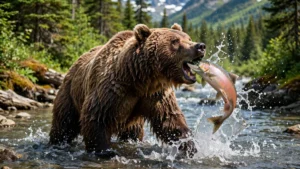
The brown bear is Siberia’s largest land predator, and it lives across the whole region, from the Urals to the Pacific. Brown bears are most often seen in spring, when they leave their dens, and in autumn, when they feed on berries and salmon in the rivers of Kamchatka.
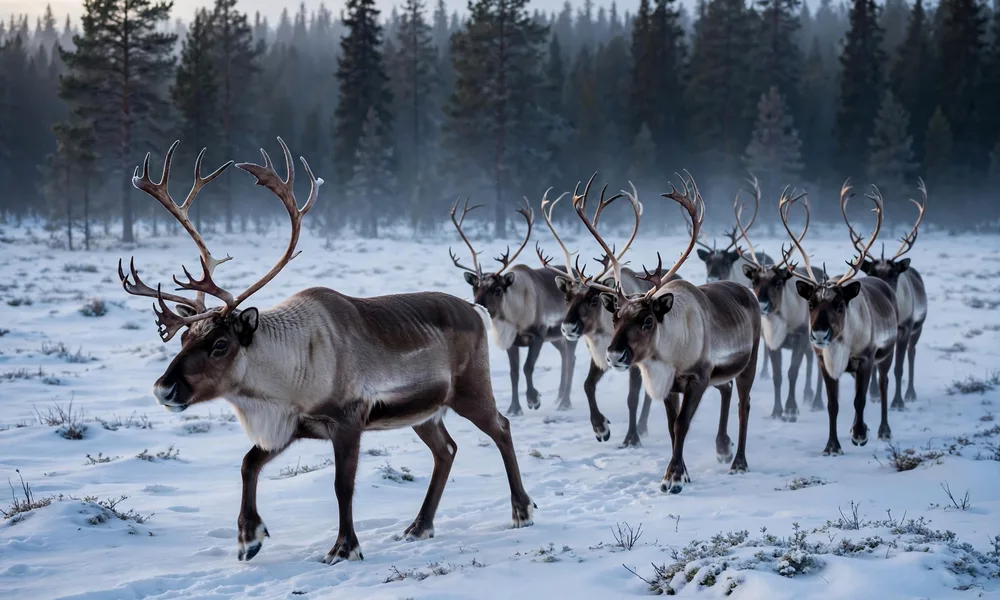
Among the predators, the snow leopard hunts in the mountains of the Altai and the Sayan, where it preys on Siberian ibex and argali sheep. Reindeer, the most important animal of the far north, are herded by the peoples of the Arctic, and wild reindeer still roam the tundra in huge herds.
One animal should not be on any visitor’s list as a certainty: the Amur leopard. It is the rarest big cat in the world, with only about a hundred left in the wild, living in the forests of the far east near the border with China. The same is true of the snow leopard, which is shy and wide-ranging. Both are reminders of how much of Siberia’s wildlife depends on vast, undisturbed country.
Birds of Siberia
The Siberian crane is Siberia’s most famous bird, and one of the rarest cranes in the world. It breeds in the wetlands of Yakutia, in the far north-east, and it migrates thousands of kilometres to winter in China and India. It is most often seen in spring and autumn, when it passes through the wetlands of the south on its long journey.
The white-tailed sea eagle is Siberia’s largest bird of prey, and it breeds along the rivers, lakes and coasts of the whole region. It is often seen from a boat or a lakeside hide, and it is most common in the far east, where the rivers are full of salmon.
Siberia’s position on the migration routes between the Arctic and the tropics makes it one of the most remarkable places in the world for birdwatching. In spring and autumn, huge numbers of birds pass through, from geese and ducks to waders and shorebirds.
Lake Baikal, rivers and the smaller wildlife of Siberia
Siberia’s waters hold their own wildlife, and the Baikal seal is the most remarkable of all. Baikal seals live only in Lake Baikal, the deepest lake on Earth, and they are the only freshwater seals in the world. They are most often seen in winter, when they rest on the ice, and in summer, when they haul out on the rocky shores of the lake.
Along the great rivers, beavers have returned to many Siberian waters, and their dams now shape wetlands for frogs, dragonflies and water birds. The rivers of Kamchatka are among the best places in the world to see brown bears fishing for salmon.
Smaller mammals are everywhere in Siberia, though they are often overlooked. Sables, the most famous fur animals of the taiga, hunt in the forests of the east, and wolverines, lemmings and Arctic foxes live in the tundra of the far north. Like the tundra animals of other continents, most Siberian species survive by growing thick winter coats and slowing down in the cold.
| Species | Where to look | Best season | How likely is a sighting |
|---|---|---|---|
| Amur tiger | Forests of the Russian Far East | Winter, tracks in the snow | Very low |
| Snow leopard | Mountains of the Altai and Sayan | Winter, at dawn | Very low |
| Brown bear | Rivers of Kamchatka and the taiga | May to October | Fair with a guide |
| Baikal seal | Lake Baikal ice and shores | February to March, on the ice | Good in winter |
| Reindeer | Tundra of the far north | Summer, in herds | Good |
| Siberian crane | Wetlands of Yakutia | Spring and autumn, on migration | Low |
| Wolverine | Taiga and tundra | Winter | Very low |
Best seasons for wildlife watching
June to September is the finest time for most wildlife watching in Siberia. The taiga is green, the rivers are open, the mosquitoes are at their worst but the animals are most active, and the reindeer herds are on the tundra. It is also the best time for the rivers of Kamchatka, where the brown bears fish for salmon.
Winter, from November to March, is the hardest time to visit, when the temperatures fall below minus 40 degrees and the snow is deep. The trade-off is clear tracks in the snow, and the best chances of finding Amur tiger and snow leopard sign.
In any season, dawn and dusk are the best times for Siberian animals, and the long days of the northern summer give the most hours of light.
Staying safe around Siberia’s wildlife
Siberia’s large animals are usually calm, but they deserve respect. Keep your distance from brown bears, wolves and moose, never approach a bear cub, and never try to feed or touch any wild animal. If you meet a brown bear, back away slowly, speak calmly and never run. Carry bear spray in bear country and know how to use it.
In the cold, wear warm layers and waterproofs, protect your face from the wind, and tell someone where you are going before a walk. The weather can change fast, and a calm morning can turn into a blizzard by afternoon. Never travel alone in the taiga or the tundra, and always carry a means of calling for help.
Siberia wildlife watching checklist
- Book a local guide for Amur tigers, snow leopards and brown bears — they know where the animals are.
- Go out at dawn or dusk for mammals, and plan trips for June to September, when the taiga is at its greenest.
- Bring binoculars, warm layers and waterproofs, even in summer — Siberian weather changes fast.
- Keep at least 50 metres from nesting birds and grazing reindeer, and far more from brown bears, wolves and moose.
- Never feed wild animals, and never use food or calls to lure them closer for a photograph.
- Stay on marked tracks and keep off the ice of Lake Baikal unless a guide says it is safe.
- Leave no trace: take your rubbish home and keep to marked paths in sensitive habitats.
Frequently asked questions
What is the most famous animal in Siberia?
The Amur tiger is the most famous, and the forests of the Russian Far East are the only place in the world where it lives. The Baikal seal is the most famous animal of Lake Baikal, and the snow leopard is the most famous cat of the southern mountains.
Are there tigers in Siberia?
Yes. Amur tigers live in the forests of the Russian Far East, and they are the largest tigers in the world. They are rare and shy, and no honest guide can promise a sighting — most visitors see only their tracks in the snow.
Can I see a Baikal seal in Siberia?
Yes. Baikal seals live only in Lake Baikal, and they are most often seen in February and March, when they rest on the ice, and in summer, when they haul out on the rocky shores. Go with a local guide for the best chance.
When is the best time to see brown bears in Siberia?
May to October is the best time, when the bears leave their dens and feed in the taiga and along the rivers. The rivers of Kamchatka are best in summer, when the bears fish for salmon in the shallows.
Can I see a snow leopard in Siberia?
Not in any realistic sense. Snow leopards live in the mountains of the Altai and the Sayan, but they are among the rarest cats in the world, and no honest guide can promise a sighting. Look for brown bears, reindeer and Baikal seals instead.
How is this guide different from the Sahara desert animals guide?
This guide covers Siberia, the coldest inhabited region on Earth, with Amur tigers, snow leopards, brown bears and Baikal seals. The Sahara desert animals guide covers the largest hot desert on Earth, with fennec foxes, addax, sand cats and dromedary camels.
Conclusion
Siberia’s wildlife rewards patience: Amur tigers in the snows of the far east, brown bears fishing for salmon in Kamchatka, reindeer herds on the tundra and Baikal seals on the ice of the world’s deepest lake are all within reach if you plan around the short summer and keep your distance.
The next step is to pick one species and one season — a summer bear trip in Kamchatka, a winter visit to Lake Baikal for seals, or a guided search for tiger tracks in the far east — and plan your visit around it.