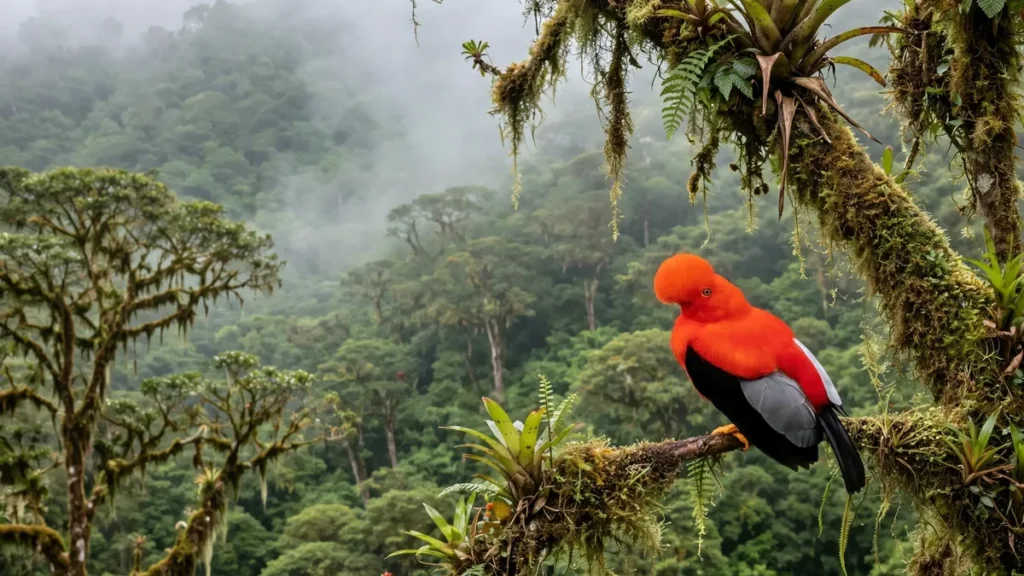
Colombia animals range from Andean condors soaring over the high mountains to pink river dolphins in the Amazon, and the country holds more bird species than any other country on Earth. If you are wondering which animals live in Colombia and where to see them, the short answer is this: spectacled bears, condors and hummingbirds live in the Andes, jaguars, tapirs and pink river dolphins live in the Amazon and the Llanos, and humpback whales visit the Pacific coast each year.
Colombia is one of the best places in the world to watch wildlife, because so much of the country is still mountain, rainforest, wetland and coast. This guide covers the species you are most likely to meet, where each one lives and the best seasons to see them.
Key takeaways
- Colombia’s most iconic land animals are the spectacled bear, the Andean condor, the jaguar, the cotton-top tamarin and the pink river dolphin.
- Colombia holds more bird species than any other country in the world, with more than 1,900 species, including more hummingbirds than anywhere else.
- The cotton-top tamarin lives only in Colombia, and it is one of the most endangered primates in the Americas.
- Humpback whales visit the Pacific coast from July to October, and the best place to see them is around Nuqui and Bahia Solano.
- The dry season, from December to March, is the best time for most wildlife watching, and early morning is the best time of day for forest animals.
What makes Colombia’s wildlife special
Colombia sits at the meeting point of Central and South America, and its wildlife reflects both. Species from the rainforests of the Amazon meet species from the high Andes and the dry Caribbean coast here, between the Pacific Ocean in the west and the Caribbean Sea in the north.
Honesty matters here: Colombia is one of the most biodiverse countries on Earth, and it holds more bird species than any other country. What it has instead of a single famous animal is an extraordinary range of life packed into one country, from the snowy peaks of the Sierra Nevada de Santa Marta to the flooded grasslands of the Llanos.
That variety comes from the landscape itself. Colombia holds three ranges of the Andes, the Amazon rainforest, the vast Llanos grasslands, the dry Guajira desert and two long sea coasts, so animals from many different habitats can live within one country. Like the rainforest animals of other Amazonian countries, many Colombian species depend on large, quiet woodland, and the Amazon forests of the south and the cloud forests of the Andes are among the wildest corners of the country.
The great mammals of Colombia
The spectacled bear is Colombia’s most famous mammal and the only bear in South America. It lives in the cloud forests of the Andes, feeding on bromeliads and fruit, and it is shy and rarely seen. The best chance of a sighting is in the cloud forests of the eastern Andes, with a local guide, especially where the bears come down to feed on fruiting trees.
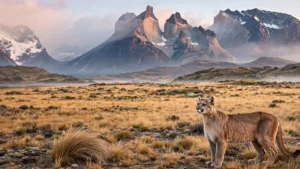
Among the predators, the jaguar is the largest cat in the Americas, and it still lives in the forests of the Amazon and the Llanos, but it is rare, nocturnal and almost never seen by visitors. The puma is more widespread, hunting deer and capybaras in the mountains and the grasslands, and the ocelot hunts at night in the rainforest understorey. The cotton-top tamarin, a tiny monkey with a shock of white hair, lives only in the dry forests of north-western Colombia, and it is one of the most endangered primates in the Americas.
The pink river dolphin lives in the rivers of the Colombian Amazon, surfacing quietly among the flooded forest, and it is one of the few dolphins in the world that lives in fresh water. The giant river otter hunts fish in family groups along the same rivers, and the lowland tapir, the largest land mammal in South America, lives in the forests of the Amazon and the Llanos.
One animal should not be on any visitor’s list as a certainty: the jaguar. It survives in Colombia, but in small numbers in vast forest, and no honest guide can promise a sighting. The same is true of the giant armadillo, which is now very rare. Both are reminders of how much of Colombia’s wildlife depends on large, undisturbed forest.
Birds of Colombia
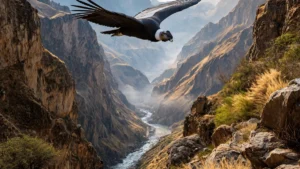
The Andean condor is one of the largest flying birds in the world, with a wingspan of more than three metres, and it soars over the high Andes of Colombia. The condors ride the thermals up from the valleys in the morning, and they are best seen from a high viewpoint at dawn, in the national parks of the central Andes.
Colombia holds more hummingbird species than any other country, and the cloud forests of the Andes are the best place to see them.
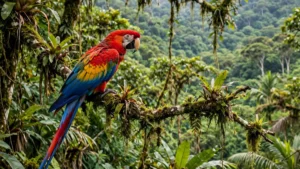
Colombia’s position on the migration routes between North and South America makes it one of the best birdwatching countries in the world. In the northern winter, warblers, tanagers and flycatchers arrive from the north, and the country holds more than 1,900 bird species, from scarlet macaws in the Amazon to flamingos on the Caribbean coast. Like the forest animals of other Andean countries, the condors, cock-of-the-rock and hummingbirds of Colombia depend on tall, undisturbed woodland.
Rivers, coasts and smaller wildlife
Colombia’s Llanos, the vast flooded grasslands of the east, hold their own wildlife, and they are the best place to see it. The Llanos hold capybaras, caimans, anacondas and hundreds of bird species, and the flooded grasslands are best explored by boat at dawn and dusk, when the animals are most active.
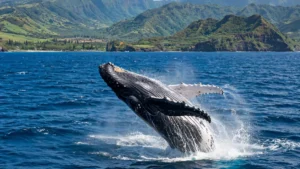
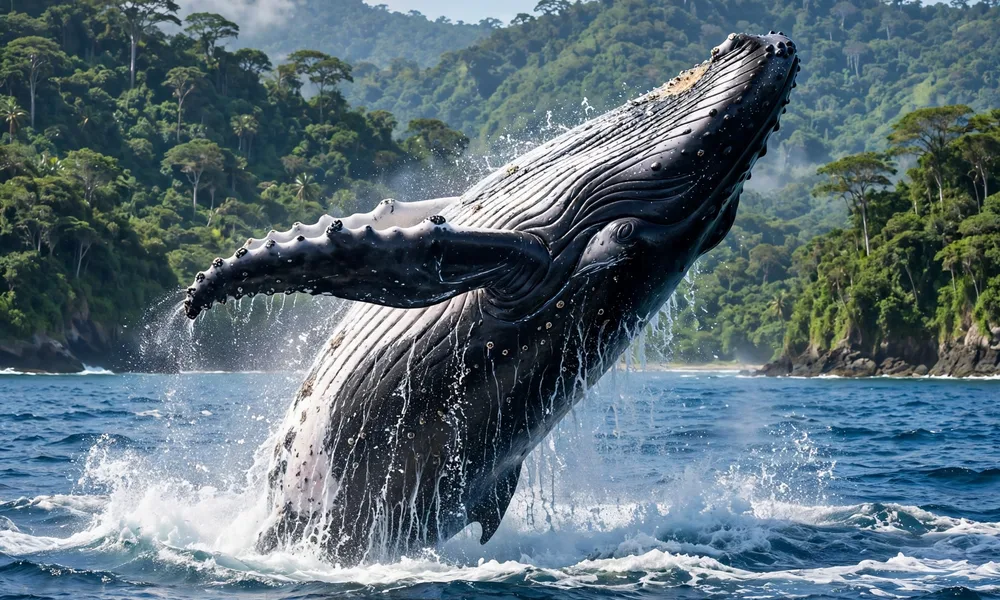
Along the Pacific coast, the humpback whale visits from July to October, when the mothers give birth in the warm, sheltered bays around Nuqui and Bahia Solano. The whales are most often seen from a boat, and the best time is in the morning, when the sea is calm. The Caribbean coast holds flamingos in the lagoons of the Guajira desert, and sea turtles nest on the beaches of the north coast.
Smaller animals are everywhere in Colombia, though they are often overlooked. The kinkajou, a nocturnal forest mammal with a long prehensile tail, hunts fruit and nectar in the canopy at night.
| Species | Where to look | Best season | How likely is a sighting |
|---|---|---|---|
| Andean condor | High Andes, Los Nevados and Chingaza | Year-round, morning | Fair with a guide |
| Cotton-top tamarin | Dry forests of north-western Colombia | Year-round | Fair with a guide |
| Pink river dolphin | Amazon rivers of the south | Dry season, December to March | Fair with a guide |
| Humpback whale | Pacific coast, Nuqui and Bahia Solano | July to October | Good in season |
| Andean cock-of-the-rock | Cloud forests of the Andes | Year-round, at dawn | Good with a guide |
| Capybara | Llanos grasslands of the east | Dry season, December to March | Good |
| Spectacled bear | Cloud forests of the eastern Andes | Year-round | Very low |
Best seasons for wildlife watching
The dry season, from December to March, is the finest season. The trails are easier to walk, the rivers are low and the animals gather at the remaining water, and the Llanos are at their best for capybaras, caimans and birds. It is also the best season for the Amazon, when the rivers are low and the pink river dolphins are easiest to find.
The wet season, from April to November, brings heavy rain to the Amazon and the Pacific coast, when the frogs are at their most active and the forests are at their greenest. The humpback whales visit the Pacific coast from July to October, and the best time to see them is in the morning, when the sea is calm.
Within any season, the time of day matters as much as the month. Early morning is the best time for forest animals: hummingbirds, cock-of-the-rock and monkeys are all most active at dawn. Night walks reveal glass frogs, kinkajous and night monkeys that are invisible by day.
Staying safe around Colombia’s wildlife
Colombia’s large animals are usually calm, but they deserve respect. Keep your distance from jaguars, pumas, caimans and anacondas, never approach a capybara with young, and never try to feed or touch any wild animal. Caimans and anacondas live in the rivers and wetlands of the Llanos and the Amazon, so never swim unless a local guide says it is safe.
On the coast, keep away from nesting sea turtles, never handle a turtle or a hatchling, and keep a safe distance from whales, even when they seem calm. In the mountains, carry water and sun protection, and allow time to acclimatise to the altitude before a long walk in the high Andes. The condors and eagles of the mountains are shy and avoid people, but they should always be watched from a distance.
Colombia wildlife watching checklist
- Book a local guide for condors, cock-of-the-rock and pink river dolphins — they know where the animals are.
- Go out at dawn for birds, and plan Llanos trips for December to March, when the grasslands are at their best.
- Bring binoculars, warm layers and waterproofs, even in the dry season — mountain weather changes fast.
- Keep at least 50 metres from nesting birds and capybaras, and far more from jaguars, pumas and caimans.
- Never feed wild animals, and never use food or calls to lure them closer for a photograph.
- On the coast, keep away from marked turtle nests and avoid bright lights at night during the nesting season.
- Leave no trace: take your rubbish home and keep to marked paths in sensitive habitats.
Frequently asked questions
What is the most famous animal in Colombia?
The Andean condor is the most famous bird, and the cotton-top tamarin is the most famous mammal. The pink river dolphin and the humpback whale are the most famous sights after them.
Are there jaguars in Colombia?
Yes, but they are rare and shy. Jaguars live in the forests of the Amazon and the Llanos, and they are almost never seen by visitors. No honest guide can promise a sighting.
Can I see a cotton-top tamarin in Colombia?
Yes. The cotton-top tamarin lives only in the dry forests of north-western Colombia, and the best place to see it is in a protected reserve, with a local guide. It is one of the most endangered primates in the Americas.
When is the best time to see humpback whales in Colombia?
July to October is the whale season, when humpback whales gather in the warm bays of the Pacific coast around Nuqui and Bahia Solano. The best way to see them is on a boat trip in the morning.
Can I see pink river dolphins in Colombia?
Yes. Pink river dolphins live in the rivers of the Colombian Amazon, and the best time is the dry season, from December to March, when the rivers are low and the dolphins are easiest to find.
How is this guide different from the Argentina animals guide?
This guide covers Colombia, a country at the meeting point of Central and South America, with more bird species than any other country, plus cotton-top tamarins, pink river dolphins and humpback whales. The Argentina animals guide covers a much larger, more southerly country, with southern right whales, Magellanic penguins and capybaras in wetlands Colombia does not have.
Conclusion
Colombia’s wildlife rewards patience: Andean condors over the high mountains, cotton-top tamarins in the dry forests of the north-west, pink river dolphins in the Amazon and humpback whales off the Pacific coast are all within reach if you plan around the seasons.
The next step is to pick one species and one season — a dry-season trip to the Llanos for capybaras, a visit to the cloud forests for cock-of-the-rock, or a whale trip to Nuqui from July to October.