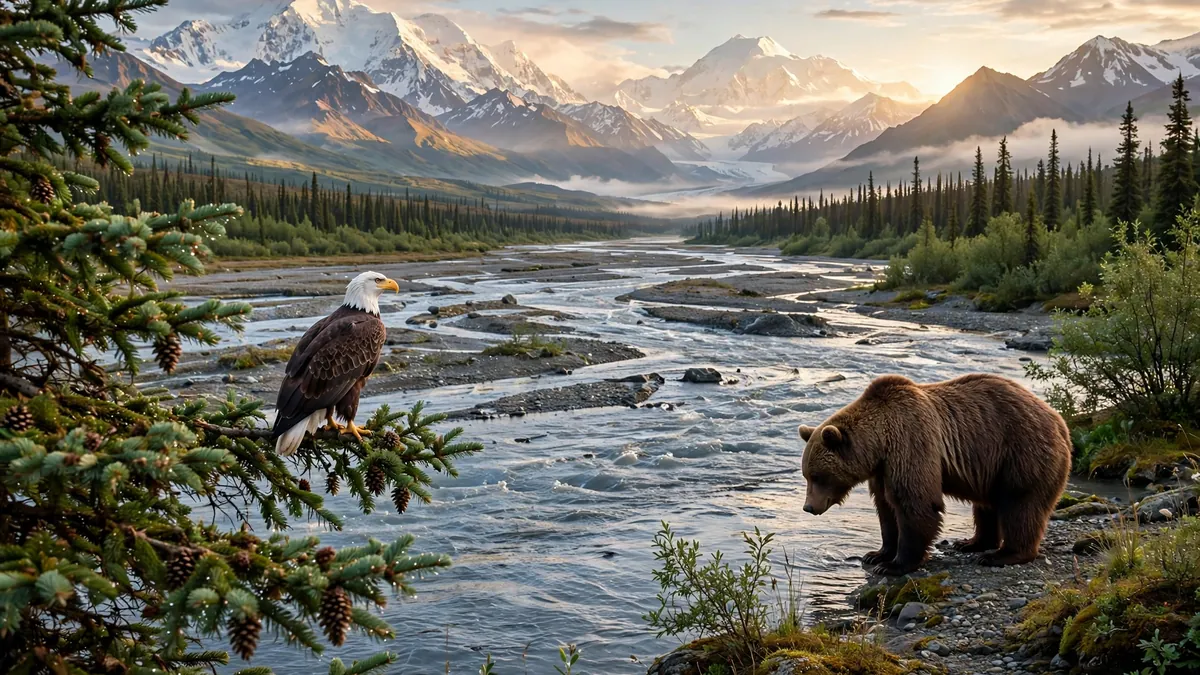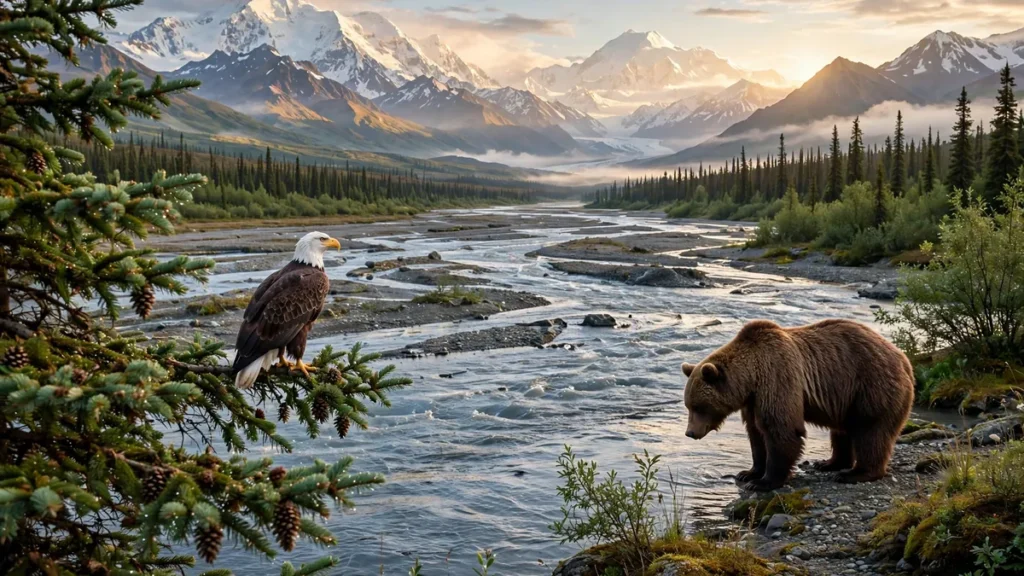
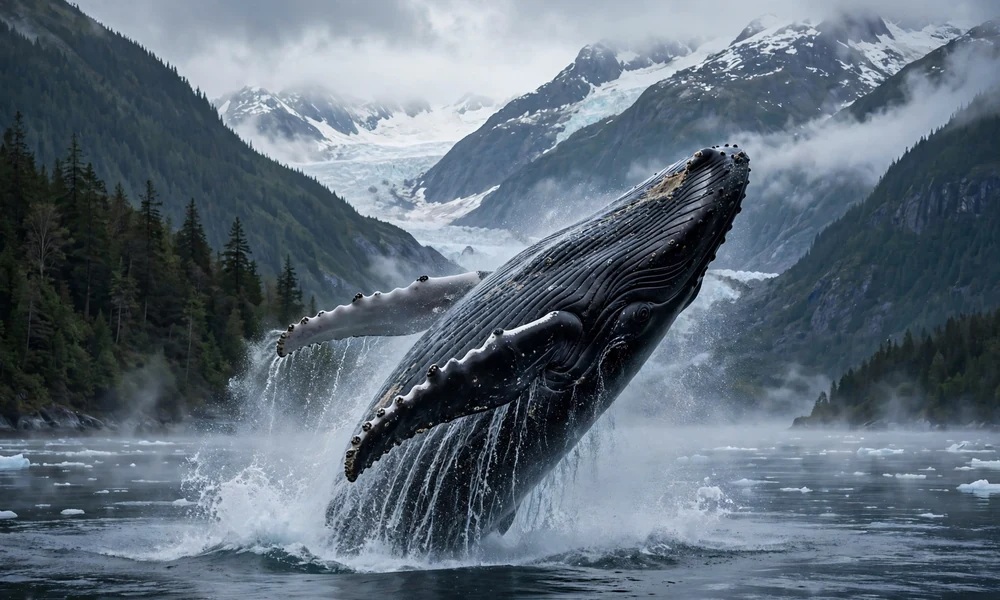
Alaska animals range from brown bears fishing for salmon in wild rivers to humpback whales breaching in icy fjords, and the state holds some of the most spectacular wildlife in North America. If you are wondering which animals live in Alaska and where to see them, the short answer is this: brown bears, moose, caribou, Dall sheep and wolves roam the mountains and tundra, humpback, orca and beluga whales fill the coastal waters, bald eagles patrol the shores, and vast salmon runs feed almost everything else.
Alaska is one of the best places in the world to watch wildlife, because so much of the state is still untouched wilderness. This guide covers the species you are most likely to meet, and where and when to see them.
Key takeaways
- Alaska’s most iconic land animals are the brown bear, moose, caribou, Dall sheep, grey wolf and Arctic fox.
- The bald eagle is Alaska’s best-loved bird, and the state holds more of them than anywhere else in North America.
- Humpback, orca and beluga whales, sea otters and seals make Alaska’s coasts as rich in wildlife as its land.
- Salmon runs in summer feed bears, eagles and many other animals, and they are one of the great wildlife sights of the state.
- Summer is the best season for most wildlife watching, and early morning and late evening are the best times of day for large mammals.
What makes Alaska’s wildlife special
Alaska is the largest state in the United States, and its wildlife reflects its scale. The state stretches from the temperate rainforest of the south-east to the treeless Arctic tundra of the far north, with great mountain ranges, wide river valleys and a long, rugged coastline in between. Animals from the forests, the tundra and the cold northern seas all live here, side by side.
Honesty matters here: Alaska has very few true endemics, and no large mammal lives only in Alaska. What it has instead is an unusually complete Arctic and sub-Arctic community, from brown bears and wolves on land to humpback whales and sea otters in the sea.
That variety comes from the landscape itself. Alaska holds Denali, the largest mountain in North America, the vast tundra of the Arctic coastal plain, the great river valleys of the Yukon and the Kuskokwim, and more coastline than all the other American states put together. Like the forest animals of the far north, many Alaskan species depend on large, quiet habitat, and Denali National Park and the Kenai Peninsula are among the wildest corners of the state.
The great mammals of Alaska
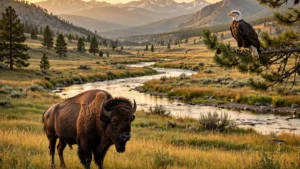
The brown bear is Alaska’s largest land predator, living in the mountains, forests and tundra across much of the state. The coastal brown bears, often called grizzlies inland, are among the largest bears on earth, growing heavy on salmon through the summer. Bears are most often seen in summer, when they gather at salmon streams, and they are best looked for with a local guide.
Among the predators, the grey wolf lives in the forests and tundra across much of the state, hunting caribou and moose in packs. Wolves are shy and hard to see, and Denali National Park is one of the best places to look for them. The Arctic fox lives on the tundra of the far north, turning white in winter.
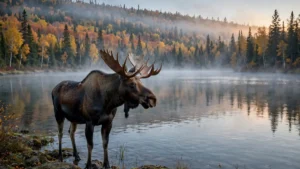
Moose are the largest members of the deer family, and they are common across Alaska, feeding in marshes, lakes and river valleys, often close to towns and roads. They are covered only briefly here, as one species among many, because our moose facts guide already covers moose in general. Caribou roam the tundra in great herds, migrating hundreds of miles between their summer and winter ranges. Dall sheep, with their curled horns and white coats, live on the high mountain slopes of Denali and the Brooks Range.
One animal should not be on any visitor’s list as a certainty: the wolverine. It lives in the mountains and forests of Alaska, but it is rare, wide-ranging and very hard to see, and no honest guide can promise a sighting.
Birds of Alaska
The bald eagle is Alaska’s best-loved bird, and the state holds more bald eagles than anywhere else in North America. They gather in large numbers along the salmon rivers in summer and autumn, perching in the spruce trees above the water and sweeping down to take fish.
Alaska’s coasts and cliffs hold vast seabird colonies, and the puffins are the best loved of all. Horned and tufted puffins nest in burrows on the rocky islands of the Aleutian chain and the Kenai Fjords, coming ashore in summer to raise their young. Murres, kittiwakes and auklets nest in their thousands on the same cliffs.
Alaska’s position on the migration routes between the Americas and Asia makes it one of the best birdwatching places in the world. In spring and autumn, huge numbers of birds pass through, from sandhill cranes and swans to shorebirds that breed on the Arctic tundra.
Rivers, coasts and smaller wildlife
Alaska’s rivers hold one of the great wildlife events of the world: the salmon run. Each summer, millions of salmon return from the sea to the rivers where they were born, leaping up rapids and filling the shallow streams. The runs feed bears, eagles, wolves and many other animals, and watching bears fish at the Brooks River is one of the finest wildlife sights in North America.
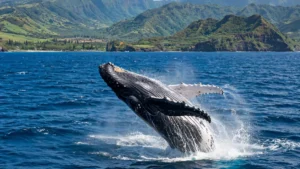
Along the coasts, the humpback whale comes to the cold, rich waters of the south-east and the Kenai Fjords each summer to feed. The whales breach, slap their tails and feed in groups, and they are best seen from a boat trip out of Juneau or Seward. Orcas, or killer whales, hunt salmon and seals along the coast, and beluga whales gather in the shallow waters of Cook Inlet near Anchorage.
Smaller animals are everywhere in Alaska, though they are often overlooked. Sea otters float in the kelp beds of the south-east and the Aleutian chain, and harbour seals haul out on ice and rocky shores. Like the wetland animals of other northern countries, the frogs, dragonflies and water birds of Alaska’s marshes depend on clean, undisturbed water.
| Species | Where to look | Best season | How likely is a sighting |
|---|---|---|---|
| Brown bear | Denali, Katmai and salmon rivers | June to September | Good with a guide |
| Moose | Marshes and river valleys statewide | Year round, best in summer | Good |
| Caribou | Arctic tundra and Denali | Summer and autumn | Fair with a guide |
| Dall sheep | Mountain slopes of Denali | Summer | Fair with binoculars |
| Grey wolf | Denali and the interior forests | Winter, dawn and dusk | Low |
| Humpback whale | South-east fjords and Kenai Fjords | May to September | Good on a boat trip |
| Bald eagle | Salmon rivers and the coast | Summer and autumn | Good in season |
Best seasons for wildlife watching
Summer is the finest season. The salmon run, the bears gather at the rivers, the whales feed in the fjords, the puffins come ashore to nest, and the long days give plenty of time for watching.
Autumn brings the great gathering of bald eagles on the Chilkat River, when thousands of birds come to feed on the late salmon run, and the caribou migration, when the herds move across the tundra.
Winter is the quiet season, but moose and caribou are easy to see against the snow, wolves leave clear tracks, and the northern lights fill the dark skies. Spring brings the return of the migrating birds and the bears leaving their dens.
Staying safe around Alaska’s wildlife
Alaska’s large animals are usually calm, but they deserve respect. Keep your distance from bears, moose and wolves, never approach a moose with a calf, and never try to feed or touch any wild animal. If you meet a bear, back away slowly, speak calmly and never run.
On the coast, keep away from seals hauled out on the shore and never approach a whale carcass. In the mountains and tundra, carry warm layers and waterproofs even in summer, and tell someone where you are going before a long walk.
Alaska wildlife watching checklist
- Book a local guide for bears, wolves and whales — they know where the animals are.
- Go out at dawn or dusk for mammals, and plan salmon-river and whale trips for June to September.
- Bring binoculars, warm layers and waterproofs, even in summer — Alaskan weather changes fast.
- Keep at least 50 metres from nesting birds and caribou, and far more from bears, moose with calves and wolves.
- Never feed wild animals, and never use food or calls to lure them closer for a photograph.
- Carry bear spray in bear country and know how to use it before you set out.
- Leave no trace: take your rubbish home and keep to marked paths in sensitive habitats.
Frequently asked questions
What is the most famous animal in Alaska?
The brown bear is the most famous large mammal, and the bald eagle is the best-loved bird. The humpback whales of the fjords are the most famous wildlife sight.
Are there bears and wolves in Alaska?
Yes. Brown bears live in the mountains, forests and tundra across much of the state, and grey wolves live in the forests and tundra of the interior. Both are shy, and both are best looked for with a guide.
Can I see a wolverine in Alaska?
Not in any realistic sense. The wolverine lives in Alaska, but it is rare and very hard to see, and no honest guide can promise a sighting.
When is the best time to see whales in Alaska?
May to September is the best time, when humpback whales feed in the fjords of the south-east and the Kenai Fjords. The best way to see them is on a boat trip from Juneau or Seward.
Can I see bald eagles in Alaska?
Yes. Alaska holds more bald eagles than anywhere else in North America, and they gather in large numbers along the salmon rivers in summer and autumn. The Chilkat River holds one of the largest gatherings in the world.
How is this guide different from the United States animals guide?
This guide covers Alaska, a single far-northern state with its own Arctic and sub-Arctic wildlife, from brown bears and caribou on the tundra to humpback whales and puffins on the cold northern coasts. The United States animals guide covers the whole country, including the lower forty-eight states, with a much wider mix of species and habitats that Alaska does not share.
Conclusion
Alaska’s wildlife rewards patience: brown bears fishing for salmon, moose in the river valleys, caribou on the tundra, humpback whales in the fjords and bald eagles above the rivers are all within reach if you plan around the seasons.
The next step is to pick one species and one season — a summer boat trip from Juneau for the whales, an autumn visit to the Chilkat River for the eagles, or a visit to Denali for the bears, caribou and Dall sheep.