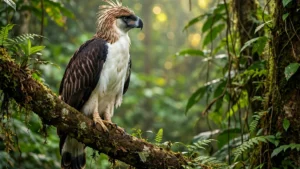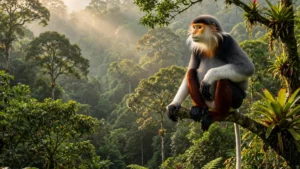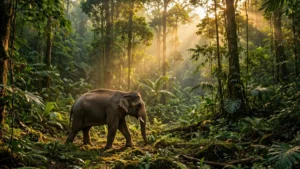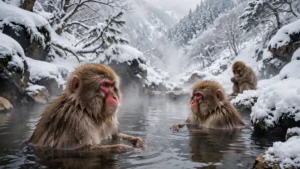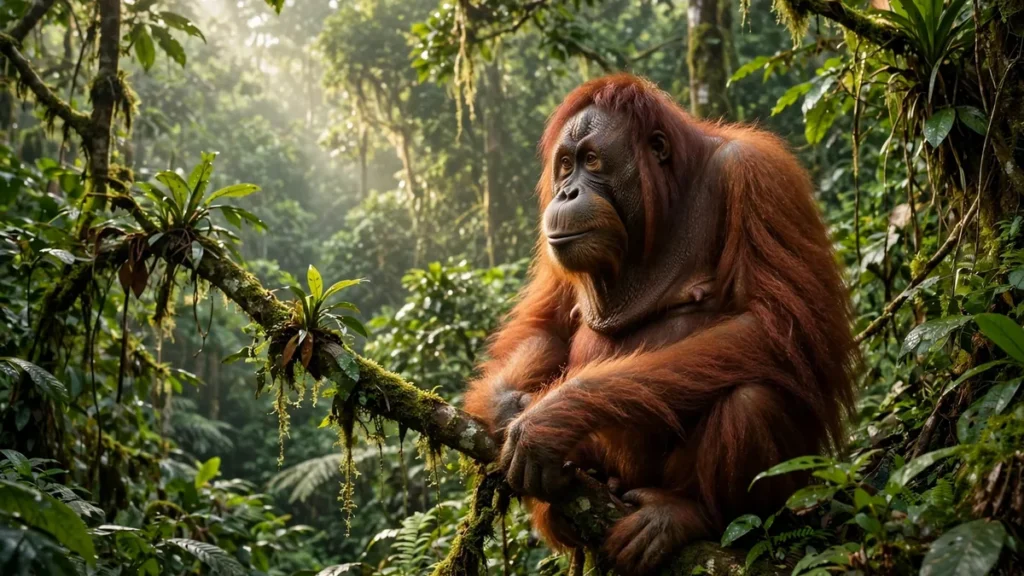
Indonesia animals range from orangutans in the rainforests of Borneo and Sumatra to Komodo dragons on the dry grasslands of the Lesser Sunda Islands. If you are wondering which animals live in Indonesia and where to see them, the short answer is this: orangutans, proboscis monkeys and hornbills live in the rainforests of Borneo and Sumatra, Komodo dragons live only on a handful of islands in the east, birds of paradise display in the forests of Papua, and the reefs of Raja Ampat hold some of the richest marine life anywhere in the world.
Indonesia is one of the best places in the world to watch wildlife, with rainforest, mountain, wetland and reef spread across more than seventeen thousand islands. This guide covers the species you are most likely to meet, where each one lives and the best seasons to see them.
Key takeaways
- Indonesia’s most iconic land animals are the orangutan, the Komodo dragon, the proboscis monkey, the Sumatran tiger and the Javan rhino.
- The Javan rhino is extremely rare, with fewer than a hundred animals left in one park, so no honest guide should promise a sighting.
- Birds of paradise, hornbills and the Bali starling make Indonesia one of the best birdwatching countries in the world.
- Raja Ampat holds some of the richest reef life on Earth, with manta rays, reef sharks and turtles.
- The dry season, from April to October, is the best time for most wildlife watching, and early morning is the best time of day.
What makes Indonesia’s wildlife special
Indonesia sits on the equator between Asia and Australia, and its wildlife reflects both continents. Species from the rainforests of South-East Asia meet species from New Guinea and Australia here, divided by the Wallace Line, which runs between Borneo and Sulawesi and between Bali and Lombok. West of the line the animals are Asian; east of it they become increasingly Australian, with marsupials, cockatoos and birds of paradise.
That meeting of two faunas is what makes Indonesia so special. No other country holds orangutans, Komodo dragons and birds of paradise alongside the richest coral reefs in the world. The country also holds more endemic species than almost anywhere else, because so many islands have been separated for so long that their animals evolved in isolation.
The variety comes from the landscape itself: vast rainforests, high volcanoes, wide wetlands, mangroves and long coral coasts. Like the forest animals of other tropical countries, many Indonesian species depend on large, quiet woodland, and the rainforests of Kalimantan and Sumatra are among the wildest corners of the country.
The great mammals of Indonesia
The orangutan is Indonesia’s most famous animal, and one of the great apes of the world. Bornean orangutans live in the rainforests of Kalimantan, and Sumatran orangutans in the forests of northern Sumatra, both spending most of their lives in the trees. The best places to see them are Tanjung Puting National Park in Kalimantan and Gunung Leuser National Park in Sumatra, both on guided treks. Both species are critically endangered.
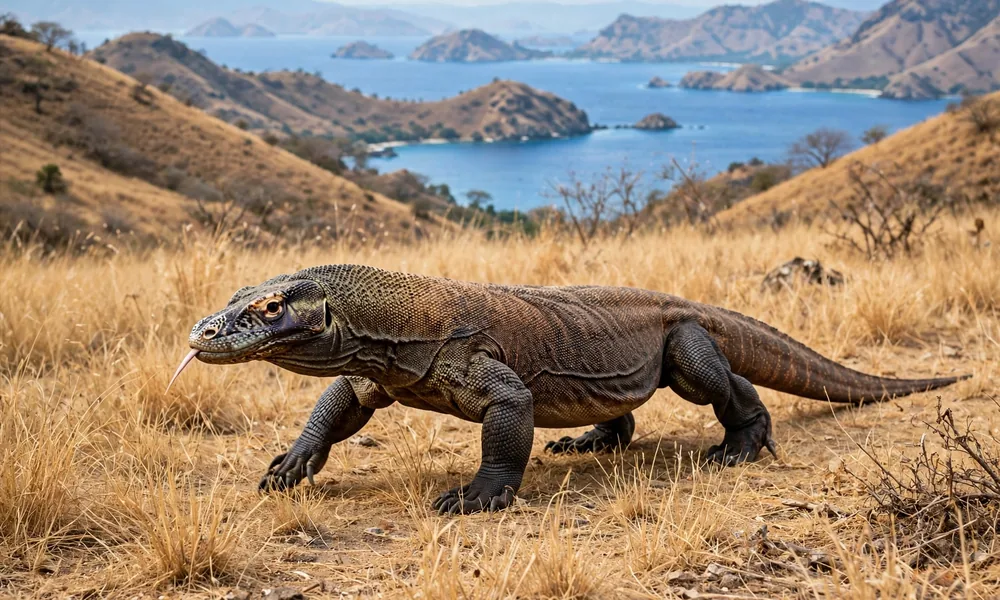
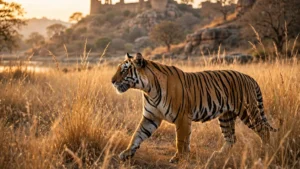
Among the predators, the Sumatran tiger is the rarest, living in the forests of Sumatra in very small numbers and almost never seen by visitors. The clouded leopard and the sun bear also live in the forests of Sumatra and Borneo, and both are shy, nocturnal and hard to find. The Komodo dragon is easier to see: the world’s largest lizard, around three metres long, lives only on Komodo, Rinca and a few nearby islands.
The proboscis monkey is one of Indonesia’s strangest animals, with the males carrying a large drooping nose and a pot belly. It lives only in the mangroves and river forests of Borneo, and it is easiest to see on river trips at dawn and dusk. Sulawesi holds its own endemics: the babirusa, a wild pig with curving tusks, the anoa, a small forest buffalo, and the night-hunting tarsier.
One animal should not be on any visitor’s list: the Javan rhino. It was once found across South-East Asia, but today fewer than a hundred animals remain, all of them in Ujung Kulon National Park in western Java, in dense forest closed to ordinary visitors. No honest guide can promise a sighting, and no tour can offer one.
Birds of Indonesia
The birds of paradise are Indonesia’s most famous birds, and some of the most spectacular in the world. The males display their brilliant plumes in the forests of Papua, dancing and calling at dawn in the canopy. They are best seen with a local guide who knows the display trees. Like the rainforest animals of other tropical countries, they depend on tall, undisturbed forest.
Hornbills are the other great birds of the Indonesian forests. The rhinoceros hornbill, with its huge curved casque, flies through the canopy of Borneo and Sumatra in pairs, calling loudly as it goes. The helmeted hornbill is rarer and critically endangered. The Bali starling is Indonesia’s rarest bird: a white bird with a blue patch around the eye, found only on Bali and critically endangered.
Indonesia’s position on the migration routes between Asia and Australia makes it one of the best birdwatching countries in the world. In the northern winter, huge numbers of shorebirds arrive from Siberia and East Asia, filling the mudflats and wetlands of Java, Sumatra and Sulawesi. The forests also hold parrots, cockatoos and eagles, and the islands of Wallacea hold many species found nowhere else.
Rivers, coasts and smaller wildlife
Indonesia’s rivers and wetlands hold their own wildlife, and the rivers of Kalimantan are the best place to see it. The river forests hold proboscis monkeys, macaques and otters, and the rivers themselves hold crocodiles and freshwater dolphins. The mangroves shelter wading birds, monitor lizards and mudskippers.
Below the water, Indonesia is even richer. The country sits at the heart of the Coral Triangle, the richest marine region on Earth, and Raja Ampat holds more coral and reef fish species than anywhere else. Manta rays, reef sharks and turtles gather on the reefs, and whale sharks visit Cenderawasih Bay. Green and hawksbill turtles nest on sandy beaches, and leatherback turtles, the largest in the world, nest on the beaches of Papua.
Smaller land animals are everywhere in Indonesia, though they are often overlooked. Tarsiers and slow lorises hunt at night in the forests of Sulawesi and Sumatra, flying squirrels glide between the trees of Borneo, and monitor lizards bask along the riverbanks. The reefs, the mangroves and the rainforests all depend on clean, undisturbed water and forest.
| Species | Where to look | Best season | How likely is a sighting |
|---|---|---|---|
| Orangutan | Tanjung Puting and Gunung Leuser | Year-round, dry season best | Good with a guide |
| Komodo dragon | Komodo and Rinca islands | April to December | Good with a ranger |
| Proboscis monkey | Rivers of Kalimantan | Year-round, dawn and dusk | Good on a river trip |
| Bird of paradise | Forests of Papua | Dry season, at dawn | Fair with a local guide |
| Rhinoceros hornbill | Forests of Borneo and Sumatra | Year-round | Fair with a guide |
| Manta ray | Raja Ampat and Nusa Penida | Year-round | Good on a dive trip |
| Javan rhino | Ujung Kulon National Park | No public access | Not realistically possible |
Best seasons for wildlife watching
The dry season, from around April to October, is the finest season for most wildlife watching. The forest trails are easier to walk, the rivers are calmer, the seas are clearer for diving and snorkelling, and the Komodo dragons are at their most active on the dry grasslands. It is also the most popular season, so book guides and lodges well ahead.
The wet season, from around November to March, brings heavy rain to much of the country, and some forest trails and sea crossings become harder. But the forests are at their greenest, and the birdwatching can be excellent, with fruiting trees drawing hornbills and parrots. Orangutans can be seen year-round, and the wet season is often quieter, with fewer visitors in the parks.
Within any season, the time of day matters as much as the month. Early morning is the best time for forest animals: orangutans, hornbills and birds of paradise are all most active at dawn. Late afternoon is the best time for proboscis monkeys along the rivers and for Komodo dragons. Night walks reveal tarsiers, slow lorises and frogs that are invisible by day.
Staying safe around Indonesia’s wildlife
Indonesia’s large animals are usually calm, but they deserve respect. Keep your distance from orangutans, Komodo dragons and wild pigs, and never try to feed or touch any wild animal. Komodo dragons are powerful predators, and they must only ever be seen with a park ranger, on a marked trail, at the distance the ranger sets.
At sea, keep away from nesting turtles and never handle a turtle or a hatchling. Do not touch the coral, and keep a safe distance from manta rays and sharks, even when they seem calm. In the forests, carry water and sun protection, and tell someone where you are going before a long walk. Leeches are common in the wet rainforest, so use repellent and cover up at dawn and dusk.
Indonesia wildlife watching checklist
- Book a local guide for orangutans, birds of paradise and Komodo dragons — they know where the animals are.
- Plan forest trips for the dry season, from April to October, and go out at dawn.
- Bring binoculars, waterproofs and leech socks for the rainforest, and reef-safe sunscreen for the coast.
- Keep at least 50 metres from orangutans and nesting birds, and follow your ranger’s distance for Komodo dragons.
- Never feed wild animals, and never use food or calls to lure them closer for a photograph.
- On turtle beaches, keep away from marked nests and avoid bright lights at night.
- Leave no trace: take your rubbish home and keep to marked paths.
Frequently asked questions
What is the most famous animal in Indonesia?
The orangutan is the most famous land animal, and the Komodo dragon is the most famous reptile. The birds of paradise and the manta rays of Raja Ampat are the most famous sights.
Are there orangutans in Indonesia?
Yes. Bornean orangutans live in Kalimantan, and Sumatran orangutans live in northern Sumatra. The best places to see them are Tanjung Puting and Gunung Leuser national parks, both with local guides.
Can I see a Komodo dragon in Indonesia?
Yes. Komodo dragons live only on Komodo, Rinca and a few nearby islands, and they are regularly seen on guided walks with a park ranger in Komodo National Park, especially in the dry season.
Can I see a Javan rhino in Indonesia?
No, not in any realistic sense. Fewer than a hundred Javan rhinos remain, all in the dense forest of Ujung Kulon National Park, which is closed to ordinary visitors.
When is the best time to see wildlife in Indonesia?
The dry season, from around April to October, is the best time for most wildlife watching. Go early in the morning for forest animals, and plan reef trips for the calmest seas.
How is this guide different from the Vietnam animals guide?
This guide covers Indonesia, a vast archipelago where Asian and Australian wildlife meet, with orangutans, Komodo dragons, birds of paradise and the reefs of Raja Ampat. The Vietnam animals guide covers a single mainland country, with a different mix of species and none of those animals.
Conclusion
Indonesia’s wildlife rewards patience: orangutans in the rainforests of Kalimantan and Sumatra, Komodo dragons on the dry grasslands of the east, birds of paradise in the forests of Papua and manta rays on the reefs of Raja Ampat are all within reach if you plan around the seasons.
The next step is to pick one island and one season — a dry-season river trip in Tanjung Puting for orangutans, a guided walk on Komodo for the dragons, or a dive trip to Raja Ampat for the reefs.