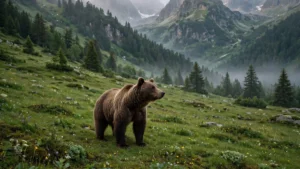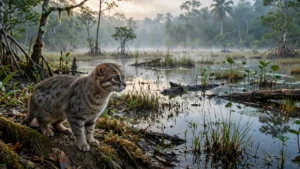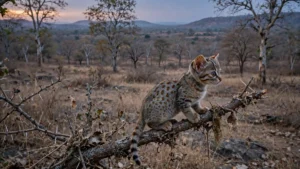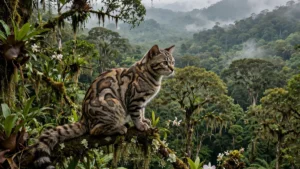
Tanzania animals include lions and leopards on the Serengeti plains, black rhinos on the floor of the Ngorongoro Crater, elephants in Tarangire and flamingos on the soda lakes of the Rift Valley. If you are wondering which animals live in Tanzania and where to see them, the short answer is this: the great mammals gather on the northern savannas, the great migration of wildebeest and zebra moves through the Serengeti, and the country’s lakes, rivers and coast hold flamingos, hippos, crocodiles and the wildlife of Zanzibar.
Tanzania holds some of the finest wildlife watching in Africa, because so much of the country is protected savanna, crater, mountain and coast. This guide covers the species you are most likely to meet, where each one lives and the best seasons to see them.
Key takeaways
- Tanzania’s most iconic animals are the lion, leopard, cheetah, African elephant, black rhino, giraffe, zebra, wildebeest and hippopotamus.
- The great migration of wildebeest and zebra moves through the Serengeti for much of the year, and its main range lies in Tanzania.
- The Ngorongoro Crater holds one of the densest gatherings of large mammals in Africa, including black rhinos on the crater floor.
- Tarangire is famous for its large elephant herds, and Lake Natron is one of the most important flamingo breeding sites in the world.
- The dry season, from June to October, is the best time for most wildlife watching, while the green season brings newborn animals.
What makes Tanzania’s wildlife special
Tanzania stretches from the Serengeti plains in the north to the Selous, now Nyerere National Park, in the south, and from Mount Kilimanjaro in the east to the shores of Lake Tanganyika in the west. That range covers open savanna, woodland, crater highlands, soda lakes, rivers and the tropical coast of Zanzibar, so the country holds species from several habitats at once.
The Serengeti is the heart of it. Its grasslands hold large herds of wildebeest, zebra and gazelle, and the lions, leopards, cheetahs and hyenas that follow them. The Ngorongoro Crater, a vast volcanic caldera, holds lions, elephants, buffalo, hippos and black rhinos on a single crater floor. Kilimanjaro rises above the savanna, its lower slopes holding forest animals that never appear on the open plains.
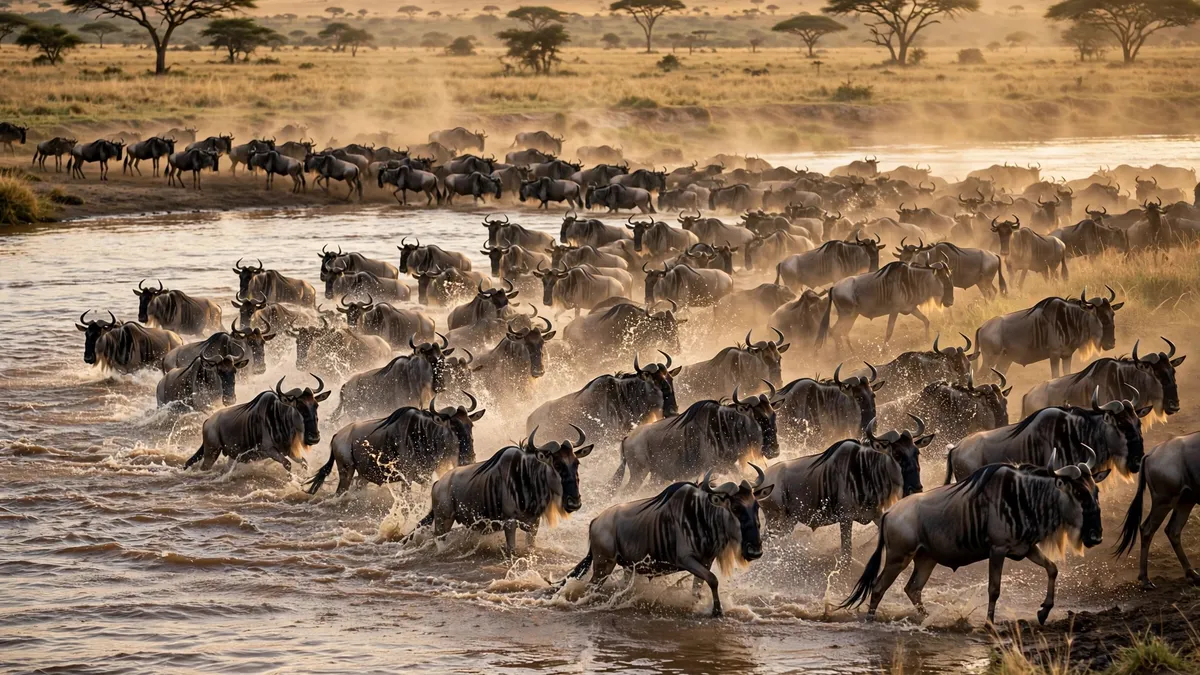
What sets Tanzania apart is the scale of the migration. More than a million wildebeest, with hundreds of thousands of zebra and gazelle, move in a great circle through the Serengeti and into Kenya’s Masai Mara, following the rains. The main range of that journey lies in Tanzania, and the river crossings, when the herds plunge through crocodile-filled rivers, are among the great wildlife sights of the world.
The great mammals of Tanzania
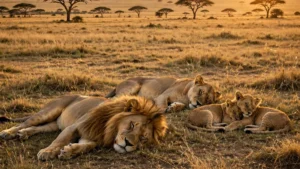
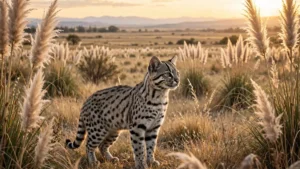
The lion is the animal most visitors hope to see, and the Serengeti is one of the best places on earth to find it. Lions rest in the shade of acacia trees by day and hunt at dawn and dusk, and the prides of the Serengeti and the Ngorongoro Crater are large and often easy to spot. Leopards are shyer, resting in the branches of sausage trees along the rivers, while cheetahs hunt on the open plains, using speed rather than cover.

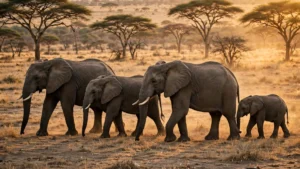
The African elephant is Tanzania’s largest land animal, and Tarangire is the best place to see it. In the dry season, large herds gather along the Tarangire River, and the park is known for its old bulls with long tusks. Elephants also live in the Serengeti, the Ngorongoro highlands and the southern parks.
The black rhino is the rarest of the great mammals here, and the Ngorongoro Crater is the best place to look for it. Rhinos graze on the crater floor, often at a distance, and a good guide with a spotting scope is the best way to find one. Giraffes browse the acacia woodland across the northern parks, and zebras and wildebeest graze the open plains in vast herds.
Hippos gather in the rivers and pools of the Serengeti and the Ngorongoro Crater, coming out to graze at night. Buffalo graze in large herds on the savanna and in the crater, and among the predators, spotted hyenas hunt and scavenge across the plains, often at night.
Birds of Tanzania
Lake Natron is the most famous bird site in the country. Its shallow, salty water turns pink with flamingos, and the lake is one of the most important breeding sites for lesser flamingos in the world. The birds nest on the mudflats, and at dawn the flocks rise and settle in clouds of pink over the water.
The ostrich strides across the open plains of the Serengeti, and the lilac-breasted roller, with its bright blue, green and lilac plumage, perches on acacia branches across the savanna. The African fish eagle calls over the lakes and rivers, its cry one of the best-known sounds of Africa, and martial eagles and secretary birds hunt over the grassland.
The Rift Valley lakes hold a rich mix of water birds. Lake Manyara is known for its flamingos and pelicans. In the eastern forests and highlands, sunbirds, turacos and hornbills add colour to the trees.
Rivers, coasts and smaller wildlife
The floor of the Ngorongoro Crater holds one of the densest gatherings of large mammals in Africa. Lions, elephants, buffalo, wildebeest, zebra, hippos and flamingos live within a few hours’ drive of each other, and the crater’s lake draws birds from across the highlands. It is the one place in Tanzania where so many species can be seen in a single day.
In the south, the Selous, now Nyerere National Park, is a vast wilderness of rivers, lakes and woodland. Its rivers hold hippos and crocodiles, its woodland holds elephants, buffalo and lions, and its open areas hold giraffes, zebras and antelope. The park is far larger and quieter than the northern parks.
On the coast, Zanzibar holds its own wildlife. The Zanzibar red colobus, a monkey found only on the islands, lives in the forests of Jozani, and the coast holds dolphins, sea turtles and reef fish. Like the wetland animals of the mainland lakes, the wildlife of the coast depends on clean water and quiet shores. Smaller mammals live across the mainland too: mongooses, genets, bushbabies, dik-diks and hyraxes in the woodland and on the rocky outcrops.
| Species | Where to look | Best season | How likely is a sighting |
|---|---|---|---|
| Lion | Serengeti plains and Ngorongoro Crater | All year, dawn and dusk | Good |
| Black rhino | Ngorongoro Crater floor | Dry season, June to October | Fair with a guide |
| African elephant | Tarangire River in the dry season | June to October | Good |
| Wildebeest | Serengeti, following the migration | All year, moving with the rains | Good in season |
| Lesser flamingo | Lake Natron and Lake Manyara | Breeding season at Lake Natron | Good in season |
| Cheetah | Open plains of the Serengeti | Dry season, June to October | Fair |
| Zanzibar red colobus | Jozani Forest on Zanzibar | All year | Good with a guide |
Best seasons for wildlife watching
The dry season, from June to October, is the best time for most wildlife watching. The grass is short, the animals gather around the rivers and waterholes, and the herds of the great migration are on the move through the Serengeti. This is also the best time for the river crossings and for seeing elephants in Tarangire.
The migration itself follows the rains. The herds calve on the southern Serengeti plains early in the year, move north through the central Serengeti as the dry season begins, and reach the Mara River around the middle of the year, before turning south again as the rains return.
The green season, from November to May, is the quiet season, and it has its own rewards. The plains turn green, newborn animals appear, migratory birds arrive, and the parks are far less crowded. The short rains fall around November and December, and the long rains around March to May, when some roads become hard to pass.
Staying safe around Tanzania’s wildlife
Tanzania’s large animals are usually calm, but they deserve respect. Keep your distance from elephants, lions, hippos and buffalo, never walk between a mother and her young, and never try to feed or touch any wild animal. Hippos and crocodiles are dangerous in and near the water, so never swim in rivers or lakes where they live, and never walk along a riverbank at night.
Always travel with a licensed guide in the national parks, stay inside your vehicle unless your guide says it is safe to get out, and keep your arms and camera inside the vehicle when animals are close. At night, stay in camp and use a torch on paths.
Tanzania wildlife watching checklist
- Book a licensed local guide or a safari camp — they know where the herds and the predators are.
- Plan around the migration: calving in the south early in the year, river crossings in the north around the middle of the year.
- Go out at dawn and dusk for lions, leopards and cheetahs, and spend midday at a waterhole or a shaded viewpoint.
- Bring binoculars, a hat, sunscreen and warm layers for cold mornings in the highlands, even in the dry season.
- Keep at least 25 metres from most animals, and far more from elephants, lions, hippos and buffalo with young.
- Never feed wild animals, and never use food or calls to lure them closer for a photograph.
- Leave no trace: take your rubbish home, keep to the tracks, and give every animal more space than you think it needs.
Frequently asked questions
What is the most famous animal in Tanzania?
The lion is the most famous, and the Serengeti is one of the best places in the world to see it. The wildebeest migration is the most famous wildlife event.
When is the best time to see the great migration?
The migration moves all year, so there is no single best month. The herds calve on the southern Serengeti plains early in the year, move north through the central Serengeti as the dry season begins, and reach the Mara River around the middle of the year.
Are there rhinos in Tanzania?
Yes. Black rhinos live on the floor of the Ngorongoro Crater, and small numbers live in the Serengeti and in the southern parks. The crater is the best place to look for one, with a guide and a spotting scope.
What animal lives only in Tanzania?
The kipunji, a monkey found only in the highlands of southern Tanzania, is one of the country’s endemic mammals. The Zanzibar red colobus lives only on the islands of Zanzibar, and several birds and frogs are found only in Tanzania’s mountains and forests.
Is it safe to see wildlife in Tanzania?
Yes, with a licensed guide and sensible rules. Stay in your vehicle unless your guide says it is safe to get out, keep your distance from large animals, never swim where hippos and crocodiles live, and stay in camp at night.
How is this guide different from the Kenya animals guide?
This guide covers Tanzania’s side of the same great migration — the Serengeti, where the herds spend most of the year, and the Ngorongoro Crater, which Kenya does not have — while the Kenya animals guide covers the Maasai Mara, where the herds cross the Mara River. The two countries share one ecosystem and most of the same animals, so read both guides to plan the full migration.
Conclusion
Tanzania’s wildlife rewards patience: lions on the Serengeti plains, black rhinos on the floor of the Ngorongoro Crater, elephants along the Tarangire River and flamingos on Lake Natron are all within reach if you plan around the seasons.
The next step is to pick one season and one place — a dry-season safari in the Serengeti, a morning on the Ngorongoro Crater floor, or a flamingo trip to Lake Natron — and plan your visit around it.