Wetland animals are the creatures that live where land and water meet, in marshes, reedbeds, fens, estuaries and floodplains all over the world. If you are wondering what makes a wetland such a busy place, the short answer is this: shallow water, soft mud and thick reeds give animals food, shelter and hiding places in one small space, so more kinds live here than in many larger habitats.
This guide covers the best-known wetland animals, from beavers and otters to herons, frogs and dragonflies.
Key takeaways
- Wetland animals include beavers, otters, herons, bitterns, frogs, dragonflies and many kinds of fish.
- The beaver builds dams that create ponds, which become homes for frogs, fish, birds and insects.
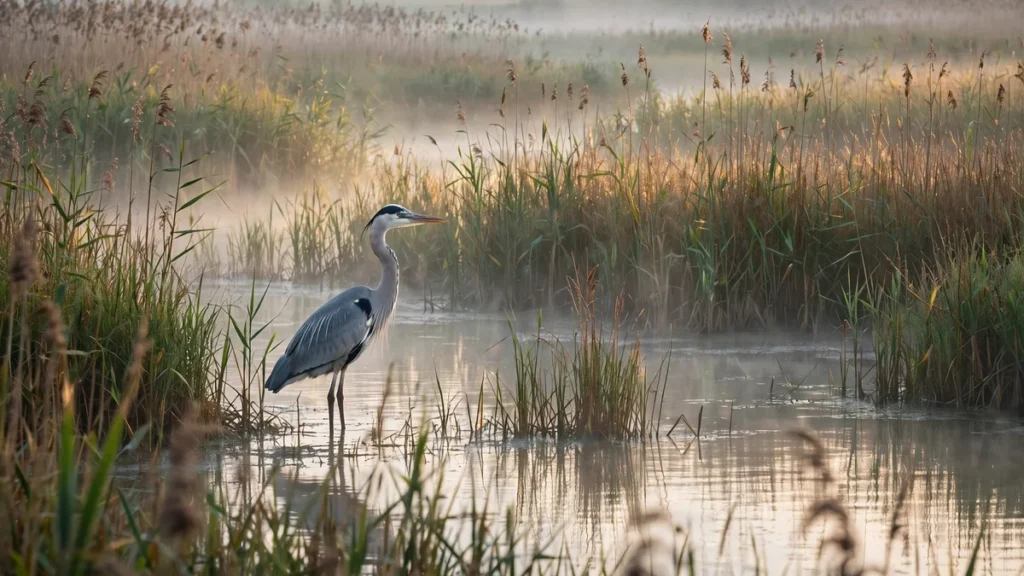
- Herons and bitterns hunt by standing still in the shallows, waiting for a fish or frog to come within reach.
- Many wetland animals live two lives, one in the water and one on land, like frogs and dragonflies.
- Wetlands are found on every continent, in marshes, reedbeds, fens, estuaries and floodplains.
Mammals of the marsh
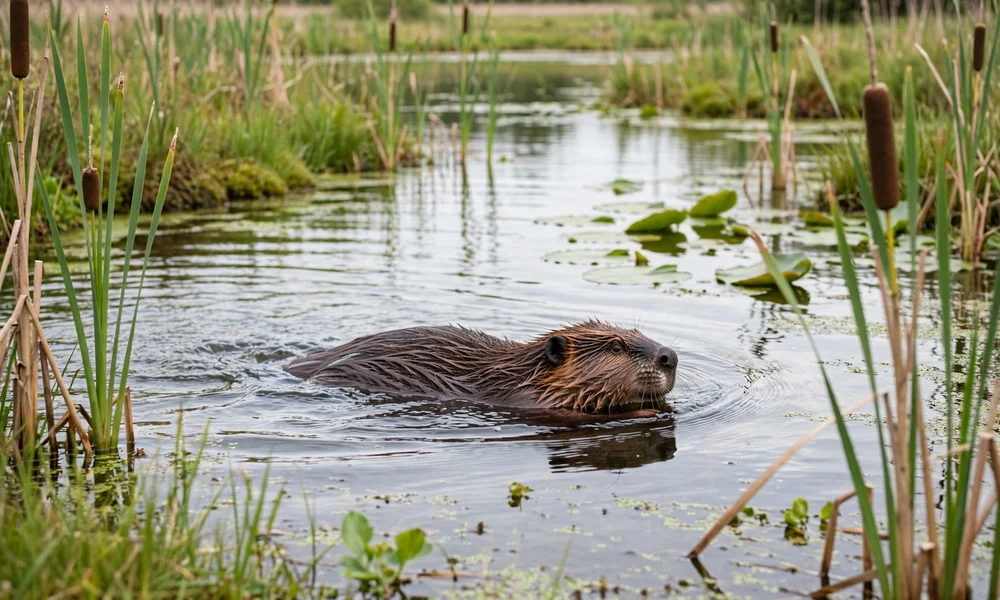
The Eurasian beaver is the great builder of the wetlands. It fells small trees with its strong teeth and uses the branches to build dams across slow streams, and behind each dam a pond forms. The pond gives the beaver a safe place to swim, a store of branches to eat through the winter, and a lodge of sticks and mud with an entrance under the water, where no land predator can follow. Beavers change the whole wetland around them, and frogs, fish, dragonflies and water birds all make use of the ponds they create.
The otter is the most graceful hunter of the marsh. It has a long, sleek body, webbed feet and a thick tail that works like a rudder, and it can hold its breath for a long while as it chases fish through the reeds. Otters eat fish, frogs, crabs and water birds, and they play as much as they hunt, sliding down muddy banks and chasing each other through the water. Like the ocean animals that hunt in the open sea, otters are at home in the water, but they still need dry banks and hollow logs to rest and raise their young.
Smaller mammals live in the reeds and on the wet meadows around the marsh. Water voles swim through the ditches and nibble water plants at the edge, and water shrews hunt underwater, using tiny bubbles to find prey in the dark. Larger animals come to the floodplains to feed too: wild boar root in the soft mud for roots and grubs, and deer come at dawn to drink and eat the fresh grass.
Birds of the reedbeds
The grey heron is the classic bird of the wetlands, tall, grey and patient, standing still in the shallows with its neck folded back and its yellow bill ready. When a fish or a frog swims close, the neck shoots out like a spear and the prey is caught in a single strike. Herons nest in tall trees near the water, often in colonies, and they fly with slow, heavy wingbeats.
The bittern is a heron that hides. It is a brown, streaked bird that lives deep in the reedbeds, and when startled it points its bill straight up and sways gently, looking exactly like a clump of reeds. Its call is a deep, booming sound that carries far across the marsh on a still evening. Bitterns are shy and hard to see, and a glimpse of one in the reeds is a treat for any birdwatcher.
Other wetland birds are easier to spot. The kingfisher is a small, bright bird with a blue back and an orange chest that dives from a low branch to catch small fish. The reed warbler sings its chattering song from deep in the reeds, and the marsh harrier quarters low over the marsh, hunting voles and young birds. Ducks, geese and swans gather on the open water, and in winter many wading birds feed on the mud of the estuaries, probing for worms and shellfish.
Frogs, fish and insects
Frogs are the voice of the wetland. The common frog lays its jelly-like spawn in shallow ponds in spring, and the tadpoles feed on algae before growing legs and leaving the water as small frogs. The marsh frog is larger and greener, and it calls loudly from the edge of the reeds on warm evenings. Frogs need both water and land: water for their eggs and tadpoles, and damp grass and logs where the adults can hunt insects and hide.
Fish are the hidden life of the wetland. Carp, pike, perch and roach all live in the slow water of marshes and floodplains, and the pike is the great hunter among them, lying still among the reeds before darting out to catch smaller fish. Eels travel from the sea to live in the marshes for years, and the mudfish of New Zealand can survive in damp mud when a pond dries out in summer. Like the nocturnal animals of the forest, many wetland fish are most active at dawn and dusk, when the light is low.
Dragonflies are the jewels of the wetland. They spend most of their lives underwater as nymphs, hunting tadpoles and small fish, then climb a reed stem, split their skin and emerge as winged adults with bright blue, green or red bodies. Adult dragonflies are fast, fierce hunters, catching flies and midges in the air, and they can hover, dart and fly backwards. Damselflies are their slimmer cousins, resting with wings folded back along their bodies. Water boatmen, pond skaters and diving beetles fill the ponds below them, a whole small world on the surface of the water.
How wetland animals survive
Wetland animals have to cope with water that rises and falls, and with ground that is sometimes dry and sometimes under water. Many are good swimmers, with webbed feet, waterproof fur or feathers, and bodies shaped for moving through water. Beavers and otters have thick fur that traps air and keeps them warm, and water birds have oily feathers that shed the water, so they can swim in cold water without getting chilled.
Food in a wetland changes with the seasons, and wetland animals change with it. In spring the ponds are full of frog spawn and young fish, and the herons and bitterns hunt in the shallows. In summer the air is full of dragonflies and midges, and the warblers and swallows catch them on the wing. In autumn and winter, ducks, geese and wading birds arrive in flocks to feed on the mud and the seeds of the reeds, and the beavers settle into their lodges with their stores of branches.
Hiding is just as important as hunting in a wetland. The reeds give cover to bitterns, warblers and water voles, and the muddy water hides fish and frogs from herons and otters. Many wetland animals are coloured to match the reeds and the mud: brown, grey and green, with streaks and spots that break up their shape. Like the forest animals that hide among the trees, wetland animals survive by blending in and by staying still.
Wetland animals and people
People have always lived close to wetlands, and wetland animals have always been part of that life. Beavers were once hunted for their fur and for the scent glands they carry, and they vanished from many countries before being brought back to rivers and marshes in recent years. Herons and bitterns were once hunted too, but today they are protected, and the return of the bittern to restored reedbeds is one of the great success stories of wetland conservation.
Wetlands are under pressure from draining, building, farming and pollution, and when a marsh is drained its animals have nowhere to go. The good news is that wetlands can be restored: ponds can be dug, reedbeds planted, and rivers allowed to flood their meadows again, and the animals return quickly. Protecting wetland animals means protecting the whole wetland: the clean water, the reeds, the mud and the open spaces birds need to feed and rest. A marsh that looks quiet at noon can be full of life at dawn, and it is worth keeping.
| Animal | Type | Where it lives | Best-known fact |
|---|---|---|---|
| Eurasian beaver | Mammal | Rivers and marshes of Europe and Asia | Builds dams that create ponds |
| Otter | Mammal | Rivers, marshes and coasts worldwide | Sleek swimmer that hunts fish |
| Grey heron | Bird | Wetlands of Europe, Asia and Africa | Strikes like a spear at fish |
| Bittern | Bird | Reedbeds of Europe and Asia | Hides by standing like a reed |
| Kingfisher | Bird | Rivers and ponds of Europe and Asia | Dives for small fish |
| Common frog | Amphibian | Ponds and damp grass in Europe | Lays jelly-like spawn in spring |
| Pike | Fish | Slow rivers and marshes of Europe | Lies still, then darts at prey |
| Dragonfly | Insect | Ponds and marshes worldwide | Flies backwards and hovers |
Wetland animals checklist
- Start with the builders and hunters: beaver, otter, water vole and water shrew.
- Remember the birds of the reeds: grey heron, bittern, kingfisher, reed warbler and marsh harrier.
- Do not forget the frogs and fish: common frog, marsh frog, pike, carp and eel.
- Add the insects: dragonflies, damselflies, pond skaters and diving beetles.
- Check the facts: a beaver’s dam creates a pond, and a bittern hides by standing like a reed.
- Use this guide for quizzes, school projects and trips, and add your own favourites.
Frequently asked questions
What animals live in wetlands?
Wetlands are home to beavers, otters, herons, bitterns, kingfishers, frogs, fish, dragonflies and many kinds of duck, goose and wading bird. The mix changes with the kind of wetland, but marshes, reedbeds, fens, estuaries and floodplains are all full of life.
What is the difference between a wetland and a swamp?
A swamp is one kind of wetland, and it is usually full of trees standing in water. Wetlands also include marshes, reedbeds, fens, estuaries and floodplains, which may have few trees or none at all. Like the swamp animals of wooded swamps, wetland animals live where land and water meet, but they are found in many more kinds of wet ground.
Why are beavers important to wetlands?
Beavers build dams that turn slow streams into ponds, and those ponds become homes for frogs, fish, dragonflies and water birds. Their dams also slow the water down, hold it in the land during dry weather, and create new marshy ground.
How do herons catch fish?
Herons stand still in the shallows, waiting for a fish or a frog to come within reach, and then they shoot their neck out like a spear and catch it with their bill. They hunt by patience, and they can stand without moving for a long time.
Do frogs live in wetlands all year?
Frogs need water in spring for their eggs and tadpoles, and damp ground for the rest of the year. In cold weather many frogs hide under logs or in the mud at the bottom of a pond until spring.
What is the best time to see wetland animals?
Dawn and dusk are the best times, when herons hunt in the shallows, otters swim through the reeds and frogs begin to call. Spring is best for frog spawn and birdsong, and winter is best for ducks, geese and wading birds on the estuaries.
Conclusion
Wetlands look quiet from a distance, but they are among the busiest places on earth for wildlife. Beavers build, herons wait, frogs call, dragonflies hunt, and every reed and channel holds another life.
Visit a marsh at dawn, stand still by the reeds, and watch: the wetland will show you its animals one by one, and you will see why this meeting place of land and water is worth protecting.