Ocean animals are the creatures that live in the sea, from the blue whale, the largest animal that has ever lived, to the tiny krill that feed it. If you are wondering what lives in the ocean, the short answer is this: more than 200,000 known species, spanning whales, sharks, dolphins, octopuses, fish, jellyfish, crabs, corals and countless creatures of the deep, each adapted to a world without solid ground.
This guide covers the best-known ocean animals, grouped by where they live and how they make a living — the ones that matter most, and what they show about life in the sea.
Key takeaways
- Ocean animals include whales, sharks, dolphins, octopuses, reef fish, jellyfish and deep-sea creatures — over 200,000 known species.
- The blue whale is the largest animal that has ever lived, and it feeds almost entirely on tiny krill.
- Sharks, dolphins and whales are all top predators, but they hunt in very different ways.
- Coral reefs support a quarter of all ocean species, despite covering a tiny fraction of the sea floor.
- The deep sea is the largest habitat on earth, and most of its animals are still unknown to science.
Whales and dolphins
Whales and dolphins are mammals, not fish, and they must come to the surface to breathe air. The blue whale is the largest of them all, and the largest animal that has ever lived, growing to around 30 metres long. It eats krill, tiny shrimp-like animals, filtering them from the water with plates of baleen instead of teeth. A blue whale can eat several tonnes of krill in a single day during the feeding season.
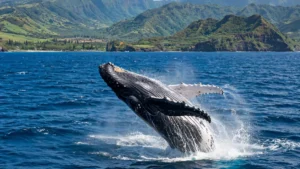
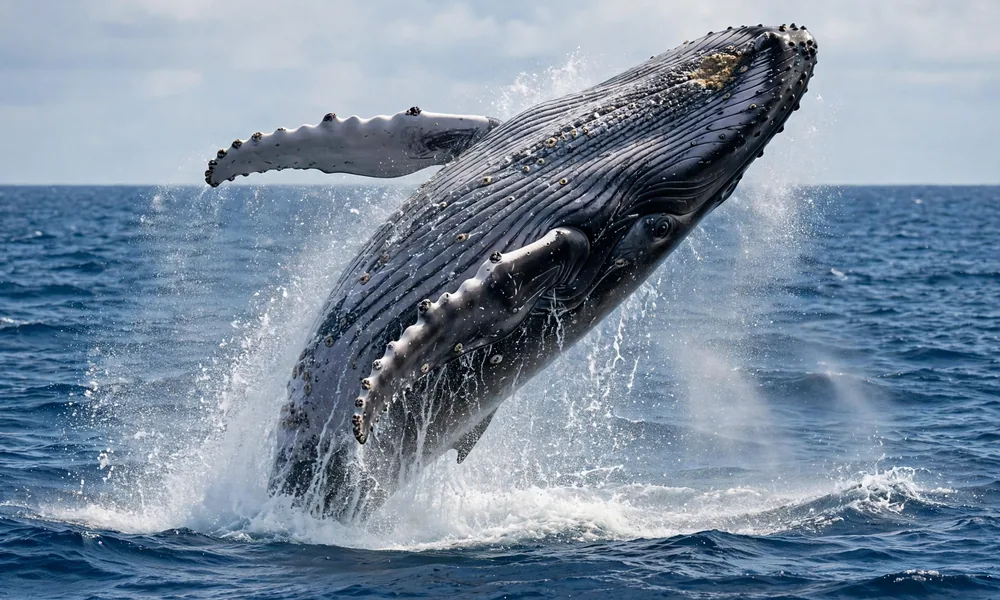
The humpback whale is the most famous singer of the sea. Males produce long, complex songs that can last for hours, and the songs change from year to year. Humpbacks are also famous for breaching, leaping clear of the water and crashing back down. They migrate further than almost any other mammal, travelling between cold feeding grounds and warm breeding waters each year.
Dolphins are smaller, faster relatives of the whales. The bottlenose dolphin is the best known, a clever, social animal that lives in groups called pods, hunts fish in teams and communicates with whistles and clicks. Orcas, or killer whales, are the largest dolphins of all, and they are among the most powerful hunters in the sea, taking seals, fish and even other whales. The beluga whale, the white whale of the Arctic, is known for its pale colour, its round head and its wide range of calls, which have earned it the name the canary of the sea.
Sharks and rays
Sharks have been swimming in the oceans for far longer than humans have walked on land, and there are more than 500 species. The great white shark is the most famous, a powerful hunter that can grow to six metres long and take seals, sea lions and large fish. Its teeth are replaced throughout its life, so a broken tooth is never a problem for long.
Not all sharks are hunters of large prey. The whale shark is the largest fish in the world, growing to twelve metres or more, yet it feeds on plankton, tiny drifting animals and plants, filtering them from the water as it swims slowly near the surface. The basking shark, the second-largest fish, feeds the same way, and is a gentle giant that poses no danger to people. The hammerhead shark is easy to recognise by its wide, flattened head, which gives it a wider field of vision and helps it find rays buried in the sand.
Rays are close relatives of sharks, with flattened bodies and wide, wing-like fins. The manta ray is the largest, with a wingspan that can reach seven metres, and it glides through open water feeding on plankton. Stingrays live on the sea floor, half-buried in sand, and feed on shellfish and small fish. Like the predator animals of the land, sharks and rays sit at the top of the food chain in their part of the sea, and they keep the numbers of the animals below them in balance.
Octopuses, squid and other clever hunters
The octopus is one of the most intelligent animals in the sea. It has three hearts, blue blood and eight arms lined with suckers, and it can change the colour and texture of its skin in a fraction of a second, vanishing against rock or coral. Octopuses are escape artists, squeezing through gaps far smaller than their bodies, and they solve problems, open jars and remember the layout of their dens. They live short lives, usually only a year or two, and the female guards her eggs until they hatch, then dies.
Squid are the fast swimmers of the cephalopod family, jetting through the water by forcing water out of their bodies. The giant squid is one of the largest invertebrates on earth, with eyes the size of dinner plates, the largest eyes of any animal, and it lives in the deep sea, where it is hunted by sperm whales. The colossal squid is even heavier, and it carries hooks on its arms. Cuttlefish are close relatives, and they are masters of camouflage too, flashing patterns across their skin to communicate and to hide.
Fish of the reef and the open sea
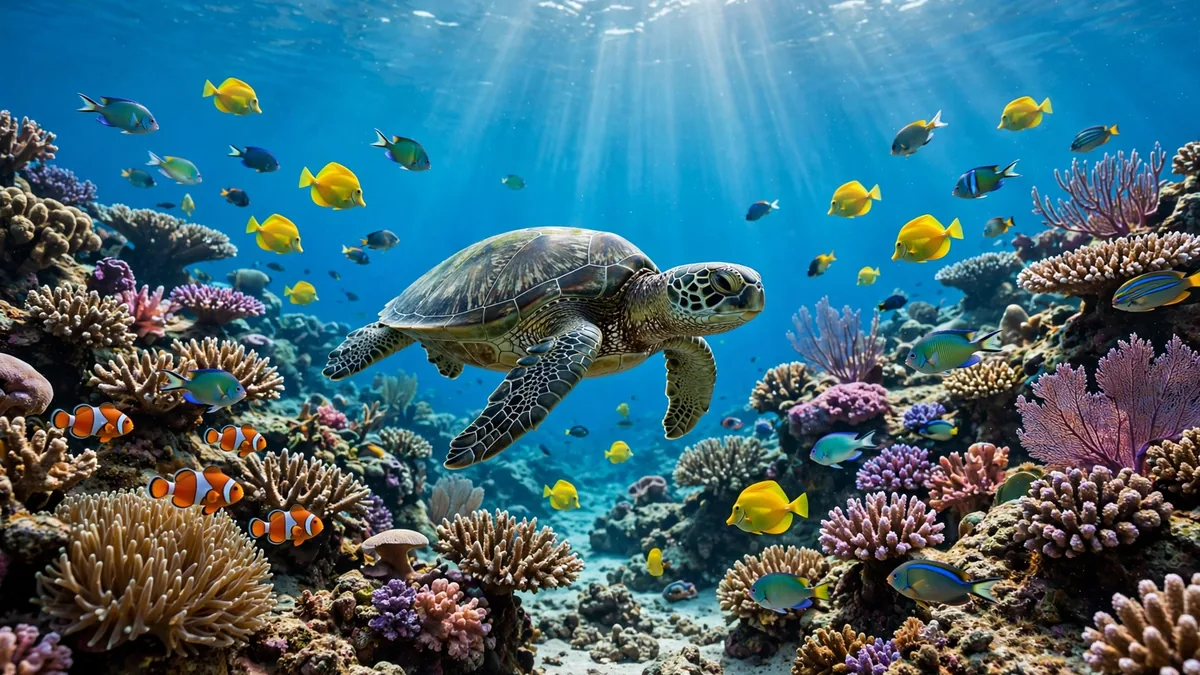
Coral reefs are the rainforests of the sea. A reef is built by tiny animals called coral polyps, which lay down limestone skeletons over centuries, and the structure they build supports a huge variety of fish. Clownfish live among the stinging tentacles of sea anemones, protected by a layer of mucus, and they defend their anemone fiercely. Parrotfish scrape algae from the coral with beak-like teeth, and their grazing keeps the reef healthy. The jellyfish drifts through the same waters, a creature with no brain and no heart, pulsing through the water on currents.
The open sea, far from the reef, belongs to the fast swimmers. The bluefin tuna is one of the fastest fish in the sea, and it migrates across whole oceans, from the Atlantic to the Mediterranean to spawn. The sailfish is faster still, raising a tall fin like a sail as it chases schools of smaller fish. Flying fish escape predators by leaping from the water and gliding on stiff fins, sometimes for hundreds of metres. The ocean sunfish, or mola, is the heaviest bony fish in the world, a strange, disc-shaped animal that basks at the surface and dives deep to feed on jellyfish.
Life in the deep sea
The deep sea begins where sunlight fades, and most of it is dark, cold and under enormous pressure. Yet it is the largest habitat on earth, and it is full of life. The anglerfish is its most famous resident, a fish with a glowing lure on its head that draws prey close in the blackness. The blobfish lives on the deep sea floor off Australia, a pale, jelly-like fish that looks very different in its own habitat, where the pressure holds its shape, than it does when brought to the surface.
Other deep-sea animals have their own solutions to the dark. The vampire squid drifts in the oxygen-poor depths, turning itself inside out to escape danger, and the gulper eel has a huge mouth and a tiny body, able to swallow prey larger than itself. Lanternfish, which rise towards the surface at night to feed and sink again by day, are among the most numerous fish in the ocean, and they are a vital food source for whales, dolphins and larger fish.
Ocean animals and people
People have always depended on the sea, for food, for trade and for wonder, and ocean animals have always shaped human life. Whale watching is now a major activity in many coastal countries, and the recovery of the humpback whale from near-extinction is one of the great conservation stories. The blue whale, hunted almost to extinction before whaling was banned, has recovered slowly, and its return is a sign that protection can work when it is enforced.
Not every story is a recovery. Sharks are killed in large numbers for their fins, and many species are now in decline. Coral reefs are under pressure from warming seas, which bleach the coral and kill the animals that depend on it. Plastic waste, from bags to fishing nets, injures and kills sea animals, from turtles that mistake bags for jellyfish to seals tangled in nets. Like the tundra animals of the far north, ocean animals are sensitive to changes in their habitat, and small changes in temperature or chemistry can have large effects.
There is still much to learn. Scientists estimate that most ocean species have not yet been described, especially in the deep sea, where new animals are found on almost every expedition. Protecting the sea means protecting places as well as species: marine reserves, where fishing is limited or banned, let fish grow larger and more numerous, and the benefits spill over into the waters around them.
| Animal | Type | Where it lives | Best-known fact |
|---|---|---|---|
| Blue whale | Mammal | Oceans worldwide | Largest animal ever |
| Humpback whale | Mammal | Oceans worldwide | Sings long, complex songs |
| Great white shark | Fish | Coastal seas worldwide | Top predator, replaces its teeth |
| Whale shark | Fish | Tropical oceans | Largest fish, eats plankton |
| Bottlenose dolphin | Mammal | Warm and temperate seas | Hunts in pods, highly social |
| Octopus | Cephalopod | Oceans worldwide | Changes colour and texture instantly |
| Clownfish | Fish | Warm Pacific and Indian reefs | Lives among stinging anemones |
| Anglerfish | Fish | Deep sea | Lures prey with a glowing light |
Ocean animals checklist
- Start with the giants: blue whale, humpback whale, whale shark and great white shark.
- Remember the clever ones: octopus, dolphin, cuttlefish and orca.
- Do not forget the reef: clownfish, parrotfish, cleaner wrasse and seahorse.
- Add the deep sea: anglerfish, blobfish, vampire squid and lanternfish.
- Check the facts: whales and dolphins are mammals, sharks are fish, and octopuses are neither.
- Use this guide for quizzes, school projects and trips, and add your own favourites.
Frequently asked questions
What is the largest ocean animal?
The blue whale is the largest ocean animal, and the largest animal that has ever lived. It grows to around 30 metres long, weighs up to 200 tonnes, and feeds almost entirely on tiny krill, filtered from the water with baleen.
Are whales fish?
No. Whales and dolphins are mammals. They breathe air through a blowhole, give birth to live young and feed their calves with milk. They evolved from land mammals that returned to the sea, and they must come to the surface to breathe.
What is the fastest fish in the sea?
The sailfish is generally regarded as the fastest fish, reaching very high speeds in short bursts as it chases schools of smaller fish. The bluefin tuna is also among the fastest.
How deep does the ocean go?
The deepest part of the ocean is the Mariana Trench in the Pacific, which is nearly 11 kilometres deep. Life exists even there, though the animals of the trench are few and small.
Do octopuses really have three hearts?
Yes. Two pump blood to the gills, and one pumps it to the rest of the body. Its blood is blue, because it uses a copper-based molecule to carry oxygen instead of the iron-based one in our blood.
What lives on a coral reef?
A coral reef supports fish, sharks, rays, turtles, octopuses, crabs, shrimps and sea stars. Reefs cover a tiny fraction of the sea floor, yet they support a quarter of all ocean species.
Conclusion
The ocean holds more variety of life than any other place on earth. Pick a favourite, learn its story, and the sea will never look empty again.
Visit the coast, watch the water, and remember that beneath the surface there is a world as rich as any on land.