Europe animals range from European bison in the ancient forests of Poland to brown bears in the mountains of Romania, and the continent holds some of the best large-mammal watching in the temperate world. If you are wondering which animals live in Europe and where to see them, the short answer is this: bison, wolves, lynx and brown bears survive in the forests and mountains, moose, reindeer and wild boar roam the north, and white-tailed sea eagles, puffins and griffon vultures fill the coasts and cliffs.
Europe is one of the best places in the world to watch large mammals, because so much of the continent is still forest, mountain, wetland and coastline. This guide covers the species you are most likely to meet, where each one lives and the best seasons to see them.
Key takeaways
- Europe’s most iconic land animals are the European bison, grey wolf, Eurasian lynx, brown bear, moose, red deer and wild boar.
- The European bison is Europe’s largest land mammal, and the Bialowieza Forest is the best place in the world to see it in the wild.
- The Iberian lynx is one of the rarest cats in the world, and it lives only in Spain and Portugal, where its numbers are slowly recovering.
- White-tailed sea eagles, griffon vultures and Atlantic puffins make Europe one of the best birdwatching continents in the world.
- Spring and autumn are the best seasons for most wildlife watching, and early morning and late evening are the best times of day for large mammals.
What makes Europe’s wildlife special
Europe stretches from the Arctic tundra of northern Norway to the Mediterranean islands of the south, and its wildlife reflects that whole journey. Species from the boreal forests of Scandinavia, the mountains of the Alps and the Carpathians, the wetlands of the Danube Delta and the dry scrub of the Mediterranean all live within one continent.
Honesty matters here: Europe has very few true endemics among its large mammals, and the Iberian lynx, which lives only in Spain and Portugal, is the best-known exception. What it has instead is something rarer in the modern world — large, connected forests and mountains where big animals still live in the wild, after centuries of hunting and habitat loss.
That variety comes from the landscape itself. Europe holds the boreal forests of the north, the ancient woodlands of the east, the high Alps and Pyrenees, the great Danube Delta and the long Atlantic and Mediterranean coasts, so animals from many different habitats can live within one continent. Like the forest animals of northern Europe, many European species depend on large, quiet woodland, and the Bialowieza Forest and the Carpathian Mountains are among the wildest corners of the continent.
The great mammals of Europe
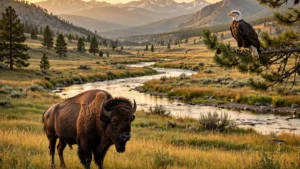
The European bison, or wisent, is Europe’s largest land mammal and the animal most visitors hope to see. Bison were brought back from the edge of extinction in the last century, and the free-roaming herds of the Bialowieza Forest, on the border of Poland and Belarus, are now the best-known in the world. Bison graze in forest clearings and meadows, and they are most often seen in the early morning or late evening.
Among the predators, the grey wolf lives in the forests and mountains across much of the continent, from Spain to Romania, hunting deer and wild boar in packs. The Eurasian lynx is rarer and shyer, hunting roe deer in the forests of the Carpathians and the Alps. Brown bears live in the Carpathians, the Dinaric Alps and the Cantabrian Mountains of northern Spain, and they are most often seen in spring, when they leave their dens.
Moose are the largest deer in Europe, spread across the forests and marshes of Scandinavia and the Baltic states, and most active at dawn and dusk. Red deer live in forests across the continent, reindeer graze the tundra of the far north, and wild boar root through the woodland floor in family groups.
One animal should not be on any visitor’s list as a certainty: the Iberian lynx. It survives in small numbers in a few protected areas, and no honest guide can promise a sighting. The same is true of the Arctic fox, which is now very rare in Scandinavia. Both are reminders of how much of Europe’s wildlife depends on large, undisturbed habitat.
Birds of Europe
The white-tailed sea eagle is Europe’s largest bird of prey, and it is one of the great conservation recoveries of the continent. It breeds along the coasts of Norway and Scotland, around the big lakes of Poland and Germany, and along the Danube Delta, and it is often seen from a boat or a lakeside hide.
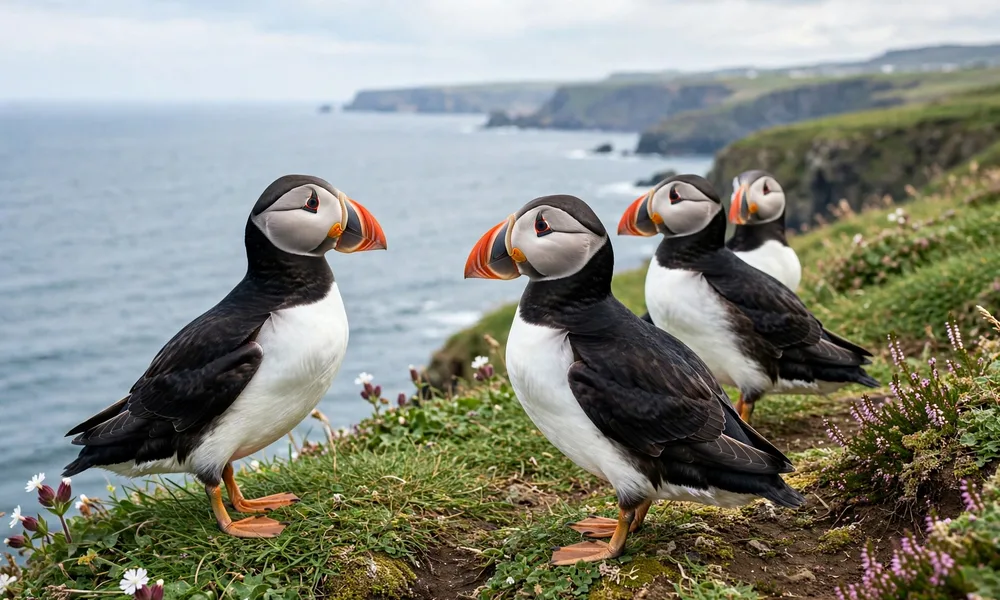
The Atlantic puffin is one of Europe’s best-loved birds, nesting in large colonies on the cliffs of Iceland, Norway, Scotland and Ireland. The puffins come ashore in spring to raise their young in burrows, and they are most often seen in the early morning, when they fly out to sea to fish.
Europe’s position on the migration routes between Africa and the Arctic makes it one of the best birdwatching continents in the world. In spring and autumn, huge numbers of birds pass through, from white storks and cranes to eagles and buzzards. The Danube Delta, on the Black Sea coast, is one of the finest birdwatching sites in Europe, with pelicans, herons and egrets.
Rivers, coasts and smaller wildlife
Europe’s rivers hold their own wildlife, and the beaver is the most visible of all. Beavers have returned to many European rivers and lakes, and their dams now shape wetlands for frogs, dragonflies and water birds. Otters hunt along the same rivers, and they are most often seen at dawn and dusk in Scotland, Ireland and the Danube Delta.
Along the Atlantic coast, grey seals haul out on sandbanks and rocky islets, and harbour porpoises are regular visitors to the coastal waters of the north. The seals are best seen from a boat in summer, and the coasts of Scotland and the Farne Islands are among the best places to look for them.
Smaller mammals are everywhere in Europe, though they are often overlooked. Red squirrels, pine martens and dormice live in the forests, and the Alpine ibex, with its huge curved horns, climbs the rocky slopes of the Alps. Like the wetland animals of other European countries, the frogs, dragonflies and water birds of the Danube Delta depend on clean, undisturbed water.
| Species | Where to look | Best season | How likely is a sighting |
|---|---|---|---|
| European bison | Bialowieza Forest clearings and meadows | All year, early morning and evening | Good with a guide |
| Brown bear | Carpathian Mountains and the Cantabrians | May to October | Low, needs a guide |
| Grey wolf | Forests of the Carpathians and the Cantabrians | Winter, dawn and dusk | Low |
| Moose | Forests and marshes of Scandinavia | Spring and autumn, dawn and dusk | Fair |
| White-tailed sea eagle | Norwegian coast, Scottish isles and the Danube | All year | Good from a boat or hide |
| Atlantic puffin | Cliffs of Iceland, Norway and Scotland | April to August | Good in season |
| Iberian lynx | Scrub of southern Spain and Portugal | Year-round | Very low |
Best seasons for wildlife watching
Spring is the finest season. The white storks return to their nests, the puffins come ashore to breed, the bears leave their dens, and the wetlands fill with migrating birds. It is also the most sensitive season, so keep to paths and give every animal more space than you think it needs.
Summer is the easiest season for bison, moose and puffins. The days are long, and the animals are out in the clearings at dawn and dusk. Autumn brings the deer rut, when red deer stags are at their most visible and vocal, and bears feed hard on berries and nuts before they den for the winter.
In any season, early morning is the best time for large mammals, and late afternoon is the best time for sea eagles hunting over the water.
Staying safe around Europe’s wildlife
Europe’s large animals are usually calm, but they deserve respect. Keep your distance from bison, bears, wolves and moose, never approach a moose calf or walk between a cow and her calves, and never try to feed or touch any wild animal. If you meet a bear, back away slowly, speak calmly and never run. Moose on the road are a real danger at dawn and dusk, so slow down on forest roads and watch the verges.
On the coast, keep away from marked seal haul-outs, avoid bright lights on turtle nesting beaches at night, and never handle a turtle or a hatchling. In the mountains, carry water and sun protection in summer, and tell someone where you are going before a long walk. The wolves and lynx of the forests are shy and avoid people, but they should always be watched from a distance.
Europe wildlife watching checklist
- Book a local guide for bison, bears and wolves — they know where the animals are.
- Go out at dawn or dusk for mammals, and plan puffin and Danube Delta trips for April to June.
- Bring binoculars, warm layers and waterproofs, even in summer — mountain weather changes fast.
- Keep at least 50 metres from seals, nesting birds and grazing deer, and far more from bison, bears, moose with calves and wolves.
- Never feed wild animals, and never use food or calls to lure them closer for a photograph.
- On turtle beaches, keep away from marked nests and avoid bright lights at night during the nesting season.
- Leave no trace: take your rubbish home and keep to marked paths in sensitive habitats.
Frequently asked questions
What is the most famous animal in Europe?
The European bison is the most famous, and the Bialowieza Forest is the best place in the world to see it in the wild. The brown bear is the largest predator, and the Atlantic puffin is the best-loved bird.
Are there bears and wolves in Europe?
Yes. Brown bears live in the Carpathian Mountains, the Dinaric Alps and the Cantabrian Mountains, and grey wolves live in the forests and mountains across much of the continent. Both are shy and avoid people.
Can I see an Iberian lynx in Europe?
Not in any realistic sense. The Iberian lynx survives in small numbers in a few protected areas of Spain and Portugal, and no honest guide can promise a sighting. Look for the European bison, brown bear and Eurasian lynx instead.
When is the best time to see puffins in Europe?
April to August is the best time, when Atlantic puffins come ashore to breed on the cliffs of Iceland, Norway, Scotland and Ireland. Go early in the morning for the best light and the most activity.
Can I see bison in Europe?
Yes. European bison live in the Bialowieza Forest on the border of Poland and Belarus, and they are most often seen in the early morning or late evening, when the herds come out into the clearings to graze. A local guide greatly improves the odds.
How is this guide different from the Africa animals guide?
This guide covers Europe, a temperate continent of forest, mountain and coast, with bison, wolves, lynx, bears and puffins. The Africa animals guide covers a much larger, warmer continent, with lions, elephants, gorillas and the great migration in savanna and rainforest Europe does not have.
Conclusion
Europe’s wildlife rewards patience: European bison in the ancient forest of Bialowieza, brown bears in the Carpathians, white-tailed sea eagles on the Norwegian coast and Atlantic puffins on the cliffs of Iceland are all within reach if you plan around the seasons.
The next step is to pick one species and one season — a dawn bison walk in Bialowieza, a spring birding trip to the Danube Delta, or a summer visit to the cliffs of Iceland for puffins.