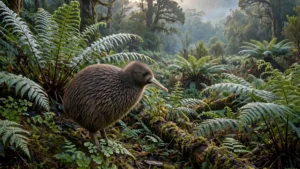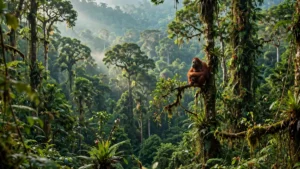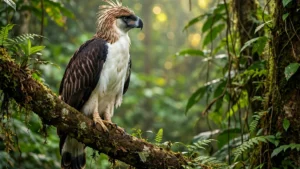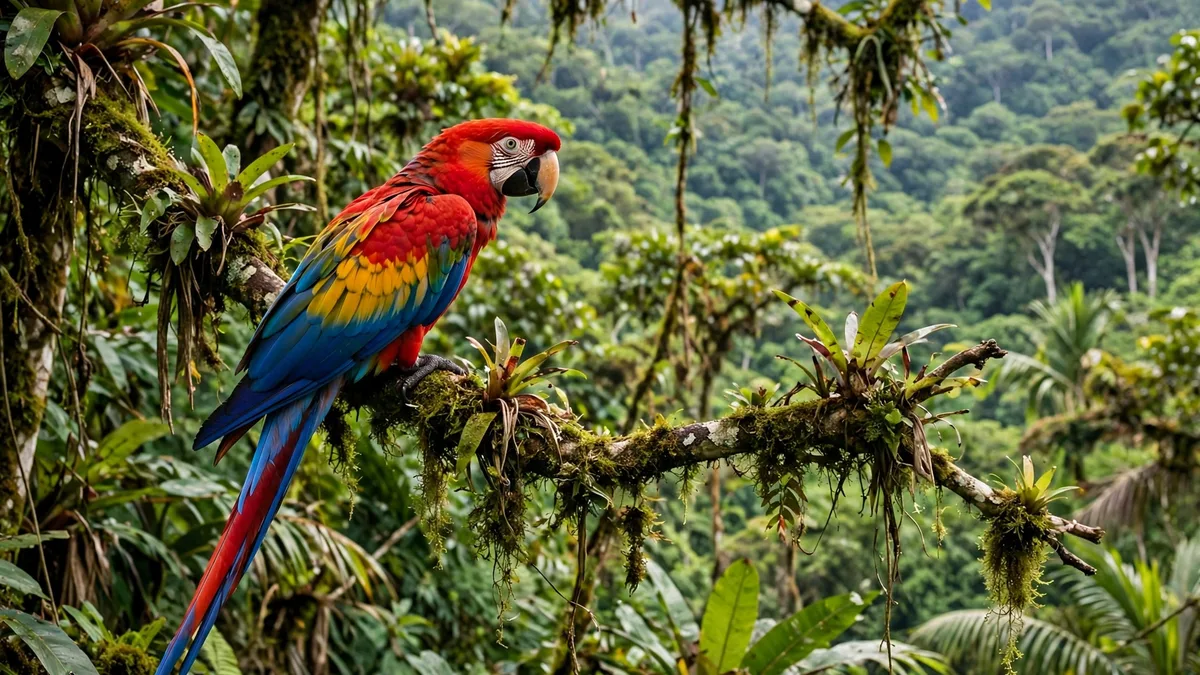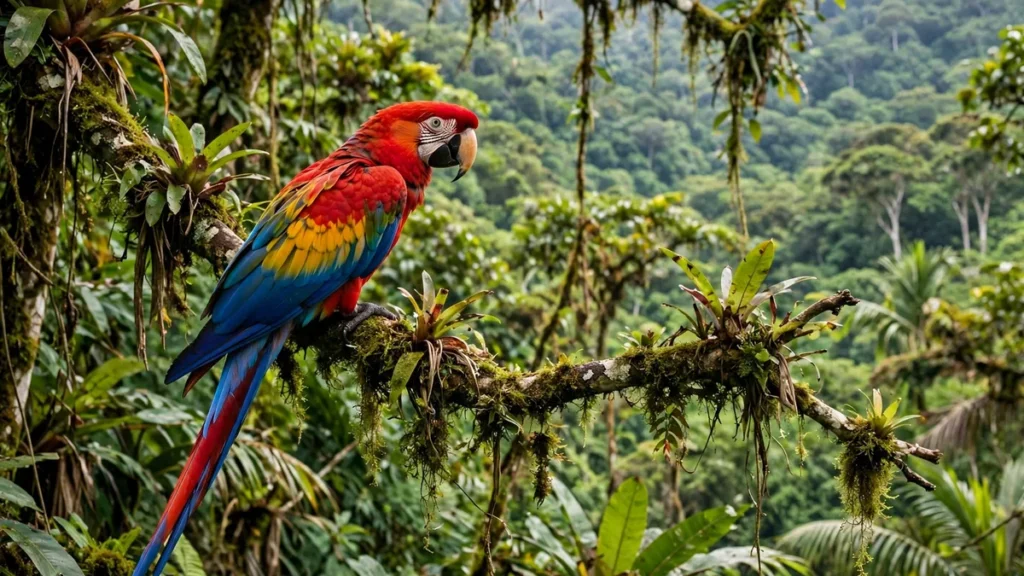
Costa Rica animals range from sloths hanging in the rainforest canopy to scarlet macaws flying over the Pacific coast, and the country holds some of the richest wildlife in Central America. If you are wondering which animals live in Costa Rica and where to see them, the short answer is this: sloths, monkeys, toucans and the resplendent quetzal live in the forests, poison dart frogs and red-eyed tree frogs live in the lowland rainforest, and leatherback turtles nest on the beaches of Tortuguero and the Nicoya Peninsula.
Costa Rica is one of the best places in the world to watch tropical wildlife, because so much of the country is protected rainforest, cloud forest, wetland and coast. This guide covers the species you are most likely to meet, where each one lives and the best seasons to see them.
Key takeaways
- Costa Rica’s most iconic land animals are the three-toed sloth, the white-faced capuchin, the mantled howler monkey, the scarlet macaw and the resplendent quetzal.
- The jaguar is Costa Rica’s largest predator, but it is rare and shy, so no honest guide should promise a sighting.
- Leatherback, green and hawksbill turtles nest on the beaches of Tortuguero and the Nicoya Peninsula in different seasons.
- Poison dart frogs, red-eyed tree frogs and glass frogs make Costa Rica one of the best countries in the world for amphibians.
- The dry season, from December to April, is the best time for most wildlife watching, and early morning is the best time of day for forest animals.
What makes Costa Rica’s wildlife special
Costa Rica sits on the narrow bridge of land between North and South America, and its wildlife reflects both continents. Species from the rainforests of South America meet species from the dry forests of Mexico and Central America here, between the Caribbean coast in the east and the Pacific in the west.
Honesty matters here: Costa Rica has many endemic species, but few large mammals live only here. What it has instead is an extraordinary density of life: the country covers a tiny fraction of the world’s land, yet it holds around five per cent of the world’s species. Around a quarter of the country is protected in national parks and reserves, and that protection is the reason so much wildlife survives.
That variety comes from the landscape itself. Costa Rica holds lowland rainforest, high cloud forest, dry forest, wide wetlands, mangroves and two long sea coasts, so animals from many different habitats can live within one small country. Like the rainforest animals of other tropical countries, many Costa Rican species depend on large, quiet woodland, and Corcovado National Park on the Osa Peninsula and the cloud forests of Monteverde are among the wildest corners of the country.
The great mammals of Costa Rica
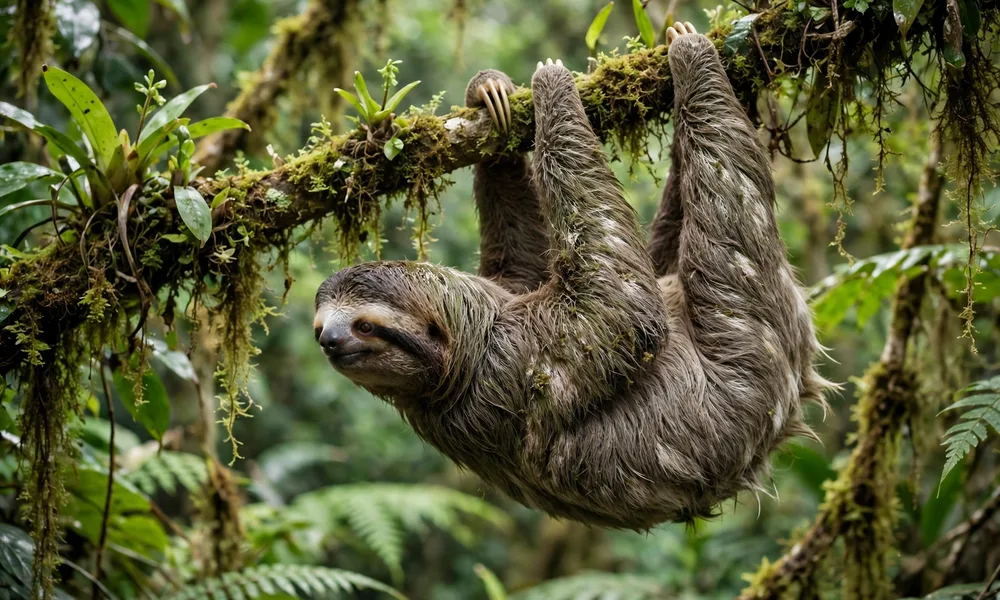
The three-toed sloth is Costa Rica’s most famous animal, and one of the easiest to see. Sloths hang in the trees of Manuel Antonio, Tortuguero and the Osa Peninsula, moving so slowly that algae grows in their fur, turning them green.
Among the predators, the jaguar is the largest cat in the Americas, and it still lives in the forests of Corcovado and Tortuguero, but it is rare, nocturnal and almost never seen by visitors. The ocelot and the puma are also present, and both are shy and hard to find. The white-faced capuchin is the monkey most visitors meet first, travelling in noisy troops through the trees, while the mantled howler monkey announces the dawn with deep, roaring calls that carry for kilometres through the forest.
Baird’s tapir is Costa Rica’s largest land mammal, a shy forest animal that lives in the lowland rainforest of Corcovado and Tortuguero. It is endangered and rarely seen, but its tracks and droppings are common along forest trails.
One animal should not be on any visitor’s list: the jaguar. It survives in Costa Rica, but in small numbers, and no honest guide can promise a sighting. The same is true of the giant anteater, which is now very rare in the country. Both are reminders of how much of Costa Rica’s wildlife depends on large, connected forest.
Birds of Costa Rica
The resplendent quetzal is Costa Rica’s most famous bird, a dazzling green bird with a crimson breast and a tail that streams behind the male for more than half a metre. It lives in the cloud forests of Monteverde and the Talamanca mountains, feeding on wild avocados, and it is best seen in the breeding season, from February to May, when the males display at their nest holes.
Scarlet macaws are the great parrots of the Pacific coast, flying in pairs over the forests of the Osa Peninsula and Carara National Park with loud, harsh calls. Toucans are just as striking: the keel-billed toucan, with its rainbow bill, and the chestnut-mandibled toucan are common in the lowland forests, and they are often seen from a lodge balcony at dawn.
Costa Rica’s position on the migration routes between North and South America makes it one of the best birdwatching countries in the world. In the northern winter, warblers, tanagers and flycatchers arrive from the north, and the country holds more than 900 bird species, from hummingbirds to harpy eagles. Like the forest animals of other tropical countries, the quetzals, macaws and toucans of Costa Rica depend on tall, undisturbed forest.
Rivers, coasts and smaller wildlife
Costa Rica’s rivers and wetlands hold their own wildlife, and Tortuguero, on the Caribbean coast, is the best place to see it. The canals of Tortuguero hold caimans, river turtles, herons and kingfishers, and the surrounding rainforest holds monkeys, sloths and toucans. The beach at Tortuguero is one of the most important nesting sites in the world for green turtles.
Along the Pacific coast, the leatherback turtle, the largest turtle in the world, comes ashore to nest on the beaches of the Nicoya Peninsula and the Osa Peninsula. The females lay their eggs at night, and the hatchlings make their way to the sea a few weeks later. The nesting beaches are protected, and visitors are asked to keep away from marked nests and to avoid bright lights at night.
Smaller animals are everywhere in Costa Rica, though they are often overlooked. The red-eyed tree frog, with its bright green body and scarlet eyes, is one of the most photographed animals in the country, and the strawberry poison dart frog, a tiny red frog with blue legs, lives on the forest floor of the Caribbean lowlands. Glass frogs, whose organs can be seen through their skin, live along forest streams at night.
| Species | Where to look | Best season | How likely is a sighting |
|---|---|---|---|
| Three-toed sloth | Manuel Antonio, Tortuguero and the Osa Peninsula | Year-round | Good with a guide |
| Resplendent quetzal | Monteverde and the Talamanca mountains | February to May | Good in season |
| Scarlet macaw | Osa Peninsula and Carara National Park | Year-round, dawn | Good with a guide |
| White-faced capuchin | Forests of Manuel Antonio and Tortuguero | Year-round | Good |
| Leatherback turtle | Nicoya Peninsula and Tortuguero beaches | October to March | Fair on a guided night walk |
| Red-eyed tree frog | Lowland rainforest, Tortuguero and Arenal | Wet season, at night | Good on a night walk |
| Baird’s tapir | Corcovado and Tortuguero rainforest | Dry season | Low, needs luck |
Best seasons for wildlife watching
The dry season, from December to April, is the finest season. The forest trails are easier to walk, the monkeys and sloths are easy to find, and the leatherback turtles nest on the Pacific beaches. It is also the most popular season, so book guides and lodges well ahead.
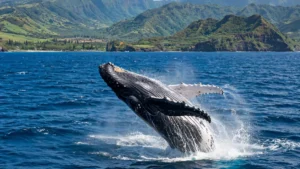
The wet season, from May to November, brings heavy rain to the Caribbean lowlands and the Osa Peninsula, when the frogs are at their most active and the forests are at their greenest. The green turtles nest at Tortuguero from July to October, and the humpback whales visit the Pacific coast in the second half of the year.
Within any season, the time of day matters as much as the month. Early morning is the best time for forest animals: sloths, monkeys, toucans and quetzals are all most active at dawn. Night walks reveal red-eyed tree frogs, glass frogs and kinkajous that are invisible by day.
Staying safe around Costa Rica’s wildlife
Costa Rica’s large animals are usually calm, but they deserve respect. Keep your distance from crocodiles, tapirs and wild pigs, never approach a monkey with young, and never try to feed or touch any wild animal. Crocodiles live in the rivers of the Pacific coast, so never swim in a river unless a local guide says it is safe.
On the coast, keep away from marked turtle nests, avoid bright lights on nesting beaches at night, and never handle a turtle or a hatchling. In the forest, carry water and insect repellent, wear long sleeves and sturdy shoes, and tell someone where you are going before a long walk. Poison dart frogs are tiny and not a danger if left alone, but they should never be touched.
Costa Rica wildlife watching checklist
- Book a local guide for sloths, quetzals and frogs — they know where the animals are.
- Go out at dawn for monkeys and birds, and plan quetzal trips to Monteverde from February to May.
- Bring binoculars, waterproofs and insect repellent, even in the dry season — rainforest weather changes fast.
- Keep at least 50 metres from nesting birds and monkeys, and far more from crocodiles and tapirs.
- Never feed wild animals, and never use food or calls to lure them closer for a photograph.
- On turtle beaches, keep away from marked nests and avoid bright lights at night.
- Leave no trace: take your rubbish home and keep to marked paths in sensitive habitats.
Frequently asked questions
What is the most famous animal in Costa Rica?
The three-toed sloth is the most famous land animal, and the resplendent quetzal is the most famous bird. The scarlet macaw and the red-eyed tree frog are the most famous sights after them.
Are there jaguars in Costa Rica?
Yes, but they are rare and shy. Jaguars live in Corcovado and Tortuguero national parks, and they are almost never seen by visitors. No honest guide can promise a sighting.
Can I see a quetzal in Costa Rica?
Yes. The resplendent quetzal lives in the cloud forests of Monteverde and the Talamanca mountains, and the best time is the breeding season, from February to May, when the males display at their nest holes. A local guide greatly improves the odds.
When is the best time to see turtles in Costa Rica?
Leatherback turtles nest on the Pacific beaches from October to March, and green turtles nest at Tortuguero from July to October. The best way to see them is on a guided night walk.
Can I see sloths in Costa Rica?
Yes. Three-toed sloths live in the lowland forests of Manuel Antonio, Tortuguero and the Osa Peninsula all year, and they are most often found with a local guide, who knows which trees they favour.
How is this guide different from the Hawaii animals guide?
This guide covers Costa Rica, a mainland tropical country of rainforest and cloud forest, with sloths, monkeys, quetzals and poison dart frogs. The Hawaii animals guide covers an isolated Pacific island chain, with a different mix of species, from humpback whales and monk seals to honeycreepers, and no native monkeys or sloths at all.
Conclusion
Costa Rica’s wildlife rewards patience: sloths in the lowland forests, quetzals in the cloud forests of Monteverde, scarlet macaws over the Osa Peninsula and leatherback turtles on the Pacific beaches are all within reach if you plan around the seasons.
The next step is to pick one species and one season — a dry-season trip to Manuel Antonio for sloths, a February visit to Monteverde for quetzals, or a night walk at Tortuguero for green turtles.