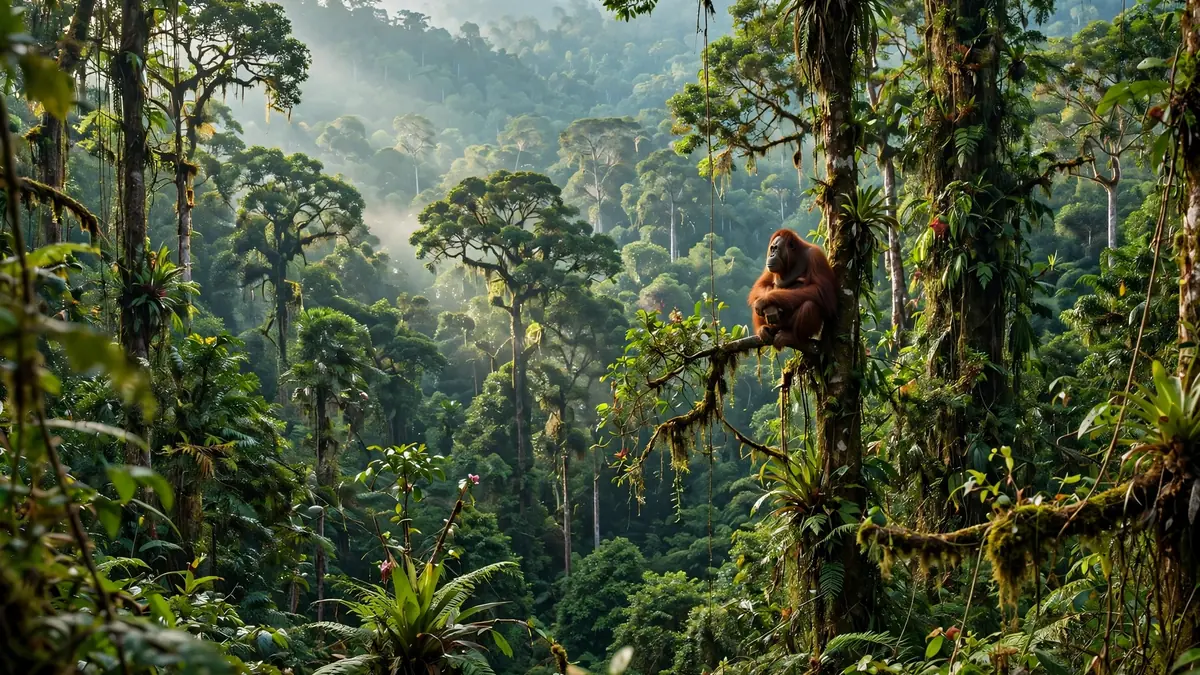
Malaysia animals range from orangutans in the rainforests of Borneo to proboscis monkeys along the rivers of Sabah, and the country holds some of the richest wildlife in South-East Asia. If you are wondering which animals live in Malaysia and where to see them, the short answer is this: orangutans, proboscis monkeys, pygmy elephants and sun bears live in the forests of Borneo, Malayan tapirs and hornbills live in the rainforests of the peninsula, and turtles, reef fish and dolphins live along the coasts and islands.
Malaysia is one of the best places in the region to watch wildlife, because so much of the country is still rainforest, mangrove, mountain and reef. This guide covers the species you are most likely to meet and where each one lives.
Key takeaways
- Malaysia’s most iconic land animals are the Bornean orangutan, the proboscis monkey, the pygmy elephant, the Malayan tapir, the sun bear and the clouded leopard.
- The Malayan tiger is critically endangered and extremely rare, so no honest guide should promise a sighting.
- Proboscis monkeys live only on Borneo, and the rhinoceros hornbill is the best-known bird of the Malaysian rainforest.
- Green and hawksbill turtles nest on the beaches of Sabah and the east coast of the peninsula, and the reefs around Sipadan hold some of the finest marine life in Asia.
- The dry months from March to October are the best seasons for most wildlife watching, and early morning and late afternoon are the best times of day for large mammals.
What makes Malaysia’s wildlife special
Malaysia sits at the meeting point of mainland Asia and the island of Borneo, and its wildlife reflects both. Species from the rainforests of the Malay Peninsula live alongside the animals of Borneo, one of the oldest rainforests on Earth.
Honesty matters here: several of Malaysia’s most famous species are now rare and hard to see in the wild. What it has instead is an unusually rich mix of species living side by side, from orangutans and elephants in Borneo to tapirs and hornbills on the peninsula.
That variety comes from the landscape itself. Malaysia holds ancient lowland rainforest, high mountain forest, wide mangroves, great rivers and coral reefs, so animals from many different habitats can live within one country. Like the rainforest animals of other tropical countries, many Malaysian species depend on large, quiet forest, and Taman Negara and Danum Valley are among the wildest corners of the country.
The great mammals of Malaysia
The Bornean orangutan is Malaysia’s most famous animal, living in the rainforests of Sabah and Sarawak on the island of Borneo. Orangutans spend most of their lives in the trees, feeding on fruit, leaves and bark, and they are most often seen in the early morning. They are shy and best looked for with a local guide, at Sepilok and along the Kinabatangan River.
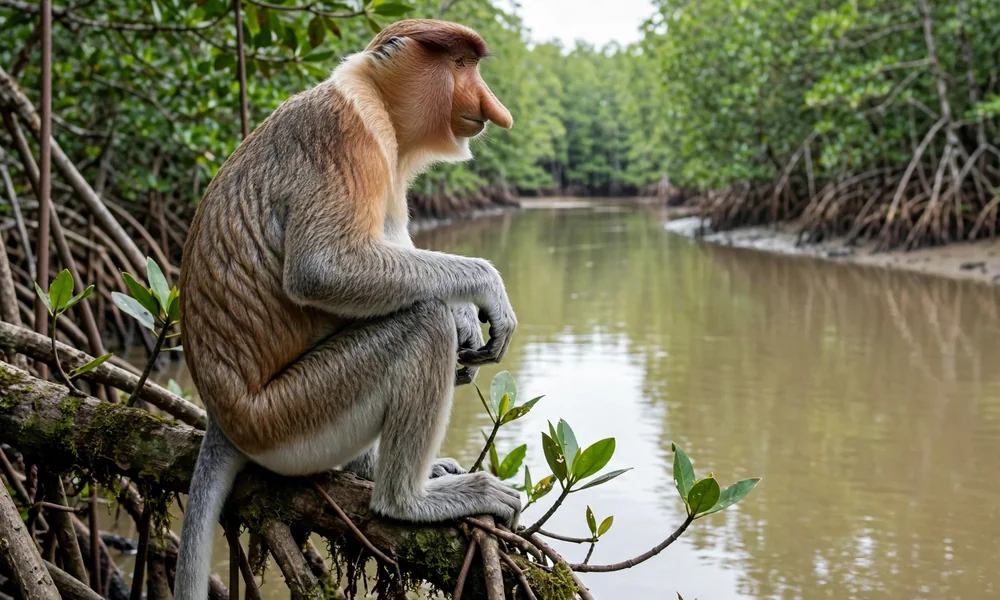
The proboscis monkey lives only on Borneo, and Malaysia is one of the best places to see it. The males are known for their large, drooping noses, and the troops gather in the mangroves and riverside trees of Sabah and Sarawak, especially at Bako National Park and along the Kinabatangan River. They are easiest to see in the late afternoon, when they settle in the trees beside the water.
Pygmy elephants live in the forests of Sabah, and they are smaller than the Asian elephants of the mainland. They move in herds along the Kinabatangan River, and they are most often seen from a boat in the early morning or late afternoon. The Malayan tapir, with its grey body and pale saddle, lives in the rainforests of the peninsula, and it is shy, largely nocturnal and rarely seen.
Among the predators, the sun bear is the smallest bear in the world, living in the forests of the peninsula and Borneo, and the clouded leopard hunts in the trees at night. One animal should not be on any visitor’s list: the Malayan tiger. It was once the great cat of the peninsula’s forests, but it is now critically endangered, with only a small number left in the wild. No honest guide can promise a sighting.
Birds of Malaysia
The rhinoceros hornbill is one of Malaysia’s best-loved birds, with its huge curved beak and black-and-white plumage. It lives in the rainforests of the peninsula and Borneo, and it is the state bird of Sarawak. Hornbills fly in pairs or small groups through the canopy, and their loud wingbeats can be heard long before the birds are seen.
Malaysia holds eight species of hornbill, from the great hornbill to the smaller Oriental pied hornbill, and the rainforest canopy is one of the best places in Asia to see them. The forests also hold pittas, broadbills, trogons and kingfishers, many of them brightly coloured and hard to spot.
Malaysia’s position on the migration routes between northern Asia and Australia makes it one of the best birdwatching countries in the region. In the northern winter, huge numbers of birds arrive from the north, from waders and ducks to eagles and flycatchers. The mudflats and mangroves of the west coast are among the finest birdwatching sites in the country.
Rivers, coasts and smaller wildlife
Malaysia’s rivers and mangroves hold their own wildlife, and the Kinabatangan River in Sabah is the best place to see it. The river’s banks hold proboscis monkeys, macaques, crocodiles and hornbills, and the surrounding forest holds pygmy elephants and orangutans. It is best explored by boat at dawn and dusk.
Along the coasts, green and hawksbill turtles come ashore to nest on the sandy beaches of Sabah and the east coast of the peninsula. The females lay their eggs at night, and the hatchlings make their way to the sea a few weeks later. The nesting beaches are protected, and visitors are asked to keep away from marked nests and to avoid bright lights at night.
Smaller mammals are everywhere in Malaysia, though they are often overlooked. Long-tailed macaques, silvered leaf monkeys, gibbons, slow lorises and mouse deer live in the forests of the peninsula and Borneo, and the flying lemur glides between the trees at night. Like the coastal animals of other tropical countries, the reef fish, turtles and dolphins of Malaysia’s seas depend on clean, undisturbed water.
| Species | Where to look | Best season | How likely is a sighting |
|---|---|---|---|
| Bornean orangutan | Sepilok and the Kinabatangan River, Sabah | March to October | Fair with a guide |
| Proboscis monkey | Bako National Park and the Kinabatangan River | March to October | Good in the late afternoon |
| Pygmy elephant | Kinabatangan River, Sabah | March to October | Fair from a boat |
| Malayan tapir | Taman Negara and the peninsula rainforest | March to October | Very low, mostly nocturnal |
| Rhinoceros hornbill | Taman Negara, Danum Valley and Sarawak | March to October | Fair with a guide |
| Sun bear | Borneo and peninsula rainforest | March to October | Low |
| Green turtle | Turtle Islands and the east coast beaches | March to October | Fair on a guided night walk |
Best seasons for wildlife watching
The dry months from March to October are the finest season. The rivers are lower and the animals gather at the water, the forest trails are easier to walk, and the orangutans, proboscis monkeys and hornbills are at their most active. Keep to paths and give every animal more space than you think it needs.
The wet months from November to February bring heavy rain to the east coast and to Borneo, and the forest trails can be muddy and hard to walk. The rainforest is at its greenest then, and the birdwatching is still good, but river trips may be cancelled after heavy rain. The west coast of the peninsula is drier at this time.
Across the year, the time of day matters as much as the season. Early morning and late afternoon are the best times for large mammals, when the orangutans, elephants and proboscis monkeys are feeding and moving. The midday heat drives most mammals into cover, so use the middle of the day for the canopy walkways and the reefs.
Staying safe around Malaysia’s wildlife
Malaysia’s large animals are usually calm, but they deserve respect. Keep your distance from orangutans, elephants, sun bears and wild boar, never approach an elephant with young, and never try to feed or touch any wild animal. Crocodiles live in the rivers of Borneo, so never swim in a river unless a local guide says it is safe.
On the coast, keep away from marked turtle nests, avoid bright lights on nesting beaches at night, and never handle a turtle or a hatchling. In the forest, carry water and insect repellent, wear long sleeves and sturdy shoes, and tell someone where you are going before a long walk. Leeches are common on rainforest trails in the wet season, so check your shoes and legs after a walk.
Malaysia wildlife watching checklist
- Book a local guide for orangutans, pygmy elephants and hornbills — they know where the animals are.
- Go out at dawn or dusk for mammals, and plan Kinabatangan river trips for March to October.
- Bring binoculars, rain gear and insect repellent, even in the dry season — rainforest weather changes fast.
- Keep at least 50 metres from nesting birds and elephants, and far more from orangutans and elephants with young.
- Never feed wild animals, and never use food or calls to lure them closer for a photograph.
- On turtle beaches, keep away from marked nests and avoid bright lights at night during the nesting season.
- Leave no trace: take your rubbish home and keep to marked paths in sensitive habitats.
Frequently asked questions
What is the most famous animal in Malaysia?
The Bornean orangutan is the most famous large mammal, and the proboscis monkey is the most distinctive. The rhinoceros hornbill is the best-known bird, and the pygmy elephants of the Kinabatangan River are the most famous wildlife sight in Sabah.
Are there orangutans in Malaysia?
Yes. Bornean orangutans live in the rainforests of Sabah and Sarawak, and the best places to see them are Sepilok and the forests along the Kinabatangan River. Wild sightings are never guaranteed, so a visit to a rehabilitation centre is the surest way to see one.
Can I see a Malayan tiger in Malaysia?
No, not in any realistic sense. The Malayan tiger is critically endangered, with only a small number left in the wild, and no honest guide or tour can promise a sighting. Look for the orangutan, proboscis monkey and pygmy elephant instead.
When is the best time to see proboscis monkeys in Malaysia?
The dry months from March to October are the best times, when the monkeys gather in the riverside trees in the late afternoon. Go on a boat trip on the Kinabatangan River or visit Bako National Park for the best chance.
Can I see turtles in Malaysia?
Yes. Green and hawksbill turtles nest on the sandy beaches of Sabah and the east coast of the peninsula, from March to October. The best way to see them is on a guided night walk.
How is this guide different from the Philippines animals guide?
This guide covers Malaysia, a mainland and Bornean country with orangutans, proboscis monkeys, pygmy elephants and Malayan tapirs in ancient rainforest. The Philippines animals guide covers an island archipelago, with a different mix of species and no orangutans or pygmy elephants in the wild.
Conclusion
Malaysia’s wildlife rewards patience: orangutans in the rainforests of Sabah, proboscis monkeys in the mangroves of Borneo, rhinoceros hornbills in the canopy and green turtles on the beaches of the east coast are all within reach if you plan around the seasons.
The next step is to pick one species and one season — a dry-season river trip on the Kinabatangan for proboscis monkeys and pygmy elephants, a spring visit to Taman Negara for hornbills, or a summer turtle walk on the beaches of Sabah.