Amazon rainforest animals range from jaguars padding along the riverbanks to scarlet macaws gathering at clay licks at dawn, and the largest rainforest on Earth holds more species than any other place in the world. If you are wondering which animals live in the Amazon rainforest and where to see them, the short answer is this: jaguars, giant river otters and tapirs roam the forest floor, pink river dolphins swim the rivers, and harpy eagles, macaws and toucans fill the canopy above.
The Amazon is one of the best places in the world for wildlife watching, because so much of it is still unbroken rainforest. This guide covers the species you are most likely to meet, where each one lives and the best seasons to see them.
Key takeaways
- The Amazon’s most iconic animals are the jaguar, pink river dolphin, harpy eagle, scarlet macaw and giant river otter.
- The Amazon rainforest covers more than five million square kilometres across nine countries.
- Pink river dolphins live only in the rivers of the Amazon and Orinoco basins, and they are the largest river dolphins in the world.
- Macaws gather at clay licks along the riverbanks in the early morning, and they are easiest to see from a boat.
- The dry season, from June to October, is the best time for most wildlife watching, because the trails are passable and the rivers are low.
What makes the Amazon’s wildlife special
The Amazon stretches across South America from the foothills of the Andes to the Atlantic coast, a rainforest larger than Western Europe. Its wildlife is shaped by its rivers, its canopy and its flooded forest.
Honesty matters here: the Amazon has no native large cats besides the jaguar and the puma, and no native bears at all. What it has instead is something no other forest can match — the greatest diversity of life on Earth, with more tree species in one hectare than in all of Europe. The giant river otter, the three-toed sloth and the poison dart frog are all Amazon originals.
That variety comes from the forest itself. The Amazon holds flooded forest, terra firme, river islands, oxbow lakes and white-sand clearings, so animals from many different habitats can live within one rainforest. Like the forest animals of other continents, most Amazon species depend on large, unbroken woodland, and the rainforest is still the wildest corner of South America.
The great mammals of the Amazon
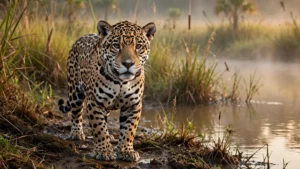
The jaguar is the Amazon’s largest cat and the animal most visitors hope to see. Jaguars live throughout the rainforest, but they are shy and hard to find, and the best chances are along the rivers, where they hunt capybaras and caimans. They swim well and are most often seen in the dry season, when the water is low and the animals gather along the riverbanks.
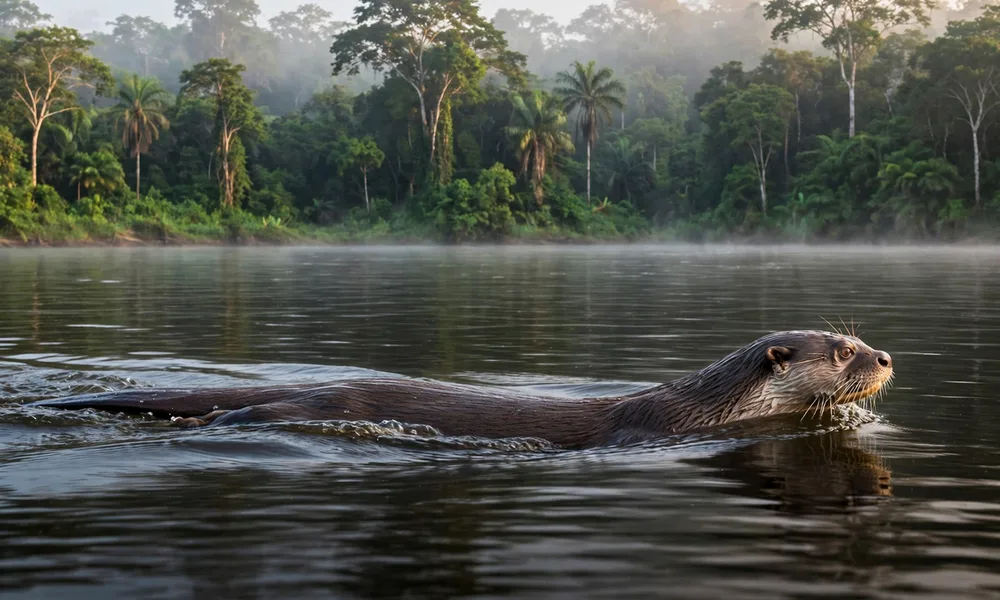
The giant river otter is one of the most social animals in the rainforest, living in family groups of up to ten animals that hunt fish together and rest on the riverbanks. Tapirs, the largest land mammals in South America, browse the forest floor at night, and they are most often seen at clay licks and along the rivers.
Among the predators, the puma ranges across the whole rainforest, hunting deer and agoutis. The ocelot, a smaller spotted cat, hunts at night in the undergrowth, and the margay, a tree-dwelling cat, almost never comes down to the ground. In the canopy, three-toed sloths hang from the branches, and howler monkeys call at dawn from the treetops.
One animal should not be on any visitor’s list as a certainty: the harpy eagle. It is one of the most powerful eagles in the world, hunting monkeys and sloths in the canopy, but it is rare and wide-ranging, and no honest guide can promise a sighting. The same is true of the bush dog, a rare forest hunter that is seldom seen at all. Both are reminders of how much of the Amazon’s wildlife depends on large, undisturbed forest.
Birds of the Amazon
The scarlet macaw is the Amazon’s most famous bird, and one of the most colourful. Macaws gather at clay licks along the riverbanks in the early morning, where they eat clay that helps them digest the seeds and unripe fruit in their diet. They are easiest to see from a boat, when they fly in pairs over the river at dawn.
The harpy eagle is the Amazon’s most powerful bird of prey, with talons as large as a grizzly bear’s claws. It hunts monkeys and sloths in the canopy, and it is most often seen near a nest, where the adults bring food to a single chick. Toco toucans, with their huge orange bills, are common in the forest canopy, and the hoatzin, a strange leaf-eating bird, lives along the oxbow lakes.
The Amazon holds more bird species than any other place on Earth, and it is one of the best birdwatching regions in the world. In the canopy, tanagers, parrots and hummingbirds fill the trees, and along the rivers, herons, kingfishers and roseate spoonbills gather in the dry season.
Rivers, frogs and the smaller wildlife of the Amazon
The Amazon’s rivers hold their own wildlife, and the pink river dolphin is the most remarkable of all. Pink river dolphins live only in the rivers of the Amazon and Orinoco basins, and they are the largest river dolphins in the world, growing to more than two metres long. They are most often seen at dawn, when they surface in the calm water near riverbanks and flooded forest.
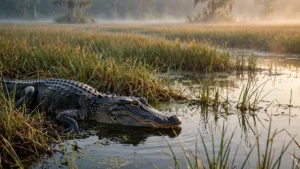
Along the riverbanks, giant river otters hunt in family groups, and black caimans, the largest caimans in the world, bask on the mud in the dry season.
Smaller animals are everywhere in the Amazon, though they are often overlooked. Poison dart frogs, brightly coloured and no bigger than a thumbnail, hop across the forest floor, and leaf-cutter ants carry green fragments along trails to their nests. Like the wetland animals of other continents, the frogs, caimans and water birds of the flooded forest depend on clean, seasonal water.
| Species | Where to look | Best season | How likely is a sighting |
|---|---|---|---|
| Jaguar | Riverbanks of the Amazon and Pantanal | June to October, dry season | Low, needs a guide |
| Pink river dolphin | Amazon and Orinoco rivers | June to November, low water | Good from a boat |
| Giant river otter | Oxbow lakes and slow rivers | Dry season, early morning | Fair with a guide |
| Scarlet macaw | Clay licks along the rivers | Early morning, dry season | Good at a clay lick |
| Harpy eagle | Canopy near a nest | All year | Very low |
| Three-toed sloth | Canopy of the rainforest | All year | Good with a guide |
| Poison dart frog | Forest floor near streams | Wet season | Fair with a guide |
Best seasons for wildlife watching
The dry season, from June to October, is the finest time for most wildlife watching in the Amazon. The rivers fall and the animals gather along the banks, so jaguars, otters and caimans are all easier to find. The trails are passable, the macaws visit the clay licks every morning, and the mosquitoes are fewer than in the wet season.
The wet season has its own rewards: the rivers rise and the flooded forest fills with pink river dolphins, the waterfalls are at their fullest, and the forest is at its greenest. The trade-off is muddy trails, heavier rain and more insects, and some lodges close when the roads flood.
In any season, early morning is the best time for birds and large mammals, and late afternoon is the best time for river dolphins surfacing in the calm water. The clay licks are best at dawn, when the macaws arrive in pairs over the river.
Staying safe around Amazon wildlife
The Amazon’s large animals are usually calm, but they deserve respect. Keep your distance from jaguars, pumas and black caimans, never swim in rivers where caimans and piranhas live, and never try to feed or touch any wild animal. If you meet a puma, stand your ground, make yourself look big and back away slowly, and never run. Jaguars almost never approach people, but they should always be watched from a boat.
In the forest, wear long sleeves and insect repellent, drink only treated water, and tell someone where you are going before a walk. The snakes of the rainforest are shy and avoid people, but they should always be given a wide berth.
Amazon rainforest wildlife watching checklist
- Book a local guide for jaguars, giant river otters and harpy eagles — they know where the animals are.
- Go out at dawn for birds and clay licks, and plan trips for June to October, when the rivers are low.
- Bring binoculars, waterproofs and insect repellent, even in the dry season — rainforest weather changes fast.
- Keep at least 50 metres from nesting birds and caimans, and far more from jaguars and pumas.
- Never feed wild animals, and never use food or calls to lure them closer for a photograph.
- Stay on marked trails and keep off the riverbanks at night, when caimans are most active.
- Leave no trace: take your rubbish home and keep to marked paths in sensitive forest.
Frequently asked questions
What is the most famous animal in the Amazon rainforest?
The jaguar is the most famous, and the rivers of the Amazon and the Pantanal are the best places to look for one. The pink river dolphin is the most famous river animal, and the scarlet macaw is the most famous bird.
Are there jaguars in the Amazon rainforest?
Yes. Jaguars live throughout the Amazon rainforest, but they are shy and hard to find. The best chances are along the rivers in the dry season, when the water is low and the animals gather along the banks.
Can I see a pink river dolphin in the Amazon?
Yes. Pink river dolphins live only in the rivers of the Amazon and Orinoco basins, and they are most often seen at dawn from a boat, when they surface in the calm water near the riverbanks. The dry season, when the water is low, is the best time to look for them.
When is the best time to see macaws in the Amazon?
The dry season, from June to October, is the best time, when the macaws visit the clay licks along the riverbanks every morning. Go at dawn, watch from a boat, and look for pairs flying in over the river.
Can I see a harpy eagle in the Amazon?
Not in any realistic sense. Harpy eagles are rare and wide-ranging, and no honest guide can promise a sighting. Look for scarlet macaws, toucans and giant river otters instead, and ask your guide about known nest sites.
How is this guide different from the Antarctica animals guide?
This guide covers the Amazon rainforest, the warmest and most diverse forest on Earth, with jaguars, pink river dolphins, harpy eagles and macaws. The Antarctica animals guide covers a frozen continent with no native land mammals, where penguins, seals and whales depend on the Southern Ocean.
Conclusion
The Amazon’s wildlife rewards patience: jaguars on the riverbanks, pink river dolphins in the rivers, giant river otters in the oxbow lakes and scarlet macaws at the clay licks are all within reach if you plan around the dry season and keep your distance.
The next step is to pick one species and one season — a dry-season river trip for dolphins and otters, a dawn visit to a clay lick for macaws, or a guided forest walk for sloths and monkeys — and plan your visit around it.