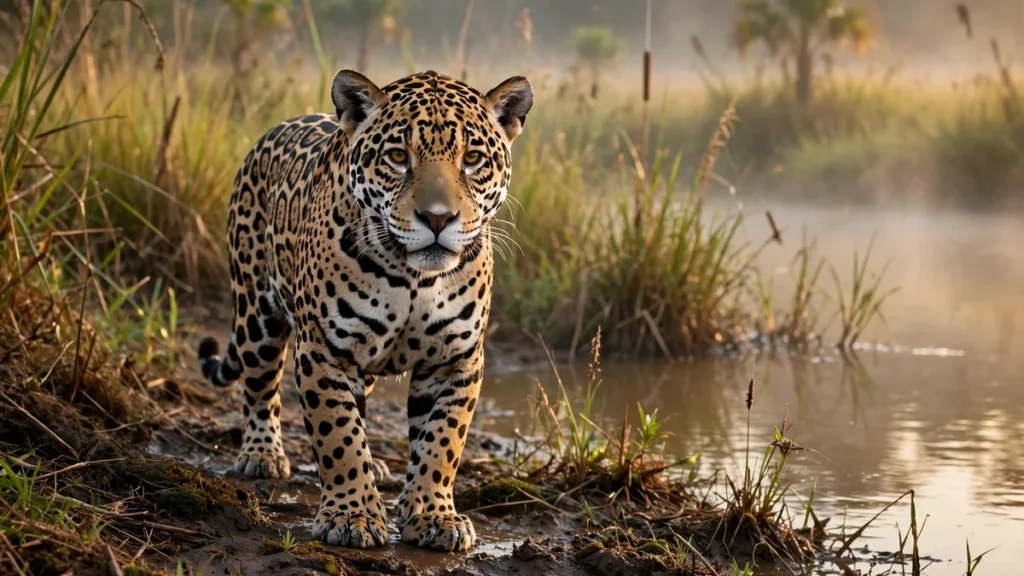
South America animals range from jaguars in the wetlands of the Pantanal to Andean condors circling the high peaks of the Andes, and the continent holds some of the most spectacular wildlife on Earth. If you are wondering which animals live in South America and where to see them, the short answer is this: jaguars, giant anteaters and capybaras roam the grasslands and wetlands, pink river dolphins and giant river otters swim the Amazon rivers, and condors, vicuñas and spectacled bears live high in the Andes.
South America is one of the best continents in the world for wildlife watching, because so much of it is still rainforest, wetland, grassland and mountain. This guide covers the species you are most likely to meet, where each one lives and the best seasons to see them.
Key takeaways
- South America’s most iconic land animals are the jaguar, giant anteater, capybara, maned wolf and spectacled bear.
- The Pantanal is the best place in the world to see a wild jaguar, and the dry season is the best time to go.
- Pink river dolphins live only in the rivers of the Amazon and Orinoco basins, and they are the largest river dolphins in the world.
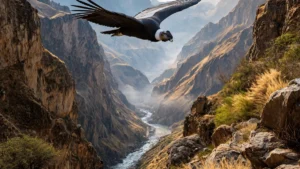
- The Andean condor is one of the largest flying birds in the world, and it soars over the Andes on wings more than three metres across.
- The dry season, from June to October, is the best time for most wildlife watching, because animals gather at shrinking waterholes and trails are passable.
What makes South America’s wildlife special
South America stretches from the Caribbean coast in the north to the cold tip of Patagonia in the south, and its wildlife reflects that whole journey, from the Amazon rainforest and the high Andes to the dry Atacama desert, the grasslands of the pampas and the wetlands of the Pantanal.
Honesty matters here: South America has no native large cats besides the jaguar and the puma, and no native bears besides the spectacled bear. What it has instead is the Amazon, the largest rainforest on Earth, and the Pantanal, the largest tropical wetland, both holding animals found nowhere else. The giant anteater, the capybara, the three-toed sloth and the pink river dolphin are all South American originals.
That variety comes from the landscape itself. South America holds the Amazon rainforest, the Andes mountains, the Atacama desert, the Patagonian steppe and the long Atlantic and Pacific coasts, so animals from many different habitats can live within one continent. Like the forest animals of other continents, many South American species depend on large, quiet woodland, and the Amazon and the Atlantic forest are among the wildest corners of the continent.
The great mammals of South America
The jaguar is South America’s largest cat and the animal most visitors hope to see. Jaguars live from Mexico to northern Argentina, but the Pantanal, the great wetland of Brazil, is the best place in the world to see one. Jaguars swim well and hunt caimans and capybaras along the riverbanks, and they are most often seen in the dry season, when the water is low and the animals gather along the rivers.
The giant anteater is one of the strangest mammals on the continent, with a long snout, a huge bushy tail and a tongue that reaches deep into termite mounds. Capybaras, the largest rodents in the world, graze in groups along the riverbanks, and they are the jaguar’s favourite prey.
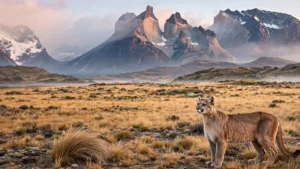
Among the predators, the puma ranges across the whole continent, from the Andes to Patagonia, hunting guanacos and deer. The spectacled bear, the only bear in South America, lives in the cloud forests of the Andes, climbing trees to eat bromeliads and fruit.
One animal should not be on any visitor’s list as a certainty: the giant river otter. It lives in family groups on the rivers of the Amazon and the Pantanal, but it is shy and easily disturbed, and no honest guide can promise a sighting. Both it and the rare bush dog depend on large, undisturbed habitat.
Birds of South America
The Andean condor is South America’s most famous bird, and one of the largest flying birds in the world. It soars over the Andes on wings more than three metres across, riding the mountain winds without flapping, and it is often seen from a roadside viewpoint in the high passes.
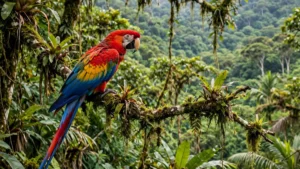
The Amazon holds more bird species than any other place on Earth, and the scarlet macaw is the best known of them all. Macaws gather at clay licks along the riverbanks in the early morning, where they eat clay that helps them digest the seeds and unripe fruit in their diet. Toco toucans, with their huge orange bills, are common in the forest canopy, and the harpy eagle, one of the most powerful eagles in the world, hunts monkeys and sloths in the treetops.
South America’s position between the tropics and the far south makes it one of the best birdwatching continents in the world. In the wetlands, roseate spoonbills, jabirus and hundreds of herons and egrets gather in the dry season.
Rivers, coasts and smaller wildlife
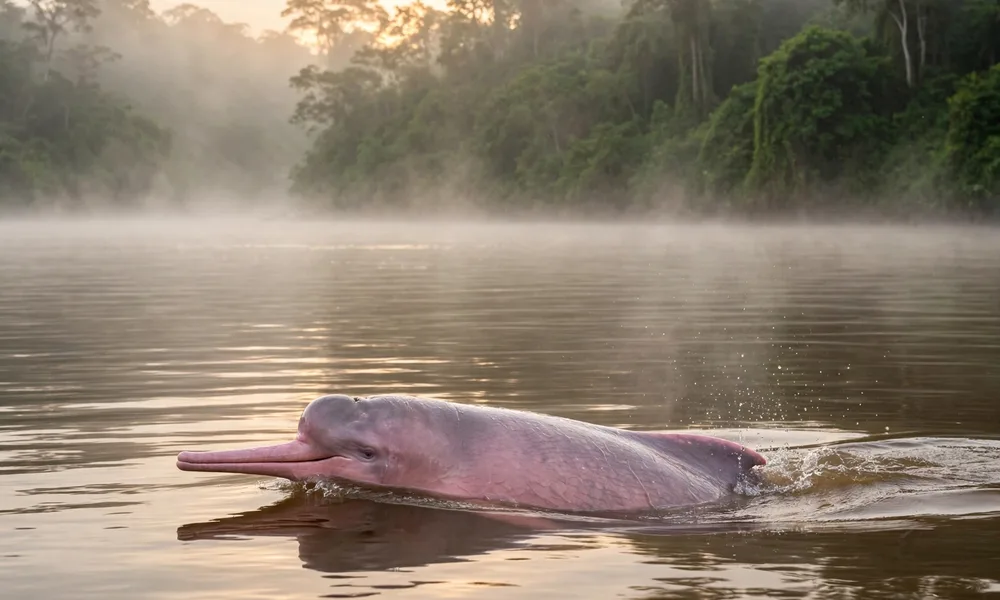
South America’s rivers hold their own wildlife, and the pink river dolphin is the most remarkable of all. Pink river dolphins live only in the rivers of the Amazon and Orinoco basins, and they are the largest river dolphins in the world, growing to more than two metres long. They are most often seen at dawn, when they surface in the calm water near riverbanks and flooded forest.
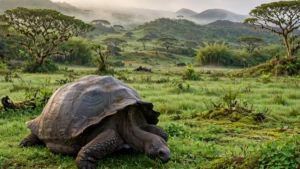
Along the Pacific coast, Humboldt penguins nest on rocky islands off Peru and Chile, and sea lions haul out on the beaches in large colonies. The Galapagos Islands, far off the coast of Ecuador, hold giant tortoises, marine iguanas and blue-footed boobies, and they are among the best places in the world to see wildlife that has never learned to fear people.
Smaller mammals are everywhere in South America, though they are often overlooked. Three-toed sloths hang in the rainforest canopy, agoutis and pacas forage on the forest floor, and coatis, with their long ringed tails, travel in bands through the trees. Like the wetland animals of other continents, the frogs, caimans and water birds of the Pantanal depend on clean, seasonal water.
| Species | Where to look | Best season | How likely is a sighting |
|---|---|---|---|
| Jaguar | Pantanal riverbanks in Brazil | June to October, dry season | Good with a guide |
| Pink river dolphin | Amazon and Orinoco rivers | June to November, low water | Good from a boat |
| Andean condor | High passes of the Andes | All year, midday thermals | Fair from a viewpoint |
| Giant anteater | Grasslands of the Pantanal and Cerrado | Dry season, early morning | Fair |
| Capybara | Riverbanks across the Pantanal | All year | Very good |
| Scarlet macaw | Clay licks of the Amazon | Early morning, dry season | Good at a clay lick |
| Spectacled bear | Cloud forests of the Andes | All year | Very low |
Best seasons for wildlife watching
The dry season, from June to October, is the finest time for most wildlife watching in South America. In the Pantanal the water falls and the animals gather along the rivers, so jaguars, capybaras and caimans are all easier to find. In the Amazon the trails are passable, the rivers are low, and the macaws visit the clay licks every morning.
The wet season has its own rewards: the rivers rise and the flooded forest fills with pink river dolphins, the waterfalls are at their fullest, and the forest is at its greenest.
In any season, early morning is the best time for birds and large mammals, and late afternoon is the best time for jaguars hunting along the riverbanks.
Staying safe around South America’s wildlife
South America’s large animals are usually calm, but they deserve respect. Keep your distance from jaguars, pumas and caimans, never swim in rivers where caimans and piranhas live, and never try to feed or touch any wild animal. If you meet a puma, stand your ground, make yourself look big and back away slowly, and never run. Jaguars almost never approach people, but they should always be watched from a boat or a vehicle.
On the coast, keep away from marked sea lion colonies, avoid bright lights on turtle nesting beaches at night, and never handle a turtle or a hatchling. In the rainforest, wear long sleeves and insect repellent, drink only treated water, and tell someone where you are going before a long walk.
South America wildlife watching checklist
- Book a local guide for jaguars, giant river otters and harpy eagles — they know where the animals are.
- Go out at dawn or dusk for mammals, and plan Pantanal trips for June to October, when the water is low.
- Bring binoculars, warm layers for the Andes and waterproofs for the rainforest, even in the dry season.
- Keep at least 50 metres from nesting birds, sea lion colonies and grazing deer, and far more from jaguars, pumas and caimans.
- Never feed wild animals, and never use food or calls to lure them closer for a photograph.
- On turtle beaches, keep away from marked nests and avoid bright lights at night during the nesting season.
- Leave no trace: take your rubbish home and keep to marked paths in sensitive habitats.
Frequently asked questions
What is the most famous animal in South America?
The jaguar is the most famous, and the Pantanal is the best place in the world to see it in the wild. The Andean condor is the most famous bird, and the pink river dolphin is the most famous river animal.
Are there jaguars and pumas in South America?
Yes. Jaguars live from Mexico to northern Argentina, and they are most often seen in the Pantanal. Pumas range across the whole continent, from the Andes to Patagonia, and both are shy and avoid people.
Can I see a pink river dolphin in South America?
Yes. Pink river dolphins live only in the rivers of the Amazon and Orinoco basins, and they are most often seen at dawn from a boat, when they surface in the calm water near the riverbanks. The dry season, when the water is low, is the best time to look for them.
When is the best time to see jaguars in South America?
The dry season, from June to October, is the best time, when the water in the Pantanal falls and the animals gather along the rivers. Go with a local guide and a boat, and look along the riverbanks in the early morning and late afternoon.
Can I see an Andean condor in South America?
Yes. Andean condors soar over the high passes of the Andes, and they are often seen from roadside viewpoints in Peru, Bolivia, Chile and Argentina. Go around midday, when the mountain thermals lift them high over the peaks.
How is this guide different from the Europe animals guide?
This guide covers South America, a tropical continent of rainforest, wetland and high mountain, with jaguars, pink river dolphins, giant anteaters and Andean condors. The Europe animals guide covers a temperate continent of forest, mountain and coast, with bison, wolves, lynx, bears and puffins, and none of South America’s tropical wildlife.
Conclusion
South America’s wildlife rewards patience: jaguars on the riverbanks of the Pantanal, pink river dolphins in the Amazon, Andean condors over the high passes and scarlet macaws at the clay licks are all within reach if you plan around the dry season and keep your distance.
The next step is to pick one species and one season — a dry-season jaguar trip in the Pantanal, a dawn boat ride on the Amazon for river dolphins, or a midday condor watch in the Andes — and plan your visit around it.