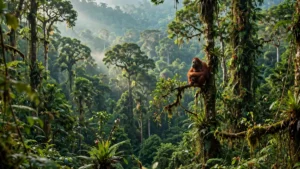
Ecuador animals range from giant tortoises on the Galapagos Islands to Andean condors soaring over the high mountains, and the country holds some of the most remarkable wildlife in South America. If you are wondering which animals live in Ecuador and where to see them, the short answer is this: giant tortoises, marine iguanas, blue-footed boobies and sea lions live on the Galapagos, condors and spectacled bears live in the high Andes, and jaguars, pink river dolphins and poison dart frogs live in the Amazon rainforest.
Ecuador is one of the best places in the world to watch wildlife, because so much of the country is still island, mountain, cloud forest and rainforest. This guide covers the species you are most likely to meet, where each one lives and the best seasons to see them.
Key takeaways
- Ecuador’s most iconic land animals are the Galapagos giant tortoise, the marine iguana, the Andean condor, the spectacled bear and the pink river dolphin.
- The Galapagos Islands hold animals found nowhere else on Earth, and they are the best place in the world to see wildlife up close.
- The blue-footed booby, the flightless cormorant and the Galapagos penguin all live only on the Galapagos Islands.
- The cloud forests of Mindo hold more hummingbird species than almost anywhere else, and they are one of the best birdwatching sites in South America.
- The dry season, from June to November, is the best time for the Galapagos, and early morning is the best time of day for forest animals.
What makes Ecuador’s wildlife special
Ecuador is a small country that holds four worlds in one: the Galapagos Islands in the Pacific, the high Andes, the cloud forests of the western slopes and the Amazon rainforest in the east. That range covers island, mountain, forest and jungle, so the country holds species from several habitats at once, and it is one of the most biodiverse countries on Earth.
Honesty matters here: Ecuador has more endemic species than almost any other country of its size, and the Galapagos Islands alone hold animals found nowhere else on Earth. What it has instead of a single famous animal is an extraordinary range of life packed into one small country, from giant tortoises that live for more than a century to hummingbirds that weigh less than a coin. The Galapagos Islands are among the wildest corners of the Pacific.
That variety comes from the landscape itself. Ecuador holds the volcanic islands of the Galapagos, the high peaks of the Andes, the cloud forests of Mindo and the vast lowland forests of the Amazon. Like the rainforest animals of other Amazonian countries, many Ecuadorian species depend on large, quiet woodland, and the Yasuni National Park in the Amazon is one of the most biodiverse places on Earth.
The great mammals of Ecuador
The Galapagos giant tortoise is Ecuador’s most famous animal, and one of the longest-lived animals on Earth. The tortoises live on several islands of the Galapagos, grazing on grasses and cactus in the highlands, and they can live for more than a century. They are most often seen in the highlands of Santa Cruz Island, where they gather around ponds and wallows in the morning.
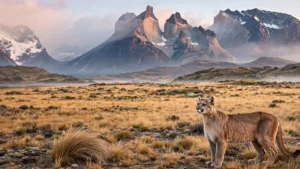
Among the predators, the jaguar is the largest cat in the Americas, and it still lives in the forests of the Ecuadorian Amazon, but it is rare, nocturnal and almost never seen by visitors. The puma is more widespread, hunting deer and tapirs in the mountains and the lowland forest, and the ocelot hunts at night in the rainforest understorey. The spectacled bear, the only bear in South America, lives in the cloud forests of the Andes, feeding on bromeliads and fruit.
The pink river dolphin lives in the rivers of the Ecuadorian Amazon, surfacing quietly among the flooded forest, and it is one of the few dolphins in the world that lives in fresh water. The giant river otter hunts fish in family groups along the same rivers, and the lowland tapir, the largest land mammal in South America, lives in the forests of the Amazon and the cloud forest.
One animal should not be on any visitor’s list as a certainty: the jaguar. It survives in Ecuador, but in small numbers in vast forest, and no honest guide can promise a sighting. The same is true of the giant armadillo, which is now very rare. Both are reminders of how much of Ecuador’s wildlife depends on large, undisturbed forest.
Birds of Ecuador
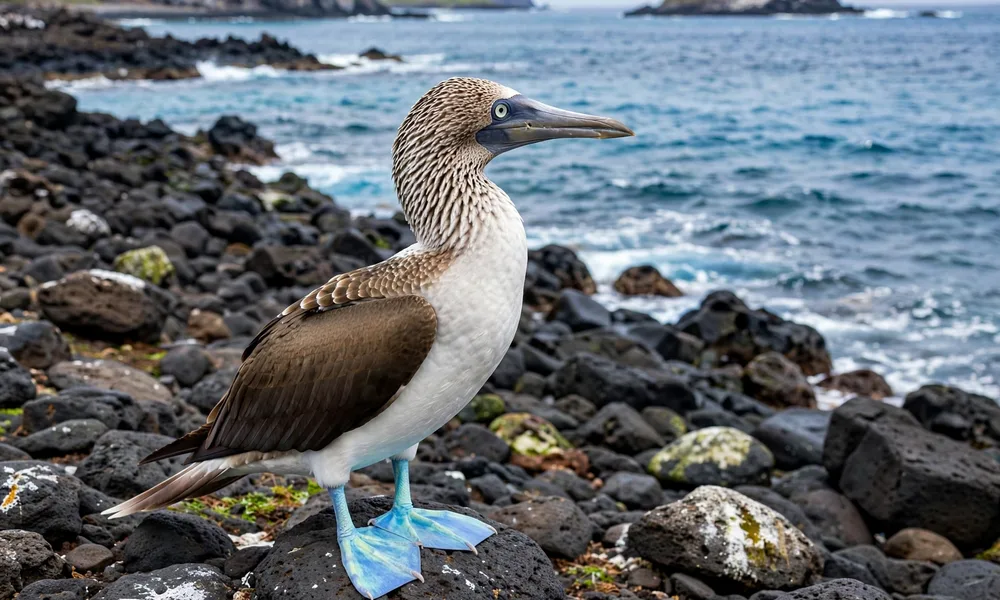
The blue-footed booby is one of the most famous birds of the Galapagos, and it is best known for its bright blue feet, which the males show off in a slow, high-stepping dance. The boobies nest on the rocky shores of several islands, and they are most often seen on North Seymour Island and Espanola Island, where they dive for fish in the cold waters around the islands.
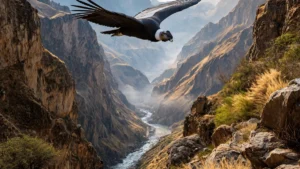
The Andean condor is one of the largest flying birds in the world, with a wingspan of more than three metres, and it soars over the high Andes of Ecuador. The condors ride the thermals up from the valleys in the morning, and they are best seen from a high viewpoint at dawn, in the national parks of the central Andes.
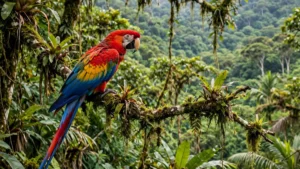
Ecuador holds more bird species than almost any other country of its size, from scarlet macaws in the Amazon to hummingbirds in the cloud forest.
Rivers, coasts and smaller wildlife
Ecuador’s Galapagos Islands hold their own wildlife, and the marine iguana is the most remarkable of all. It is the only lizard in the world that swims in the sea, diving for algae on the rocky shores, and it lives only on the Galapagos. The iguanas bask on the black lava rocks in the morning, warming up in the sun before they dive.
Along the Galapagos coasts, the Galapagos penguin, the only penguin that lives north of the equator, nests on the rocky shores of the western islands. Galapagos sea lions haul out on the beaches and rocky shores around the islands, and they are curious and playful, often swimming alongside snorkellers. The Galapagos fur seal lives on the rocky shores of the western islands.
Smaller animals are everywhere in Ecuador, though they are often overlooked. The poison dart frog, a tiny brightly coloured frog, lives on the forest floor of the Amazon, and the glass frog, whose organs can be seen through its skin, lives along forest streams at night. Like the coastal animals of other island groups, the penguins, iguanas and sea lions of the Galapagos depend on clean seas and undisturbed shores.
| Species | Where to look | Best season | How likely is a sighting |
|---|---|---|---|
| Galapagos giant tortoise | Highlands of Santa Cruz and Isabela | Year-round, morning | Good |
| Marine iguana | Rocky shores of the Galapagos | Year-round, morning | Good |
| Blue-footed booby | North Seymour and Espanola islands | Year-round | Good |
| Andean condor | High Andes, Antisana and Cotopaxi | Year-round, morning | Fair with a guide |
| Galapagos penguin | Western islands, Fernandina and Isabela | Year-round | Fair from a boat |
| Pink river dolphin | Amazon rivers of the east | Dry season, June to November | Fair with a guide |
| Flightless cormorant | Western Galapagos, Fernandina | Year-round | Fair from a boat |
Best seasons for wildlife watching
The dry season, from June to November, is the finest season for the Galapagos. The seas are at their coolest and clearest, the penguins and cormorants are easiest to find, and the giant tortoises gather in the highlands. It is also the best season for the Amazon, when the rivers are low and the pink river dolphins are easiest to find.
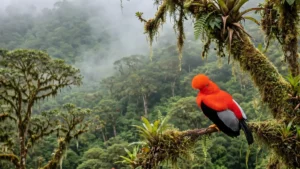
The cloud forests of Mindo are busy with hummingbirds all year, and the Andean cock-of-the-rock displays at dawn through the breeding season.
Within any season, the time of day matters as much as the month. Early morning is the best time for forest animals: hummingbirds, cock-of-the-rock and monkeys are all most active at dawn. Night walks reveal glass frogs, kinkajous and night monkeys that are invisible by day.
Staying safe around Ecuador’s wildlife
Ecuador’s large animals are usually calm, but they deserve respect. Keep your distance from jaguars, pumas, sea lions and fur seals, never approach a sea lion with young, and never try to feed or touch any wild animal. The Galapagos has strict rules: keep at least two metres from all wildlife, never touch a tortoise or an iguana, and never feed any animal.
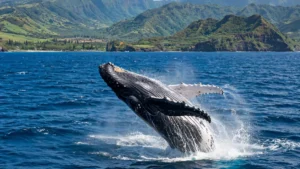
On the coast, keep away from nesting seabirds, never handle a penguin or a sea lion, and keep a safe distance from whales, even when they seem calm. In the mountains, carry water and sun protection, and allow time to acclimatise to the altitude before a long walk in the high Andes. The condors and eagles of the mountains are shy and avoid people, but they should always be watched from a distance.
Ecuador wildlife watching checklist
- Book a local guide for condors, cock-of-the-rock and pink river dolphins — they know where the animals are.
- Go out at dawn for birds, and plan Galapagos trips for June to November, when the seas are clearest.
- Bring binoculars, warm layers and waterproofs, even in the dry season — mountain weather changes fast.
- Keep at least two metres from all Galapagos wildlife, and far more from sea lions with young.
- Never feed wild animals, and never use food or calls to lure them closer for a photograph.
- On the coast, keep to marked paths on penguin islands and never approach a sea lion colony.
- Leave no trace: take your rubbish home and keep to marked paths in sensitive habitats.
Frequently asked questions
What is the most famous animal in Ecuador?
The Galapagos giant tortoise is the most famous land animal, and the marine iguana is the most famous reptile. The blue-footed booby is the best-known bird, and the Andean condor is the most famous bird of the mainland.
Can I see giant tortoises in Ecuador?
Yes. Galapagos giant tortoises live in the highlands of Santa Cruz and Isabela islands, and they are most often seen in the morning, when they gather around ponds and wallows. Keep at least two metres away and never touch one.
Can I see penguins in Ecuador?
Yes. The Galapagos penguin lives on the rocky shores of the western Galapagos Islands, and it is the only penguin that lives north of the equator. The best way to see it is from a boat around Fernandina and Isabela.
When is the best time to visit the Galapagos?
June to November is the best time, when the seas are cool and clear, the penguins and cormorants are easiest to find, and the giant tortoises gather in the highlands. The islands can be visited all year.
Are there jaguars in Ecuador?
Yes, but they are rare and shy. Jaguars live in the forests of the Ecuadorian Amazon, and they are almost never seen by visitors. No honest guide can promise a sighting.
How is this guide different from the Colombia animals guide?
This guide covers Ecuador, a small country that holds the Galapagos Islands, with giant tortoises, marine iguanas and penguins found nowhere else on Earth. The Colombia animals guide covers a larger mainland country, with a different mix of species, including cotton-top tamarins and humpback whales, and no Galapagos wildlife at all.
Conclusion
Ecuador’s wildlife rewards patience: giant tortoises in the highlands of Santa Cruz, marine iguanas on the lava rocks, blue-footed boobies on North Seymour and Andean condors over the high mountains are all within reach if you plan around the seasons.
The next step is to pick one species and one season — a dry-season trip to the Galapagos for tortoises and penguins, a visit to Mindo for hummingbirds, or a boat trip in the Amazon for pink river dolphins.