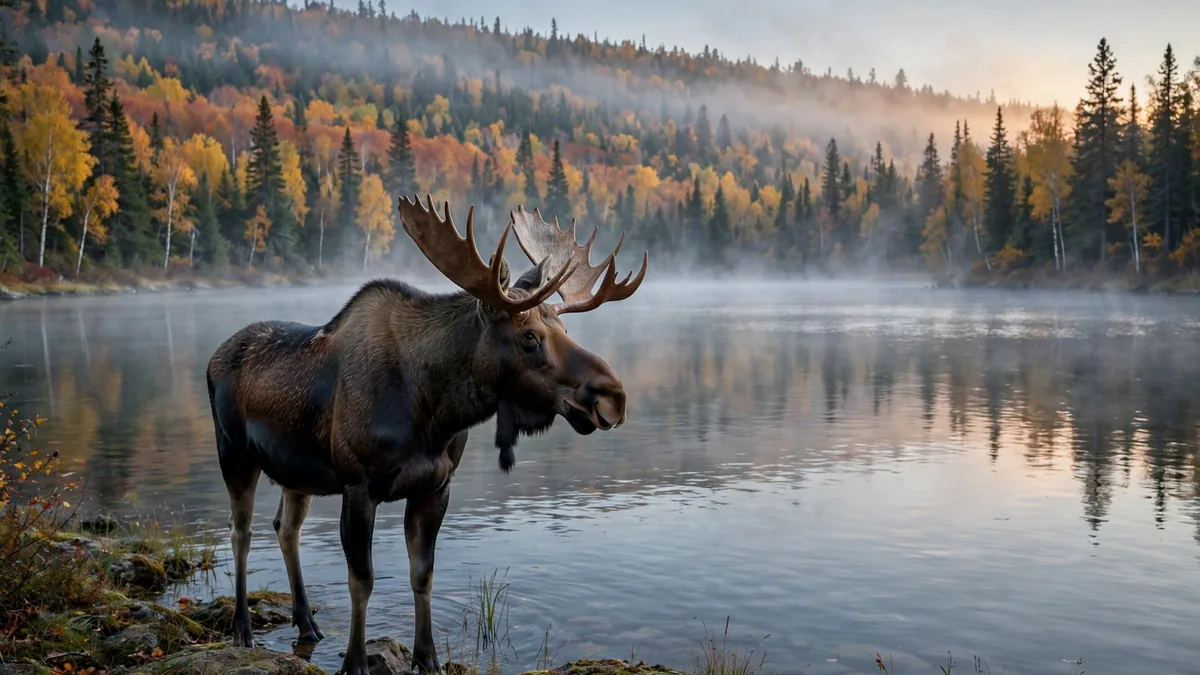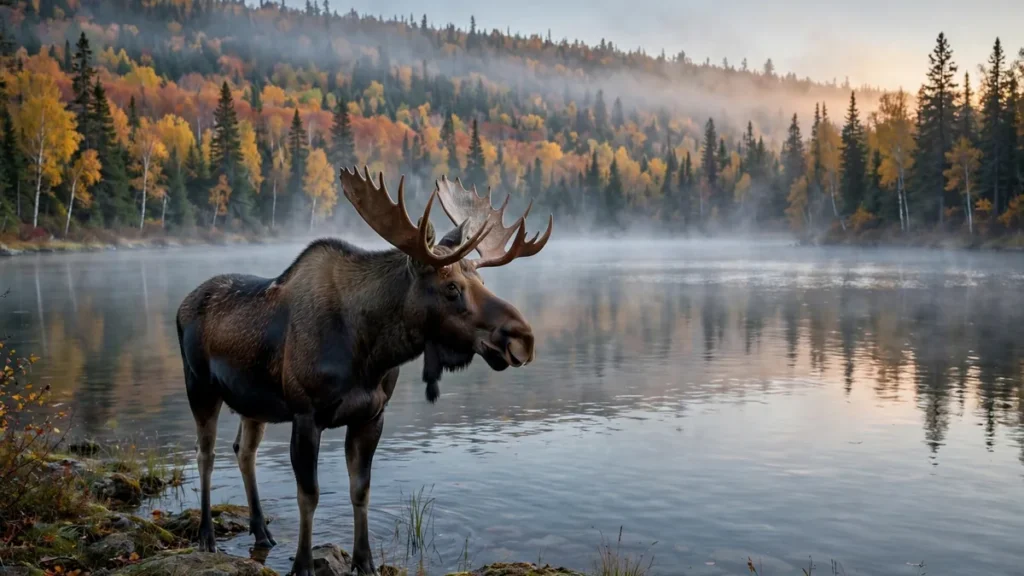
Canada animals range from moose wading through the lakes of Ontario to polar bears on the sea ice of Hudson Bay, and the country holds some of the wildest and most wide-ranging wildlife in the world. If you are wondering which animals live in Canada and where to see them, the short answer is this: moose, black bears, grizzly bears, beavers, wolves and caribou roam the forests and tundra, beluga whales gather in the northern rivers, and polar bears patrol the far north.
Canada is one of the best places in the world to watch wildlife, because so much of it is still boreal forest, tundra, mountain and coastline. This guide covers the species you are most likely to meet, where each one lives and the best seasons to see them.
Key takeaways
- Canada’s most iconic land animals are the moose, black bear, grizzly bear, beaver, grey wolf, caribou and Canada lynx.
- The beaver is Canada’s national animal, and its dams shape wetlands across the country.
- Churchill in Manitoba is the best place to see polar bears on land, and beluga whales in summer.
- The common loon, the Canada goose and the Atlantic puffin are among Canada’s best-loved birds.
- Summer is the best season for whales, puffins and most wildlife watching, autumn is best for moose, and October and November are best for polar bears.
What makes Canada’s wildlife special
Canada is the second-largest country in the world, and its wildlife reflects that scale: species from the temperate forests of the east, the Rocky Mountains of the west and the frozen tundra of the north all live within one country.
Honesty matters here: Canada has very few true endemics, and no large mammal lives only in Canada. The best-known exception is the Vancouver Island marmot, which lives only on Vancouver Island in British Columbia and nowhere else on Earth. What Canada has instead is an unusually large and intact mix of northern species living in huge, connected habitats, from boreal forest to Arctic tundra.
That variety comes from the landscape itself: vast boreal forest, high mountains, wide prairies, great lakes and rivers, and three long sea coasts. Like the forest animals of northern Europe, many Canadian species depend on large, quiet woodland, and Algonquin Park in Ontario, Banff and Jasper in the Rockies, and the boreal forest of the north are among the wildest corners of the country.
The great mammals of Canada
The moose is Canada’s most famous animal, a huge deer with broad, palmate antlers on the bulls, standing in lakes and wetlands from Newfoundland to British Columbia. Moose are most often seen at dawn and dusk, feeding on water plants in shallow lakes, and Algonquin Park in Ontario is one of the best places to look for them. Our moose facts guide covers the species in full, so here it takes its place as one of many Canadian animals.
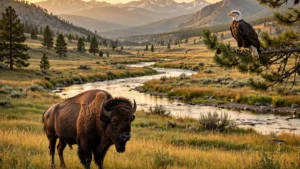
Among the predators, the black bear lives in forests across most of Canada, while the grizzly bear lives mainly in the mountains of British Columbia, Alberta and the Yukon. Grey wolves hunt deer, moose and caribou in packs across the boreal forest, and the Canada lynx, a shy wild cat with long ear tufts, hunts snowshoe hares in the northern forests.
Caribou are the wild reindeer of the north, with great herds of barren-ground caribou crossing the Arctic tundra and woodland caribou living in the boreal forest further south. The herds are hard to reach and best seen on a guided trip. In the far north, the polar bear is the largest land predator on Earth, hunting seals from the sea ice of Hudson Bay, and Churchill is the best place in the world to see polar bears on land.
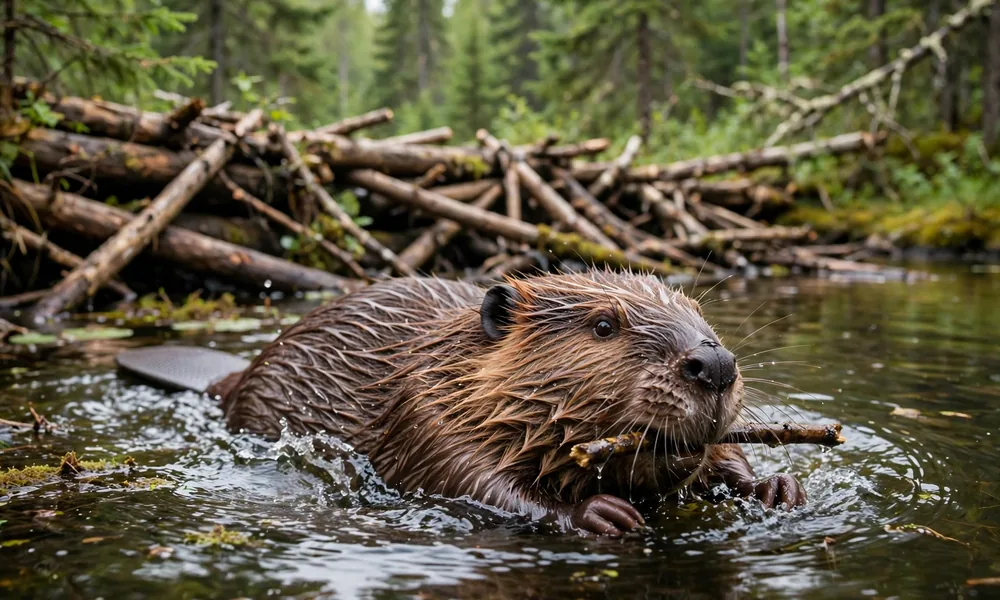
The beaver deserves a place of its own. Canada’s national animal builds dams and lodges from sticks and mud, flooding small valleys and creating ponds that other animals depend on. Beavers are most active at dusk.
Birds of Canada
The common loon is the sound of the Canadian summer, its haunting call carrying across the northern lakes at dawn and dusk. Loons nest on quiet lakes across the country, and the loon appears on the one-dollar coin, which Canadians call the loonie.
The Canada goose nests across the Arctic and northern Canada and gathers in huge flocks on lakes and fields during migration. The snowy owl hunts lemmings on the Arctic tundra in summer and moves south in some winters, when it can be seen on open fields and coastal dunes. On the Atlantic coast, the Atlantic puffin nests in large colonies on the cliffs of Newfoundland and Labrador, and the Witless Bay islands near St John’s hold one of the largest puffin colonies in North America.
Canada’s position on the migration routes between the Arctic and the Americas makes it one of the best birdwatching countries in the world. The bald eagle is now a common sight along the coasts of British Columbia, and the great grey owl hunts in the boreal forests of Manitoba and Ontario.
Rivers, coasts and smaller wildlife
Canada’s rivers hold their own wildlife, and the Churchill River in Manitoba is the best place to see it. In summer, thousands of beluga whales gather in the warm, shallow water of the river mouth, and visitors can watch them from boats and kayaks. The St Lawrence River in Quebec is another fine place to see belugas, along with minke whales and, in summer, the occasional blue whale.
Along the Pacific coast, orcas and humpback whales feed around Vancouver Island, and sea otters raft in the kelp beds off the west coast. On the Atlantic coast, humpback and minke whales feed off Newfoundland in summer, and the puffin colonies of Witless Bay share the cliffs with murres and kittiwakes. The Bay of Fundy, between New Brunswick and Nova Scotia, has some of the highest tides in the world.
Smaller mammals are everywhere in Canada: red foxes, porcupines, snowshoe hares and pine martens in the forests, and river otters along the banks of lakes and rivers. Like the wetland animals of other countries, the frogs and water birds of Canada’s marshes depend on clean, undisturbed water.
| Species | Where to look | Best season | How likely is a sighting |
|---|---|---|---|
| Moose | Algonquin Park and lakes across Ontario and Quebec | May to October, dawn and dusk | Good in season |
| Black bear | Forests across most of Canada | May to September | Fair with a guide |
| Grizzly bear | Banff, Jasper and the mountains of British Columbia | May to October | Fair with a guide |
| Grey wolf | Boreal forest and the far north | Winter, dawn and dusk | Low |
| Beaver | Ponds and slow rivers across Canada | May to September, dusk | Good in season |
| Beluga whale | Churchill River and the St Lawrence River | July and August | Good in season |
| Polar bear | Churchill, Manitoba | October and November | Good on a guided tour |
Best seasons for wildlife watching
Summer is the finest season. The beluga whales gather at Churchill, the puffins nest on the cliffs of Newfoundland, and the loons call on the northern lakes. It is also the easiest season for travel, with the national parks open and the weather at its warmest, though blackflies and mosquitoes can be fierce in the north.
Autumn brings the moose rut, when bull moose are at their most visible and vocal, and the great autumn migration, when Canada geese pass south in huge flocks. The autumn colours of Ontario and Quebec make this one of the most beautiful seasons to visit. Winter is the quiet season, but wolves and lynx leave clear tracks in the snow, and the snowy owl sometimes moves south to open fields and coasts.
Spring is the season of return, when the loons and geese come back to the northern lakes and the bears leave their dens. The polar bear season comes in October and November, when the bears gather around Churchill waiting for the sea ice to form on Hudson Bay, and the beluga season comes in July and August.
Staying safe around Canada’s wildlife
Canada’s large animals are usually calm, but they deserve respect. Keep your distance from bears, moose and wolves, never approach a moose with a calf, and never feed or touch any wild animal. If you meet a bear, back away slowly, speak calmly and never run. Carry bear spray in bear country and know how to use it.
Moose on the road are a real danger at dawn and dusk, especially in Newfoundland and Ontario, so slow down on forest roads and watch the verges. In the far north, never walk alone in polar bear country: always go with a local guide. In summer, carry insect repellent in the north, tell someone where you are going before a long walk, and keep well away from any animal that looks sick or behaves strangely.
Canada wildlife watching checklist
- Book a local guide for bears, wolves and polar bears — they know where the animals are.
- Go out at dawn or dusk for moose, beavers and bears, and plan Churchill trips for July and August for belugas, or October and November for polar bears.
- Bring binoculars, warm layers and waterproofs, even in summer.
- Keep at least 50 metres from nesting birds and deer, and far more from bears and moose with calves.
- Never feed wild animals, and never use food or calls to lure them closer for a photograph.
- On the coast, keep to marked paths on puffin cliffs.
- Leave no trace: take your rubbish home and keep to marked paths in sensitive habitats.
Frequently asked questions
What is the most famous animal in Canada?
The moose is the most famous land animal, and the beaver is the national animal. The polar bear of Churchill and the beluga whales of the Churchill River are the most famous wildlife sights.
Are there bears and wolves in Canada?
Yes. Black bears live in forests across most of Canada, grizzly bears live mainly in the mountains of British Columbia, Alberta and the Yukon, and grey wolves live in the boreal forest and the far north. All three are shy.
Can I see a polar bear in Canada?
Yes. Churchill in Manitoba is the best place in the world to see polar bears on land, and the best time is October and November, when the bears gather waiting for the sea ice to form on Hudson Bay. Go on a guided tour.
When is the best time to see beluga whales in Canada?
July and August are the best months, when thousands of beluga whales gather in the Churchill River in Manitoba.
Where is the best place to see a moose in Canada?
Algonquin Park in Ontario is one of the best places, especially at dawn and dusk from May to October, when moose feed on water plants in the shallow lakes. Moose also live in lakes and wetlands across the country.
How is this guide different from the New Zealand animals guide?
This guide covers Canada, a huge mainland country with moose, bears, beavers, wolves, caribou and polar bears in vast boreal forest and Arctic tundra. The New Zealand animals guide covers a much smaller island country with no native land mammals at all, where the wildlife is mostly birds.
Conclusion
Canada’s wildlife rewards patience: moose in the lakes of Algonquin Park, beavers at their dams in the boreal forest, beluga whales in the Churchill River and polar bears on the shores of Hudson Bay are all within reach if you plan around the seasons.
The next step is to pick one species and one season — a summer whale trip to Churchill, or an autumn visit to Algonquin Park for the moose rut.