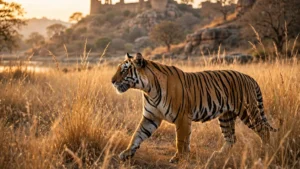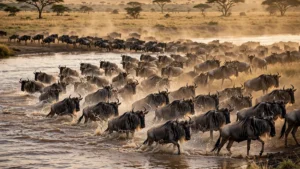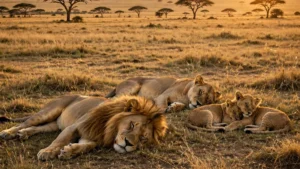
South Africa animals include the Big Five on the savannas of Kruger, penguins on the beaches of the Cape Peninsula and whales off the coast of Hermanus. If you are wondering which animals live in South Africa and where to see them, the short answer is this: lions, leopards, rhinos, elephants and buffalo live in the great parks of the north and east, penguins and seals live on the southern coast, and whales gather offshore in the winter months.
South Africa holds some of the finest wildlife watching in Africa, because so much of the country is national park, private reserve and coastline. This guide covers the species you are most likely to meet, where each one lives and the best seasons to see them.
Key takeaways
- South Africa’s most iconic animals are the Big Five: lion, leopard, black rhino, white rhino, African elephant and Cape buffalo.
- Kruger National Park is the largest reserve in the country and the best place to see the Big Five together.
- The African penguin lives only on the southern coast of Africa, and Boulders Beach near Cape Town is the best place to see it.
- Whales gather off Hermanus and the Garden Route coast in winter, and the sardine run moves up the east coast in early winter.
- The dry winter months, from May to September, are the best time for most wildlife watching, while the green summer brings newborn animals.
What makes South Africa’s wildlife special
South Africa stretches from the Kalahari desert in the north-west to the green hills of KwaZulu-Natal in the east and the fynbos shrubland of the Western Cape in the south. That range covers savanna, bushveld, semi-desert, high mountains, forest and two long sea coasts, so the country holds species from several habitats at once.
The Kruger National Park, in the north-east, is the heart of South Africa’s wildlife. Its savannas and riverine forests hold lions, leopards, elephants, rhinos, buffalo, giraffes, zebras and antelope in large numbers, and the park is one of the best places in Africa to see the Big Five together in a single visit.
What sets South Africa apart is the combination of land and sea. The country has two oceans, the Atlantic in the west and the Indian Ocean in the east, and the cold Benguela Current brings nutrients that feed whales, seals, penguins and great white sharks. Few countries hold lions on the savanna and penguins on the beach within a single day’s drive.
The great mammals of South Africa
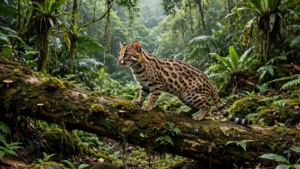
The lion is the animal most visitors hope to see, and Kruger is one of the best places on earth to find it. Lions rest in the shade of mopane trees by day and hunt at dawn and dusk, and the prides of Kruger are large and often easy to spot. Leopards are shyer, resting in the branches of leadwood trees along the rivers, while cheetahs hunt on the open grassland of the Kalahari.
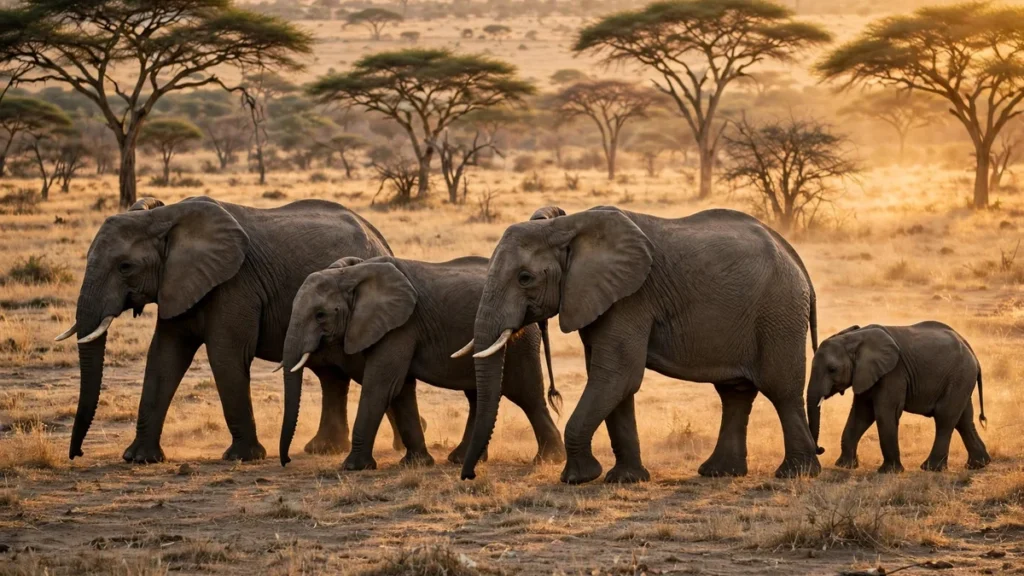
The African elephant is South Africa’s largest land animal, and the Addo Elephant National Park, near Gqeberha, was founded to protect a small remnant herd. Today Addo holds hundreds of elephants, and its thickets and waterholes are one of the best places to see them at close range. Elephants also live in Kruger, where large herds gather at the rivers in the dry season.
South Africa holds both species of African rhino. White rhinos graze on open grassland in Kruger and in Hluhluwe-iMfolozi, while black rhinos browse in the thickets of the same parks. Both are heavily protected, and rangers guard them around the clock. Giraffes browse the acacia woodland across the northern parks, and zebras and wildebeest graze the open plains in large herds.
Cape buffalo gather in large herds near water, and hippos crowd the rivers and dams of Kruger, coming out to graze at night. Among the predators, spotted hyenas hunt and scavenge across the savanna, and African wild dogs are rare but present in Kruger and in the northern reserves.
Birds of South Africa
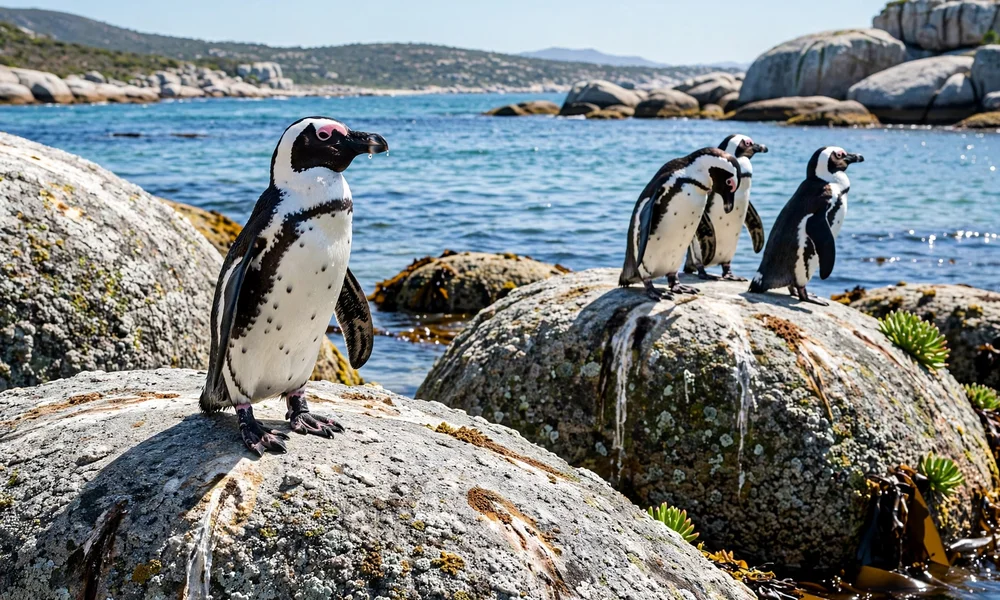
The African penguin is the country’s best-known bird. It lives only on the southern coast of Africa, breeding on offshore islands and on the mainland at Boulders Beach near Cape Town, where a colony nests among the granite boulders and the wooden boardwalks let visitors watch them without disturbing them.
The lilac-breasted roller, with its bright blue, green and lilac plumage, perches on acacia branches across the savanna, and the southern ground hornbill, a large black bird with a red face, walks the grassland in family groups. The ostrich strides across the open plains of the Karoo and the Kalahari, and the secretary bird stalks through the grass on long legs, hunting snakes.
The fynbos shrubland of the Western Cape holds birds found nowhere else, including the Cape sugarbird and the orange-breasted sunbird, both of which feed on the flowers of the protea. Like the coastal animals of other countries, South Africa’s seabirds, from Cape gannets to African penguins, depend on healthy seas and undisturbed islands.
Rivers, coasts and smaller wildlife
The coast is the second half of South Africa’s wildlife. In winter, southern right whales gather in the bays of the Western Cape, and Hermanus is known as the best land-based whale-watching town in the world. Humpback whales pass along the coast in spring and autumn, and dolphins are common in the surf of the Garden Route.
Each winter, the sardine run moves up the east coast from the Cape, a vast shoal of sardines followed by dolphins, sharks, gannets and seals. It is one of the great wildlife events of the country, and it draws predators from across the Indian Ocean.
On land, the Kalahari holds its own wildlife. Meerkats stand on their hind legs in the red dunes, gemsbok and springbok graze the dry grassland, and the black-maned Kalahari lion hunts across the open plains. Smaller mammals live everywhere too: mongooses, genets, bushbabies, rock hyraxes and the dassie, which suns itself on the rocks of Table Mountain.
| Species | Where to look | Best season | How likely is a sighting |
|---|---|---|---|
| Lion | Kruger National Park savanna | Dry season, May to September | Good |
| African elephant | Addo Elephant National Park and Kruger | Dry season, May to September | Good |
| White rhino | Hluhluwe-iMfolozi and Kruger | Dry season, May to September | Fair with a guide |
| Leopard | Kruger riverine woodland | All year | Fair, needs patience |
| African penguin | Boulders Beach near Cape Town | All year | Good |
| Southern right whale | Hermanus and the Western Cape bays | June to November | Good in season |
| Meerkat | Kalahari desert and the Karoo | All year, early morning | Good with a guide |
Best seasons for wildlife watching
The dry winter, from May to September, is the best time for most wildlife watching. The bush thins out, the animals gather at the waterholes, and the days are clear and cool. This is the best time for the Big Five in Kruger and for the whales off Hermanus.
The green summer, from October to April, brings rain, newborn animals and migratory birds. The bush is thick and the animals are harder to find, but the birdwatching is at its best, and the parks are greener and quieter. The sardine run moves up the east coast in early winter, and the whale season runs from June to November.
For the coast, winter is the whale season and summer is the penguin season. Boulders Beach can be visited all year, but the penguins are most active in the breeding season, and the sea is calmest in the summer months.
Staying safe around South Africa’s wildlife
South Africa’s large animals are usually calm, but they deserve respect. Keep your distance from lions, elephants, rhinos, hippos and buffalo, never walk between a mother and her young, and never try to feed or touch any wild animal. Hippos and crocodiles are dangerous in and near the water, so never swim in rivers or lakes where they live.
Always travel with a licensed guide in the national parks, stay inside your vehicle unless your guide says it is safe to get out, and keep your arms and camera inside the vehicle when animals are close. On the coast, keep back from the water’s edge where the waves break, and never approach a seal or a penguin colony beyond the marked paths.
South Africa wildlife watching checklist
- Book a licensed local guide or a safari camp in Kruger or Addo — they know where the animals are.
- Plan around the dry season, from May to September, for the Big Five, and around June to November for the whales.
- Go out at dawn and dusk for lions, leopards and cheetahs, and spend midday at a waterhole or a shaded viewpoint.
- Bring binoculars, a hat, sunscreen and warm layers for cold mornings in the bush, even in the dry season.
- Keep a safe distance from elephants, lions, hippos and buffalo, and never feed baboons or monkeys, which can become aggressive.
- Never feed wild animals, and never use food or calls to lure them closer for a photograph.
- Leave no trace: take your rubbish home, keep to the tracks, and give every animal more space than you think it needs.
Frequently asked questions
What is the most famous animal in South Africa?
The lion is the most famous, and Kruger is one of the best places in the world to see it. The African penguin is the most famous coastal animal, and the southern right whale is the most famous marine animal.
Where is the best place to see the Big Five?
Kruger National Park is the best place to see all five together — lion, leopard, rhino, elephant and buffalo — and the private reserves on its western boundary are among the best places in Africa for leopards. Addo is the best place for elephants.
Can I see penguins in South Africa?
Yes. African penguins live on the southern coast, and Boulders Beach near Cape Town is the best place to see them. A colony nests among the granite boulders, and the boardwalks let visitors watch them without disturbing them.
When is the best time to see whales in South Africa?
June to November is the whale season, when southern right whales gather in the bays of the Western Cape. Hermanus is the best place to watch them from land, and boat trips run from the harbour in season.
Are there elephants in South Africa?
Yes. Addo Elephant National Park holds hundreds of elephants, and Kruger holds large herds that gather at the rivers in the dry season.
How is this guide different from the Tanzania animals guide?
This guide covers South Africa’s own wildlife — the Big Five of Kruger, the penguins of Boulders Beach, the whales of Hermanus and the meerkats of the Kalahari — while the Tanzania animals guide covers the Serengeti, the Ngorongoro Crater and the great migration. The two countries share lions, elephants and leopards, but South Africa’s penguins, whales and fynbos birds are found in neither Tanzania nor Kenya.
Conclusion
South Africa’s wildlife rewards patience: the Big Five on the savannas of Kruger, penguins on the beaches of the Cape Peninsula, whales off the coast of Hermanus and meerkats in the red dunes of the Kalahari are all within reach if you plan around the seasons.
The next step is to pick one place and one season — a dry-season safari in Kruger, a winter whale trip to Hermanus, or a visit to Boulders Beach for the penguins — and plan your visit around it.