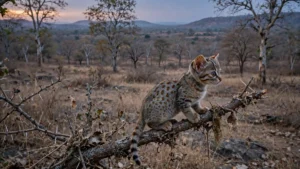
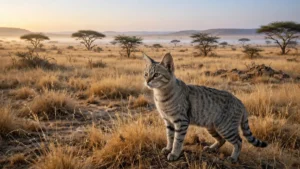
Morocco animals range from Barbary macaques in the cedar forests of the Atlas Mountains to fennec foxes in the Sahara dunes, and few countries pack so much wildlife into such a small space. If you are wondering which animals live in Morocco and where to see them, the short answer is this: macaques and Barbary sheep in the mountains, the rare northern bald ibis on the Atlantic coast, flamingos in the coastal lagoons, and desert foxes and gazelles in the Sahara.
Morocco sits where Africa meets Europe, with the Atlantic on one side, the Mediterranean on the other, and the Atlas Mountains down its spine. This guide covers the species you are most likely to meet, where each one lives, and the best seasons to see them.
Key takeaways
- Morocco’s most iconic animals are the Barbary macaque, northern bald ibis, fennec fox, dorcas gazelle and Barbary sheep.
- The Atlas Mountains, the Sahara and the Atlantic coast sit side by side, so mountain, desert and coastal wildlife can all be seen on one trip.
- The northern bald ibis survives in the wild mainly at Souss-Massa National Park, and it is one of the rarest birds in the world.
- The Barbary lion is extinct in the wild, so no honest guide can promise a sighting — but Morocco’s living wildlife is remarkable enough without it.
- Spring and autumn are the best seasons, with mild weather and the great bird migration over the Strait of Gibraltar.
What makes Morocco’s wildlife special
Morocco holds three worlds in one country. The Atlas Mountains rise to snow-capped peaks and cool cedar forests, the Sahara spreads across the south in dunes and rocky plains, and the long Atlantic coast holds lagoons, estuaries and cliffs. An animal of cold mountain forest and an animal of hot desert sand can both be Moroccan, and a traveller can move between their worlds in a single day.
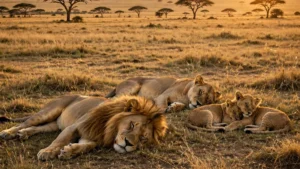
Morocco also has a famous animal that is gone. The Barbary lion, the great lion of North Africa, is extinct in the wild, and the last wild animals disappeared many decades ago. A few zoo lions are said to descend from Barbary stock, but none survive in the wild in Morocco. The animals that do survive here, from the macaques of the cedar forests to the bald ibis of the coast, are rare and remarkable in their own right.
The great mammals of Morocco
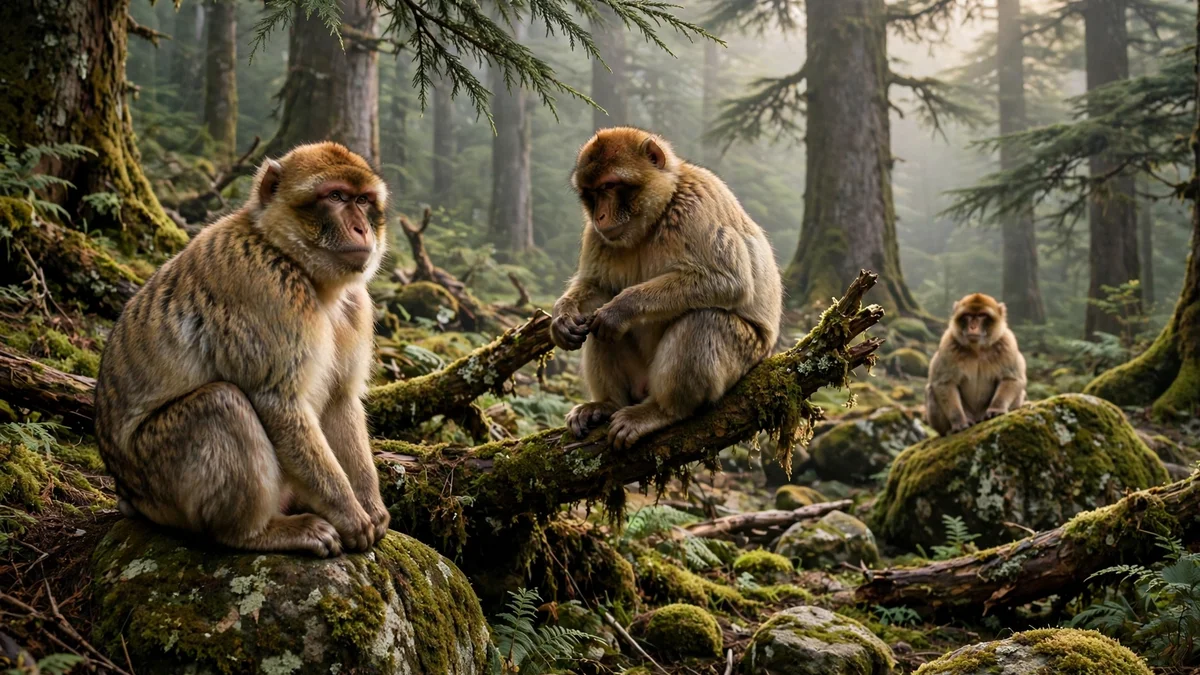
The Barbary macaque is the animal most visitors hope to see, and the only monkey found wild in Africa north of the Sahara. The macaques live in troops in the cedar and oak forests of the Middle Atlas, around Ifrane and Azrou, foraging on the forest floor and grooming each other in the branches. They are bold in busy clearings, so watch from a distance and never offer food.

The Barbary sheep, also called the aoudad, is a wild sheep of the rocky mountains and desert hills, with curved horns and a shaggy mane. It lives in the Atlas Mountains and in the rocky country towards the Sahara, climbing steep slopes with ease and surviving on sparse desert plants.
The dorcas gazelle is a small, graceful desert antelope, built for speed and for life with very little water. It lives in the southern deserts and the pre-Saharan steppe, often in small groups, and it is most active in the cooler hours of the morning and evening. Like other desert animals of North Africa, it can go for long periods without drinking.
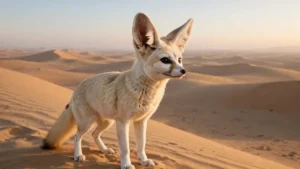
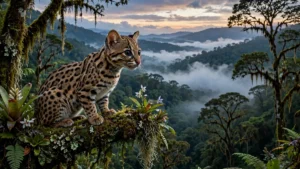
Among the predators, the striped hyena is the largest, a shy nocturnal scavenger that roams the dry hills and desert edges after dark. The caracal is a wild cat with long black ear tufts, hunting birds and small mammals in the scrub, while the sand cat, one of the smallest wild cats in the world, lives in the deep Sahara and is rarely seen. The fennec fox, with its huge ears and pale sandy coat, is the desert’s most famous small mammal, hunting at night in the dunes near Merzouga.
Birds of Morocco
The northern bald ibis is Morocco’s rarest bird, and one of the rarest birds in the world. This dark, bare-headed ibis with a shaggy crest survives in the wild mainly along the Atlantic coast at Souss-Massa National Park, where it nests on the sea cliffs and feeds in the coastal fields. It was once widespread across North Africa and Europe, but it is now critically endangered, and the Souss-Massa colony is the heart of its survival. Visitors should keep well back from the cliffs.
The white stork is a far more familiar sight, nesting on rooftops, chimneys and poles in towns and villages across the country. The birds arrive in spring and raise their young through the summer. Flamingos gather in the coastal lagoons, above all at Merja Zerga, where the shallow water and mudflats suit them, and the lagoon also holds ducks, waders and herons through the winter.
The Strait of Gibraltar is one of the great birdwatching spectacles on earth. In spring and autumn, storks, eagles, vultures and other raptors cross between Europe and Africa in huge numbers, using the narrow strait as their bridge. On a good day, hundreds of birds of prey can pass overhead.
Rivers, coasts and smaller wildlife
Morocco’s Atlantic coast is a world of its own. The lagoons and estuaries, from Merja Zerga to Souss-Massa and Khenifiss, hold flamingos, spoonbills, herons and waders, and the tidal mudflats are rich feeding grounds at low tide. Dolphins are sometimes seen offshore.
Inland, the rivers that run down from the Atlas Mountains water the valleys and oases, and their banks hold frogs, terrapins and kingfishers. The Souss-Massa wetlands are among the most important in North Africa, not only for the bald ibis but for the whole community of wetland animals that depends on fresh water in a dry land.
The desert holds smaller wildlife that is easy to miss. Jerboas hop across the sand at night, desert hedgehogs forage in the scrub, and the sandfish skink swims through loose sand. Horned vipers live in the dunes, and the spiny-tailed lizard basks on rocks in the heat of the day.
| Species | Where to look | Best season | How likely is a sighting |
|---|---|---|---|
| Barbary macaque | Cedar forests of the Middle Atlas, around Ifrane and Azrou | All year, best in spring and autumn | Good in the forest clearings |
| Northern bald ibis | Sea cliffs of Souss-Massa National Park | All year, best in spring | Fair with a guide, keep your distance |
| Fennec fox | Sahara dunes near Merzouga | Spring and autumn, at night | Fair on a guided night walk |
| Dorcas gazelle | Southern deserts and pre-Saharan steppe | Spring and autumn, dawn and dusk | Fair |
| Barbary sheep | Rocky slopes of the Atlas Mountains | Spring and autumn, dawn and dusk | Low, shy and well camouflaged |
| Flamingo | Merja Zerga and other Atlantic lagoons | Winter, best in the early morning | Good in season |
| White stork | Rooftops and poles in towns and villages | March to September | Good in season |
Best seasons for wildlife watching
Spring is the finest season. The Atlas Mountains are green after the winter rains, the macaques are active in the cedar forests, the bald ibis is busy at its cliff nests, and the great migration of storks and raptors passes over the Strait of Gibraltar. The desert is warm but not yet at its hottest. Spring is also the most sensitive season, so keep to paths and give nesting birds more space than you think they need.
Summer is the hardest season for wildlife watching. The Sahara is fiercely hot by day, and most desert animals are active only at night, so desert trips should be planned around dawn, dusk and night walks with a local guide. The mountains are cooler, the storks are raising their young, and the Atlantic coast is at its best.
Autumn is the second great season. The migration passes over the Strait of Gibraltar again, the desert cools enough for comfortable days, and the flamingos and waders begin to arrive at the coastal lagoons. Winter is the quiet season, and the best for the lagoons, when Merja Zerga holds its largest flocks and desert nights are cold.
Staying safe around Morocco’s wildlife
Morocco’s wildlife is not generally dangerous, but it deserves respect. Keep your distance from macaques, which can bite if they feel cornered or if food is involved, and never try to feed or touch any wild animal. Watch where you put your hands and feet in the desert, where scorpions and snakes shelter under rocks and in the sand, and shake out shoes left on the ground overnight. Like the predators of other wild places, Morocco’s larger animals are shy and avoid people, so the real risks are heat, sun and dehydration — carry water and plan desert walks for the cooler hours.
Morocco wildlife watching checklist
- Book a local guide for Souss-Massa, the Middle Atlas and a desert night walk near Merzouga.
- Go out at dawn or dusk for mammals, and plan lagoon trips for spring and autumn.
- Bring binoculars, warm layers, sun protection and plenty of water.
- Keep at least 50 metres from nesting birds and the bald ibis cliffs, and far more from any animal with young.
- Never feed wild animals, or use food to lure them closer for a photograph.
- Watch your step in the desert, shake out shoes left on the ground, and leave no trace.
- Carry a field guide or bird identification app.
Frequently asked questions
What is the most famous animal in Morocco?
The Barbary macaque is the most famous, and the cedar forests of the Middle Atlas are the best place to see it. The northern bald ibis is the rarest, and the fennec fox is the most famous animal of the Sahara.
Are there lions in Morocco?
No, not in the wild. The Barbary lion is extinct in the wild, and there are no wild lions left in Morocco.
Where can I see Barbary macaques in Morocco?
Barbary macaques live in the cedar and oak forests of the Middle Atlas, above all around Ifrane and Azrou. They are easiest to see in the forest clearings in the morning.
When is the best time to see flamingos in Morocco?
Flamingos are best at the coastal lagoons, above all Merja Zerga, in winter, when the flocks are at their largest. They can also be seen at Souss-Massa and the Khenifiss lagoon.
Can I see a fennec fox in the Sahara?
Yes, with patience and a local guide. Fennec foxes are nocturnal, so the best chance is a guided night walk in the dunes near Merzouga in spring or autumn.
How is this guide different from the Egypt animals guide?
This guide covers Morocco’s Atlas Mountains, Atlantic coast and Sahara edge, from Barbary macaques and the northern bald ibis to fennec foxes, while the Egypt animals guide covers the Nile, the Red Sea and the Sinai desert, from dugongs and flamingos to Nubian ibex. Both are North African countries with desert wildlife, but Morocco’s mountains and Atlantic coast give it animals Egypt does not have, and Egypt’s Nile and Red Sea give it animals Morocco does not have.
Conclusion
Morocco’s wildlife rewards patience: Barbary macaques in the cedar forests of the Atlas, the rare bald ibis on the cliffs of Souss-Massa, flamingos on the Atlantic lagoons and fennec foxes in the Sahara dunes are all within reach if you plan around the seasons and go with a local guide.
The next step is to pick one species and one season — a spring morning with the macaques of Azrou, a winter dawn at Merja Zerga, or an autumn night walk near Merzouga — and plan your visit around it. The forest animals of the Atlas and the desert animals of the Sahara belong to two different worlds in the same country.