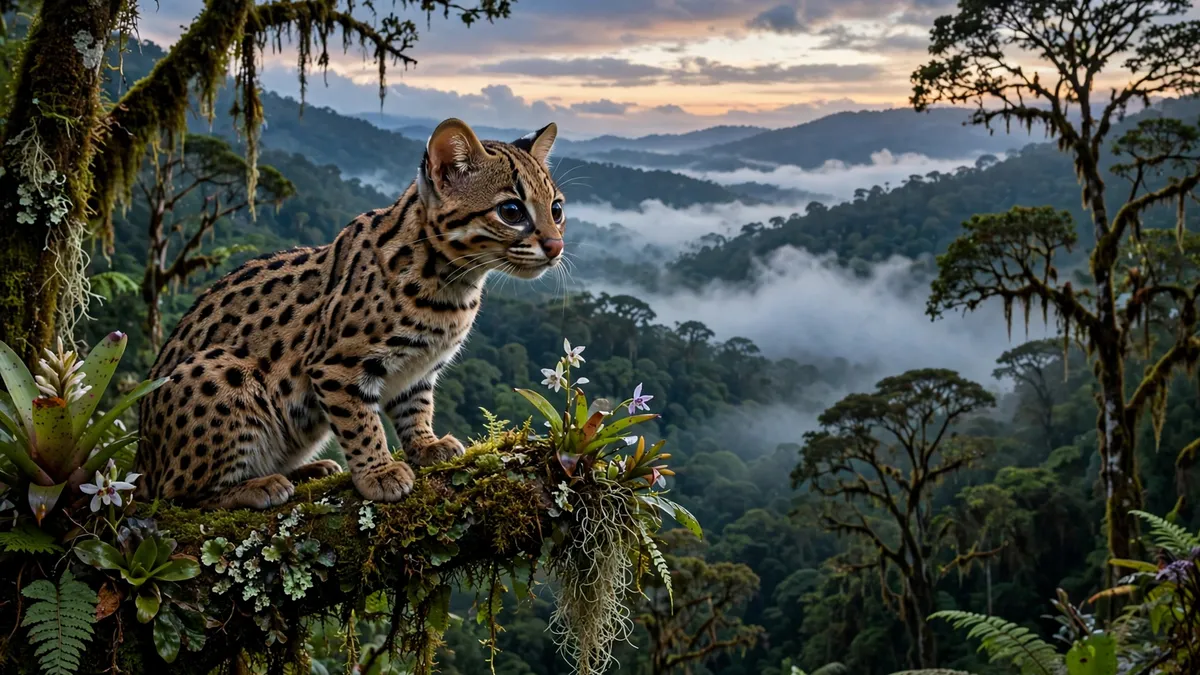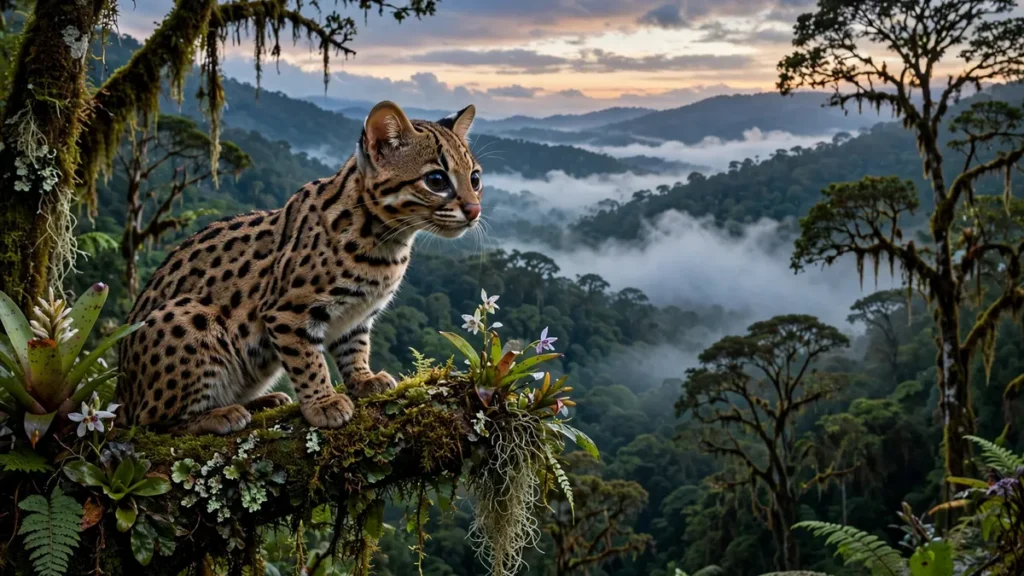
The oncilla species is one species, Leopardus tigrinus, a tiny spotted cat that lives in the forests of Central and South America. If you are asking how many oncilla species there are, the answer is one. It weighs only about 1.5 to 3 kilogrammes, roughly the size of a small house cat, and it spends much of its life in the trees, hunting after dark. It looks like a miniature ocelot, but it is a cat in its own right, and one of the smallest wild cats in the Americas.
The oncilla is easy to miss, and that is part of its charm. It is nocturnal, quiet and at home high in the forest canopy, so most people who live near it never see one. It is often confused with the ocelot and the margay, two spotted cats that share its forests, but the oncilla is much smaller than either of them. It is listed as Vulnerable, and its forest home is shrinking, which makes every sighting a small piece of good fortune.
Key takeaways
- There is only one oncilla species, Leopardus tigrinus, a small spotted cat of Central and South American forests.
- Oncillas weigh about 1.5 to 3 kilogrammes, with a head and body of 38 to 59 centimetres.
- They are nocturnal and tree-dwelling, hunting small mammals, birds and lizards in the forest canopy at night.
- Oncillas are often confused with ocelots and margays, but they are much smaller than both.
- The oncilla is listed as Vulnerable, mainly because its forest habitat is being cleared and broken up.
What makes an oncilla an oncilla
An oncilla is a small, slender cat with a short golden-brown coat marked with dark spots and short dark streaks, a pale belly and a long, ringed tail. Its head is small and rounded, with large ears and very large eyes that gather what little light reaches the forest at night. An adult measures about 38 to 59 centimetres in head and body length, with a tail of 20 to 42 centimetres, and usually weighs between 1.5 and 3 kilogrammes.
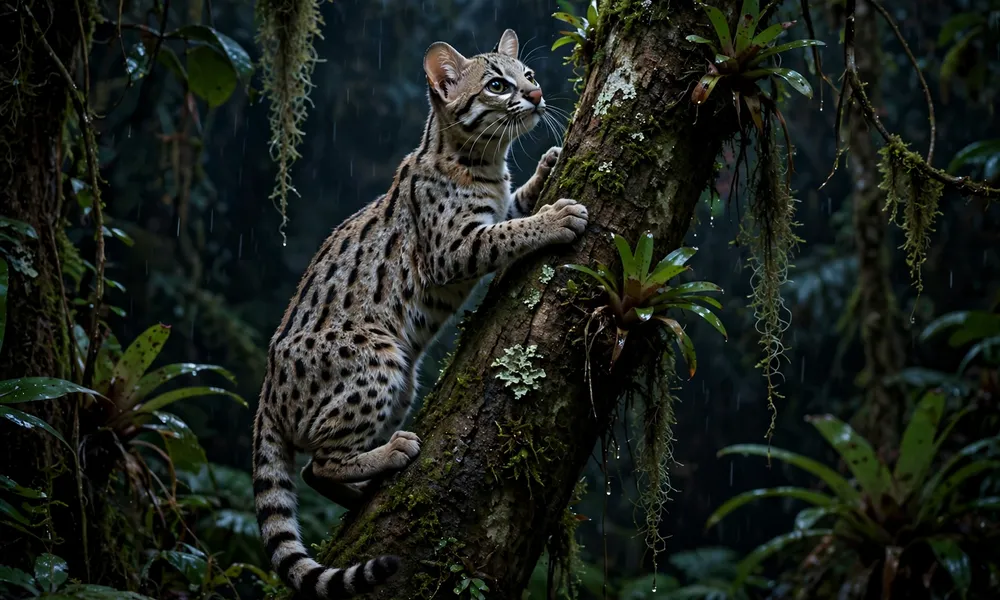
The oncilla’s large eyes are its most useful tool. It hunts at night, when the forest is dark, and its eyes take in far more light than ours do. Its body is built for the trees too: it is light, agile and sure-footed, with strong claws that grip bark, and it can leap from branch to branch and climb down a trunk head first.
What sets the oncilla apart from its lookalikes is its size. An ocelot weighs three to five times as much, and a margay is larger too, with a longer tail and even bigger eyes for its size. The oncilla is also more of a forest cat than the ocelot, which hunts on the ground as well as in the trees, and it is found higher in the mountains, in cloud forest up to about 3,000 metres.
The oncilla species and its relatives
Leopardus tigrinus is the only oncilla species, and it sits in the genus Leopardus alongside the ocelot, the margay, the kodkod and Geoffroy’s cat. A few subspecies have been described across its wide range, from Costa Rica to northern Argentina, but they are all the same species. It belongs to the cat family, Felidae, and its closest kin are the other small spotted cats of the Americas, all of them hunters of forest and scrub.
The ocelot is the oncilla’s best-known relative and its most frequent lookalike, but it is a far bigger cat, weighing 8 to 16 kilogrammes, and it hunts mostly on the forest floor. The margay is closer in size and also lives in the trees, yet it is larger, with a longer tail. Further afield, the kodkod of Chile and Argentina is almost as small, the jaguarundi is a plain-coated cousin, and the puma, the clouded leopard and the serval show how widely the cat family has spread.
| Type | Animal | Where it lives | Best-known food | Length |
|---|---|---|---|---|
| Species | Oncilla (Leopardus tigrinus) | Central and South American forests | Small mammals, birds and lizards | 38 to 59 cm body |
| Close relative | Ocelot | Central and South America | Small mammals and birds | 55 to 100 cm body |
| Close relative | Margay | Central and South America | Small mammals, birds and frogs | 48 to 79 cm body |
| Close relative | Kodkod | Chile and southern Argentina | Rodents, birds and lizards | 37 to 51 cm body |
| Close relative | Jaguarundi | Central and South America | Rodents, birds and reptiles | 53 to 77 cm body |
| Close relative | Puma | North and South America | Deer and small mammals | 105 to 180 cm body |
| Close relative | Clouded leopard | Forests of South-east Asia | Monkeys, deer and birds | 68 to 108 cm body |
| Close relative | Serval | African grassland and wetlands | Rodents, birds and frogs | 59 to 92 cm body |
How oncillas live
Oncillas are solitary cats. Each adult holds a home range in the forest, marked with scent and defended against other oncillas of the same sex. They rest by day, curled in a tree hollow or on a shaded branch, and become active after dark. Like other nocturnal animals, they use the night for cover, when their large eyes give them an edge over their prey.
Small mammals are the oncilla’s main food, especially mice, rats and other rodents, along with small birds, lizards and frogs. It hunts both in the trees and on the forest floor, moving quietly along branches and pouncing on prey it hears rustling below.
Breeding can happen at any time of year. After a gestation of about 74 to 76 days, the female gives birth to one or two kittens in a sheltered den, often in a tree hollow or among rocks. The kittens open their eyes at about 17 days and start to take solid food at around two months.
Where oncillas live
The oncilla’s range runs from Costa Rica and Panama in Central America, south through Colombia, Venezuela, Ecuador and Peru, and east across Brazil to Bolivia and northern Argentina. It is a forest cat through and through, and it is one of the most widespread of the small rainforest animals, found in lowland rainforest, montane forest and cloud forest alike.
Within that range the oncilla favours dense, undisturbed forest, and it climbs higher than most of its relatives, living in cloud forest up to about 3,000 metres. It also uses forest edges and shaded coffee plantations where the tree cover remains, but it avoids open farmland and towns.
The species is listed as Vulnerable, and its numbers are thought to be falling. The main pressure is the loss of forest to farming, logging and settlement, which shrinks its hunting grounds and cuts off the routes between populations.
Best seasons for oncilla watching
Oncillas are active all year, so there is no closed season, but the dry season is usually the best time to look for them. Trails are easier to walk, night walks are less likely to be rained off, and prey gathers near the remaining water, bringing hunters with it.
The wet season has its own rewards. There is more prey about, and oncillas are often bolder near the edges of the forest. The best hours are the first few after dark, when oncillas leave their daytime rests to hunt.
Good places to try include the cloud forests of Costa Rica, the reserves of Ecuador and the Atlantic Forest of Brazil, where oncillas are among the forest animals that guides know best. A local guide makes a real difference, because oncillas are quiet, quick and high in the trees.
Staying safe around oncillas
An oncilla is a wild cat with sharp teeth and strong claws, and although it is far too small to be a danger to people under normal conditions, it should always be treated with respect. Keep your distance, never approach one on foot, and never try to touch or feed it, because a cornered cat can bite hard.
Oncillas are sometimes seen near farms and villages at the forest edge, where they may take poultry or small pets. If you are staying near the forest, keep chickens and small pets shut away at night and ask the local staff how oncillas are managed in the area.
The other safety issue is the pet trade. Oncillas are sometimes sold as exotic pets, but they make poor ones: they are active, restless and nocturnal, need a large space to climb and hunt, and can injure a person badly when frightened. Keeping one is illegal in many places.
Oncilla watching checklist
A little preparation turns a night walk into a real chance of seeing an oncilla, so pack for dark forest and long, quiet waits.
- Binoculars with good low-light performance, for picking a small spotted cat out of the branches.
- A red-filtered torch, for scanning the trees without dazzling the animals.
- A camera with a fast shutter speed, ready for a sudden move between branches.
- Dark, quiet clothing that blends into the forest and does not rustle.
- Water, insect repellent and a light rain jacket, because oncilla country is warm and wet.
- A booked local guide who knows the trails, the territories and the oncilla calls.
- Patience and silence, because oncillas are quiet, shy animals and a noisy group will send them away.
Frequently asked questions
How many oncilla species are there?
There is one oncilla species, Leopardus tigrinus. A few subspecies have been described across its range, from Costa Rica to northern Argentina, but they are all the same species.
How big is an oncilla?
An oncilla is one of the smallest wild cats in the Americas. Adults weigh about 1.5 to 3 kilogrammes, with a head and body of 38 to 59 centimetres and a tail of 20 to 42 centimetres. It is roughly the size of a small house cat.
What do oncillas eat?
Oncillas eat small mammals, especially mice and rats, along with small birds, lizards and frogs. They hunt both in the trees and on the forest floor.
How is this guide different from the ocelot species guide?
This guide covers the single oncilla species, a tiny tree-dwelling cat of Central and South American forests that weighs only 1.5 to 3 kilogrammes, while our ocelot species guide covers the ocelot, a much larger spotted cat that weighs 8 to 16 kilogrammes and hunts mostly on the forest floor. The two are close relatives, but they differ greatly in size and in how they live.
Is an oncilla the same as a margay?
No, although the two are close relatives and easy to confuse. The margay is larger, with a longer tail and even bigger eyes, and it spends almost all of its life in the trees. Our margay species guide covers that cat in full, while this guide covers the smaller, more mountain-loving oncilla.
Are oncillas endangered?
Oncillas are listed as Vulnerable, which means they are not classed as endangered but are at risk of becoming so. Their numbers are falling as forest is cleared for farming and settlement.
Conclusion
The oncilla species shows how much wildness one tiny cat can hold: Leopardus tigrinus, with its spotted coat, its very large eyes and its life in the branches, a hunter built for the dark forests of Central and South America.
If you go looking for one, go after dark, go with a guide, and go quietly. Watch an oncilla pause on a mossy branch, and you will understand why this small cat has earned its place in the forest, and why keeping its wild, standing forest matters most.