Nocturnal animals are the creatures that are active at night and rest during the day, from owls and bats to badgers, foxes and fireflies. If you are wondering which animals come out after dark, the short answer is this: a huge share of the animal kingdom, including most bats, many owls, and familiar mammals like the badger, the hedgehog and the fox, all of them equipped with senses built for the dark.
This guide covers the best-known nocturnal animals, grouped by how they hunt, feed and move after sunset — the ones that matter most, and what they show about life without daylight.
Key takeaways
- Nocturnal animals include owls, bats, badgers, foxes, hedgehogs, moths and fireflies.
- Night animals rely on hearing, smell and touch far more than on sight, though many see well in low light.
- Owls hunt by hearing, bats hunt by echolocation, and badgers hunt by smell.
- Many animals are active at dawn and dusk rather than in the middle of the night.
- Artificial light is now one of the biggest threats to nocturnal wildlife.
Owls: hunters of the night
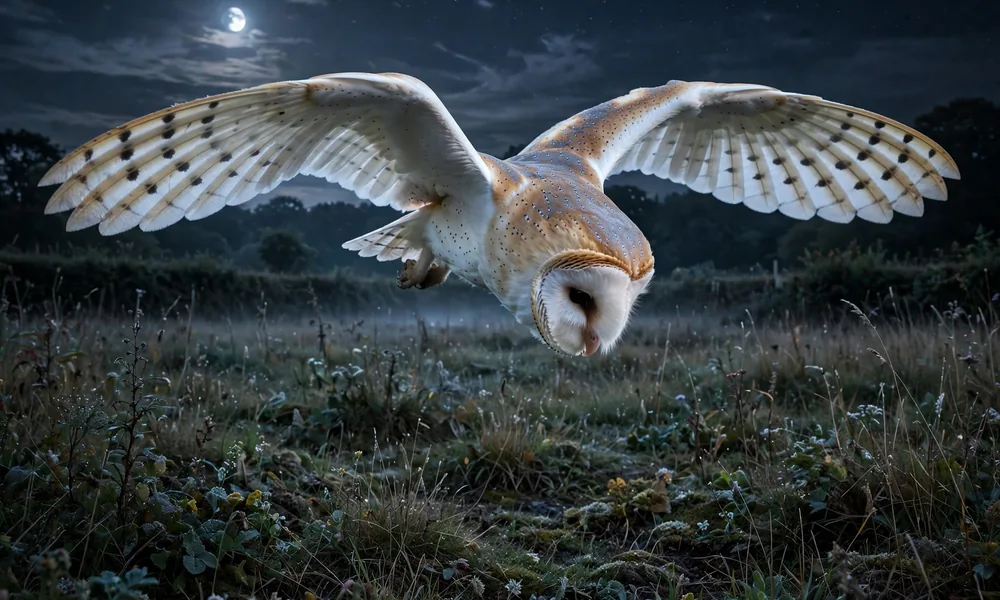
The owl is the most famous nocturnal animal of all, and the barn owl is its best-known representative. It is a pale, heart-faced bird that hunts mice and voles over fields and barns, and it is found on every continent except Antarctica. Its flight is silent, thanks to soft fringes on its wing feathers. Its ears are set at different heights on its head, which lets it pinpoint a sound in three dimensions, and it can strike its prey in complete darkness.
The tawny owl is the common owl of European woodland, and its hooting is the classic sound of the night forest. It is a stocky, brown bird that hunts from a perch, dropping silently onto mice, voles and small birds. The great grey owl is the largest owl in Europe, a tall, grey bird of northern forests, and it can hear a vole moving under deep snow, then plunge through the snow crust to catch it. The snowy owl, white and striking, hunts in the Arctic summer, when the night never truly falls, and it is active by day as well as by night.
Other night birds include the nightjar, which hunts moths on the wing at dusk. Like the owl species of every continent, these birds show that the night belongs to those with the senses to use it.
Bats: the only flying mammals
Bats are the only mammals that can truly fly, and most of them are nocturnal. There are more than 1,400 species, from the tiny bumblebee bat, the smallest mammal in the world, to the fruit bats of the tropics, which pollinate trees and spread seeds. Most bats hunt insects, and they find their prey by echolocation, sending out high-pitched calls and listening to the echoes that bounce back from moths, beetles and other flying insects.
A single bat can eat hundreds of insects in one night, which makes bats some of the most useful animals to farmers and gardeners. They roost during the day in caves, trees, roofs and barns, hanging upside down in colonies that can number in the thousands, and they emerge at dusk. The pipistrelle, a small bat common across Europe, weighs only a few grams, yet it can catch and eat thousands of midges in a single summer night.
Fruit bats, or flying foxes, are large, feed on fruit and nectar, and pollinate trees as they go. Like the small animals of the day, bats are small, but their role in the night is enormous.
Badgers, foxes and hedgehogs
The badger is the great digger of the night. It is a stocky, black-and-white mammal that lives in setts, or burrows, and emerges at dusk to feed on earthworms, small animals, roots and fruit. A badger can eat hundreds of earthworms in a single night, and it follows regular paths, or runs, through its territory, marking them with scent. Badgers are social, living in family groups called clans, and they are one of the most familiar night animals of the European countryside.
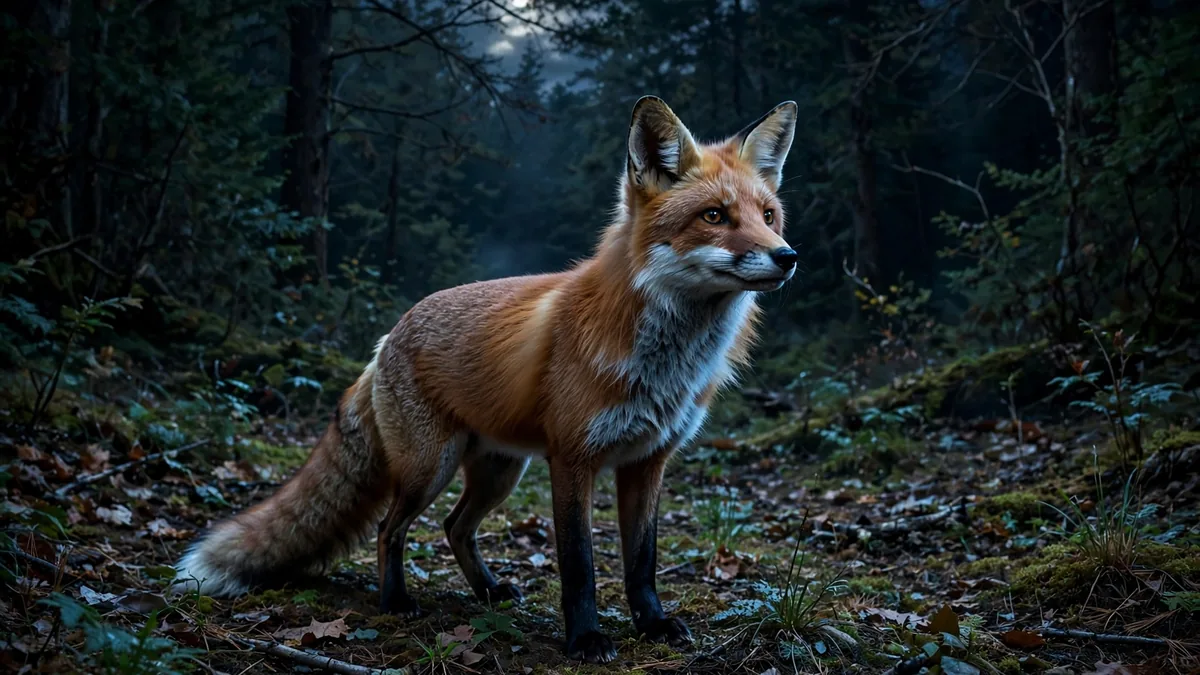
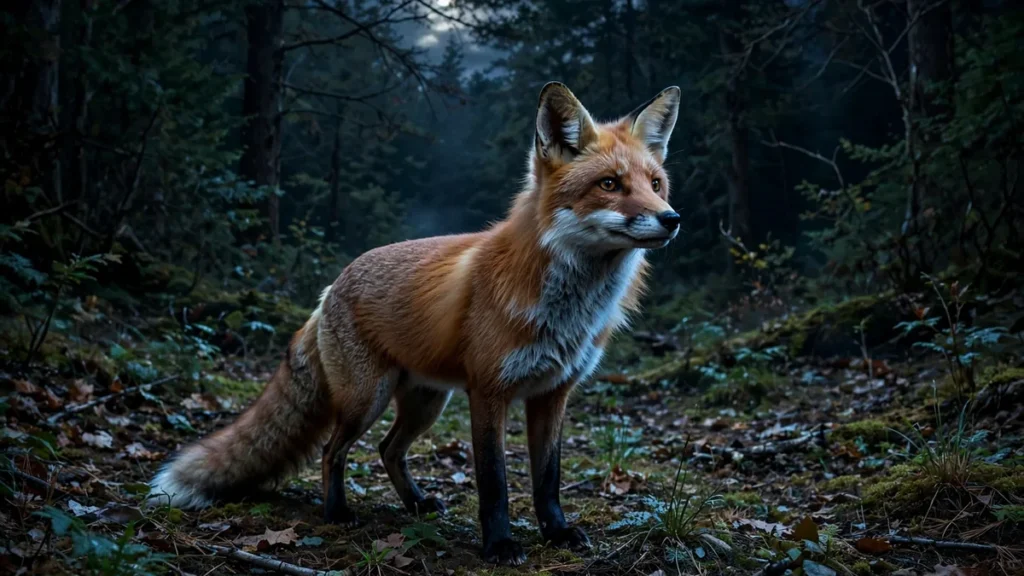
The red fox is the most adaptable night hunter of all. It is found across Europe, Asia and North America, in forests, fields, mountains and cities, and it hunts mice, voles, rabbits and birds, using hearing so sharp that it can hear a mouse moving under snow. Foxes are also scavengers, and they have learned to live alongside people, visiting gardens and streets at night for food. The red fox is a familiar sight on night cameras, its eyes shining in the dark, and its bark is one of the strangest sounds of the night.
The hedgehog is the small, spiny gardener of the night. It snuffles through gardens and woodland edges, eating slugs, beetles, worms and fallen fruit, and it rolls into a ball of spines when threatened. Hedgehogs hibernate through the winter, and they are often seen crossing lawns and paths in the dark.
Fireflies, moths and the night insects
The firefly is the most magical of all nocturnal animals. It is a beetle that makes its own light, flashing a green or yellow glow from its abdomen to attract a mate, and on a warm summer night, a field full of fireflies looks like a sky full of slow stars. Each species has its own flashing pattern, a code that lets males and females find each other in the dark.
Moths are the night shift of the butterfly world, and there are far more moth species than butterfly species. They are drawn to flowers that open at night, and they pollinate them, just as bees pollinate flowers by day. The death’s-head hawkmoth is one of the largest, with a wingspan that can reach thirteen centimetres, and it is famous for the skull-like marking on its back. Moths are also the main food of bats and nightjars, and their numbers have fallen in many places as artificial light draws them away from their feeding grounds.
Other night insects include the cricket, whose song fills warm evenings. The predator animals of the night depend on these insects, and the whole night food chain, from moth to bat to owl, rests on them.
How nocturnal animals sense the dark
Night animals have senses that are far better than ours, and each group has its own speciality. Owls have huge eyes that gather far more light than ours, and they can see in light so dim that we would call it darkness. Their hearing is even better: the barn owl can locate a mouse by sound alone, in a pitch-black barn. Cats, including the domestic cat and the wildcats of the night, have a reflective layer behind the retina, which is why their eyes shine in torchlight.
Bats use echolocation, a sense that humans do not have at all. They call, they listen, and they build a picture of the world from echoes, able to detect a moth the size of a coin and to avoid obstacles as fine as a wire. Badgers and foxes rely on smell, their main sense, and they can follow a scent trail hours old. Hedgehogs and shrews use touch, with sensitive whiskers and snouts that feel their way through the dark.
Nocturnal animals and people
People have always been fascinated by the night, and nocturnal animals have always shaped our stories, from the wise owl to the bat of folklore. But modern life has changed the night itself. Artificial light, from street lamps, buildings and cars, now brightens the sky over towns and cities, and it confuses moths, disrupts fireflies, and changes the hunting of bats and owls. Light pollution is now one of the biggest threats to nocturnal wildlife, and it is growing every year.
There are simple ways to help. Turning off garden lights, using warm-coloured bulbs and shielding lamps so they point downwards all reduce the light that spills into the dark. Leaving a wild corner in the garden, with log piles and long grass, gives hedgehogs and insects somewhere to live, and a hole in the fence lets hedgehogs travel between gardens. Like the forest animals of the day, night animals need quiet, dark ground, and the best way to see them is to sit still, stay quiet, and let the night come to you.
Watching nocturnal animals is a skill, and it rewards patience. A trail camera, set up in a garden or woodland edge, will show badgers, foxes and hedgehogs within a few nights, and a bat detector, which turns their high calls into sounds we can hear, reveals a whole world of hunting above our heads. The night is not empty: it is full, and it is waiting.
| Animal | Type | Where it lives | Best-known fact |
|---|---|---|---|
| Barn owl | Bird | Worldwide except Antarctica | Hunts by hearing in darkness |
| Pipistrelle bat | Mammal | Europe and Asia | Eats hundreds of insects a night |
| Badger | Mammal | Europe and Asia | Lives in setts, eats earthworms |
| Red fox | Mammal | Europe, Asia, North America | Hears mice under snow |
| Hedgehog | Mammal | Europe and Asia | Rolls into a ball of spines |
| Firefly | Insect | Warm regions worldwide | Makes its own cold light |
| Death’s-head hawkmoth | Insect | Europe, Africa, Asia | Skull marking on its back |
| Snowy owl | Bird | Arctic regions | White owl of the far north |
Nocturnal animals checklist
- Start with the famous ones: barn owl, tawny owl, badger, red fox and hedgehog.
- Remember the bats: pipistrelle, fruit bat and bumblebee bat, the smallest mammal.
- Do not forget the insects: firefly, moth, cricket and cockchafer.
- Add the night birds: nightjar, kiwi and snowy owl.
- Check the senses: owls hear, bats echolocate, badgers smell, and fireflies glow.
- Use this guide for quizzes, school projects and night walks, and add your own favourites.
Frequently asked questions
What is the most famous nocturnal animal?
The barn owl is probably the most famous, along with the bat. The badger is the most familiar night mammal of the countryside, and the firefly is the most magical.
Can owls see in total darkness?
Owls see very well in low light, but they do not see in total darkness. In complete darkness they hunt by hearing alone, and the barn owl can locate a mouse by sound and strike it with precision.
How do bats find their way in the dark?
Most bats use echolocation. They send out high-pitched calls and listen to the echoes that bounce back from insects and obstacles, building a picture of the world from sound. A bat can detect a moth the size of a coin and avoid obstacles as fine as a wire.
Are all bats nocturnal?
Almost all bats are nocturnal, roosting during the day in caves, trees and roofs. A few fruit bats are active at dusk and dawn, but the night is the normal time for bats.
Why do fireflies glow?
Fireflies glow to attract a mate. Each species has its own flashing pattern, a code that lets males and females find each other in the dark. The light is made by a chemical reaction, and it produces almost no heat, which is why it is called cold light.
What time do nocturnal animals come out?
Most emerge at dusk, are most active in the first hours of the night, and return to their roosts or dens before dawn. Badgers and foxes are active all night, while nightjars hunt mainly at dusk and dawn.
Conclusion
The night is not empty: it is full of owls, bats, badgers, foxes and fireflies, each with senses built for the dark. Pick a favourite, learn its story, and the next night walk will feel alive.
Sit quietly in a garden or woodland edge at dusk, switch off the lights, and wait — the night will come to you.