The African elephant species are two: the savanna elephant and the forest elephant, the largest land animals on Earth, with herds led by old females, trunks that can pick up a single leaf, and ears shaped like the continent they live on. If you are asking how many African elephant species there are, the answer is two, recognised as separate species since 2021.
The African elephant belongs to the genus Loxodonta, the same genus as the extinct mammoths, yet it lives very differently from its Asian cousin. It lives in herds of related females and their calves, with the old matriarch leading, and it roams the savannas and forests of Africa, eating up to 300 kilogrammes of plants a day.
Key takeaways
- There are two African elephant species, the savanna elephant and the forest elephant, recognised as separate since 2021.
- African elephants are the largest land animals on Earth, with males weighing up to six tonnes.
- An elephant’s trunk has about 40,000 muscles and can pick up a single leaf or tear down a tree.
- Elephants live in herds led by a matriarch, the oldest female, who remembers where the water is.
- African elephants are listed as Endangered and Critically Endangered, with about 415,000 left in the wild.
What makes an African elephant an African elephant
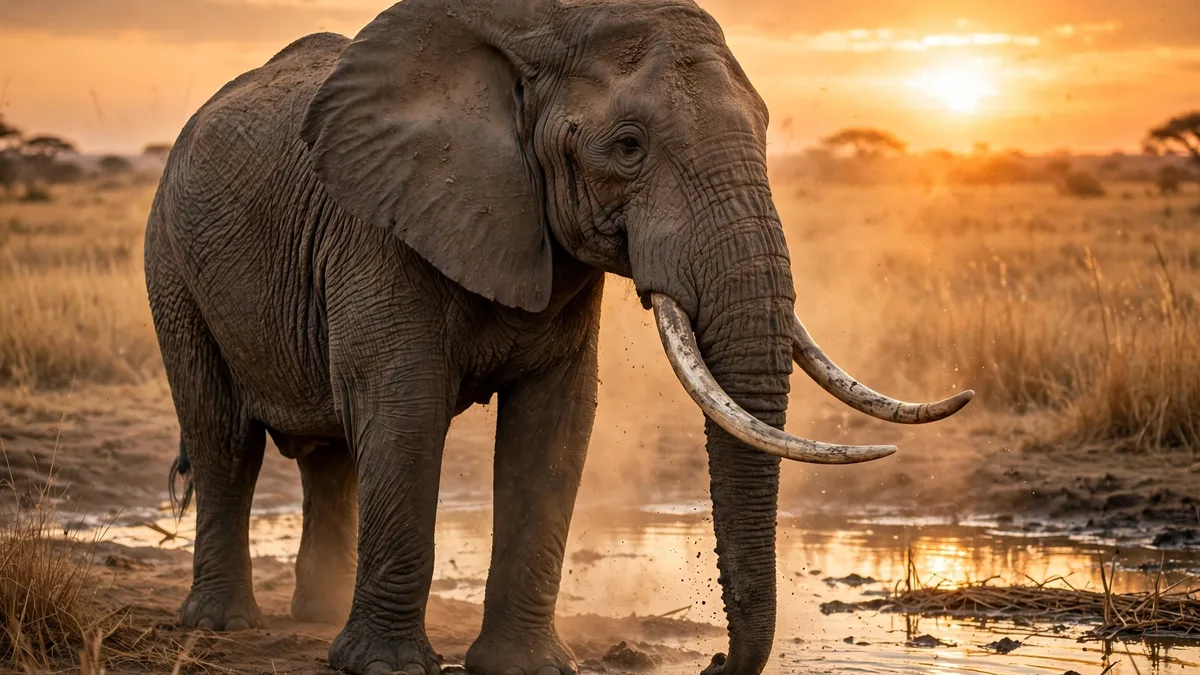
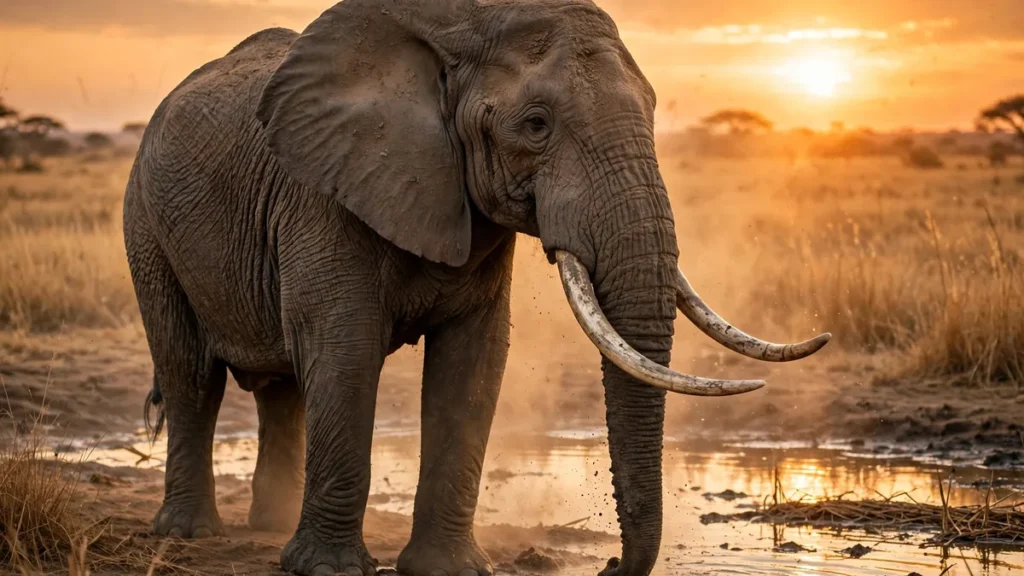
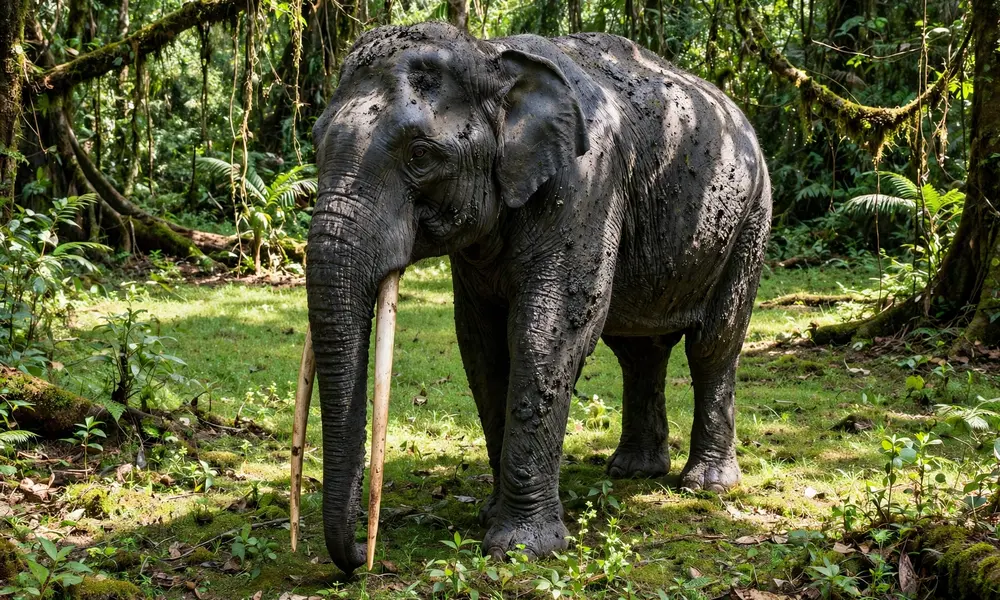
An African elephant is a huge grey animal with large ears shaped like Africa, a long trunk, and, in both males and females, long white tusks. Its body measures roughly 300 to 350 centimetres at the shoulder, with a tail about a metre long again, and it usually weighs between three and six tonnes.
The ears define the African elephant: large and shaped like the continent, they lose heat and cool the animal in the African sun. The trunk is the elephant’s most remarkable feature, with about 40,000 muscles, and it can pick up a single leaf, tear down a tree or suck up eight litres of water. African elephants eat mainly at night and at dawn, and they can eat up to 300 kilogrammes of plants in a day.
The African elephant species and their relatives
Loxodonta africana is the savanna elephant, the largest land animal on Earth, living on the grasslands of Africa, while Loxodonta cyclotis is the forest elephant, a smaller animal that lives in the rainforests of Central and West Africa. The two were recognised as separate species in 2021, after genetic studies showed they had been apart for millions of years.
The Asian elephant is the African elephant’s closest relative, being smaller, with smaller ears and only the males carrying tusks. The mammoths, now extinct, were the African elephant’s ancient cousins, with long curved tusks and thick fur for the cold. The African elephant is the largest of all, and the only elephant that lives in Africa.
| Type | Animal | Where it lives | Best-known food | Length or Height |
|---|---|---|---|---|
| Species | Savanna elephant (Loxodonta africana) | Grasslands of sub-Saharan Africa | Grasses and leaves | 300 to 350 cm at the shoulder |
| Species | Forest elephant (Loxodonta cyclotis) | Rainforests of Central and West Africa | Fruit and leaves | 240 to 300 cm at the shoulder |
| Close relative | Asian elephant | Forests of South and South-east Asia | Grasses and leaves | 240 to 300 cm at the shoulder |
| Close relative | Woolly mammoth (extinct) | Tundra of the far north | Grasses and sedges | 280 to 340 cm at the shoulder |
| Close relative | Columbian mammoth (extinct) | Grasslands of North America | Grasses and sedges | 350 to 400 cm at the shoulder |
| Close relative | African bush elephant | Grasslands of sub-Saharan Africa | Grasses and leaves | 300 to 350 cm at the shoulder |
| Close relative | African forest elephant | Rainforests of Central and West Africa | Fruit and leaves | 240 to 300 cm at the shoulder |
How African elephants live
African elephants are creatures of the herd. A herd is made up of related females and their calves, led by the oldest female, the matriarch, who remembers where the water is in a drought. The males leave the herd at about 14 years old and live alone or in small bachelor groups. Like other nocturnal animals, African elephants eat mainly at night, resting through the heat of the day in the shade.
Grasses, leaves, fruit and bark make up most of the diet, and the elephants eat together, stripping branches and pulling up grass with their trunks. A single elephant can eat more than 200 kilogrammes of plants in a day, and it may then drink up to 200 litres of water.
Breeding can happen at any time of year, and after a gestation of about 22 months, the longest of any land animal, the female gives birth to a single calf, weighing about 100 kilogrammes. The calf stays close to its mother for years, and all the females in the herd help to protect it. Young males leave the herd at about 14 years old, while the females stay for life. African elephants live for around 60 to 70 years in the wild, and more than 80 years in captivity.
Where African elephants live
The African elephant’s range once stretched across Africa, from the Mediterranean to the Cape, but it has shrunk to the savannas and forests of sub-Saharan Africa. It lives in open grassland and light woodland, wherever there are grasses and trees to eat. It is one of the characteristic savanna animals of Africa, most common in the great parks of East and Southern Africa, where the herds are largest.
Open country is the key requirement. An elephant needs room to roam and to find enough food, so it avoids dense forest and desert, and it follows the rains as they move across the savanna. It depends on the savanna staying open and connected, like many other African animals.
The savanna elephant is listed as Endangered and the forest elephant as Critically Endangered, and their numbers are falling. The main pressure is the loss of savanna and forest to farming and settlement, which removes food and brings elephants into conflict with people, while poaching for ivory adds to the decline in some countries. About 415,000 African elephants remain in the wild.
Best seasons for elephant watching
There is no closed season, because African elephants are active all year in Africa, but the dry season is usually the best time to look for them. The grass is short, the animals gather at waterholes, and the elephants are easier to find. In East Africa the dry season runs from June to October, and in Southern Africa from May to September.
The wet season has its own rewards: the herds are at their largest, the calves are born, and the savanna is at its greenest. The trade-off is tall grass that hides the elephants, muddy roads and more insects, and the animals spread out across the plains. Whichever season you choose, the best hours are the first few after dawn and the hour before dusk.
Good places to try include the Serengeti and the Masai Mara, where the great migration brings the herds, and the Kruger National Park and the Okavango Delta, where the elephants are well used to vehicles.
Staying safe around African elephants
An African elephant is a wild animal with a huge body and long tusks, and it can kill a person. Keep your distance, never get out of your vehicle in elephant country, and never walk alone in the bush at night. If you meet an elephant on foot, stand your ground, make yourself look big and back away slowly, and never run, because running can trigger a chase.
Like other wild mammals, African elephants can carry diseases, and any bite or scratch should be washed at once and checked by a doctor without delay. Admire from a distance. Avoid flash photography too, because a bright flash can startle an elephant and disturb its feeding.
The other safety issue is the herd itself, and it is the calves that pay for it. A mother elephant with a calf is quick to defend it, and a vehicle that comes too close can be charged.
African elephant watching checklist
A little preparation turns a safari into a real chance of seeing an African elephant, so pack for the heat, the dust and the early mornings.
- Binoculars with good low-light performance, for picking an elephant out of the tall grass.
- A camera with a long lens, because elephants should always be watched from a distance.
- Light layers and sun protection, because the savanna is hot by day and cool at dawn.
- Water and snacks for long drives, because the best sightings come after hours of searching.
- A booked local guide who knows the herds, the waterholes and the feeding grounds.
- A plan to be out at dawn, when elephants are most active and the light is at its best.
- Patience and silence, because elephants are quiet animals and a noisy vehicle will send them away.
Frequently asked questions
How many African elephant species are there?
There are two African elephant species, the savanna elephant and the forest elephant, recognised as separate species since 2021. They were once thought to be one species, but genetic studies showed they had been apart for millions of years.
Is an African elephant the largest land animal in the world?
Yes. The African savanna elephant is the largest land animal on Earth, with males weighing up to six tonnes. The forest elephant is smaller, and the Asian elephant is smaller still. No land animal alive today is larger.
Why do African elephants live in herds?
African elephants live in herds because the females, who are all related, share the work of raising the calves and finding water, and the matriarch, the oldest female, remembers where the water is in a drought. The herd also defends the calves from lions and hyenas, and the males, who leave at about 14 years old, live alone or in small bachelor groups.
Can you keep an African elephant as a pet?
No. An African elephant is a wild animal that needs a huge territory, eats up to 300 kilogrammes of plants a day, and can kill a person with one step. Keeping one is illegal in many places, and many pet elephants end up in rescue centres when they grow too large to handle.
How is this guide different from the Bengal tiger species guide?
This guide covers the two African elephant species, the largest land animals on Earth, while our Bengal tiger species guide covers the Bengal tiger, the Indian population of the mainland Asian tiger. The elephant lives in herds on the African savanna and in the rainforest, and the Bengal tiger lives alone in the forests and mangroves of India.
Are African elephants endangered?
The savanna elephant is listed as Endangered and the forest elephant as Critically Endangered, so both are declining. About 415,000 remain in the wild, down from millions a century ago. Protecting large areas of savanna and forest and stopping poaching for ivory are the most important steps for keeping them healthy.
Conclusion
The African elephant species show how much specialisation two animals can hold: Loxodonta africana, the largest land animal on Earth, and Loxodonta cyclotis, the smaller forest elephant, with trunks that can pick up a single leaf and herds led by a matriarch who remembers where the water is. They are the largest land animals on Earth, and they have ruled the African savanna and forest for thousands of years.
If you go looking for one, go at dawn, go with a guide, and go quietly. Watch a herd cross the savanna and you will understand why the African elephant has earned its place as the largest land animal on Earth, and why keeping its savanna and forest open matters most.