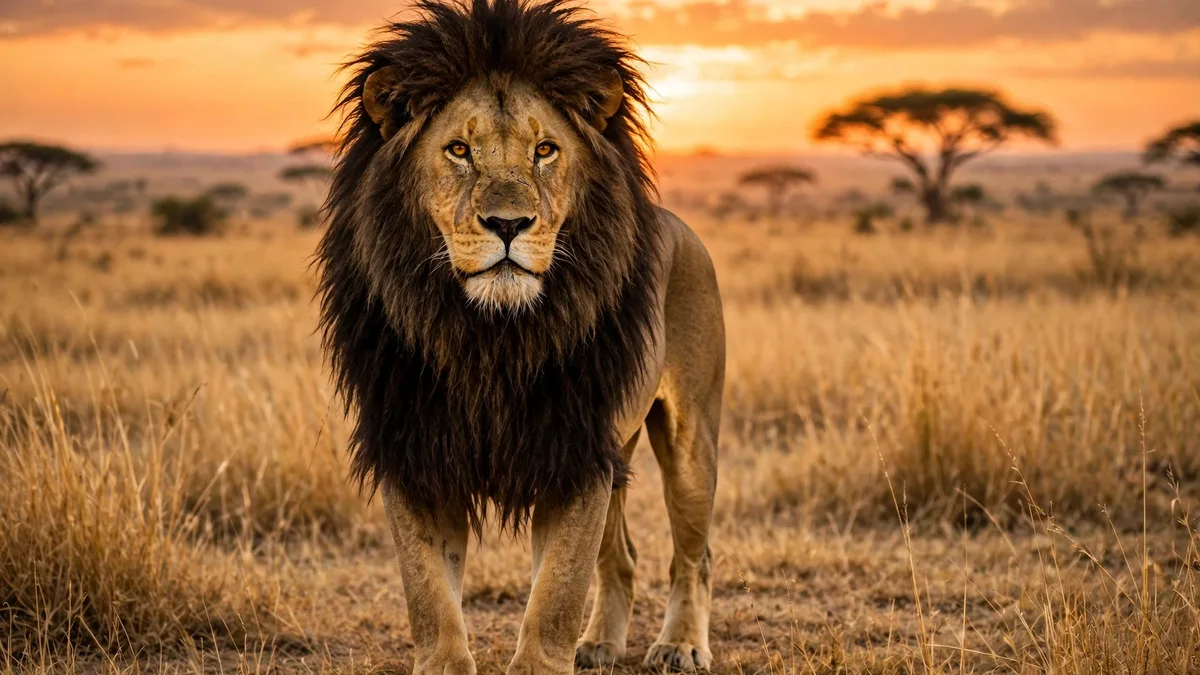
The lion species is a single species, Panthera leo, a social big cat of the African savanna and the Gir Forest of India that is often called the king of the beasts. If you are asking how many lion species there are, the answer is one: there is only one lion species in the world, and every lion alive today belongs to it.
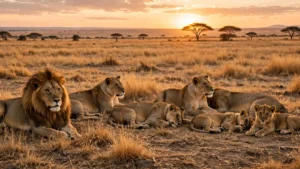
The lion belongs to the genus Panthera, the same genus as the tiger, the leopard, the jaguar and the snow leopard, yet it lives very differently from all of them. It is the only truly social big cat, living in prides of related females and their cubs, with one or two males, and it hunts in groups in a way no other big cat does.
Key takeaways
- There is only one lion species, Panthera leo, with two recognised subspecies, one in Africa and one in India.
- Lions are the only truly social big cats, living in prides of related females and their cubs.
- A lion’s roar can be heard up to eight kilometres away, and it is used to warn rival prides and to call the pride together.
- Male lions weigh between 150 and 250 kilogrammes, and females between 120 and 180 kilogrammes.
- Lions are listed as Vulnerable, with about 20,000 left in Africa and only a few hundred Asiatic lions in India.
What makes a lion a lion
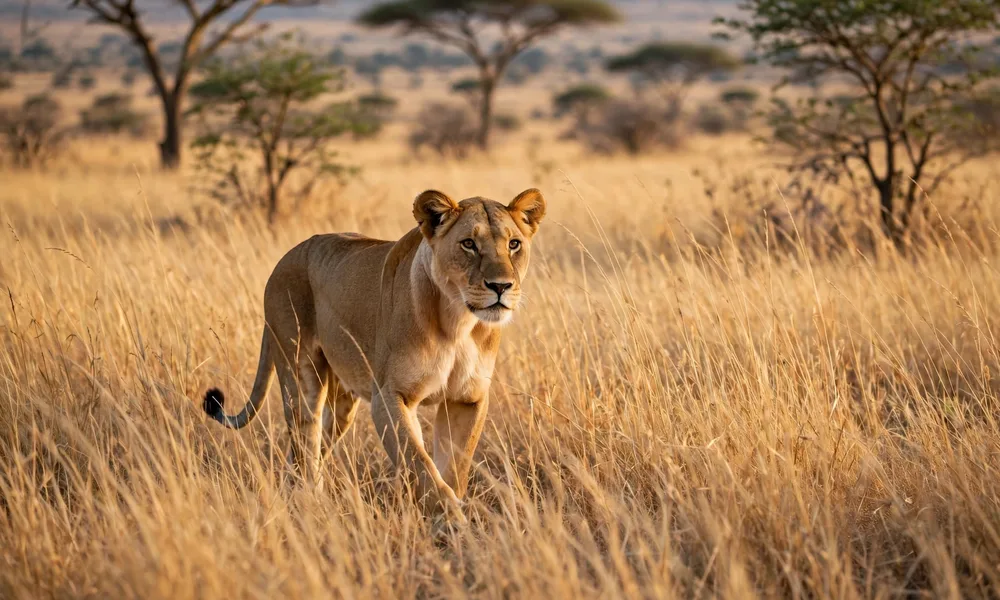
A lion is a large cat with a tawny coat, a long tail with a dark tuft at the end, and, in the male, a mane of long hair around the head, neck and shoulders. Its body measures roughly 170 to 250 centimetres, with a tail about a metre long again, and it usually weighs between 120 and 250 kilogrammes.
The mane defines the male lion: dark and full in older males, it makes the animal look larger and protects its neck in fights with rival males. The lion’s roar is the loudest of any big cat, and it can be heard up to eight kilometres away. Lions hunt mainly at night and at dawn, and the females do most of the hunting, working together to bring down zebras, wildebeest and buffalo.
The lion species and its relatives
Panthera leo is the only lion species, and it is split into two subspecies. Panthera leo leo lives in West and Central Africa and in the Gir Forest of India, while Panthera leo melanochaita lives in East and Southern Africa. The Asiatic lions of Gir are the same species as the African lions, and they are the only lions left outside Africa.
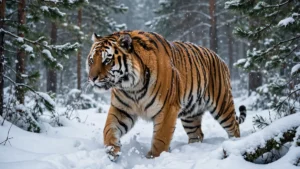
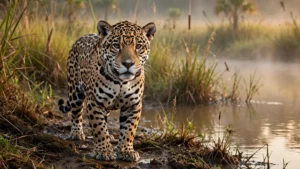
The tiger is the lion’s closest relative, being the largest cat in the world, but it lives alone in the forests of Asia. Leopards and jaguars are smaller and more solitary, climbing trees and swimming where lions do not, while the snow leopard hunts alone in the high mountains of Central Asia.
| Type | Animal | Where it lives | Best-known food | Length |
|---|---|---|---|---|
| Species | Lion (Panthera leo) | African savanna and Gir Forest, India | Zebra, wildebeest and buffalo | 170 to 250 cm body, tail about 1 m |
| Close relative | Tiger | Forests of Asia | Deer and wild boar | 180 to 280 cm body |
| Close relative | Leopard | Africa and Asia | Antelopes and monkeys | 90 to 190 cm body |
| Close relative | Jaguar | Central and South America | Capybaras and caimans | 110 to 180 cm body |
| Close relative | Snow leopard | Mountains of Central Asia | Wild sheep and goats | 90 to 130 cm body |
| Close relative | Cheetah | African savanna and Iran | Gazelles and hares | 110 to 150 cm body |
| Close relative | Cougar | North and South America | Deer | 100 to 180 cm body |
How lions live
Lions are creatures of the pride. A pride is made up of related females and their cubs, with one or two adult males, and it holds a territory that the females defend together. The males defend the pride from rival males, and a new male that takes over a pride may kill the cubs, bringing the females back into breeding. Like other nocturnal animals, lions hunt mainly at night, resting through the heat of the day in the shade.
Zebras, wildebeest and buffalo make up most of the diet, and the lionesses hunt together, spreading out to surround the prey and driving it towards a waiting hunter. A single lion can eat more than 30 kilogrammes of meat in one meal, and the pride may then rest for a day or more.
Breeding can happen at any time of year, and after a gestation of about 110 days the female gives birth to one to four cubs in a hidden den. The cubs stay in the den for about six weeks, then join the pride, where all the females nurse and protect them. Young males leave the pride at two to three years old, while the females stay for life. Lions live for around 10 to 14 years in the wild, and more than 20 years in captivity.
Where lions live
The lion’s range once stretched across Africa, the Middle East and India, but it has shrunk to the savannas of sub-Saharan Africa and a single forest in India. It lives in open grassland and light woodland, wherever there are large herds of grazing animals to hunt. It is one of the characteristic savanna animals of Africa, most common in the great parks of East and Southern Africa, where the herds are largest.
Open country is the key requirement. A lion needs room to hunt in groups and to hold a territory, so it avoids dense forest and desert, and it follows the herds as they move with the rains. It depends on the savanna staying open and connected, like many other African animals.
The species is listed as Vulnerable, but its numbers are falling. The main pressure is the loss of savanna to farming and settlement, which removes prey and brings lions into conflict with people, while hunting and the trade in lion parts add to the decline in some countries. The Asiatic lion, with only a few hundred left in the Gir Forest, is listed as Endangered.
Best seasons for lion watching
There is no closed season, because lions are active all year in Africa, but the dry season is usually the best time to look for them. The grass is short, the animals gather at waterholes, and the lions are easier to find. In East Africa the dry season runs from June to October, and in Southern Africa from May to September.
The wet season has its own rewards: the herds are at their largest, the cubs are born, and the savanna is at its greenest. The trade-off is tall grass that hides the lions, muddy roads and more insects, and the animals spread out across the plains. Whichever season you choose, the best hours are the first few after dawn and the hour before dusk.
Good places to try include the Serengeti and the Masai Mara, where the great migration brings the herds, and the Kruger National Park and the Okavango Delta, where the lions are well used to vehicles.
Staying safe around lions
A lion is a wild animal with sharp teeth and strong claws, and it can kill a person. Keep your distance, never get out of your vehicle in lion country, and never walk alone in the bush at night. If you meet a lion on foot, stand your ground, make yourself look big and back away slowly, and never run, because running can trigger a chase.
Like other wild mammals, lions can carry diseases, and any bite or scratch should be washed at once and checked by a doctor without delay. Admire from a distance. Avoid flash photography too, because a bright flash can startle a lion and disturb its hunting.
The other safety issue is the pride itself, and it is the cubs that pay for it. A lioness with cubs is quick to defend them, and a vehicle that comes too close can be charged.
Lion watching checklist
A little preparation turns a safari into a real chance of seeing a lion, so pack for the heat, the dust and the early mornings.
- Binoculars with good low-light performance, for picking a lion out of the tall grass.
- A camera with a long lens, because lions should always be watched from a distance.
- Light layers and sun protection, because the savanna is hot by day and cool at dawn.
- Water and snacks for long drives, because the best sightings come after hours of searching.
- A booked local guide who knows the prides, the waterholes and the hunting grounds.
- A plan to be out at dawn, when lions are most active and the light is at its best.
- Patience and silence, because lions are quiet animals and a noisy vehicle will send them away.
Frequently asked questions
How many lion species are there?
There is one lion species, Panthera leo. It is split into two subspecies, one in Africa and one in the Gir Forest of India, but they are all the same species. No second lion species is recognised.
Is a lion the largest cat in the world?
No. The tiger is the largest cat in the world, and male tigers are heavier than male lions. The lion is the second largest cat, and the largest cat in Africa. Its mane makes it look larger than it is, but the tiger is bigger and heavier.
Why do lions live in prides?
Lions live in prides because hunting together lets them bring down large prey, like buffalo and zebra, that a single lion could not kill alone. The pride also defends a territory and protects the cubs, and the females, who are all related, share the work of hunting and raising the young.
Can you keep a lion as a pet?
No. A lion is a wild animal that needs a huge territory, stays awake at night, and can kill a person with one bite. Keeping one is illegal in many places, and many pet lions end up in rescue centres when they grow too strong to handle.
How is this guide different from the Siberia animals guide?
This guide covers the single lion species, a social big cat of the African savanna and the Gir Forest of India, while our Siberia animals guide covers a whole frozen region, with Amur tigers, snow leopards, brown bears and Baikal seals. The lion lives in the heat of the savanna, and the Siberian animals live in the cold of the taiga and the tundra.
Are lions endangered?
Lions are listed as Vulnerable, so they are not classed as endangered, but their numbers are declining. About 20,000 remain in Africa, down from hundreds of thousands a century ago, and only a few hundred Asiatic lions survive in India. Protecting large areas of savanna and reducing conflict with people are the most important steps for keeping them healthy.
Conclusion
The lion species shows how much specialisation one animal can hold: Panthera leo, with a mane that makes the male look larger, a roar that carries for eight kilometres, and a life spent hunting in prides on the open savanna. It is the only truly social big cat, and it has ruled the African grasslands for thousands of years.
If you go looking for one, go at dawn, go with a guide, and go quietly. Watch a pride hunt on the savanna and you will understand why the lion has earned its place as the king of the beasts, and why keeping its savanna open matters most.