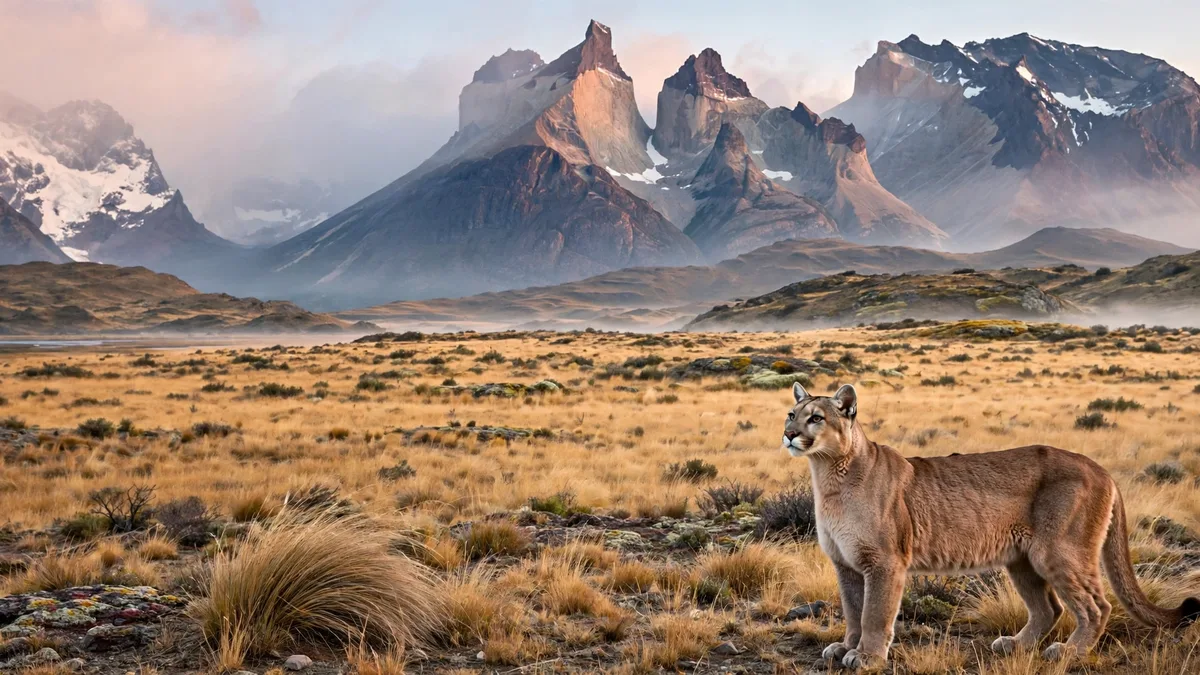
Chile animals range from pumas hunting guanacos in the steppes of Patagonia to blue whales feeding in the fjords of the south, and the country holds some of the most spectacular wildlife in South America. If you are wondering which animals live in Chile and where to see them, the short answer is this: pumas, guanacos, Andean condors and flamingos live in the mountains and deserts of the north and the far south, Humboldt penguins live on the rocky islands of the north, and blue whales gather in the Gulf of Corcovado in summer.
Chile is one of the best places in the world to watch wildlife, because so much of the country is still desert, mountain, steppe and fjord. This guide covers the species you are most likely to meet, where each one lives and the best seasons to see them.
Key takeaways
- Chile’s most iconic land animals are the puma, the guanaco, the vicuna, the Andean condor and the huemul deer.
- Torres del Paine National Park is one of the best places in the world to see wild pumas, and it is the best place in Chile to look for them.
- The Atacama Desert, the driest place on Earth, still holds flamingos, vicunas and vizcachas around its salt lakes.
- Blue whales, the largest animals that have ever lived, feed in the Gulf of Corcovado in the southern summer.
- The southern summer, from December to March, is the best time for most wildlife watching, and early morning is the best time of day for pumas and guanacos.
What makes Chile’s wildlife special
Chile is a long, narrow country that runs for more than 4,000 kilometres from the Atacama Desert in the north to the fjords and glaciers of Patagonia in the south, and its wildlife reflects that whole journey. Species from the high Andes, the dry desert, the temperate rainforest and the cold southern seas all live within one country.
Honesty matters here: Chile has very few true endemics among its large mammals, and the huemul, the endangered deer of the southern Andes, is the best-known exception. What it has instead is an extraordinary range of habitats packed into one narrow strip of land, from the driest desert on Earth to the wettest temperate rainforest, and some of the best whale watching in the southern hemisphere.
That variety comes from the landscape itself. Chile holds the Atacama Desert, the high Altiplano, the central valleys, the lake district and the wild steppes of Patagonia, so animals from many different habitats can live within one country. Like the desert animals of other dry countries, the flamingos, vicunas and vizcachas of the Atacama depend on a harsh landscape that few other animals can use.
The great mammals of Chile
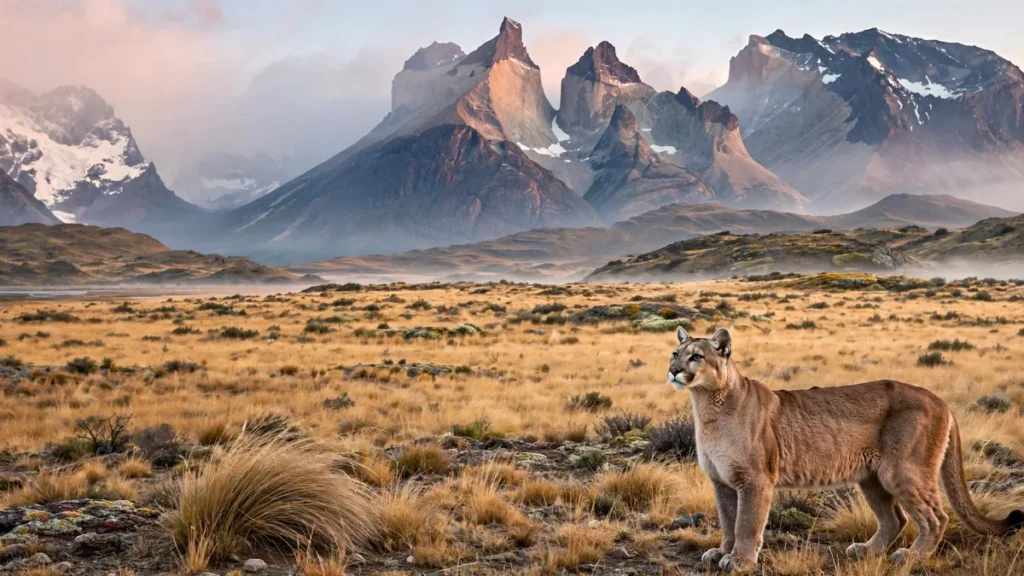
The puma is Chile’s most famous animal, and Torres del Paine National Park, in the far south, is one of the best places in the world to see one. Pumas hunt guanacos on the open steppe, and they are most often seen at dawn and dusk, when they come out to hunt.
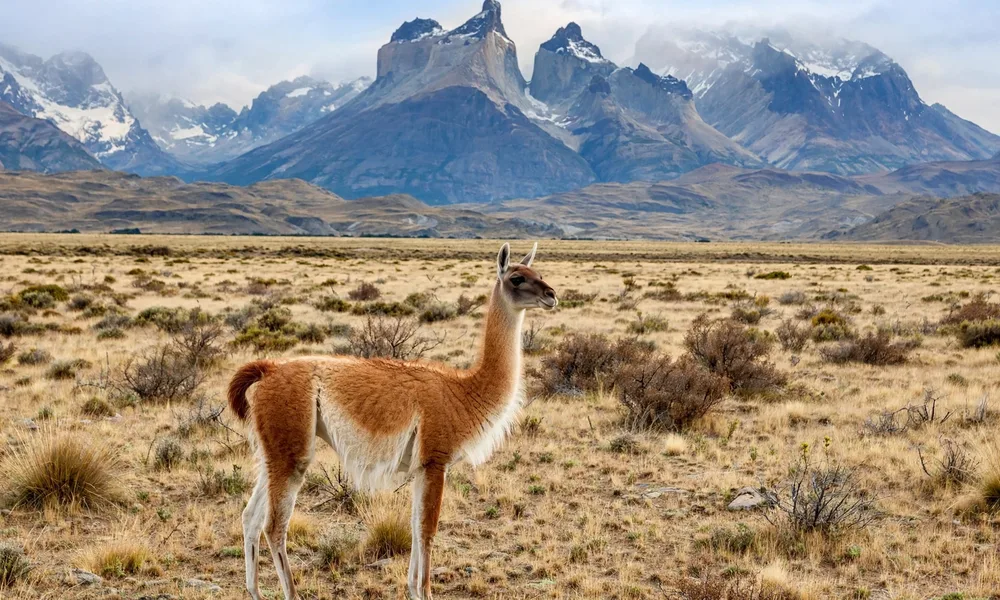
The guanaco is the wild relative of the llama, and it lives on the steppes and mountains of Patagonia and the high Andes in large herds. Vicunas graze the high puna grasslands of the north, and both are most often seen in the early morning, when they come down to the valleys to feed. Among the predators, the Andean fox, or culpeo, hunts rabbits and rodents across the mountains and the steppe, and the small Darwin’s fox, one of the rarest foxes in the world, lives only in the temperate rainforests of the south.
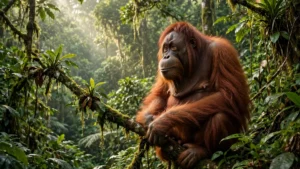
The huemul, or south Andean deer, is Chile’s national animal and one of the most endangered deer in the world. It lives in the mountains of Patagonia and the southern Andes, and it is shy and very hard to see. The pudu, the smallest deer in the world, lives in the dense temperate rainforest of the south, and it is rarely seen by visitors.
One animal should not be on any visitor’s list as a certainty: the huemul. It survives in small numbers in remote mountains, and no honest guide can promise a sighting. The same is true of the Darwin’s fox. Both are reminders of how much of Chile’s wildlife depends on large, undisturbed habitat.
Birds of Chile
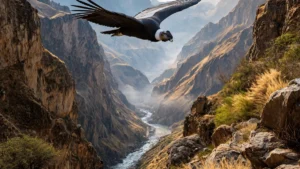
The Andean condor is one of the largest flying birds in the world, with a wingspan of more than three metres, and it soars over the high Andes and the mountains of Patagonia. The condors ride the thermals up from the valleys in the morning, and they are best seen from a high viewpoint at dawn.
The Chilean flamingo is the great bird of the Atacama Desert, feeding in the shallow salt lakes of the Salar de Atacama and the high lakes of Lauca National Park. The flamingos gather in large flocks, turning the pale salt lakes pink, and they are most numerous in the southern summer. The Magellanic penguin nests in large colonies on the islands of the far south, and the Humboldt penguin nests on the rocky islands of the north.
Chile’s position on the migration routes between the Americas makes it one of the best birdwatching countries in the southern hemisphere. In the southern summer, huge numbers of shorebirds arrive from the north, filling the mudflats and wetlands of the central coast. Like the coastal animals of other southern countries, Chile’s penguins and seabirds depend on clean seas and undisturbed islands.
Rivers, coasts and smaller wildlife
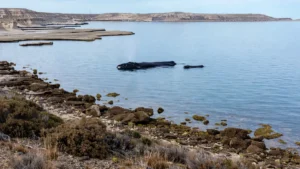
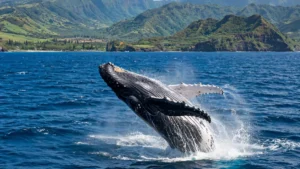
Chile’s coasts hold some of the richest marine wildlife in the world, and the Gulf of Corcovado, in the south, is the best place to see it. Blue whales, the largest animals that have ever lived, feed in the gulf in the southern summer, and humpback whales, sei whales and orcas are seen there too. The best way to see them is on a boat trip from Chiloe Island or Puerto Chacabuco.
Along the northern coast, the Humboldt penguin nests on the rocky islands off the Atacama coast, and the Humboldt Current brings cold, nutrient-rich water that feeds anchovies, sea lions and fur seals. South American sea lions haul out on rocky shores around the country, and the endangered marine otter, or chungungo, hunts in the rocky shallows of the north and centre.
Smaller mammals are everywhere in Chile, though they are often overlooked. The mountain vizcacha, a rabbit-like rodent with a long tail, suns itself on rocky slopes in the high Andes, and the degu, a small social rodent, lives in the dry scrub of the central valleys.
| Species | Where to look | Best season | How likely is a sighting |
|---|---|---|---|
| Puma | Torres del Paine National Park steppe | December to March, dawn and dusk | Good with a guide |
| Guanaco | Patagonian steppe and the high Andes | Year-round | Good |
| Andean condor | High Andes and Patagonian mountains | Year-round, morning | Fair with a guide |
| Chilean flamingo | Salar de Atacama and Lauca National Park | December to March | Good in season |
| Blue whale | Gulf of Corcovado, southern fjords | December to April | Fair on a boat trip |
| Humboldt penguin | Rocky islands of the northern coast | Year-round | Good from a boat |
| Huemul | Mountains of Patagonia and the southern Andes | Year-round | Very low |
Best seasons for wildlife watching
The southern summer, from December to March, is the finest season. The pumas are easiest to find in Torres del Paine, the blue whales feed in the Gulf of Corcovado, the flamingos gather on the salt lakes of the Atacama, and the days are long enough for a full day in the field.
Winter is the quiet season, but the condors still soar over the high Andes, and the seas hold southern right whales off the central coast.
In any season, early morning is the best time for pumas and guanacos, and late afternoon is the best time for condors riding the thermals.
Staying safe around Chile’s wildlife
Chile’s large animals are usually calm, but they deserve respect. Keep your distance from pumas, guanacos and sea lions, never approach a guanaco with young, and never try to feed or touch any wild animal. If you meet a puma, stand your ground, make yourself look large and never run.
On the coast, keep away from nesting penguins, never handle a sea lion or a fur seal, and keep a safe distance from whales, even when they seem calm. In the mountains, carry water and sun protection, and allow time to acclimatise to the altitude before a long walk in the high Andes. The condors and eagles of the mountains are shy and avoid people, but they should always be watched from a distance.
Chile wildlife watching checklist
- Book a local guide for pumas in Torres del Paine — they know where the cats are.
- Go out at dawn or dusk for pumas and guanacos, and plan whale trips to the Gulf of Corcovado from December to April.
- Bring binoculars, warm layers and waterproofs, even in summer — Patagonian weather changes fast.
- Keep at least 50 metres from nesting penguins and guanacos, and far more from pumas and sea lions with young.
- Never feed wild animals, and never use food or calls to lure them closer for a photograph.
- On the coast, keep to marked paths on penguin islands and never approach a sea lion colony.
- Leave no trace: take your rubbish home and keep to marked paths in sensitive habitats.
Frequently asked questions
What is the most famous animal in Chile?
The puma is the most famous land animal, and Torres del Paine is one of the best places in the world to see one. The blue whale is the most famous marine animal, and the Andean condor is the best-loved bird.
Can I see a puma in Chile?
Yes. Torres del Paine National Park is one of the best places in the world to see wild pumas, and the best time is the southern summer, from December to March, at dawn and dusk, with a local guide who knows the pumas’ territories.
Can I see blue whales in Chile?
Yes. Blue whales feed in the Gulf of Corcovado in the southern summer, from December to April, and the best way to see them is on a boat trip from Chiloe Island or Puerto Chacabuco. A sighting takes luck, but the gulf is one of the best places in the world to try.
When is the best time to see flamingos in the Atacama Desert?
December to March is the best time, when Chilean flamingos gather in large flocks on the salt lakes of the Salar de Atacama and Lauca National Park. Go early in the morning for the best light.
Are there penguins in Chile?
Yes. Humboldt penguins nest on the rocky islands of the northern coast, and Magellanic penguins nest in large colonies on the islands of the far south. Both are best seen from a boat.
How is this guide different from the Peru animals guide?
This guide covers Chile, a long narrow country that runs from the Atacama Desert to Patagonia, with pumas, guanacos, flamingos and blue whales. The Peru animals guide covers a wider country that runs from the high Andes to the Amazon, with condors, giant river otters and pink river dolphins in rainforest Chile does not have.
Conclusion
Chile’s wildlife rewards patience: pumas on the steppes of Torres del Paine, flamingos on the salt lakes of the Atacama, blue whales in the Gulf of Corcovado and penguins on the rocky islands of the north are all within reach if you plan around the seasons.
The next step is to pick one species and one season — a summer puma trip to Torres del Paine, a whale trip to the Gulf of Corcovado, or a visit to the Salar de Atacama for flamingos.