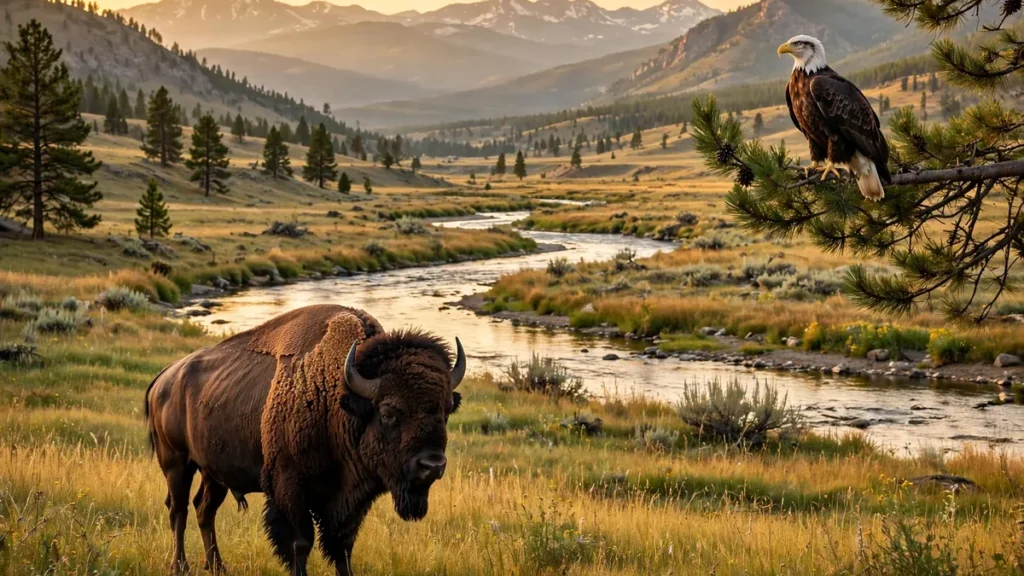
United States animals range from bison on the Great Plains to alligators in the swamps of Florida, and the country holds some of the most varied wildlife in the world. If you are wondering which animals live in the United States and where to see them, the short answer is this: bison, elk, pronghorn and grizzly bears roam the mountains and plains of the west, alligators and manatees live in the warm waters of the south-east.
The United States is one of the best places in the world to watch wildlife, because so much of the country is still national park, forest, desert, wetland and coastline. This guide covers the species you are most likely to meet, where each one lives, and the best seasons to see them.
Key takeaways
- The most iconic land animals are the American bison, grizzly bear, grey wolf, elk, moose, pronghorn and mountain lion.
- Bison, grizzly bears, wolves and bald eagles were all pushed to the edge of extinction, and all four have recovered in protected places.
- The bald eagle is the national bird, the California condor is one of the rarest birds, and the black-footed ferret is one of the rarest mammals.
- Alligators are common in Florida and Louisiana, and manatees gather in warm Florida springs in winter.
- Spring and autumn are the best seasons for most wildlife watching, and early morning and late evening are the best times of day for large mammals.
What makes the United States’ wildlife special
The United States covers a whole continent of habitats, from the Arctic tundra of Alaska to the deserts of Arizona, the swamps of Florida and the rainforests of the Pacific north-west. Its wildlife reflects that range, from polar bears in the far north to roadrunners in the south-west.
Honesty matters here: the United States has relatively few true endemics among its large mammals, but the pronghorn lives nowhere else, and the Florida panther lives only in southern Florida. The black-footed ferret, once thought extinct, survives only in a handful of reintroduction sites on the Great Plains.
That variety comes from the landscape itself, and from the national park system, which protects some of the largest wild places left in the temperate world. Yellowstone, Grand Teton, Denali, Glacier and the Everglades each hold a different community of animals. Like the forest animals of other countries, many American species depend on large, undisturbed woodland.
The great mammals of the United States
The American bison is the largest land animal in North America and the national mammal of the United States. Hunting had reduced tens of millions of bison to a few hundred animals by the late 1800s. Today, conservation herds live in Yellowstone National Park, in South Dakota, and on protected prairies across the west, and the bison there are most often seen grazing in the Lamar and Hayden valleys.
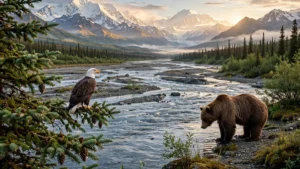
Among the predators, the grizzly bear lives in Alaska, Montana, Wyoming and Idaho. Grizzlies are most often seen in spring, when they leave their dens, and in autumn, when they feed hard before the winter. The grey wolf was reintroduced to Yellowstone in 1995 after being wiped out in the park, and wolves now live in the northern Rockies and the Great Lakes region too, hunting elk and deer in packs. They are shy and wide-ranging, and a sighting usually needs a guide and a very early start.
Elk live in the mountains and valleys of the west, and the autumn rut, when the bulls bugle, is one of the great wildlife sounds of North America. Pronghorn, the fastest land animal in the Americas, run across the open sagebrush of Wyoming, Montana and the Dakotas, and they are often the easiest large mammal to see on a drive through the west.
Two animals should not be on any visitor’s list as a certainty. The Florida panther survives only in southern Florida, in very small numbers, and it is almost never seen by visitors. The black-footed ferret, a small prairie predator that hunts prairie dogs, was thought extinct in the 1970s and now survives only in reintroduction sites, where it is nocturnal and extremely hard to find.
Birds of the United States
The bald eagle is the national bird of the United States, and one of the great conservation recoveries of the country. By the 1960s, the pesticide DDT had reduced the population to a few hundred nesting pairs in the lower forty-eight states. After DDT was banned and the species was protected, the eagles recovered, and they were removed from the endangered species list in 2007. Today, they are a common sight along rivers, lakes and coasts.
The California condor is one of the rarest birds in the country. By 1987, only twenty-seven condors were left in the world, and all of them were taken into captivity. A breeding programme slowly rebuilt the population, and condors now fly free again over the Grand Canyon and the mountains of California. Seeing one takes luck, but the Grand Canyon is the best place to try.
Sandhill cranes gather in huge flocks along the Platte River in Nebraska each spring, one of the great bird migrations in the world, and whooping cranes, the tallest birds in North America, pass through the same flyway in much smaller numbers. The great horned owl is common across the country, and the roadrunner runs through the deserts of the south-west.
Rivers, coasts and smaller wildlife
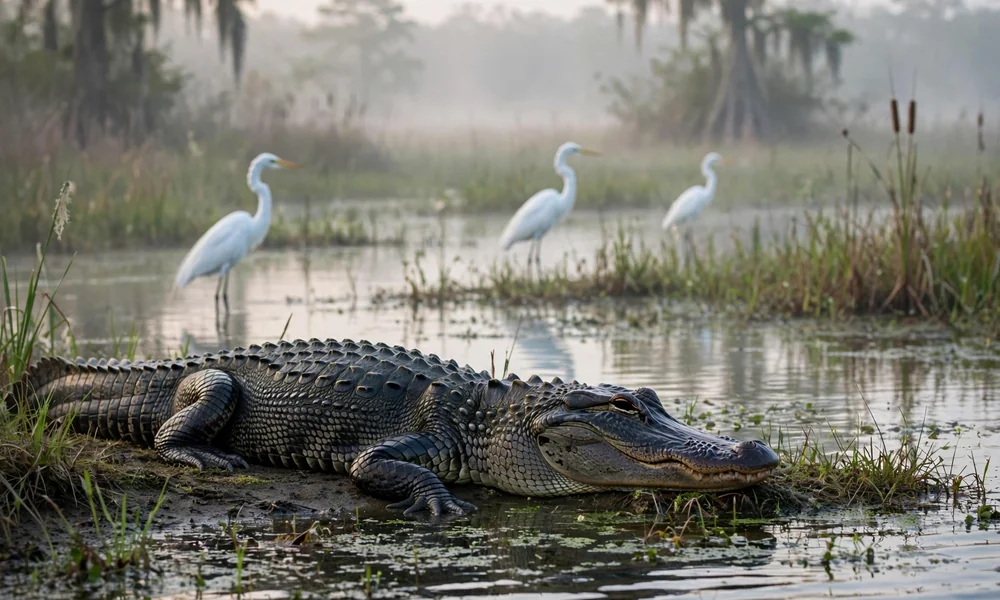
The rivers and wetlands of the south-east hold their own wildlife, and the Everglades is the best place to see it. The American alligator, once endangered itself, is now common in Florida and Louisiana, with more than a million animals in Florida alone, and it is most often seen basking on the banks of a slow river or canal.
Along the warm coasts of Florida, the manatee gathers in warm springs and sheltered bays in winter, when the sea cools. The Florida manatee is slow, gentle and fully protected, and the best way to see one is from a kayak or a viewing platform, keeping a respectful distance. Like the wetland animals of other countries, the frogs and water birds of the Everglades depend on clean, undisturbed water.
Smaller mammals are everywhere in the United States, though they are often overlooked. Beavers build dams in the streams of the north and west, prairie dogs live in great colonies on the Great Plains, and river otters play in the rivers of the north-west. In the deserts of the south-west, the desert tortoise and the kit fox survive the heat by resting through the day and coming out at night. Along the Pacific coast, sea otters float in the kelp beds of California and Alaska.
| Species | Where to look | Best season | How likely is a sighting |
|---|---|---|---|
| American bison | Yellowstone and the Great Plains | Year-round, best in spring and autumn | Good in Yellowstone |
| Grizzly bear | Yellowstone, Glacier and Alaska | Spring and autumn | Low, needs a guide |
| Grey wolf | Yellowstone and the northern Rockies | Winter, dawn and dusk | Low |
| Bald eagle | Rivers, lakes and coasts, especially Alaska | Autumn and winter | Good in season |
| California condor | Grand Canyon and southern California | Year-round | Very low |
| American alligator | Everglades and Louisiana swamps | Spring and summer | Good in season |
| Florida manatee | Florida springs and sheltered bays | Winter | Fair with a guide |
| Pronghorn | Wyoming, Montana and the Dakotas | Year-round | Good on a drive |
Best seasons for wildlife watching
Spring is the finest season. The sandhill cranes gather on the Platte River, the wetlands fill with migrating birds, and the bears leave their dens. Keep to paths and give every animal more space than you think it needs.
Summer is the easiest season for alligators and wetland birds. The alligators bask on the banks of the Everglades, and the seabirds crowd the cliffs of Alaska. Go out early in the morning or late in the evening.
Autumn brings the elk rut, when the bulls bugle in the valleys of the Rocky Mountains, and the great autumn migration, when bald eagles gather along the salmon rivers of Alaska. Winter is the quiet season, but wolves leave clear tracks in the snow, and the manatees gather in the warm springs of Florida.
Staying safe around the United States’ wildlife
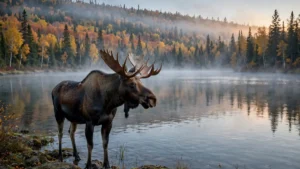
The large animals of the United States are usually calm, but they deserve respect. Keep your distance from bison, bears, moose and alligators, never approach a moose with a calf, and never try to feed or touch any wild animal. Bison look slow, but they are fast and unpredictable. If you meet a bear, back away slowly, speak calmly and never run.
On the coast and in the wetlands, keep away from alligators, never swim in water where alligators live, and never handle a manatee or a sea turtle. In the deserts, carry water and sun protection, and remember that rattlesnakes rest in the shade during the day. In the mountains, carry bear spray where it is recommended.
United States wildlife watching checklist
- Book a local guide for grizzly bears, wolves and condors.
- Go out at dawn or dusk for mammals, and plan crane and Yellowstone trips for April to June.
- Bring binoculars, warm layers and waterproofs, even in summer.
- Keep at least 25 metres from bison and elk, and at least 100 metres from bears and wolves.
- Never feed wild animals, and never use food or calls to lure them closer for a photograph.
- In the Everglades, keep away from alligators and give manatees plenty of space.
- Leave no trace: take your rubbish home and keep to marked paths in sensitive habitats.
Frequently asked questions
What is the most famous animal in the United States?
The American bison is the most famous large mammal and the national mammal, and the bald eagle is the national bird.
Are there bears and wolves in the United States?
Yes. Grizzly bears live in Alaska, Montana, Wyoming and Idaho, black bears live across much of the country, and grey wolves live in the northern Rockies and the Great Lakes region after their reintroduction to Yellowstone in 1995. All three are shy.
Can I see a California condor in the United States?
It is possible, but not likely. Only twenty-seven condors were left in 1987, and the population has been rebuilt by a breeding programme. The Grand Canyon is the best place to try, and a sighting takes luck and patience.
When is the best time to see bison in Yellowstone?
Spring and autumn are the best times, when the bison graze in the open valleys of Lamar and Hayden. Keep at least 25 metres away at all times.
Can I see manatees in Florida?
Yes. Florida manatees gather in warm springs and sheltered bays in winter, when the sea cools. The best way to see them is from a kayak or a viewing platform, keeping a respectful distance.
How is this guide different from the Canada animals guide?
This guide covers the United States, a much larger country that runs from Arctic Alaska to the subtropical Everglades, with bison, pronghorn, alligators, manatees and California condors. The Canada animals guide covers a colder, more northern country, with polar bears, caribou and beluga whales.
Conclusion
The wildlife of the United States rewards patience: bison in Yellowstone, bald eagles in Alaska, alligators in the Everglades and manatees in Florida are all within reach if you plan around the seasons.
The next step is to pick one species and one season — a spring crane trip, a summer alligator walk, or an autumn visit for the elk rut.