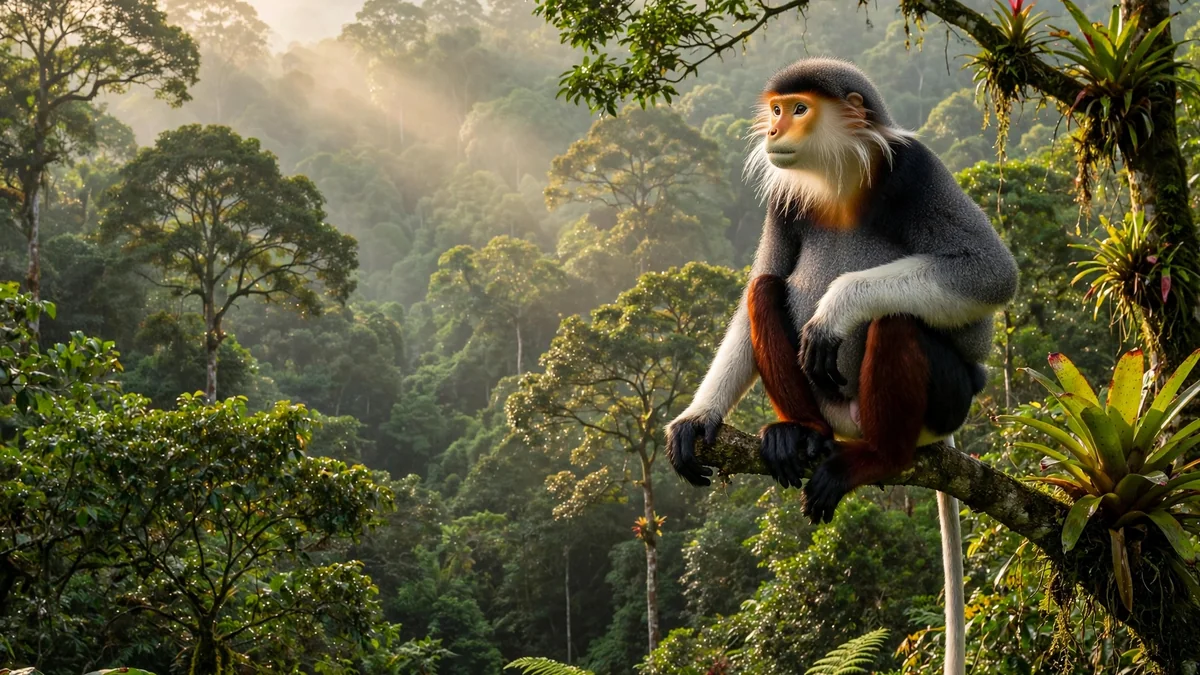
Vietnam animals range from red-shanked douc langurs in the forests of Son Tra to gibbons calling at dawn in Cat Tien, and the country holds some of the most varied wildlife in South-East Asia. If you are wondering which animals live in Vietnam and where to see them, the short answer is this: langurs, gibbons and elephants live in the forests, sarus cranes and storks fill the wetlands of the Mekong Delta, and green turtles nest on the beaches of Con Dao while coral reefs lie off the southern coast.
Vietnam is one of the best places in the region to watch wildlife, because so much of the country is still mountain, forest, wetland and coast, and this guide covers the species you are most likely to meet, where each one lives and the best seasons to see them.
Key takeaways
- Vietnam’s most iconic land animals are the red-shanked douc langur, Delacour’s langur, Cat Ba langur, gibbons, Asian elephants, gaur and sun bears.
- The Javan rhino is extinct in Vietnam, and the saola is almost never seen, so no honest guide should promise a sighting of either.
- Sarus cranes, storks and herons make the Mekong Delta one of the best birdwatching regions in South-East Asia, especially at Tram Chim in the dry season.
- Green turtles nest on the beaches of Con Dao in summer, and the island’s reefs are among the best places in Vietnam to see marine life.
- The dry season, from November to April, is the best time for most wildlife watching, and early morning is the best time of day for primates and birds.
What makes Vietnam’s wildlife special
Vietnam is a long, narrow country that runs from the mountains of the north to the Mekong Delta in the south, and its wildlife reflects that whole journey. Species from southern China, Laos and the tropical lowlands all meet here.
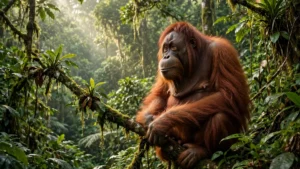
Honesty matters here: Vietnam has many species that live nowhere else, and several are among the rarest primates on earth. The Cat Ba langur lives only on Cat Ba Island, the Delacour’s langur lives mainly in one reserve in the north, and the Tonkin snub-nosed monkey lives only in a few forests in the far north.
That variety comes from the landscape itself: high mountains, limestone karst, deep rainforest, wide river deltas and a long sea coast let animals from many habitats live within one country. Like the forest animals of other tropical countries, many Vietnamese species depend on large, quiet woodland, and Cat Tien National Park in the south and Cuc Phuong National Park in the north are among the wildest corners of the country.
The great mammals of Vietnam
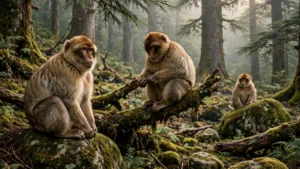
The red-shanked douc langur is Vietnam’s most striking primate, with a grey body, white forearms and bright red legs, and the forests of the Son Tra Peninsula near Da Nang are the best place in the world to see it. The langurs feed in the treetops in family groups and are most active in the early morning, so a local guide and binoculars make a real difference.

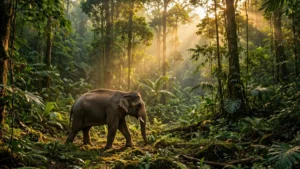
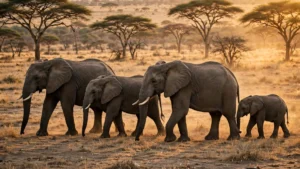
Among the predators, the clouded leopard and the sun bear still survive in Vietnam’s forests, but both are rare, shy and almost entirely nocturnal, so a sighting is a matter of luck. The Asian elephant survives in small numbers in Yok Don and Cat Tien national parks, with around 100 wild elephants left in the country.
Vietnam’s gibbons are best heard before they are seen: the northern white-cheeked gibbon and the yellow-cheeked gibbon sing loud duets at dawn in Cat Tien. The Tonkin snub-nosed monkey, with its upturned nose and pale face, is one of the rarest primates in the world and lives only in a few mountain forests in Ha Giang province.
Two animals should not be on any visitor’s list. The Javan rhino is extinct in Vietnam: the last one was killed in Cat Tien in 2010, and the species was declared extinct in the country the following year. The saola, a forest ox discovered only in 1992 in the Annamite Mountains, has not been photographed in the wild since 2013 and is almost never seen by anyone. No honest guide can promise a sighting of either. Their stories show how much of Vietnam’s wildlife depends on large, undisturbed forest.
Birds of Vietnam
The sarus crane is the tallest flying bird in the world, and the Mekong Delta is one of the best places to see it. The cranes arrive in the dry season to feed in the shallow wetlands of Tram Chim National Park, and January to April is the best time to look for them.
Storks, herons and egrets fill the wetlands of the Mekong Delta in large numbers, and the delta’s rice fields, canals and mangroves hold painted storks and Asian openbills. In the forests, the endemic Edwards’s pheasant and Vietnamese crested argus are both rare and hard to find, while hornbills fly through the canopy of Cat Tien and Cuc Phuong.
Vietnam’s position on the migration routes between northern Asia and the south makes it one of the best birdwatching countries in the region. In winter, huge numbers of ducks, waders and shorebirds arrive in the deltas and coastal lagoons. Xuan Thuy National Park in the Red River Delta is one of the finest birdwatching sites in the country, with waders, ducks, herons and birds of prey.
Rivers, coasts and smaller wildlife
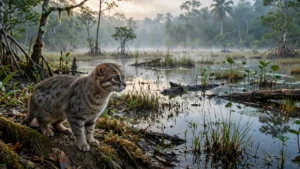
Vietnam’s rivers and wetlands hold their own wildlife, and the Mekong Delta is the best place to see it. The delta’s marshes, rice fields and mangroves hold otters, fishing cats and water birds, and the canals are lined with kingfishers and herons.
Along the southern coast, the green turtle comes ashore to nest on the sandy beaches of Con Dao in summer. The females lay their eggs at night, and the hatchlings make their way to the sea a few weeks later. The nesting beaches are protected, and visitors are asked to keep away from marked nests and to avoid bright lights at night. The reefs around Con Dao also hold reef fish and rays.
Smaller mammals are everywhere in Vietnam, though they are often overlooked. Civets, pangolins and slow lorises live in the forests, and all three are nocturnal and rarely seen. Like the wetland animals of other countries, the frogs, dragonflies and water birds of Vietnam’s marshes depend on clean, undisturbed water.
| Species | Where to look | Best season | How likely is a sighting |
|---|---|---|---|
| Red-shanked douc langur | Son Tra Peninsula near Da Nang | November to April, early morning | Good with a guide |
| Delacour’s langur | Van Long Nature Reserve, Ninh Binh | November to April | Fair with a guide |
| Cat Ba langur | Cat Ba Island, Ha Long Bay | November to April | Low, needs a guide |
| Yellow-cheeked gibbon | Cat Tien National Park | November to April, at dawn | Fair, heard more than seen |
| Asian elephant | Yok Don and Cat Tien national parks | Dry season | Very low |
| Sarus crane | Tram Chim National Park, Mekong Delta | January to April | Good in season |
| Green turtle | Con Dao beaches | May to October | Fair on a guided night walk |
Best seasons for wildlife watching
The dry season, from November to April, is the finest season. The air is cooler, the forest trails are easier to walk, the gibbons call clearly at dawn, and the sarus cranes arrive in the Mekong Delta.
Summer is the easiest season for turtles and reef life. The green turtles nest on the beaches of Con Dao, the sea is calmest for snorkelling and diving, and the long days give plenty of time for watching.
The wet season, from May to October, brings heavy rain to the deltas, when many birds are breeding and the forests are at their greenest. It is the hardest season for watching, but the wetlands fill with water birds.
Staying safe around Vietnam’s wildlife
Vietnam’s large animals are usually calm, but they deserve respect. Keep your distance from elephants, gaur and wild boar, never approach a boar with young, and never feed or touch any wild animal. If you meet an elephant, back away slowly, speak calmly and never run. Wild boar on the road are a real danger at dawn and dusk, so slow down on forest roads and watch the verges.
On the coast, keep away from marked turtle nests, avoid bright lights on nesting beaches at night, and never handle a turtle or a hatchling. Leeches are common on wet forest trails, so wear long trousers and tuck them into your socks. The clouded leopard and sun bear are shy and avoid people, but they should always be watched from a distance.
Vietnam wildlife watching checklist
- Book a local guide for langurs, gibbons and elephants — they know where the animals are.
- Go out at dawn for primates and birds, and plan sarus crane and Tram Chim trips for January to April.
- Bring binoculars, warm layers and waterproofs, even in the dry season — mountain weather changes fast.
- Keep at least 50 metres from nesting birds and deer, and far more from elephants, gaur and wild boar with young.
- Never feed wild animals, and never use food or calls to lure them closer for a photograph.
- On turtle beaches, keep away from marked nests and avoid bright lights at night during the nesting season.
- Leave no trace: take your rubbish home and keep to marked paths in sensitive habitats.
Frequently asked questions
What is the most famous animal in Vietnam?
The red-shanked douc langur is the most famous primate, and the sarus crane is the best-loved bird. The Cat Ba langur and the saola are the most famous rare animals, though neither can be promised.
Are there elephants and tigers in Vietnam?
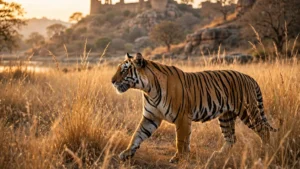
Yes, there are Asian elephants, but only around 100 wild ones are left, in Yok Don and Cat Tien national parks. Tigers are believed to be gone from the wild in Vietnam, and no honest guide can promise a sighting.
Can I see a saola in Vietnam?
No, not in any realistic sense. The saola has not been photographed in the wild since 2013, and it lives only in the remote Annamite Mountains. Look for the douc langurs, gibbons and sarus cranes instead.
When is the best time to see sarus cranes in the Mekong Delta?
January to April, in the dry season, when the cranes feed in the shallow wetlands of Tram Chim National Park. Go early in the morning for the best light and the most activity.
Can I see sea turtles in Vietnam?
Yes. Green turtles nest on the sandy beaches of Con Dao in summer, from May to October. The best way to see them is on a guided night walk with the park rangers.
How is this guide different from the Thailand animals guide?
This guide covers Vietnam, a long mainland country with its own endemic primates, including the Cat Ba langur, Delacour’s langur and Tonkin snub-nosed monkey, plus the sarus cranes of the Mekong Delta and the turtles of Con Dao. The Thailand animals guide covers a different country, with a different mix of species and its own national parks and wildlife.
Conclusion
Vietnam’s wildlife rewards patience: red-shanked douc langurs in the forests of Son Tra, gibbons calling at dawn in Cat Tien, sarus cranes in the Mekong Delta and green turtles on the beaches of Con Dao are all within reach if you plan around the seasons.
The next step is to pick one species and one season — a dry-season primate trip to Son Tra or Cat Tien, a January birding trip to Tram Chim, or a summer turtle walk on Con Dao.