Kenya animals include some of the most famous wildlife on Earth, from lions and elephants on the open savanna to flamingos on the Rift Valley lakes. If you are wondering which animals live in Kenya and where to see them, the short answer is this: the Maasai Mara holds lions, leopards, cheetahs, elephants and the great wildebeest migration, Amboseli and Tsavo hold elephants and rhinos, and Lake Nakuru holds flamingos and hundreds of other bird species.
Kenya is one of the best places in the world to watch large mammals, because so much of the country is open grassland, acacia woodland and protected reserve. This guide covers the species you are most likely to meet, where each one lives and the best seasons to see them.
Key takeaways
- Kenya’s most iconic animals are the lion, leopard, cheetah, African elephant, black and white rhino, giraffe, zebra, wildebeest and hippo.
- The Maasai Mara is the best place in Kenya to see the big cats and the great wildebeest migration, which arrives from July to October.
- Amboseli is famous for elephants against the backdrop of Mount Kilimanjaro, while Tsavo is one of the largest protected areas in Africa.
- Lake Nakuru is the best place to see flamingos, and Kenya holds more than a thousand bird species across its lakes, highlands and coast.
- The dry season is the best time for mammal watching, because animals gather at water and the grass is short enough to see them.
What makes Kenya’s wildlife special
Kenya stretches from the Indian Ocean coast in the east to the highlands around Mount Kenya and the Great Rift Valley that runs down its western side. That range covers savanna, forest, high moorland, desert and coral coast, so the country holds species from many habitats at once.
Kenya has very few endemic animals, and that honesty matters: the country has almost no land mammal found nowhere else. What it has instead is abundance and variety on a scale few countries can match. The Great Rift Valley cuts through the country with a chain of lakes, the open savannas of the Maasai Mara support some of the largest grazing herds left on Earth, and the highlands around Mount Kenya hold cool forest and moorland above the hot lowlands.
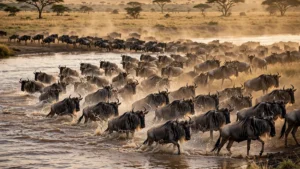
Each year the great wildebeest migration crosses from Tanzania into the Maasai Mara, bringing more than a million wildebeest and zebra, followed by the lions, leopards and cheetahs that hunt them. It is the largest land migration on the planet.
The great mammals of Kenya
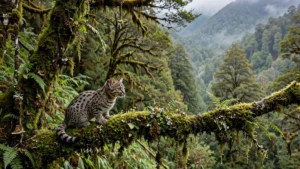
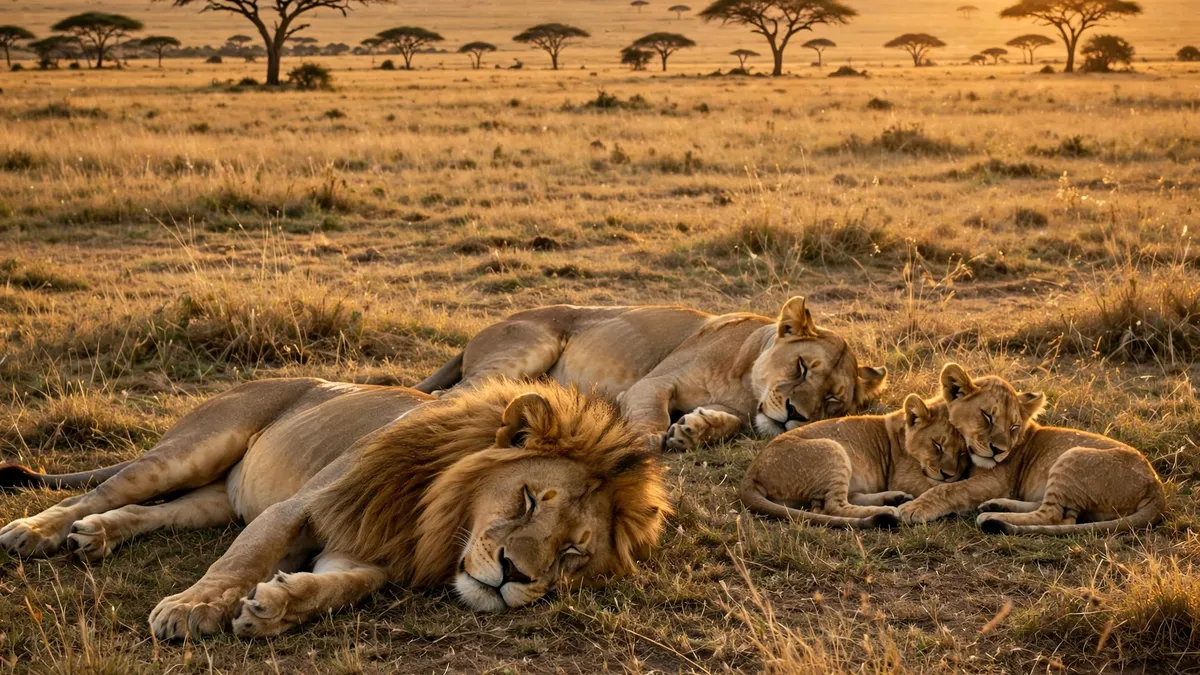
The lion is the animal most visitors hope to see, and the Maasai Mara is one of the best places in the world to see one. Lions live in prides on the open grassland, and they are most active in the early morning and late evening, resting in the shade during the heat of the day. Leopards are shyer, often seen draped over riverine tree branches, while cheetahs hunt on the open plains by day, using speed rather than cover.
The African elephant is Kenya’s largest land animal, and Amboseli is the most famous place to see it, with herds walking across the dry lake bed in front of Mount Kilimanjaro. Tsavo holds large elephant herds too, and its red dust gives the elephants their famous rust-coloured coats. Rhinos are rarer: white rhinos graze on open grassland while black rhinos browse in thickets, and both are best seen in protected sanctuaries such as Ol Pejeta and Lake Nakuru.
Giraffes are common across the savanna, and zebras graze in large herds alongside wildebeest. Hippos spend the day in the Mara River and the lakes, coming out at night to graze on the banks. Among the predators, spotted hyenas hunt and scavenge in clans, and African wild dogs are rare but present in parts of the country.
Smaller grazers are everywhere on the plains: impala and gazelles in the Mara, eland and oryx in the drier north, and dik-dik, a tiny antelope no bigger than a dog, in the bush. Buffalo gather in large herds near water, and warthogs trot through the grassland with their tails held high.
Birds of Kenya
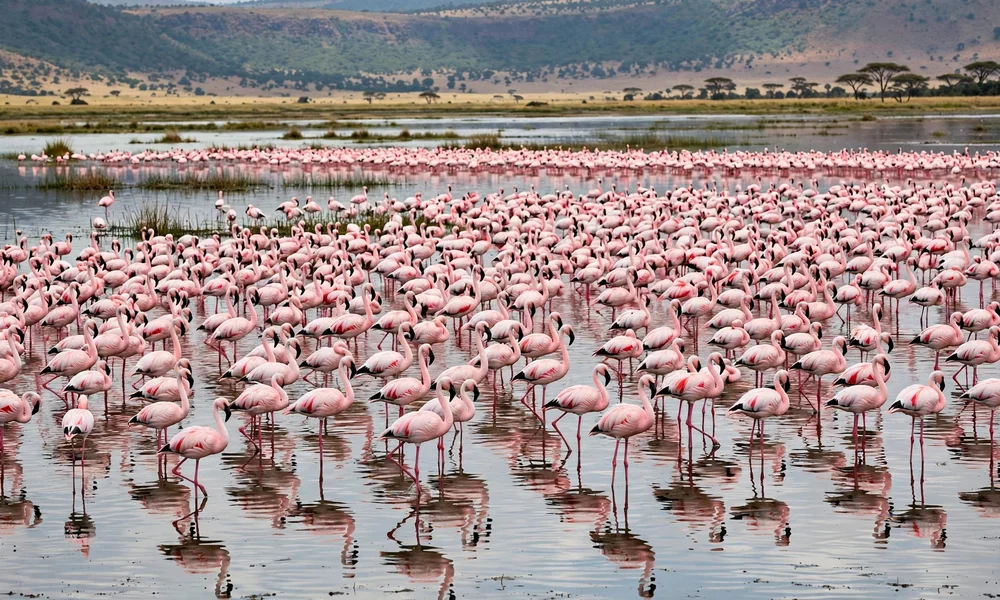
Kenya holds more than a thousand bird species, one of the richest bird lists of any country in Africa. The most famous spectacle is the flamingos of Lake Nakuru, where tens of thousands of lesser flamingos sometimes turn the shoreline pink, feeding on the algae in the shallow alkaline water.
The lilac-breasted roller, with its turquoise, lilac and green plumage, is one of the most photographed birds in the Mara, often seen perched on a roadside branch. The ostrich, the largest bird in the world, runs across the open plains, and the secretarybird stalks through the grass on long legs, hunting snakes and small animals.
The Rift Valley lakes are the heart of Kenya’s birdlife. Lake Baringo and Lake Naivasha hold fish eagles, kingfishers, herons and pelicans, and the highlands hold sunbirds, turacos and forest species. The wetlands of the Mara and the coast add waders, ducks and migratory birds in the northern winter.
Rivers, coasts and smaller wildlife
The Mara River is the great waterway of the Maasai Mara, and it is famous for two things: the crocodiles that wait for the migration crossings, and the hippos that crowd its pools. Nile crocodiles lie still on the banks for hours before sliding into the water.
In the far north, Lake Turkana is the largest desert lake in the world, a vast jade-green stretch of water in a harsh volcanic landscape. It holds crocodiles and flamingos, and the surrounding desert is home to Grevy’s zebra, oryx and gerenuk, species that are rare or absent further south.
On the Indian Ocean coast, the coral reefs off Diani and Watamu hold reef fish, turtles and dolphins, and the mangrove creeks shelter herons and kingfishers. Smaller mammals are everywhere too: mongooses, genets and civets hunt at night, rock hyraxes sun themselves on boulders, and vervet monkeys and baboons are common in the reserves and along the coast.
| Species | Where to look | Best season | How likely is a sighting |
|---|---|---|---|
| Lion | Maasai Mara grassland and riverine woodland | All year, July to October best | Good with a guide |
| African elephant | Amboseli, Tsavo East and Tsavo West | Dry season, June to October | Good |
| Black rhino | Ol Pejeta and Lake Nakuru sanctuaries | Dry season, June to October | Fair with a guide |
| Leopard | Maasai Mara riverine trees, Samburu | All year | Fair, needs patience |
| Wildebeest | Maasai Mara, during the migration | July to October | Very good in season |
| Lesser flamingo | Lake Nakuru and other Rift Valley lakes | All year, numbers vary | Good when the lake is full |
| Giraffe | Maasai Mara, Amboseli and Tsavo | All year | Good |
Best seasons for wildlife watching
The migration season, from July to October, is the most famous time to visit Kenya. The wildebeest herds cross from Tanzania into the Maasai Mara, the Mara River crossings draw crocodiles and crowds of predators, and the grass is short and dry, so animals are easy to see. It is also the busiest season, so lodges and camps should be booked well ahead.
The dry season, roughly June to October, is the best time for mammal watching in general. Water is scarce, so elephants, buffalo, zebras and antelopes gather at the remaining rivers and waterholes, and the short grass makes lions and leopards easier to spot. Mornings and evenings are cool, and the middle of the day is best spent resting in camp.
The green season, from November to May, brings rain, long grass and fewer visitors. Birding is at its best, because migratory birds arrive from Europe and Asia, and many animals give birth in the rains. The big cats are harder to find in the tall grass, but the parks are quieter and the landscape is at its greenest.
Staying safe around Kenya’s wildlife
Kenya’s large animals are usually calm, but they deserve respect. Keep your distance from lions, elephants, rhinos, hippos and buffalo, never leave your vehicle in a reserve unless a guide tells you it is safe, and never walk between a hippo and the water or an elephant and her calf. Hippos are the most dangerous animal in the reserves.
Always travel with a licensed guide or driver in the reserves, follow the rules of your camp, and keep food sealed and out of reach of monkeys and baboons. If an elephant approaches, stay still and quiet and let your guide handle it, and never try to feed or touch any wild animal.
Kenya wildlife watching checklist
- Book a licensed guide or a safari in the Maasai Mara for the migration season, from July to October.
- Go out at dawn and dusk for lions, leopards and cheetahs, and rest in camp during the heat of the day.
- Bring binoculars, a camera with a zoom lens, sun protection and warm layers for early morning drives.
- Keep a safe distance from elephants, hippos, rhinos and buffalo, and never leave your vehicle without a guide.
- Visit Lake Nakuru for flamingos and rhinos, and Amboseli for elephants in front of Mount Kilimanjaro.
- Pack insect repellent and any malaria prevention your doctor recommends, and drink bottled water.
- Leave no trace: take your rubbish home and keep to the tracks in the reserves.
Frequently asked questions
What is the most famous animal in Kenya?
The lion is the most famous, and the Maasai Mara is one of the best places in the world to see one. The African elephant is the largest land animal in the country, and the wildebeest migration is the most famous wildlife event.
When is the best time to see the wildebeest migration in Kenya?
The migration usually reaches the Maasai Mara from July to October, when the herds cross the Mara River. The exact timing varies with the rains, so a guide or camp can give the best advice.
Are there rhinos in Kenya?
Yes. Both black and white rhinos live in Kenya, mostly in protected sanctuaries such as Ol Pejeta and Lake Nakuru, where rangers guard them closely. They are rare and shy, so a guide greatly improves the chance of seeing one.
What animal lives only in Kenya?
Kenya has very few animals found nowhere else. The Tana River mangabey and the Tana River red colobus live only in the forests along the Tana River, and the hirola antelope is found only in a small area on the Kenya and Somalia border.
Is it safe to go on safari in Kenya?
Yes, if you follow the rules. Travel with a licensed guide, stay in your vehicle in the reserves, keep your distance from large animals, and follow the advice of your camp. Most visitors see the animals safely and without any trouble.
How is this guide different from the Morocco animals guide?
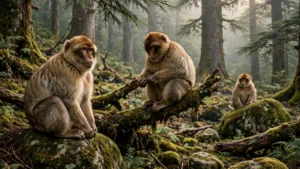
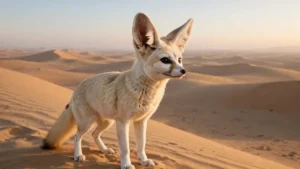
This guide covers Kenya’s East African savanna wildlife — lions, elephants, rhinos and the great migration across the Maasai Mara — while the Morocco animals guide covers North African mountain, desert and coastal wildlife, from Barbary macaques and the northern bald ibis to fennec foxes. The two countries share the white stork and the striped hyena, but Kenya’s savanna herds and big cats are on a scale Morocco does not have.
Conclusion
Kenya’s wildlife rewards planning: lions and the great migration in the Maasai Mara, elephants in front of Mount Kilimanjaro in Amboseli, rhinos in the sanctuaries of Ol Pejeta and Lake Nakuru, and flamingos on the Rift Valley lakes are all within reach if you choose the right season and travel with a good guide.
The next step is to pick one place and one season — a July migration safari in the Mara, a dry-season elephant trip to Amboseli, or a birding visit to the Rift Valley lakes — and plan your visit around it.