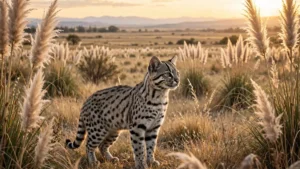
The leopard cat species is a single species, Prionailurus bengalensis, a small spotted wild cat of the forests of Asia, from Siberia and the Amur region to India and South-east Asia. If you are asking how many leopard cat species there are, the answer is one.
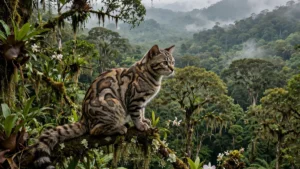
The leopard cat is a cat of the forest floor and the low branches. It is about the size of a house cat, with a golden coat marked with dark spots, and it hunts mostly at night. It climbs trees, swims across streams, and is the wild ancestor of the Bengal domestic cat breed.
Key takeaways
- There is only one leopard cat species, Prionailurus bengalensis.
- Leopard cats weigh roughly 2.5 to 7.5 kilogrammes, with a head-body length of 45 to 66 centimetres.
- Nocturnal hunters, good climbers and strong swimmers, eating mainly rodents, birds, frogs and fish.
- They range from Siberia through China and India to South-east Asia and Sumatra.
- Listed as Least Concern, but forest loss and the pet trade still pressure local populations.
What makes a leopard cat a leopard cat
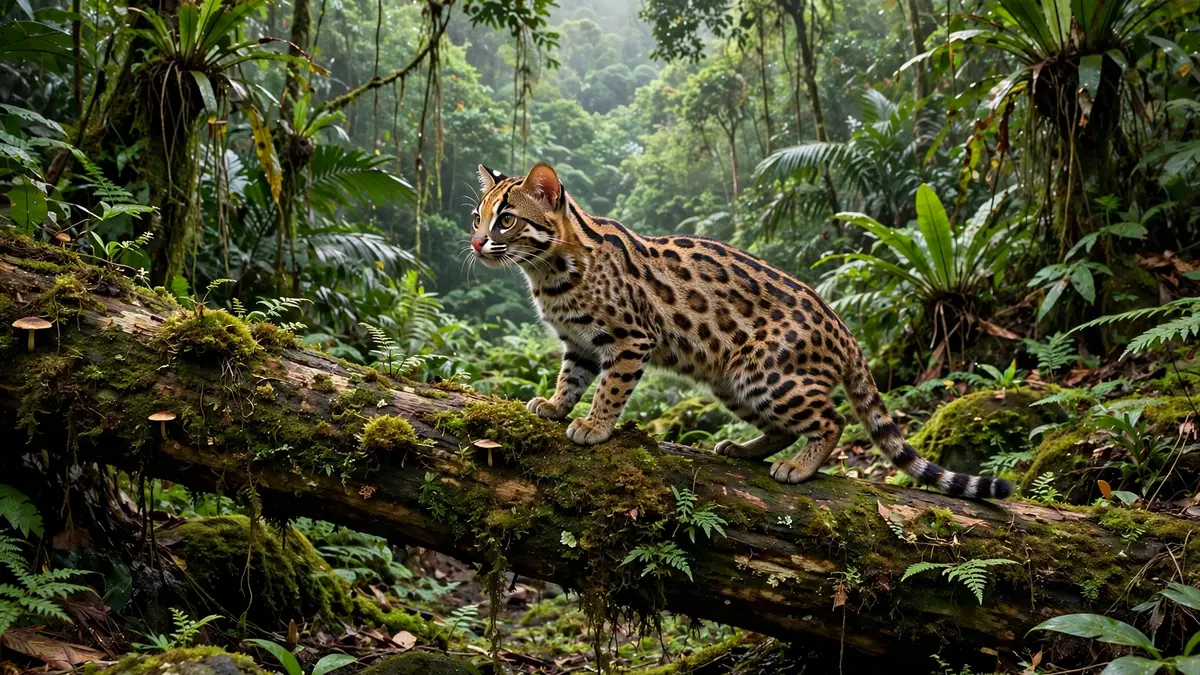
A leopard cat is a small, neat wild cat with a golden or yellowish-brown coat covered in dark spots and rosettes, and a pale belly marked with larger spots. Its head is small and rounded, with large ears. It measures roughly 45 to 66 centimetres, with a tail of about 23 to 35 centimetres, and weighs 2.5 to 7.5 kilogrammes.
The leopard cat looks like a miniature leopard, which is how it got its name, but the likeness is only skin deep. A leopard is several times heavier, built to bring down deer, while the leopard cat hunts small prey in undergrowth and branches. Its spots break up its outline in dappled forest light.
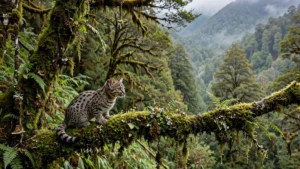
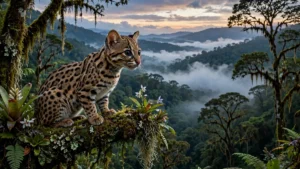
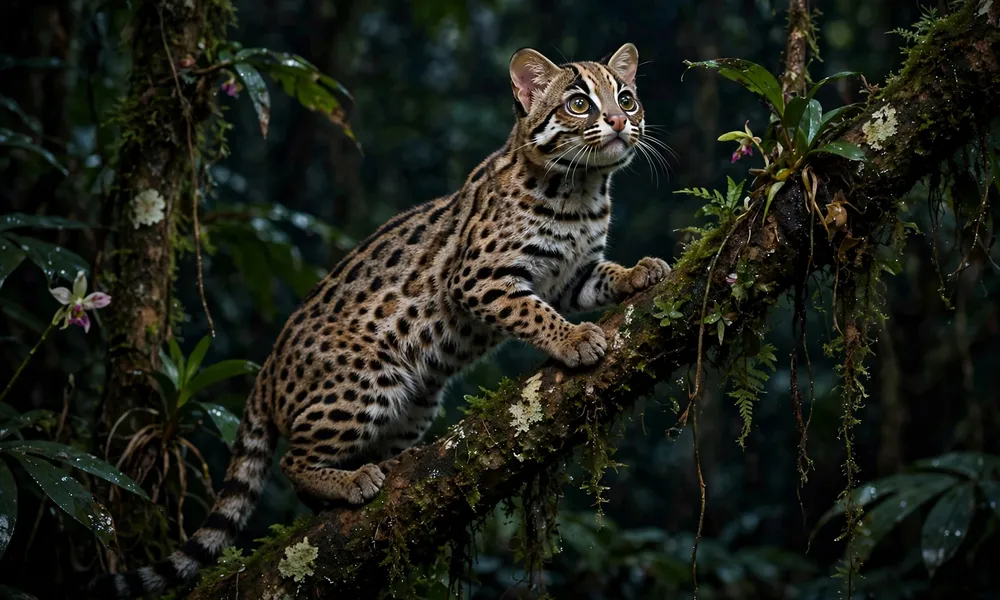
What sets the leopard cat apart is how comfortable it is in water and in trees. Few small cats swim or climb as readily, using low branches as perches and resting places. It is also the wild ancestor of the Bengal domestic cat breed, so the pet Bengal’s spotted coat began in Asian forests.
The leopard cat species and its relatives
Prionailurus bengalensis is the only leopard cat species. A handful of subspecies have been described, but they are all the same species. It sits in the genus Prionailurus alongside the fishing cat and the flat-headed cat.
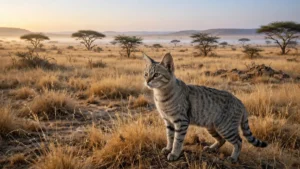
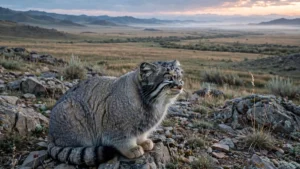
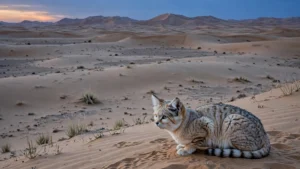
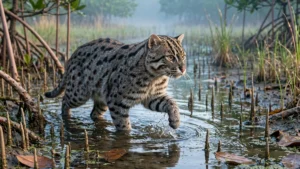
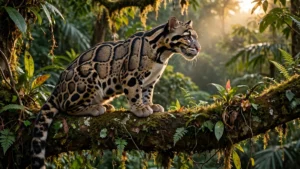
The fishing cat is the leopard cat’s nearest lookalike in South and South-east Asian wetlands, but it is larger and stockier, and it hunts fish in shallow water rather than mice in the forest. The flat-headed cat hunts in wet forests, the rusty-spotted cat in Indian dry scrub, and the jungle cat in the reed beds of Asia. The clouded leopard is a larger forest cat of South-east Asia, the Pallas’s cat a hunter of the Central Asian steppes, and the ocelot its spotted counterpart in the Americas.
| Type | Animal | Where it lives | Best-known food | Length |
|---|---|---|---|---|
| Species | Leopard cat (Prionailurus bengalensis) | Asia, Siberia to South-east Asia | Rodents, birds and frogs | 45 to 66 cm body |
| Close relative | Fishing cat | South and South-east Asian wetlands | Fish and small mammals | 57 to 78 cm body |
| Close relative | Flat-headed cat | Borneo and Sumatra wet forests | Fish and frogs | 41 to 50 cm body |
| Close relative | Rusty-spotted cat | India and Sri Lanka | Rodents, birds and lizards | 35 to 48 cm body |
| Close relative | Jungle cat | Asia, from Egypt to South-east Asia | Rodents, birds and fish | 59 to 76 cm body |
| Close relative | Pallas’s cat | Central Asian steppes | Pikas and gerbils | 46 to 65 cm body |
| Close relative | Clouded leopard | South-east Asian forests | Deer, monkeys and birds | 68 to 106 cm body |
| Close relative | Ocelot | Central and South America | Small mammals and birds | 55 to 100 cm body |
How leopard cats live
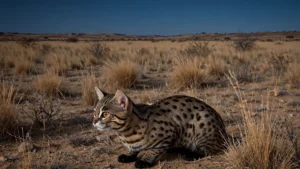
Leopard cats are solitary animals. Each adult holds a home range, marked with scent and defended against others of the same sex. They are most active at night, resting by day in a hollow tree, and they use the dark for cover, like other nocturnal animals of the Asian forests.
Rodents are the leopard cat’s main prey. It moves slowly through the undergrowth, listening for a rat or a mouse, then pounces with a short spring, pinning it with both front paws. Birds, frogs and fish add variety, and a leopard cat will wade into shallow water to scoop out fish and frogs with its paws.
Breeding can happen at any time of year in the warm south, while in the colder north it is timed for spring, so the kittens are born when prey is plentiful. After about 60 to 70 days the female gives birth to one to four kittens in a sheltered den, often in a hollow tree. The kittens are born spotted, open their eyes at ten days, and hunt with their mother at four months old.
Where leopard cats live
The leopard cat has one of the widest ranges of any small cat, from Siberia and the Amur region through China and Korea, across India and the Himalayan foothills, and through South-east Asia to Borneo, Sumatra and Java. It is a cat of forest and forest edge, at home in tropical rainforest, temperate woodland and bamboo thickets, and one of the most adaptable rainforest animals.
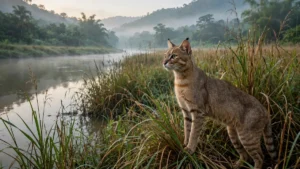
Within that range the leopard cat avoids the driest and most open places. It is rare in desert and treeless grassland, preferring cover where it can hunt unseen, and it often lives close to rivers and streams. It also lives near farms and villages, hunting rats in rice fields and orchards, alongside the other forest animals that share its home.
The species is listed as Least Concern, because it is still widespread, but its numbers are falling where forest is cut for farming, logging and towns. The main pressure is the loss of forest cover, which shrinks its hunting grounds, and in some places leopard cats are also caught for the pet trade or killed for their fur.
Best seasons for leopard cat watching
Leopard cats are active all year, but the dry season is usually the best time to look for them in South-east Asia. The trails are easier to walk, and the cats come to the same waterholes and stream banks to hunt frogs and fish. The leaves are thinner too, which makes a spotted cat easier to spot.
The wet season has its own rewards. There is more prey about, and leopard cats are often bolder near the forest edge, hunting frogs in flooded fields, but rain can cut a night walk short, and thick wet leaves hide them well. The best hours are the first two after sunset and the last two before dawn.
Good places to try include Borneo and Sumatra, the parks of Thailand and Malaysia, and the reserves of India and Nepal, where leopard cats are often seen on the roads at night. A local guide makes a real difference, because leopard cats are quiet and quick to vanish into forest cover.
Staying safe around leopard cats
A leopard cat is a wild animal with sharp teeth and strong claws, and although it is not a danger to people, it should always be treated with respect. Keep your distance, never approach one on foot, and never try to touch or feed it. If one comes close, stay still and let it move away.
Leopard cats are sometimes seen near farms, where they may take chickens, and farmers in some regions trap them for it. If you are staying on a farm or near a forest edge, keep small livestock and pets indoors at night. Any bite or scratch should be washed at once and checked by a doctor without delay.
The other safety issue is the pet trade. Leopard cats are sometimes sold as exotic pets, but a wild leopard cat makes a poor pet: it is active, shy and restless, needs a large space to climb and hunt, and can injure a person when frightened. Keeping one is illegal in many places, and many pet leopard cats end up in rescue centres.
Leopard cat watching checklist
A little preparation turns a night walk into a real chance of seeing a leopard cat, so pack for warm, wet forest and long, quiet waits.
- Binoculars with good low-light performance, for picking a spotted leopard cat out of the dark.
- A camera with a fast shutter speed, ready for a sudden pounce or a climb.
- A red-filtered torch or headlamp, which lets you see without startling a nocturnal cat.
- Neutral-coloured clothing in dark green, brown or black, which blends into the forest at night.
- Water, insect repellent and a rain jacket, because leopard cat country is warm and wet.
- A booked local guide who knows the trails and the leopard cat territories.
- Patience and silence, because leopard cats are quiet, shy animals and noise will send them away.
Frequently asked questions
How many leopard cat species are there?
There is one leopard cat species, Prionailurus bengalensis. A handful of subspecies have been described, but they are all the same species, and no second leopard cat species is recognised.
Is a leopard cat a leopard?
No, although the leopard cat is named for its spotted coat. A leopard is much larger, several times heavier, built to bring down deer, while the leopard cat is a small cat that hunts rodents, birds, frogs and fish. The two belong to different genera and live in different ways.
What do leopard cats eat?
Leopard cats eat mainly rodents, such as rats and mice, and they also take birds, frogs, lizards and fish. They hunt by listening for prey in the dense undergrowth, then pouncing with a short spring, and they will wade into shallow water to catch fish and frogs with their paws.
How is this guide different from the fishing cat species guide?
This guide covers the single leopard cat species, a small spotted hunter of Asian forests that climbs and swims, eating mainly rodents, while our fishing cat species guide covers the fishing cat, a larger, stockier cat of South and South-east Asian wetlands that hunts fish in shallow water. The two are close relatives, but they live in different places and hunt in different ways. The fishing cat guide mentions this guide as planned.
Are leopard cats endangered?
Leopard cats are listed as Least Concern, so they are not classed as endangered, but their numbers are declining in many parts of their range. Forest loss to farming, logging and towns is the main pressure, along with trapping for the pet trade and killing for their fur.
Can leopard cats swim?
Yes, leopard cats are strong swimmers and are comfortable in water. They wade into shallow streams to catch fish and frogs, and swim across rivers to move between hunting grounds. Their willingness to enter water sets them apart from most small cats.
Conclusion
The leopard cat species shows how much life one small cat can hold: Prionailurus bengalensis, with its golden coat, its dark spots and its quiet night hunting, a hunter built for the forests of Asia, from Siberia to Borneo. It climbs trees, swims streams and catches rats in the dark, and it gave its spotted coat to the Bengal breed of domestic cat.
If you go looking for one, go at night, go with a guide, and go quietly. Watch a leopard cat standing alert on a mossy log, its large eyes shining in the torchlight, and you will understand why this small spotted hunter has earned its place in the Asian forests.