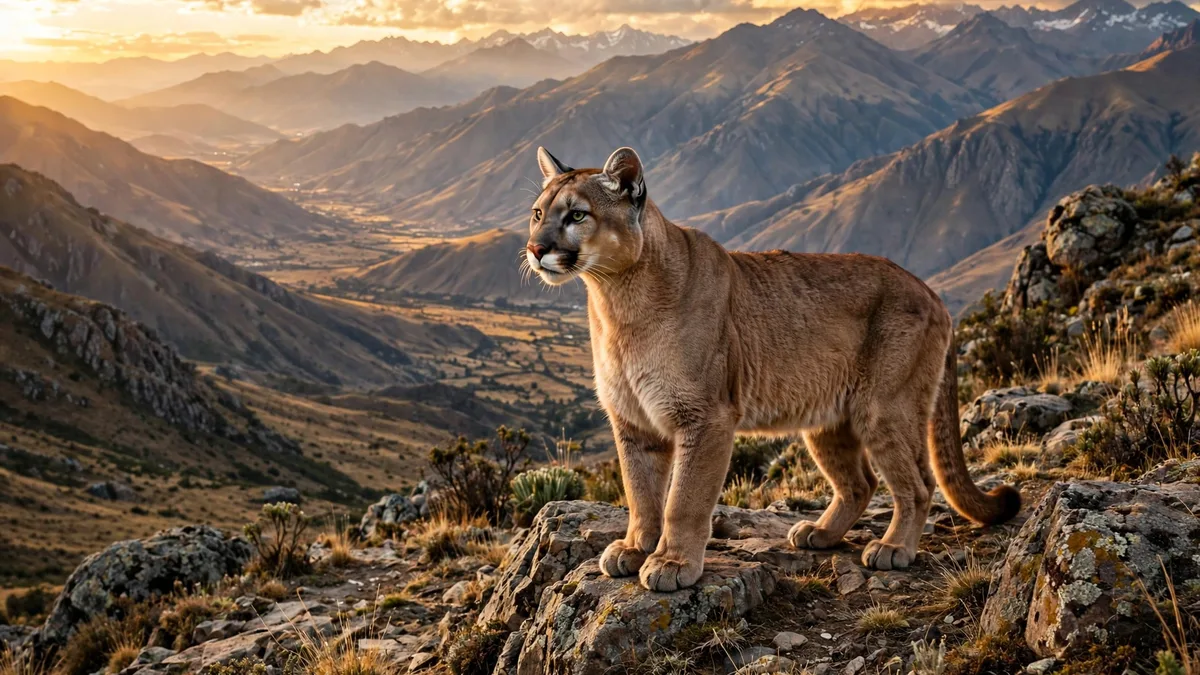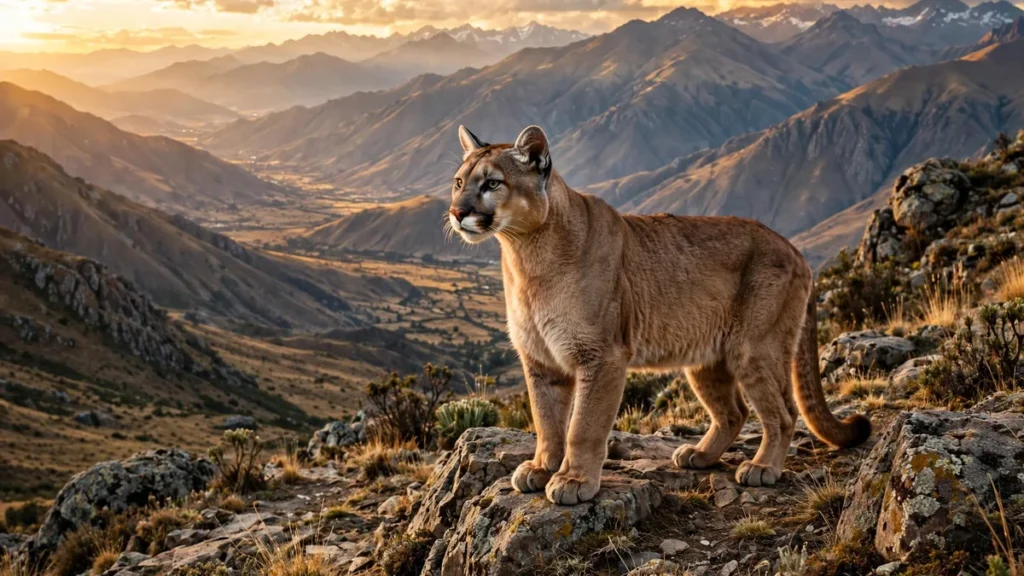
The puma species is a single species, Puma concolor, a wide-ranging big cat of the Americas that carries more common names than almost any other mammal. If you are asking how many puma species there are, the answer is one: the puma, the cougar and the mountain lion are the same animal.
The puma is the most widespread land mammal in the Americas, found from the Yukon in Canada to the southern tip of Patagonia. It is a powerful, plain-coated cat that hunts deer in the mountains, the desert and the forest, and it is the largest cat in most of its range. It is also one of the few big cats that purrs, although it cannot roar.
Key takeaways
- There is only one puma species, Puma concolor, also known as the cougar, the mountain lion and the panther.
- Pumas are the most widespread land mammal in the Americas, living from Canada to Patagonia.
- A puma usually weighs about 50 to 80 kilogrammes, although males can reach 100 kilogrammes.
- Pumas hunt mostly deer, but also take smaller mammals and livestock.
- Pumas are listed as Least Concern, but they are declining as wild land is lost.
- The Florida panther is not a separate species, but a small, isolated population of the same puma species.
What makes a puma a puma
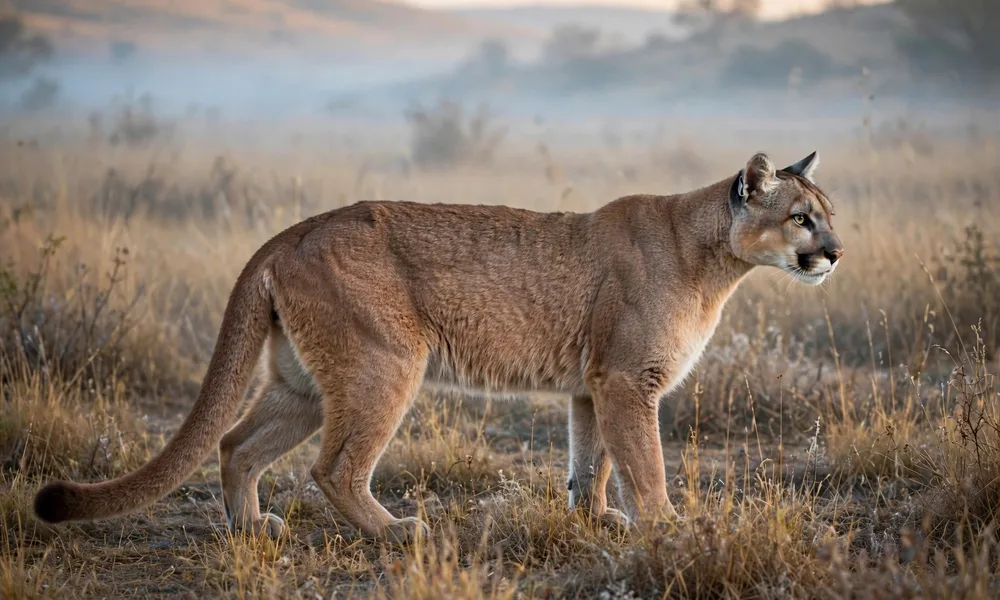
A puma is a large, powerfully built cat with a plain coat of tawny, reddish-brown or grey, a pale belly and a long, thick tail with a dark tip. Its head is small and rounded, with large ears and a short muzzle. Its body measures roughly 105 to 195 centimetres, with a tail of 60 to 95 centimetres, and it usually weighs between 50 and 80 kilogrammes, although large males can reach 100 kilogrammes.
The puma is built for stealth and for power. It stalks prey through cover until it is close, then springs in a short rush, using its strong hind legs and sharp claws to bring the animal down. It can leap up to six metres horizontally and about four and a half metres vertically, and it is an excellent climber and swimmer.
What sets the puma apart is its range. No other land mammal in the Americas lives in so many places, from the cold forests of Canada to the high Andes, from the deserts of the south-western United States to the tropical forests of Central America. It is a cat of mountains, forests, deserts and grasslands alike.
The puma species and its relatives
Puma concolor is the only puma species, and the only living member of the genus Puma. A number of subspecies have been described, but they are subspecies only, not separate species. The Florida panther is one of them, a small, isolated population in southern Florida, but it is still the same species as every other puma.
The jaguarundi is the puma’s nearest relative, a much smaller cat that shares much of the same range. The jaguar is a larger spotted cat that lives in the same forests, the ocelot and the margay are smaller spotted cousins, and the cheetah is a distant relative that shares the puma’s love of open ground. Further afield, the leopard is a similar-sized big cat of Africa and Asia, and the snow leopard is a high-altitude specialist of Central Asia.
| Type | Animal | Where it lives | Best-known food | Length |
|---|---|---|---|---|
| Species | Puma (Puma concolor) | The Americas, from Canada to Patagonia | Deer and other large mammals | 105 to 195 cm body |
| Close relative | Jaguarundi | The Americas, from the southern United States to Argentina | Small mammals, birds and reptiles | 53 to 77 cm body |
| Close relative | Jaguar | Central and South America | Peccaries, capybaras and deer | 112 to 185 cm body |
| Close relative | Ocelot | Central and South America | Small mammals, birds and reptiles | 55 to 100 cm body |
| Close relative | Margay | Central and South American forests | Small mammals and birds | 48 to 79 cm body |
| Close relative | Cheetah | Africa and Iran | Gazelles and small antelope | 112 to 150 cm body |
| Close relative | Leopard | Africa and Asia | Antelopes, monkeys and other mammals | 90 to 190 cm body |
| Close relative | Snow leopard | Central Asian mountains | Wild sheep, goats and other mountain animals | 86 to 125 cm body |
How pumas live
Pumas are mostly solitary and mostly active at dawn and dusk, although they may hunt at any hour. Each adult holds a home range that it marks with scent and patrols regularly, and males hold larger ranges than females. They are ambush hunters, stalking prey through cover until they are close enough to spring, and they drag their kill to a sheltered spot to eat. Like other nocturnal animals, they use the dark for cover when they hunt at night.
Deer are the main prey, above all mule deer, white-tailed deer and elk, with smaller mammals such as rabbits, hares and beavers taken when the chance arises, and livestock such as sheep and goats when wild prey is scarce. A puma may return to a large kill for several days, covering it with leaves and grass between feeds.
Breeding can happen at any time of year, and after a gestation of about 82 to 96 days the female gives birth to one to six cubs in a den hidden in dense cover, often in a cave or a rock crevice. The cubs are born spotted, open their eyes at about ten days, and stay with their mother for a year or more, learning to hunt by watching her. Pumas live for around 8 to 13 years in the wild, and longer in captivity.
Where pumas live
The puma range runs from the Yukon in Canada, through the western United States and Mexico, and across Central and South America as far south as Patagonia. It lives in mountains, forests, deserts, grasslands and swamps, wherever there is enough cover to hunt in and enough prey to eat. It is one of the most adaptable big cats in the world, at home in places that other big cats avoid.
Mountains are the puma’s heartland. The Rocky Mountains, the Andes and the Sierra Madre are its strongholds, and it is also common in the deserts and canyons of the south-western United States. It is rare in the open plains and in the wettest lowland forests, preferring broken ground where it can stalk unseen. Like many other mountain animals, it depends on large, connected areas of wild land.
The species is listed as Least Concern, because it remains widespread and fairly common in much of its range. Even so, its numbers are falling in many places. The main pressure is the loss of wild land to farming, ranching and settlement, which shrinks its hunting grounds and cuts off the routes between populations, while road deaths and killing by farmers add to the decline.
Best seasons for puma watching
There is no closed season, because pumas are active all year, but the dry season is usually the best time to look for them. Trails are drier and easier to walk, rain is less likely to cut a walk short, and animals gather near water, which makes their movements more predictable.
The wet season has its own rewards: the land is at its greenest, prey is plentiful, and pumas hunt actively through the damp days. The trade-off is muddy trails, heavier rain and more insects, and walks may be cancelled when storms pass through. Whichever season you choose, the best hours are the first two after dawn and the last two before dusk.
Good places to try include the national parks of the western United States, such as Yellowstone, Yosemite and the Grand Canyon, and the reserves of Patagonia, where guided walks are part of the stay. A local guide makes a real difference, because pumas are quiet, shy and well hidden.
Staying safe around pumas
A puma is a large wild cat with sharp teeth and strong claws, and it can be dangerous to people, although attacks are rare. Keep your distance, never approach one on foot, and never try to touch or feed it. If one comes close, do not run, because running can trigger a chase. Stand your ground, make yourself look as large as possible, raise your arms, shout, and throw stones or sticks if it approaches.
Children should be kept close, and small pets should be kept indoors at night in puma country, because a puma may see them as prey. If you are walking in puma country, walk in a group, make noise, and carry a stick or a walking pole. Any bite or scratch should be washed at once and checked by a doctor without delay.
Pumas are sometimes seen near farms, where they may take sheep, goats or calves, and farmers in some regions shoot or trap them for it. If you are staying on a farm or near a reserve boundary, keep small livestock and pets indoors at night and ask the local staff how pumas are managed in the area.
Puma watching checklist
A little preparation turns a dawn walk into a real chance of seeing a puma, so pack for the mountains and the early morning.
- Binoculars with good low-light performance, for picking a tawny puma out of the shadows at dawn.
- A camera with a fast shutter speed, ready for a sudden leap or a short chase.
- Neutral-coloured clothing in tan, khaki or olive, which blends into dry mountain and scrub.
- Water, sun protection and a hat, because puma country is hot and dry by day.
- A booked local guide who knows the territories, the tracks and the dawn routes.
- A plan to be out at dawn or dusk, when pumas leave cover to hunt.
- Patience and silence, because pumas are quiet, shy animals and a noisy group will send them away.
Frequently asked questions
How many puma species are there?
There is one puma species, Puma concolor. The puma, the cougar and the mountain lion are the same animal, and although a number of subspecies have been described, they are all the same species. No second puma species is recognised.
Is a puma the same as a cougar or a mountain lion?
Yes. Puma, cougar and mountain lion are three names for the same animal, Puma concolor. The name puma comes from the Quechua language of the Andes, cougar from the Tupi language of Brazil, and mountain lion from the English settlers of North America. Panther is another name, used above all in Florida.
How big is a puma?
A puma usually weighs about 50 to 80 kilogrammes, with a head and body of roughly 105 to 195 centimetres and a tail of 60 to 95 centimetres. Males are usually larger than females, and large males can reach 100 kilogrammes. It is the largest cat in most of its range.
Are pumas dangerous to people?
Pumas are shy and avoid people, and attacks on humans are rare, but they do happen. A puma is a large, powerful predator, and it should never be approached. If one comes close, do not run: stand your ground, make yourself look large, shout and throw stones. Children and small pets should be kept close in puma country.
How is this guide different from the big cat species guide?
This guide covers the single puma species, a wide-ranging big cat of the Americas that purrs but cannot roar, while our big cat species guide covers the big cats, the lions, tigers, leopards, jaguars and snow leopards that roar, grow far larger in some cases, and hunt large prey in Africa and Asia. The puma is a big cat of the Americas, and it lives a very different life.
Are pumas endangered?
Pumas are listed as Least Concern, so they are not classed as endangered, but their numbers are declining in many places. The loss of wild land to farming and settlement is the main pressure, along with killing by farmers who lose livestock to them. In Florida, the small, isolated population known as the Florida panther is endangered.
Conclusion
The puma species shows how much power one cat can hold across a continent: Puma concolor, with its plain tawny coat, its long tail and its leap of up to six metres, a hunter built for the mountains, the deserts and the forests of the Americas, from Canada to Patagonia. It is the most widespread land mammal in the Americas, and it purrs.
If you go looking for one, go at dawn, go with a guide, and go quietly. Watch a puma standing alert on a ridge and you will understand why this wide-ranging big cat has earned its place in the Americas, and why keeping its wild, open country standing matters most.