Big cat species number seven in the classic count: the lion, the tiger, the leopard, the jaguar, the snow leopard, the puma and the cheetah, the great hunters of the savanna, the jungle, the mountains and the grasslands. If you are wondering how many big cat species there are and what makes a cat a big cat, the short answer is this: the big cats are the largest members of the cat family, powerful predators that hunt large prey, and five of the seven belong to the roaring genus Panthera, while the puma and the cheetah are close cousins that cannot roar but belong in the group by size and by the way they hunt.
Key takeaways
- The classic big cats are seven species: lion, tiger, leopard, jaguar, snow leopard, puma and cheetah.
- Five of the seven belong to the genus Panthera and can roar; the puma and the cheetah cannot roar.
- Lions live in prides, tigers live alone, and leopards are the most widespread of all the big cats.
- The cheetah is the fastest land animal, reaching more than 100 kilometres per hour in a sprint.
- African savannas, Indian jungles, South American rainforests and Central Asian mountains are the best places to see big cats.
What makes a big cat a big cat
A big cat is a large member of the cat family, built to kill prey as large as deer, antelope, wild pigs and even young buffalo. Big cats have powerful jaws, long canine teeth, sharp retractable claws, superb night vision and hearing, and a body made for stealth and sudden bursts of speed. They are all obligate carnivores, which means they must eat meat to survive.
Five of the seven big cats belong to the genus Panthera: the lion, the tiger, the leopard, the jaguar and the snow leopard. These five can roar, thanks to a specially shaped bone in the throat, and their roar can carry for kilometres across the savanna or the jungle. The puma and the cheetah belong to other genera, and they cannot roar: the puma purrs, chirps and screams, while the cheetah chirps like a bird.
Big cats are solitary hunters, with one great exception: the lion. Lions are the only cats that live in family groups called prides, and they hunt together, while tigers, leopards, jaguars, snow leopards, pumas and cheetahs all hunt alone. Among the predators of the world, the big cats sit at the top of the food chain wherever they live.
Lions: the social cats of the savanna
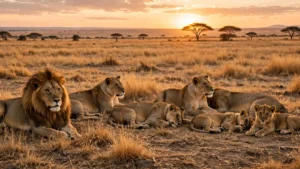
The lion is the most social of all the big cats, and the only one that lives in a pride. A pride holds several related females, their cubs and one or two adult males, and the females do most of the hunting, working together to bring down zebras, wildebeest and buffalo. The males defend the pride’s territory, and their great manes make them look larger and protect their necks in fights.
Lions live on the grasslands and savannas of Africa, with a small population of Asiatic lions surviving in the Gir forest of India. A male lion can weigh around 190 kilograms, and its roar can be heard from eight kilometres away on a still night. Lions sleep for up to 20 hours a day, and they hunt mostly at night or in the cool of dawn and dusk.

Tigers: the largest cats on Earth
The tiger is the largest cat species in the world, a great orange and black striped hunter of the forests and grasslands of Asia. A large male tiger can weigh around 220 kilograms and measure more than three metres from nose to tail. Every tiger’s stripes are unique, like a human fingerprint, and the stripes break up the cat’s outline in the dappled light of the forest.
Tigers are solitary animals, and each adult holds a large territory that it marks with scent and defends from other tigers. They are powerful swimmers, unlike most cats, and they often hunt in and around water, taking deer, wild pigs and even young buffalo. A tiger can leap more than five metres in a single bound and can drag prey much heavier than itself.
Leopards and jaguars: the spotted hunters
The leopard is the most widespread of all the big cats, living across Africa and Asia, from the rainforests of the Congo to the deserts of Arabia and the snowy mountains of Central Asia. Leopards are superb climbers, and they often drag their prey up into a tree to eat it safely away from lions and hyenas. A leopard can carry an antelope heavier than itself up a vertical tree trunk.
The jaguar is the great cat of the Americas, a powerful spotted hunter of the rainforests and wetlands of Central and South America. Jaguars are stockier than leopards, with larger heads and stronger jaws, and they have the most powerful bite of any big cat relative to their size. They hunt by crushing the skull of their prey, and they are strong swimmers that catch fish, turtles and caimans in the rivers of the Pantanal.
Snow leopards: the ghosts of the mountains
The snow leopard is the most elusive of all the big cats, a pale grey hunter of the high mountains of Central Asia. It lives at altitudes of up to 5,000 metres in the Himalayas, the Karakoram, the Pamirs and the Altai, where it hunts wild sheep, wild goats and marmots on steep, rocky slopes. Snow leopards are rarely seen, and they are often called the ghosts of the mountains.
Pumas and cheetahs: the cats that cannot roar
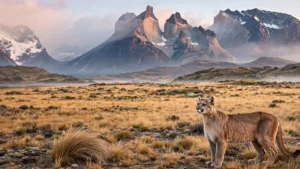
The puma, also called the cougar or mountain lion, is the great cat of the Americas, ranging from Canada to Patagonia, the widest range of any land mammal in the western hemisphere. Pumas are tawny, muscular cats that hunt deer in the forests and mountains, and they can leap more than five metres straight up into a tree. They are silent hunters, and they are rarely seen even where they are common.
The cheetah is the fastest land animal on Earth, reaching more than 100 kilometres per hour in a sprint that lasts only a few hundred metres. Cheetahs hunt by day on the open grasslands of Africa, using their speed to run down antelope, and they have small heads, long legs, a deep chest and a long tail that works like a rudder in a high-speed turn. Unlike other big cats, a cheetah cannot fully retract its claws, which work like the spikes on a running shoe.
Where big cats live
Big cats live on every continent except Australia and Antarctica, and each species has its own home. Lions live on the African savanna, tigers in the forests of Asia, leopards across Africa and Asia, jaguars in the rainforests and wetlands of the Americas, snow leopards in the mountains of Central Asia, pumas across the Americas and cheetahs on the grasslands of Africa.
The best places to see big cats are the great wildlife reserves: the Serengeti and the Maasai Mara for lions, leopards and cheetahs, the national parks of India for tigers, the Pantanal of Brazil for jaguars and the mountains of Ladakh for snow leopards. The bear species of the northern forests share their habitat with tigers and pumas in some of the world’s great wildernesses.
| Species | Genus | Where it lives | Weight |
|---|---|---|---|
| Lion | Panthera | Savannas of Africa, Gir forest of India | 190 kilograms |
| Tiger | Panthera | Forests and grasslands of Asia | 220 kilograms |
| Leopard | Panthera | Africa and Asia, forests to deserts | 60 kilograms |
| Jaguar | Panthera | Rainforests and wetlands of the Americas | 95 kilograms |
| Snow leopard | Panthera | High mountains of Central Asia | 55 kilograms |
| Puma | Puma | Americas, from Canada to Patagonia | 70 kilograms |
| Cheetah | Acinonyx | Grasslands of Africa, small numbers in Iran | 55 kilograms |
Best seasons for big cat watching
The dry season is the finest season for big cats in Africa, when the grass is short, the waterholes shrink and the animals gather where they can be seen. Early morning and late afternoon are the best times of day, when the cats are active and the light is golden. In India the dry months before the monsoon are the best time for tigers, when they come to waterholes to drink.
Staying safe around big cats
Big cats are wild animals, and they deserve respect. Never approach a big cat on foot, never leave your vehicle in a wildlife reserve, and never walk alone at night in big cat country. Watch from a vehicle or a hide, keep your distance, and follow the advice of your guide at all times.
Big cat watching checklist
- Visit the Serengeti or the Maasai Mara in the dry season for lions, leopards and cheetahs.
- Look for tigers in the national parks of India in the dry months before the monsoon.
- Scan the riverbanks of the Pantanal in the wet season for jaguars hunting by the water.
- Search the high valleys of Ladakh in winter for snow leopards following their prey.
- Watch from a vehicle or a hide, never approach on foot, and follow your guide at all times.
- Leave no trace: take your rubbish home, and never feed a wild animal.
Frequently asked questions
How many big cat species are there?
There are seven classic big cat species: the lion, the tiger, the leopard, the jaguar, the snow leopard, the puma and the cheetah. Five of the seven belong to the genus Panthera, while the puma and the cheetah belong to other genera but are counted as big cats by size and by the way they hunt.
Which big cat is the largest?
The tiger is the largest cat species in the world. A large male tiger can weigh around 220 kilograms, while a large male lion weighs around 190 kilograms. The jaguar is the largest cat of the Americas.
How is this guide different from the predator animals guide?
This is a species-level guide to the seven big cats: it covers lions, tigers, leopards, jaguars, snow leopards, pumas and cheetahs in detail. The predator animals guide is a general roundup of many different predators, from wolves and eagles to sharks, and does not go into any one group in this depth.
How is this guide different from the bear species guide?
This guide covers the big cats, which are members of the cat family that hunt by stealth, speed and ambush. The bear species guide covers bears, which are members of the bear family: they are mostly omnivores that eat plants, berries, fish and small animals as well as hunting, and they are built very differently from cats.
Which big cat is the fastest?
The cheetah is the fastest land animal on Earth, reaching more than 100 kilometres per hour in a sprint. No other big cat comes close: a lion can reach around 80 kilometres per hour in a short burst, but only for a few seconds.
Where is the best place to see a lion?
Lions are best in the Serengeti in Tanzania and the Maasai Mara in Kenya, in the dry season, when the grass is short and the prides gather near waterholes. Early morning and late afternoon are the best times to see them hunting or resting in the shade.
Conclusion
Big cat species are the great hunters of the world: lions in prides on the savanna, tigers alone in the jungle, leopards in the trees, jaguars by the rivers, snow leopards in the high mountains, pumas across the Americas and cheetahs sprinting across the grasslands.
The next step is to pick one cat and one season — a dry-season dawn in the Serengeti, a winter valley in Ladakh or a wet-season river in the Pantanal — and plan your visit around it.