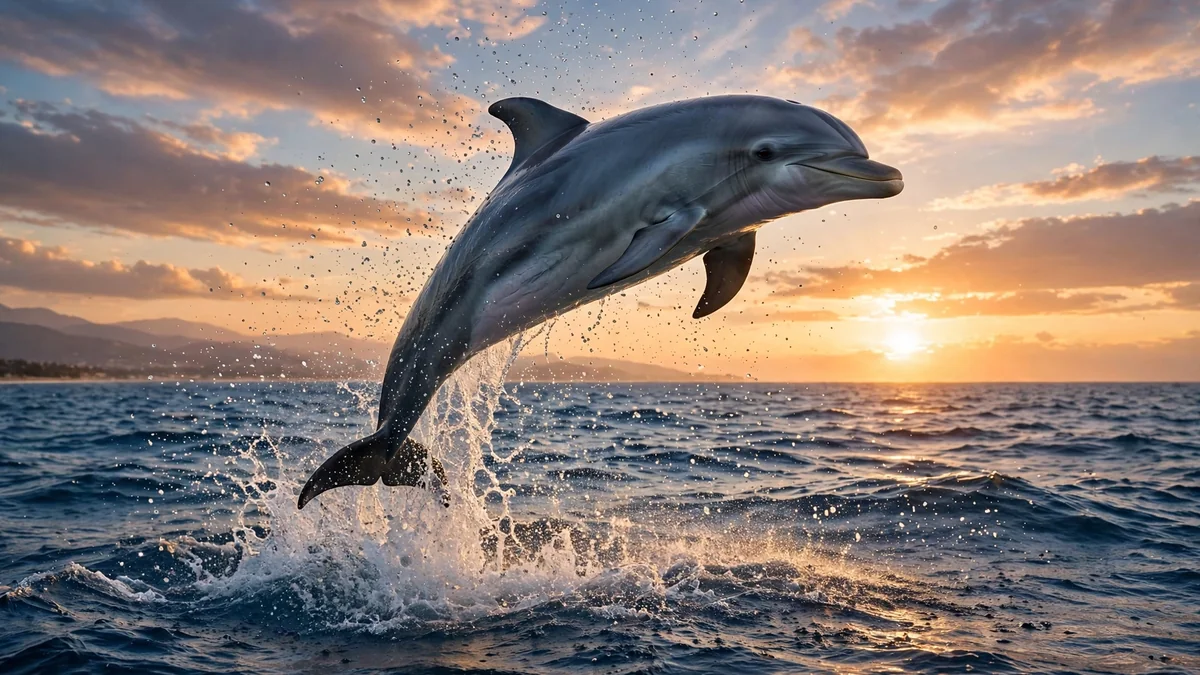
Dolphin species number around 40 oceanic species, plus a handful of river dolphins, from the familiar bottlenose dolphin of warm coastal seas to the spinning acrobats of the tropical oceans and the great orca, the largest dolphin of all. If you are wondering how many dolphin species there are and what makes a dolphin different from a whale, the short answer is this: dolphins are small toothed whales with beaked snouts, curved mouths and conical teeth, and they live in every ocean on Earth, while the word whale usually means the larger toothed whales and the great baleen whales, which feed very differently.
Key takeaways
- Around 40 oceanic dolphin species are known, plus four or five river dolphin species.
- Dolphins are small toothed whales: they hunt fish and squid with echolocation, not baleen.
- The orca, or killer whale, is the largest dolphin species, not a true whale at all.
- Bottlenose dolphins live close to coasts, spinners leap and spin in the open ocean, and river dolphins live in muddy rivers.
- Coasts, bays, estuaries and tropical seas are the best places to see dolphins, especially in the morning.
What makes a dolphin a dolphin
A dolphin is a marine mammal, a warm-blooded animal that breathes air through a blowhole on top of its head and gives birth to live young that it feeds with milk. Dolphins have streamlined bodies, a dorsal fin on the back, two flippers and a tail fluke that moves up and down, and most have a beak-like snout filled with small conical teeth for gripping slippery fish.
Dolphins find their food by echolocation. They make rapid clicks and listen to the echoes that bounce back from fish, squid and other objects, building a picture of the water around them even in darkness or muddy water. A dolphin can tell the size, shape, distance and speed of a fish from its echo alone, and it can hunt in water too dark for any eye to see in.
Dolphins are among the most social animals in the sea. They live in groups called pods, which can hold a handful of animals or several hundred, and they communicate with whistles, clicks and body language. Among the ocean animals of the open sea, dolphins are the ones most often seen riding the bow waves of ships and leaping clear of the water.
Bottlenose dolphins: the familiar face of the sea
The bottlenose dolphin is the best-known dolphin species of all, a large grey dolphin with a short, stubby beak and a curved mouth that looks like a smile. Bottlenose dolphins live in warm and temperate seas around the world, in coastal waters, bays, estuaries and lagoons, and some populations live far out at sea. They are the dolphins most often seen from shore, and the species most often kept in aquariums.
Bottlenose dolphins are clever hunters. They work together to herd schools of fish into tight balls, take turns to swim through and feed, and in some places they use tools: dolphins in Shark Bay in Australia carry sea sponges on their beaks to protect them while they probe the sandy sea floor for fish. Mothers teach the trick to their daughters, and the knowledge passes down through families.

Spinner, common and dusky dolphins: the acrobats
Spinner dolphins are the acrobats of the dolphin world. These slim, long-beaked dolphins of tropical oceans leap out of the water and spin around their long axis, sometimes turning seven times before they splash back down. Nobody knows exactly why they spin: it may shake off parasites, impress other dolphins or simply be play. Spinner dolphins rest during the day in sheltered bays and hunt at night, following lanternfish and squid up from the deep.
Dusky dolphins live in the cool coastal waters of the southern hemisphere, around New Zealand, South America and southern Africa. They are small, lively dolphins that leap, somersault and slap the water with their tails, and in New Zealand they gather in large groups in the bays of the South Island, where visitors watch them from boats. The coastal animals of shallow bays include dusky dolphins among their most playful visitors.
Orcas: the largest dolphins of all
The orca, also called the killer whale, is the largest dolphin species, and one of the most powerful predators in the sea. Male orcas can grow to nine metres long and weigh more than five tonnes, with tall black dorsal fins, white patches behind the eyes and white undersides. Despite the name, orcas are not true whales at all: they belong to the oceanic dolphin family.
Orcas live in every ocean, from the Arctic to the Antarctic, and they hunt in family groups called pods, led by the oldest female. Different pods have different cultures: some hunt fish, especially salmon, while others hunt seals, sea lions and even other whales, and each group uses its own hunting calls and techniques. Orcas in Argentina slide up onto beaches to snatch sea lion pups, while orcas in Norway herd herring into tight balls with their tails.
River dolphins: the dolphins of muddy rivers
River dolphins live far from the sea, in the great muddy rivers of South America and Asia. There are four or five river dolphin species, depending on how they are counted, and they are very different from their ocean cousins: they have long, thin beaks, small eyes, flexible necks and almost no dorsal fin, all of which help them navigate flooded forests and murky water where eyesight is nearly useless.
The Amazon river dolphin, also called the pink river dolphin, is the largest river dolphin, and the males turn pink as they grow older, especially when they are excited. It lives in the Amazon and Orinoco rivers, swimming through flooded forest in the wet season to hunt fish among the trees. The Ganges river dolphin of India and the Indus river dolphin of Pakistan are nearly blind, finding their food almost entirely by echolocation in water so muddy that light barely penetrates.
River dolphins are among the most endangered dolphin species. Dams, pollution, fishing nets and boat traffic have cut their rivers into pieces, and the baiji, the river dolphin of the Yangtze in China, is now thought to be extinct. The river animals of the world’s great rivers include these remarkable dolphins, and their survival depends on keeping their rivers clean and connected.
Other dolphin species
The beluga and the narwhal, the white whales of the Arctic, are close cousins of the dolphins, and so are the porpoises, which are smaller, blunter animals with spade-shaped teeth and no beak. Porpoises are shy and rarely leap, which is one way to tell them apart from dolphins at sea. Bottlenose and spinner dolphins also patrol the edges of tropical coral reefs for fish, moving between the reef and the open sea as the light changes.
Where dolphins live
The best places to see dolphins are warm coastal bays, estuaries and headlands, where dolphins come close to shore to feed. The Moray Firth in Scotland, the Bay of Biscay, the coasts of New Zealand and the bays of Hawaii are all famous for dolphins, and many places run boat trips that take visitors out to watch them. The whale species of the open ocean share these waters with dolphins, and a good boat trip often sees both.
| Species | Group | Where it lives | Length |
|---|---|---|---|
| Bottlenose dolphin | Oceanic dolphin | Warm coastal seas worldwide | 4 metres |
| Spinner dolphin | Oceanic dolphin | Tropical oceans worldwide | 2 metres |
| Common dolphin | Oceanic dolphin | Open oceans worldwide | 2.5 metres |
| Dusky dolphin | Oceanic dolphin | Cool coasts of the southern hemisphere | 2 metres |
| Orca | Oceanic dolphin | Every ocean, Arctic to Antarctic | 9 metres |
| Risso’s dolphin | Oceanic dolphin | Deep waters worldwide | 4 metres |
| Amazon river dolphin | River dolphin | Amazon and Orinoco rivers | 2.5 metres |
| Ganges river dolphin | River dolphin | Ganges and Brahmaputra rivers | 2.5 metres |
Best seasons for dolphin watching
Summer is the finest season for dolphins in temperate waters, when the seas are calm and the days are long. Early morning is the best time of day, when the water is flat and dolphins are feeding close to shore, and a rising tide often brings them into bays and estuaries.
Staying safe around dolphins
Dolphins are wild animals, and they deserve respect. Never chase a dolphin with a boat, never try to swim with a wild dolphin, and never feed one, since fed dolphins lose their fear of boats and can be injured by propellers. Watch from a distance, keep your boat slow and steady, and let the dolphins choose how close they come.
Dolphin watching checklist
- Watch from a headland or a boat in the early morning, when the sea is calm and dolphins feed close to shore.
- Look for bottlenose dolphins in warm bays and estuaries, and for common dolphins in the open sea.
- Scan sheltered tropical bays by day for resting spinner dolphins, and watch for their leaps at dusk.
- Look for orcas in cold northern fjords in winter, following the herring.
- Never chase, feed or swim with a wild dolphin, and keep boats slow and steady near a pod.
- Leave no trace: take your rubbish home, and never throw plastic into the sea.
Frequently asked questions
How many dolphin species are there?
Around 40 oceanic dolphin species are known, plus four or five river dolphin species. The oceanic dolphins belong to one family, and they range from the tiny spinner dolphin to the great orca.
Is an orca a whale or a dolphin?
An orca is a dolphin. Despite being called the killer whale, the orca belongs to the oceanic dolphin family, and it is the largest dolphin species of all. The name killer whale comes from old sailors who called it the killer of whales, because orcas sometimes hunt other whales.
How is this guide different from the whale species guide?
This guide covers dolphins, which are small toothed whales with beaked snouts that hunt fish and squid with echolocation. The whale species guide covers the larger toothed whales and the great baleen whales, which are much bigger animals that feed very differently, including by filtering tiny krill from the water.
What is the difference between a dolphin and a porpoise?
Dolphins have beaked snouts, conical teeth and a curved dorsal fin, and they often leap and ride bow waves. Porpoises are smaller and blunter, with no beak, spade-shaped teeth and a triangular dorsal fin, and they are shy animals that rarely leap or approach boats.
How do dolphins find their food?
Dolphins use echolocation: they make rapid clicks and listen to the echoes that bounce back from fish, squid and other objects. A dolphin can tell the size, shape, distance and speed of a fish from its echo alone, and it can hunt in water too dark for any eye to see in.
Where is the best place to see dolphins?
Dolphins are best in warm coastal bays, estuaries and headlands in the early morning, when the sea is calm and they feed close to shore. The Moray Firth in Scotland, the Bay of Biscay, the coasts of New Zealand and the bays of Hawaii are all famous for dolphins.
Conclusion
Dolphin species are the great small whales of the world: bottlenose dolphins in the bays, spinners leaping in the tropics, common dolphins in the open ocean, orcas in the cold north and pink river dolphins in the flooded forest.
The next step is to pick one coast and one calm morning — a summer dawn in a Scottish firth, a winter fjord in Norway or a sheltered bay in Hawaii — and watch the water.