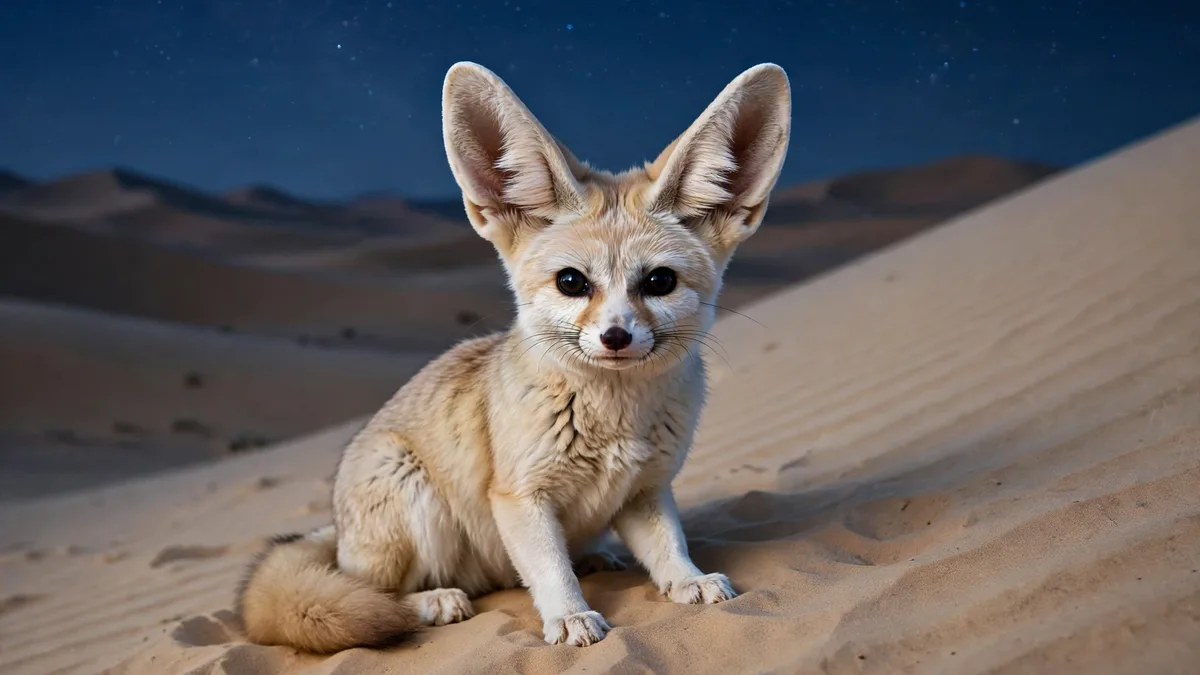
Sahara desert animals range from fennec foxes with ears larger than their faces to addax antelopes crossing the dunes, and the largest hot desert on Earth holds some of the toughest wildlife in the world. If you are wondering which animals live in the Sahara desert and where to see them, the short answer is this: fennec foxes, sand cats and desert hedgehogs hunt at night, addax, dorcas gazelles and dromedary camels cross the dunes by day, and desert horned vipers and deathstalker scorpions live under the sand.
The Sahara is one of the most demanding places in the world for wildlife watching, because so much of it is still empty sand, rock and gravel. This guide covers the species you are most likely to meet, where each one lives and the best seasons to see them.
Key takeaways
- The Sahara’s most iconic animals are the fennec fox, addax, dromedary camel, sand cat and dorcas gazelle.
- The Sahara covers more than nine million square kilometres across North Africa, and it is the largest hot desert on Earth.
- The addax is one of the rarest antelopes in the world, with only a few hundred left in the wild, and it survives in the remote dunes of Niger and Chad.
- Most desert animals are nocturnal, coming out at night when the sand cools, and the best time to look for them is at dawn and dusk.
- October to April is the best time for desert wildlife watching, when the days are warm and the nights are cool enough to travel.
What makes the Sahara’s wildlife special
The Sahara stretches across North Africa from the Atlantic coast to the Red Sea, a desert larger than the United States. Its wildlife is shaped by its sand seas, rocky plateaus and rare oases.
Honesty matters here: the Sahara has no native large cats besides the sand cat, and no native bears at all. What it has instead is something no other desert can match — animals that survive on almost no water, in heat above 50 degrees, in a landscape where rain may not fall for years. The addax, the fennec fox and the sand cat are all desert originals, shaped by the sand itself.
That variety comes from the desert itself. The Sahara holds great sand seas, rocky plateaus, gravel plains, mountain ranges and rare oases, so animals from many different habitats can live within one desert. Like the desert animals of other continents, most Sahara species depend on large, undisturbed country, and the remote dunes of Niger and Chad are among the wildest corners of Africa.
The great mammals of the Sahara
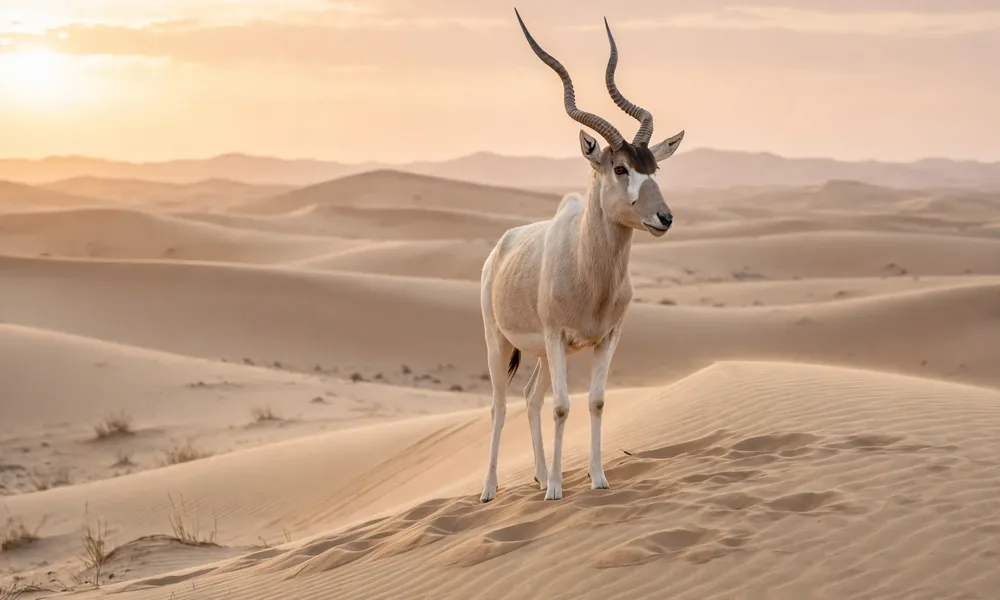
The addax is the Sahara’s most famous antelope and the animal most visitors hope to see. Addax live in the remote dunes of Niger and Chad, where they wander in small herds across the sand, eating desert grasses and shrubs. They can go for months without drinking, getting all the water they need from their food, and they are most often seen at dawn, when they come out to graze in the cool of the morning.
The dromedary camel is the Sahara’s most famous animal, and it has carried people and goods across the desert for thousands of years. Camels can drink more than a hundred litres of water in ten minutes, and they store fat in their humps for the long crossings between oases. Dorcas gazelles graze the gravel plains at dawn and dusk.
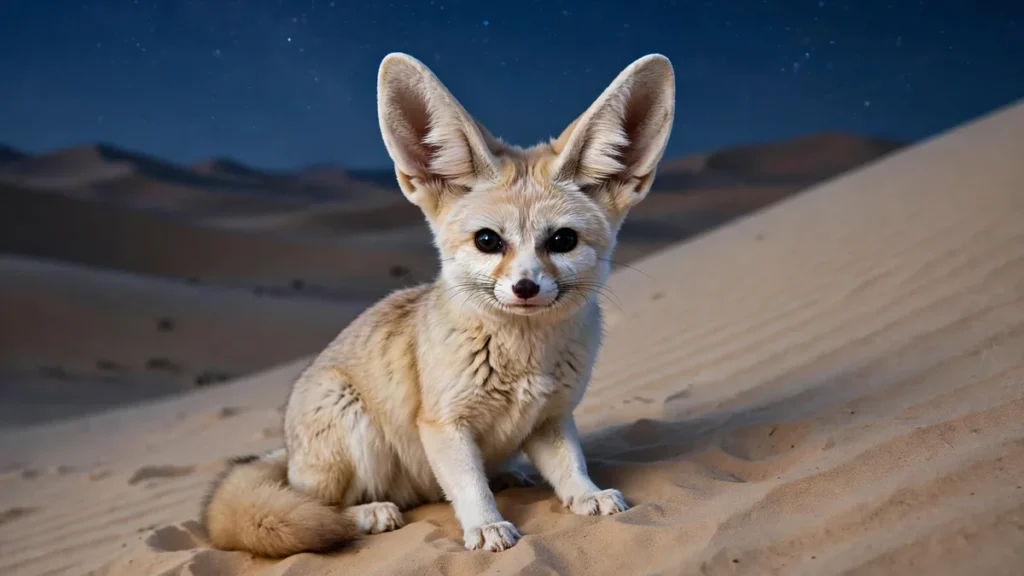
Among the predators, the sand cat is the Sahara’s only wild cat, a small, sandy-coloured hunter that comes out at night to catch gerbils and lizards. The fennec fox, with ears larger than its face, hunts the same prey in the dunes, and its huge ears lose heat and hear the smallest sounds under the sand.
One animal should not be on any visitor’s list as a certainty: the scimitar-horned oryx. It was extinct in the wild for decades, and it now survives only in a reintroduction programme in Chad, where a small herd lives under guard. The same is true of the Saharan cheetah, which is critically endangered and almost never seen. Both are reminders of how much of the Sahara’s wildlife depends on vast, undisturbed desert.
Birds of the Sahara
The ostrich is the Sahara’s most famous bird, and the largest bird in the world. North African ostriches once roamed the whole desert, but they are now rare, and they survive in small numbers in the Sahel, the dry grassland south of the Sahara.
The desert lark is the Sahara’s most common bird, a small, sandy-coloured songbird that lives in the rocky wadis and gravel plains. It sings from a rock at dawn, and it is most often seen in the cooler months, when the desert is at its mildest.
The Sahara’s position on the migration routes between Europe and Africa makes it one of the most remarkable places in the world for birdwatching. In spring and autumn, huge numbers of birds cross the desert, from white storks and cranes to eagles and buzzards.
Snakes, scorpions and the smaller wildlife of the Sahara
The Sahara’s sands hold their own wildlife, and the desert horned viper is the most famous of all. Horned vipers live under the sand of the dunes, with two small horns above their eyes, and they hunt lizards and small rodents at night. They are most often seen at dawn, when their tracks cross the sand in a winding line.
Along the rocky wadis, deathstalker scorpions hunt at night, and they are among the most venomous scorpions in the world. The sandfish, a small lizard, swims through the sand itself, moving under the surface like a fish through water.
Smaller mammals are everywhere in the Sahara, though they are often overlooked. Desert hedgehogs, jerboas and gerbils come out at night, when the sand cools, and the desert hare grazes the sparse shrubs at dawn. Like the nocturnal animals of other deserts, most Sahara species survive by sleeping through the heat of the day and hunting in the cool of the night.
| Species | Where to look | Best season | How likely is a sighting |
|---|---|---|---|
| Fennec fox | Sand dunes of Morocco and Algeria | October to April, at night | Fair on a night drive |
| Addax | Remote dunes of Niger and Chad | October to April, at dawn | Very low, needs an expedition |
| Dromedary camel | Oases and caravan routes | All year | Very good |
| Sand cat | Dunes and gravel plains | October to April, at night | Very low |
| Dorcas gazelle | Gravel plains and sand sea edges | October to April, dawn and dusk | Fair |
| Ostrich | Sahel grasslands south of the Sahara | October to April, at dawn | Low |
| Desert horned viper | Sand dunes | October to April, at dawn | Low, tracks only |
Best seasons for wildlife watching
October to April is the finest time for most wildlife watching in the Sahara. The days are warm and the nights are cool, the animals are active at dawn and dusk, and the desert is at its mildest. It is also the season when the migrant birds cross the desert, and the oases fill with warblers, wheatears and waders.
The summer months, from May to September, are the hardest time to visit, when the heat rises above 50 degrees and most animals hide through the day. The trade-off is empty dunes and clear skies, and the nights are warm enough to sleep under the stars.
In any season, dawn and dusk are the best times for desert animals, and the night is the best time for fennec foxes, sand cats and scorpions. The oases are best in the early morning, when the birds come down to drink.
Staying safe around Sahara wildlife
The Sahara’s animals are usually shy, but they deserve respect. Keep your distance from camels and Barbary sheep, never approach a camel calf, and never try to feed or touch any wild animal. If you meet a snake, back away slowly and give it room. Horned vipers and deathstalker scorpions are venomous, and they should always be watched from a safe distance.
In the desert, carry water and sun protection, wear a hat and long sleeves, and tell someone where you are going before a walk. Never walk barefoot on the sand at night, when scorpions and snakes are most active, and always shake out your shoes in the morning.
Sahara desert wildlife watching checklist
- Book a local guide for addax, fennec foxes and sand cats — they know where the animals are.
- Go out at dawn or dusk for mammals, and plan trips for October to April, when the desert is at its mildest.
- Bring binoculars, warm layers for cold desert nights, and sun protection for the days.
- Keep at least 50 metres from nesting birds and grazing gazelles, and far more from camels and Barbary sheep.
- Never feed wild animals, and never use food or calls to lure them closer for a photograph.
- Stay on marked tracks and keep off the dunes at night, when snakes and scorpions are most active.
- Leave no trace: take your rubbish home and keep to marked paths in sensitive oases.
Frequently asked questions
What is the most famous animal in the Sahara desert?
The fennec fox is the most famous, and the dunes of Morocco and Algeria are the best places to look for one. The dromedary camel is the most famous large animal, and the addax is the rarest antelope in the desert.
Are there lions in the Sahara desert?
No. Lions do not live in the Sahara itself, though they once roamed the Atlas Mountains of North Africa. The only wild cat in the Sahara is the small sand cat, which hunts gerbils and lizards at night.
Can I see a fennec fox in the Sahara?
Yes. Fennec foxes live in the sand dunes of Morocco, Algeria and Libya, and they are most often seen on a guided night drive, when they come out to hunt in the cool of the night. Go between October and April for the best chance.
When is the best time to see addax in the Sahara?
Addax live in the remote dunes of Niger and Chad, and they are best looked for at dawn between October and April. No honest guide can promise a sighting — the addax is one of the rarest antelopes in the world, and it takes a specialist expedition to find one.
Can I see an ostrich in the Sahara?
North African ostriches are rare, and they survive in small numbers in the Sahel, the dry grassland south of the Sahara. Go at dawn between October and April, and look across the gravel plains for their tall, striding figures.
How is this guide different from the Amazon rainforest animals guide?
This guide covers the Sahara desert, the largest hot desert on Earth, with fennec foxes, addax, sand cats and dromedary camels. The Amazon rainforest animals guide covers the warmest and most diverse forest on Earth, with jaguars, pink river dolphins, harpy eagles and macaws.
Conclusion
The Sahara’s wildlife rewards patience: fennec foxes in the dunes at night, addax on the remote sand seas, dorcas gazelles on the gravel plains and ostriches in the Sahel are all within reach if you plan around the cooler months and keep your distance.
The next step is to pick one species and one season — a night drive for fennec foxes in Morocco, a dawn walk for gazelles in the gravel plains, or a specialist expedition for addax in Niger — and plan your visit around it.