Lizard species number around 7,000, making lizards one of the largest and most varied groups of reptiles on Earth, from the tiny geckos that climb the walls of houses to the Komodo dragon, the largest lizard alive. If you are wondering which lizard species exist and how to tell a gecko from a chameleon or an iguana, the short answer is this: lizards are scaly reptiles with four legs, movable eyelids and external ear openings, and they live on every continent except Antarctica, in deserts, forests, grasslands and even towns and cities.
Key takeaways
- There are around 7,000 lizard species, from geckos a few centimetres long to the Komodo dragon at three metres.
- Geckos climb walls with sticky toe pads, chameleons change colour and catch insects with a long tongue, and iguanas are plant-eating lizards of the Americas.
- Most lizards are cold-blooded: they warm up in the sun and shelter in the shade to control their body temperature.
- Many lizards can drop their tail to escape a predator and grow a new one.
- Deserts, tropical forests, rocky hillsides and warm coastlines are the best places to see lizards, in the morning when they bask in the sun.
What makes a lizard a lizard
A lizard is a reptile with dry, scaly skin, four legs and a long tail, and most lizard species have movable eyelids and visible ear openings. Snakes are close relatives, but snakes have no legs, no eyelids and no external ears. Lizards are cold-blooded: they bask in the sun to warm up and move into the shade or underground when they get too hot.
Lizards come in almost every size. The smallest geckos are barely longer than a thumbnail, while the Komodo dragon of Indonesia can grow to three metres and weigh more than 70 kilograms. Between those extremes are skinks, anoles, iguanas, monitors and chameleons, each fitted to its own way of life.
The tail is one of a lizard’s most useful tools. Many lizard species can drop their tail when a predator grabs it, leaving the tail wriggling on the ground while the lizard escapes. The tail grows back, though the new one is often shorter and made of cartilage rather than bone.
Geckos: the climbers
Geckos are the lizards of walls, ceilings and tree trunks. Their toes are covered in millions of tiny hairs that grip smooth surfaces, so a gecko can walk upside down across a ceiling without falling. There are more than 1,500 gecko species, and they live in warm places all over the world, from the deserts of Australia to the houses of the Mediterranean.
Most geckos are active at night, hunting insects around lights and in the dark corners of houses. Unlike most lizards, geckos have no movable eyelids: they lick their eyes clean with their tongue. The tokay gecko of South-East Asia is one of the loudest, calling its own name at night.
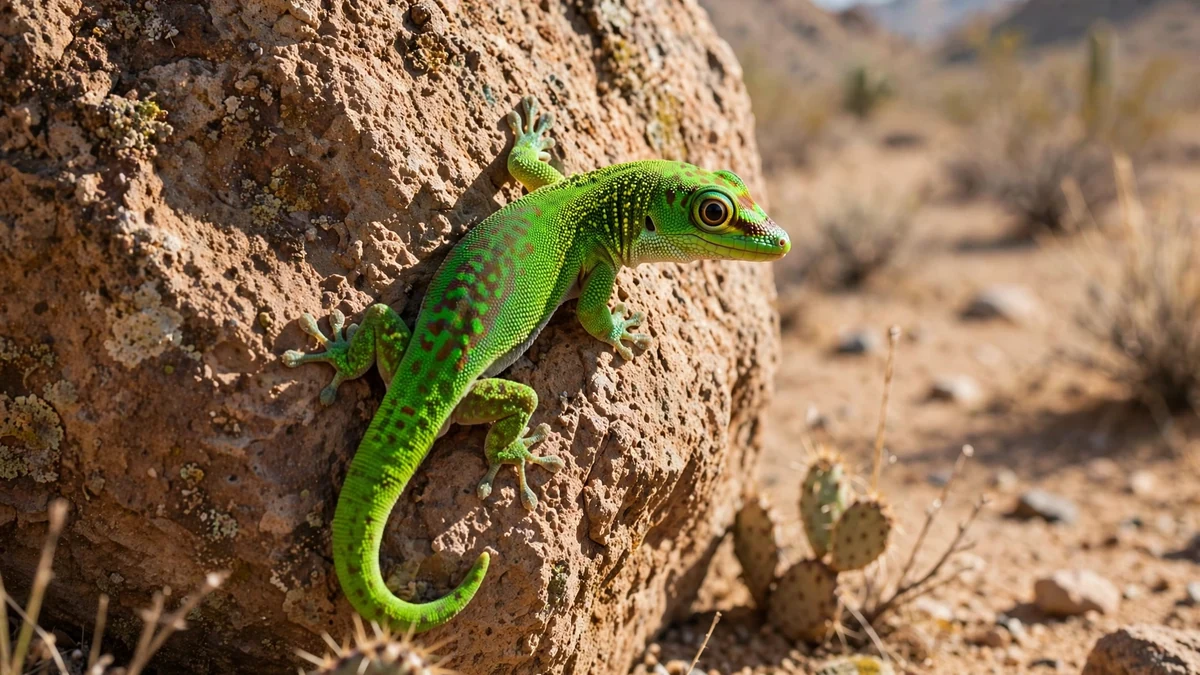
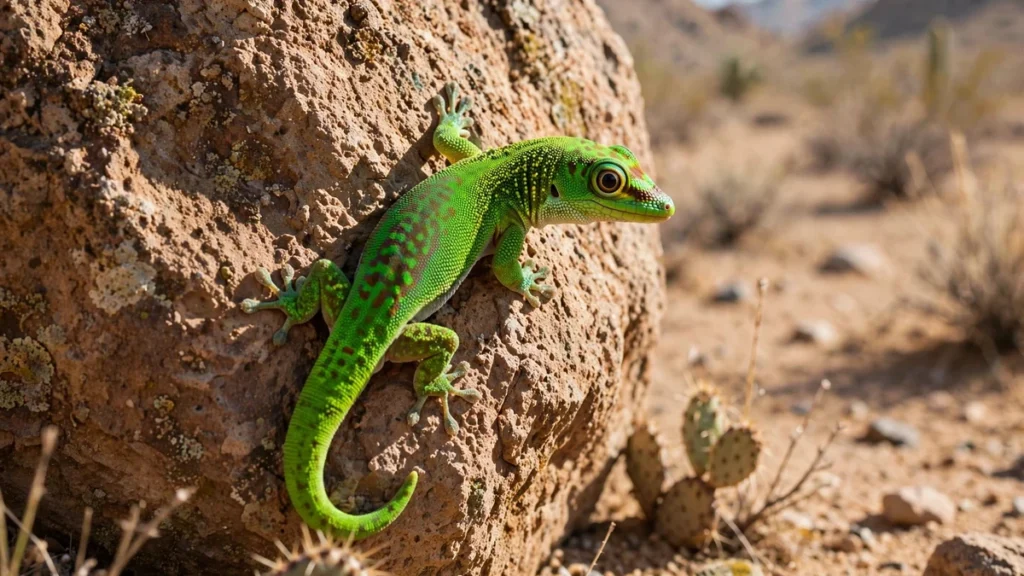
Some geckos are famous for their colour. The day geckos of Madagascar and the Indian Ocean are bright green with red markings, and they are active in daylight, feeding on nectar and insects among the leaves. The leopard gecko of the deserts of Pakistan and India is spotted like a leopard.
Chameleons: the colour changers
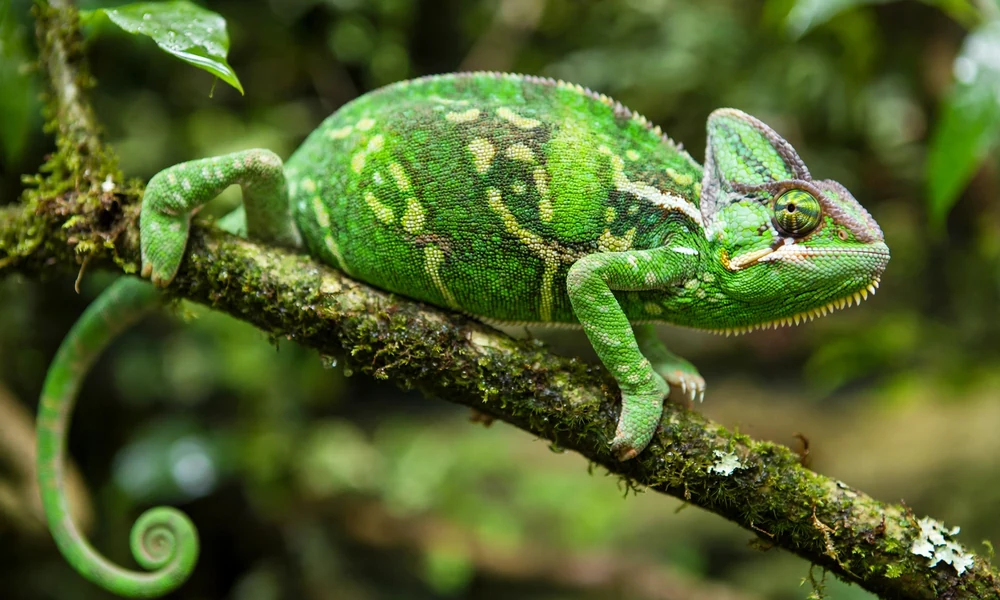
Chameleons are the most unusual lizard species of all. They change colour to match their mood, temperature and surroundings, and their eyes can move independently, so one eye can look forward while the other looks back. Their tongue is longer than their body and can shoot out in a fraction of a second to catch an insect from a distance.
Most chameleons live in Madagascar and Africa, with a few species in southern Europe and Asia. They are slow-moving tree dwellers, gripping branches with feet that work like hands and a tail that curls round a branch for balance. The panther chameleon of Madagascar is one of the most colourful, with males showing bright blues, greens and reds, while the veiled chameleon of Arabia has a tall crest on its head like a helmet.
A chameleon changes colour with special cells in its skin that contain coloured pigments and tiny crystals. When the crystals spread apart, the skin reflects blue and green light; when they draw together, it reflects yellow and red. The change is driven by temperature, light and mood rather than by a wish to hide.
Iguanas and other large lizards
Iguanas are the large, plant-eating lizards of the Americas. The green iguana of Central and South America can grow to nearly two metres including its tail, and it spends its life in trees near rivers, dropping into the water to escape danger. Male green iguanas develop a bright orange colour in the breeding season and a spiny crest along the back.
The marine iguana of the Galapagos Islands is the only lizard in the world that feeds in the sea, diving to graze on algae on the rocks. After a dive it basks on the black lava to warm up, often sneezing out the salt it swallowed with its food. The desert iguana of the American south-west is one of the most heat-tolerant lizards alive, active in temperatures that would kill most other reptiles.
Monitor lizards are the heavyweights of the lizard world after the Komodo dragon. The Nile monitor of Africa grows to more than two metres and swims and climbs with ease, eating fish, eggs, birds and small mammals. The perentie of Australia is the largest lizard on that continent, and the Komodo dragon hunts deer on a few Indonesian islands and can smell carrion from kilometres away.
Skinks, anoles and the smaller lizards
Skinks are the most widespread lizard species of all, with more than 1,500 species living on every continent except Antarctica. They are smooth, shiny lizards with small legs, and some species have legs so tiny that they look almost like snakes. The blue-tongued skink of Australia is famous for the bright blue tongue it shows when threatened.
Anoles are the small, quick lizards of the Americas and the Caribbean. Male anoles have a brightly coloured throat fan, called a dewlap, which they flash to defend a territory or attract a mate. The green anole of the south-eastern United States can change from bright green to brown, and it is often seen on fences and garden walls. Among the forest animals of the tropics, anoles are among the most common lizards of the trees.
Other well-known small lizards include the horned lizards of North America, which can squirt blood from their eyes to startle a predator, the wall lizards of Europe, which bask on old stone walls, and the agamas of Africa and Asia, where the males turn bright blue and orange in the breeding season.
Where lizards live
Lizards live almost everywhere warm, and a few live in cool places too. The desert animals of the world’s hot deserts include more lizard species than almost any other group: the deserts of Australia, North America and southern Africa are full of geckos, skinks and iguanas, each active at a different time of day to avoid the worst heat. In the tropics, the rainforest animals include chameleons, anoles and day geckos living high in the trees.
Rocky hillsides, dry stone walls and old buildings are good lizard country in Europe, where wall lizards and green lizards bask in the morning sun. In towns and cities across the warm world, house geckos live on the walls of homes, feeding on the insects that gather around lights at night.
The best time to see lizards is in the morning, when they come out to bask in the sun and warm up after a cold night. Walk slowly, watch the sunny sides of rocks, walls and tree trunks, and listen for the rustle of a lizard in dry leaves. Many lizards are shy and will run at the first sign of movement, so a slow approach helps.
| Species | Where it lives | Size | Best-known trait |
|---|---|---|---|
| Tokay gecko | South-East Asia | 35 centimetres | Climbs walls; loud call |
| Veiled chameleon | Arabia | 60 centimetres | Colour change; long tongue |
| Green iguana | Central and South America | 2 metres | Tree dweller; eats plants |
| Komodo dragon | Indonesia | 3 metres | Largest lizard alive |
| Blue-tongued skink | Australia | 60 centimetres | Bright blue tongue |
| Green anole | South-eastern United States | 20 centimetres | Changes green to brown |
| Horned lizard | North America | 15 centimetres | Squirts blood from eyes |
| Common lizard | Europe and northern Asia | 18 centimetres | Gives birth to live young |
Staying safe around lizards
Most lizards are harmless and will run away from people, but a few deserve respect. The Komodo dragon has a powerful bite and should only be seen with a guide, and the Gila monster and beaded lizard of the American south-west are venomous, though they bite only when handled. Never pick up a wild lizard: it may drop its tail, and handling spreads disease and stress. Among the predators of the reptile world, the Komodo dragon is the only lizard that regularly hunts animals as large as deer.
Watch lizards with your eyes, not your hands. Keep your distance, move slowly and never block a lizard’s escape route to cover. If you find a lizard in your house, open a door and let it leave on its own: house geckos eat insects and do no harm.
Lizard watching checklist
- Go out in the morning, when lizards bask in the sun to warm up.
- Check the sunny sides of rocks, walls and tree trunks first.
- Look for geckos on walls and ceilings after dark, near lights.
- Move slowly and use binoculars: most lizards run at the first sign of movement.
- Never pick up a wild lizard or block its escape route to cover.
- Leave no trace: take your rubbish home and keep to marked paths.
Frequently asked questions
How many lizard species are there?
There are around 7,000 lizard species, making lizards one of the largest groups of reptiles. New species are still being found every year, especially among geckos and skinks in the tropics.
How is this guide different from the desert animals guide?
This is a species-level guide to lizards: it covers geckos, chameleons, iguanas, monitors, skinks and anoles in detail. The desert animals guide is a general roundup of many different desert animals, including mammals, birds and reptiles, and does not go into any one group in this depth.
How is this guide different from the predator animals guide?
This guide covers lizards as a group, from plant-eating iguanas to the Komodo dragon. The predator animals guide is a general roundup of many different predators, from big cats to birds of prey, and most lizards are not predators at all: they eat insects, plants or fruit.
Do all lizards change colour?
No. Chameleons and a few anoles and geckos can change colour, but most lizards keep the same colours for life. Colour change in chameleons is driven by temperature, light and mood, not only by a wish to hide.
Can a lizard really grow back its tail?
Yes, many lizard species can drop their tail to escape a predator and grow a new one. The new tail is usually shorter and made of cartilage rather than bone, and it takes weeks or months to regrow.
What is the largest lizard species?
The Komodo dragon of Indonesia is the largest lizard alive, growing to three metres long and weighing more than 70 kilograms. It hunts deer on a few Indonesian islands and can smell carrion from kilometres away.
Conclusion
Lizard species are the most varied reptiles on Earth: geckos on the walls, chameleons in the trees, iguanas in the riverside forests, skinks in the leaf litter and Komodo dragons on the islands of Indonesia.
The next step is to pick one place and one morning — a desert rock, a Mediterranean wall or a tropical forest path — and watch the sunny side for the first lizard of the day.