
Bear species number just eight in the world, and they range from the polar bear hunting seals on Arctic sea ice to the giant panda eating bamboo in the mountains of China. If you are wondering how many bear species there are and how they differ, the short answer is this: the eight are the brown bear, the polar bear, the American black bear, the Asiatic black bear, the sloth bear, the spectacled bear, the sun bear and the giant panda.
This guide covers all eight bear species, where each one lives, what it eats, how it survives the cold season, and how each one is faring in the wild today.
Key takeaways
- There are eight bear species in the world, all members of the bear family, Ursidae.
- The polar bear is the largest land carnivore, and the sun bear is the smallest bear.
- Most bears are omnivores, eating berries, roots, insects, fish and small mammals.
- Three bear species hibernate in winter; the other five do not.
- Six of the eight bear species are listed as vulnerable, and the giant panda is the best-known conservation success story.
What makes a bear a bear
All eight bear species belong to the family Ursidae, and they share a body plan that is easy to recognise: a large, heavily built body, a short tail, a long snout, small round ears, and five strong claws on each paw. Bears walk on the soles of their feet, like people, and they can stand upright for a short time to look around.
The great bears of the north
The brown bear is the most widespread of all bear species, living across North America, Europe and Asia, and it is also the most variable: a brown bear in Alaska can weigh more than 500 kilograms, while one in the mountains of southern Europe may weigh less than 150. Its coat ranges from pale gold to dark brown. Brown bears eat almost anything — berries, roots, insects, fish and carrion — and in autumn they feed hard to build fat for the winter sleep. The brown bear is covered in depth in its own guide on this site; this article looks at the whole family instead.
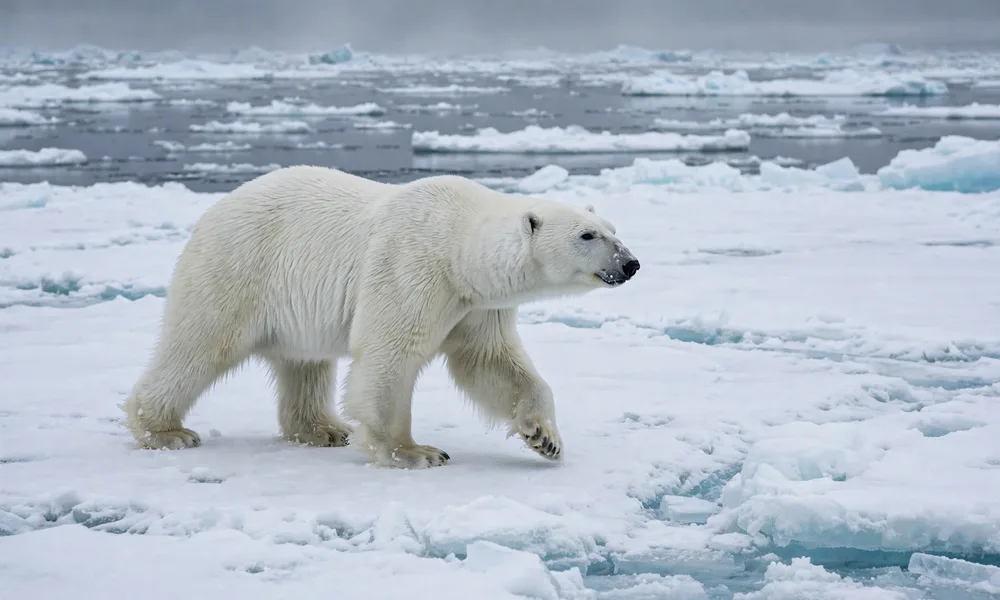
The polar bear is the largest of all bear species and the largest land carnivore on Earth. An adult male can weigh 600 kilograms or more, and its white coat and thick fat keep it warm far below freezing. Polar bears live on the sea ice of the Arctic, where they hunt ringed and bearded seals at breathing holes in the ice, waiting motionless for hours. They are almost entirely meat-eaters, and they depend on the sea ice: when it melts in summer, they come ashore and fast until it forms again. The polar bear is the most powerful of the Arctic animals of the far north.
The American black bear is the smallest bear of North America and the most common bear in the world. It lives in forests from Alaska to Mexico, and despite its name it can be brown, cinnamon or even pale blond. American black bears are excellent climbers, and cubs escape danger by climbing trees. They eat berries, nuts, insects, honey and small mammals.
The bears of Asia
The Asiatic black bear, also called the moon bear for the pale crescent on its chest, lives in the forests of eastern and southern Asia, from Japan and Korea to the Himalayas. It is a strong climber that spends much of its life in trees, resting and feeding on fruit and nuts. Asiatic black bears hibernate in the colder parts of their range, but in the warm forests of the south they stay active all year.
The sloth bear lives in the forests and grasslands of India, Nepal and Sri Lanka, and it is the most unusual feeder of all bear species. It has a long, shaggy coat and long curved claws for digging, and it feeds mainly on termites and ants, sucking them up through its long lips. It also eats fruit and honey.
The sun bear is the smallest of all bear species, weighing between 25 and 65 kilograms, and it lives in the rainforests of South-East Asia. It has a short black coat and a golden or white crescent on its chest, and its long tongue reaches into beehives and termite nests. Sun bears spend much of their time in trees, sleeping in nests of branches high in the canopy, and they do not hibernate, because the rainforest stays warm all year. Like the rainforest animals around them, sun bears depend on fruiting trees.
The bears of the Americas and the panda
The spectacled bear is the only bear species of South America, living in the cloud forests and high grasslands of the Andes, from Venezuela to Bolivia. It is named for the pale rings around its eyes, which look like spectacles. Spectacled bears climb well and build platforms in trees to feed on fruit and bromeliads.
The giant panda lives only in the mountain forests of central China, where it eats almost nothing but bamboo. A panda spends ten to fourteen hours a day eating up to 38 kilograms of bamboo, because the plant gives it so little energy. The panda was once listed as endangered, and after decades of forest protection and captive breeding it is now listed as vulnerable.
Where bears live and what they eat
Bears live on every continent except Africa, Australia and Antarctica, in almost every habitat on land, from Arctic sea ice to rainforest and grassland. The brown bear has the widest range of all, and the giant panda has the narrowest, living in a few mountain ranges in China. In Europe, brown bears live in Scandinavia, the Carpathians and the Balkans, among the forest animals of these regions.
Most bear species are omnivores, and their diet changes with the seasons. In spring they eat grasses and roots, in summer berries, fruit and insects, and in autumn nuts, acorns and salmon, feeding hard to build up fat for winter. Three species break the pattern: the polar bear eats mainly seals, the giant panda eats almost only bamboo, and the sloth bear eats mainly termites and ants.
Bears matter to their habitats: a brown bear carrying a salmon into the forest fertilises the trees, and a bear eating berries plants new bushes with the seeds in its dung.
Hibernation and the winter sleep
Three bear species hibernate: the brown bear, the American black bear and the Asiatic black bear. In autumn they eat for most of the day, building up a thick layer of fat, and then they find a den and sleep for three to seven months. During hibernation a bear does not eat, drink or pass waste, and its heart rate falls to a few beats a minute. A mother bear gives birth in the den in midwinter.
The other five bear species do not hibernate. Polar bears stay active through the Arctic winter, hunting seals on the ice, though pregnant females do den in snow drifts. Sun bears, sloth bears and spectacled bears live where food is available all year, so they have no need to sleep through a season, and giant pandas eat bamboo through the winter.
| Bear species | Where it lives | Weight | Main food | Status |
|---|---|---|---|---|
| Brown bear | North America, Europe, Asia | 100–500 kg | Berries, roots, fish | Least concern |
| Polar bear | Arctic sea ice | 350–700 kg | Seals | Vulnerable |
| American black bear | Forests of North America | 60–300 kg | Berries, nuts, insects | Least concern |
| Asiatic black bear | Forests of eastern Asia | 60–200 kg | Fruit, nuts, insects | Vulnerable |
| Sloth bear | India, Nepal, Sri Lanka | 55–140 kg | Termites, ants, fruit | Vulnerable |
| Spectacled bear | Andes of South America | 60–175 kg | Fruit, bromeliads | Vulnerable |
| Sun bear | Rainforests of South-East Asia | 25–65 kg | Insects, honey, fruit | Vulnerable |
| Giant panda | Mountain forests of China | 75–135 kg | Bamboo | Vulnerable |
Conservation: which bears are in danger
Six of the eight bear species are listed as vulnerable, which means their numbers are falling and they face a real risk of becoming endangered. The main threats are the same for most of them: loss of habitat as forests are cleared, conflict with people when bears raid crops or livestock, and hunting in parts of Asia.
The polar bear faces a different threat: the loss of sea ice as the Arctic warms. When the ice melts earlier and forms later, they have less time to hunt and build up fat. The giant panda shows that recovery is possible: China protected its bamboo forests, created reserves and bred pandas in captivity for release, and the wild population has grown.
Staying safe around bears
Bears are powerful wild animals, and they deserve respect. Never approach a bear, never walk between a mother and her cubs, and never leave food or rubbish where bears can reach it. If you meet a bear, stay calm, do not run, and back away slowly.
Bear species checklist
- Learn the eight bear species by name.
- Remember that the polar bear is the largest bear and the sun bear is the smallest.
- Know which bears hibernate.
- Look for bear signs: tracks, claw marks on trees, and turned-over logs.
- Never feed a wild bear, and never leave food or rubbish where bears can reach it.
- Support forest and sea-ice protection, which is what bears need most to survive.
Frequently asked questions
How many bear species are there?
There are eight bear species in the world: the brown bear, the polar bear, the American black bear, the Asiatic black bear, the sloth bear, the spectacled bear, the sun bear and the giant panda. All eight belong to the bear family, Ursidae.
How is this guide different from the brown bear article?
This guide covers all eight bear species at a glance. The brown bear article covers one species in depth: its behaviour, its range, and where to see it. Read this guide for the whole family.
How is this guide different from the predator animals guide?
The predator animals guide covers hunters from many families, including wolves, lynx, eagles and sharks, and how they catch their prey. This guide covers only bears, one family of animals, including plant-eaters like the panda and the spectacled bear.
Which bear is the biggest and which is the smallest?
The polar bear is the biggest bear species, with adult males weighing 350 to 700 kilograms. The sun bear is the smallest, weighing only 25 to 65 kilograms, about the size of a large dog.
Do all bears hibernate?
No. Only the brown bear, the American black bear and the Asiatic black bear hibernate. The other five live where food is available all year, or, like the polar bear, hunt through the winter.
Are giant pandas really bears?
Yes. The giant panda is a true bear, a member of the family Ursidae, and its closest relatives are the other bears of Asia and the Americas. Its bamboo diet is unusual, but its body, teeth and genes place it firmly among the bears.
Conclusion
The eight bear species show how one family of animals can spread across the world and make a living in almost every habitat: the polar bear on Arctic ice, the sun bear in the rainforest canopy, the spectacled bear in the cloud forests of the Andes, and the giant panda in the bamboo mountains of China.
The next step is to pick one bear species and learn where it lives, or to visit a place where bears still roam wild.














