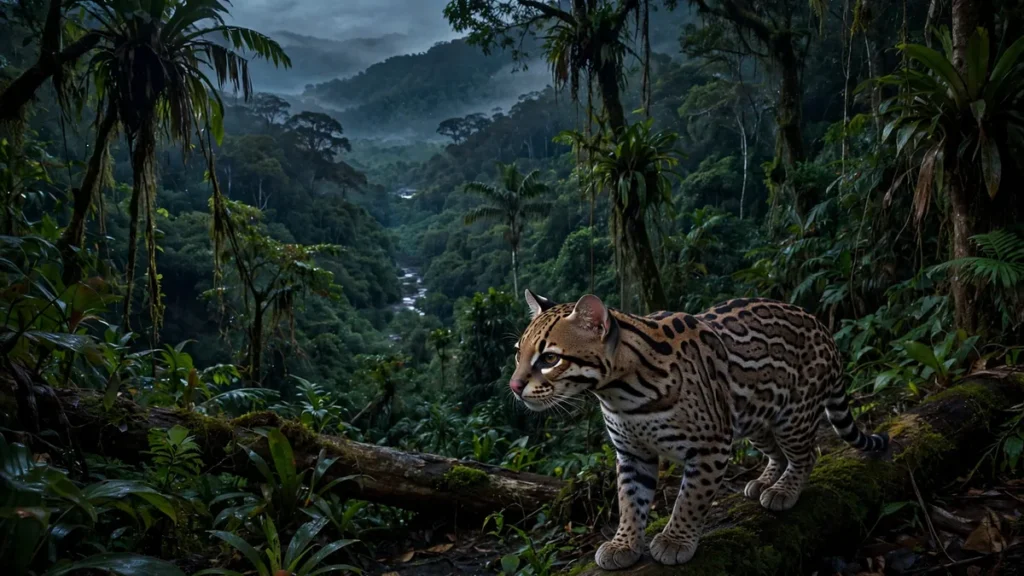
The ocelot species is a single species, Leopardus pardalis, a beautifully spotted wild cat of the forests of Central and South America that is sometimes called the dwarf leopard, although it is not a leopard at all. If you are asking how many ocelot species there are, the answer is one: there is only one ocelot species in the world, and every ocelot alive today belongs to it.
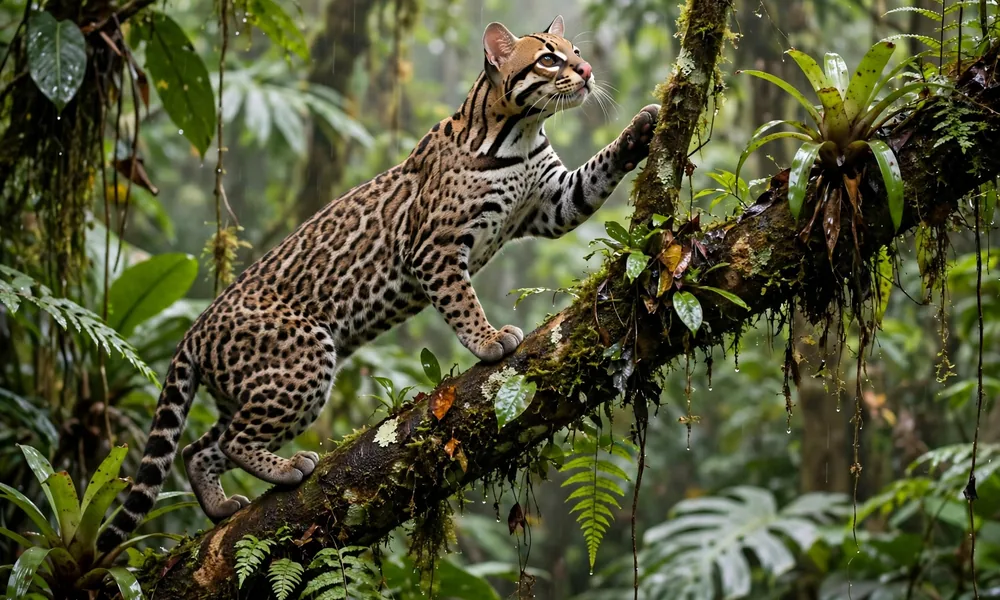
The ocelot is a medium-sized cat with a golden coat marked with black rosettes, spots and stripes, large eyes for hunting after dark, and a long tail that helps it balance in the trees. It hunts mostly at night, swims well and climbs with ease, living a quiet, solitary life in rainforest, scrub and mangrove.
Key takeaways
- There is only one ocelot species, Leopardus pardalis.
- Ocelots are nocturnal hunters of Central and South America, also found rarely in southern Texas and Arizona.
- The spotted rosette coat gives the ocelot perfect camouflage in dappled forest light and broken shade.
- An ocelot usually weighs about 8 to 15 kilogrammes and hunts small mammals, birds, reptiles and fish.
- Ocelots are listed as Least Concern, but they were once heavily hunted for their fur and still lose habitat today.
What makes an ocelot an ocelot
An ocelot is a compact, muscular cat with a head and body measuring roughly 55 to 100 centimetres, a tail of about 30 to 45 centimetres, and a weight of about 8 to 15 kilogrammes. Its coat is golden or tawny, covered with black rosettes, spots and chain-like markings, with two dark stripes running down each cheek and a white belly.
The ocelot is built for the night and for the trees. Its large eyes gather the little light that reaches the forest floor, its ears pick up the smallest rustle in the leaf litter, and its strong legs and sharp claws let it climb a trunk, leap between branches and pounce on prey from above. It is also an excellent swimmer, crossing rivers and hunting in shallow water without hesitation.
The ocelot species and its relatives
Leopardus pardalis is the only ocelot species, and the only living member of its species. A number of subspecies have been described, but they are subspecies only, not separate species. It belongs to the genus Leopardus, a group of small spotted cats of the Americas.
The margay is its closest lookalike, smaller and more tree-dwelling, with larger eyes and a longer tail, while the oncilla is smaller still and lives in similar forests. The jaguarundi is a plain-coated cousin with no spots at all, and the puma is a much larger relative that shares much of the same range. Further afield, the clouded leopard carries a similar rosette coat, the serval hunts in much the same way, and the Eurasian lynx is a northern forest hunter.
| Type | Animal | Where it lives | Best-known food | Length |
|---|---|---|---|---|
| Species | Ocelot (Leopardus pardalis) | Central and South American forests | Small mammals, birds and reptiles | 55 to 100 cm body |
| Close relative | Margay | Central and South American forests | Small mammals and birds | 48 to 79 cm body |
| Close relative | Oncilla | Central and South American forests | Small mammals and birds | 38 to 59 cm body |
| Close relative | Jaguarundi | Central and South America | Small mammals, birds and reptiles | 53 to 77 cm body |
| Close relative | Puma | North, Central and South America | Deer and other large mammals | 105 to 180 cm body |
| Close relative | Clouded leopard | South-east Asian forests | Deer, monkeys and birds | 68 to 108 cm body |
| Close relative | Serval | African savannas and wetlands | Rodents and other small animals | 59 to 92 cm body |
| Close relative | Eurasian lynx | Forests of Europe and Asia | Roe deer, hares and birds | 80 to 130 cm body |
How ocelots live
Ocelots are creatures of the night. They rest by day in a hollow tree, a dense thicket or a rocky shelter, and emerge at dusk to hunt through the dark hours. Mostly solitary, each ocelot holds a home range that it marks with scent and patrols regularly, and males hold larger ranges than females. Like other nocturnal animals, they rely on darkness for cover and are rarely seen by day.
Small mammals make up most of the diet, above all rodents, opossums and armadillos, with birds, lizards, snakes and fish taken when the chance arises. An ocelot hunts by stealth, moving slowly and silently through the undergrowth, freezing at the slightest sound, and then pouncing in a short rush.
Breeding can happen at any time of year, and after a gestation of about 70 to 85 days the female gives birth to one or two kittens in a den hidden in dense cover. The kittens open their eyes at about two weeks old, stay with their mother for around a year, and learn to hunt by watching her and by practising on small prey. Ocelots live for around 10 to 12 years in the wild, and longer in captivity.
Where ocelots live
The ocelot range runs from southern Texas and Arizona, through Mexico and Central America, and across much of South America as far south as northern Argentina. It lives in tropical rainforest, dry forest, scrub, mangrove and thorn forest, wherever there is dense cover to hunt in and water nearby. It is one of the characteristic rainforest animals of the Americas, most common in mature forest with a thick understorey, fallen trees and tangled vines.
Dense cover is the key requirement. An ocelot hunts on the ground and in the trees, but it avoids open country and needs vegetation thick enough to hide it from prey and from larger predators such as jaguars and pumas. Like many other forest animals, it depends on the forest staying standing and connected.
The species is listed as Least Concern, because it remains widespread and fairly common in much of its range. Even so, its numbers are falling in many places. The main pressure is the loss of forest to farming, ranching and settlement, while road deaths and illegal hunting add to the decline, above all in the northern part of its range, where the population is small and fragmented.
Best seasons for ocelot watching
There is no closed season, because ocelots are active all year in the tropics, but the dry season is usually the best time to look for them. Trails are drier and easier to walk at night, rain is less likely to cut a walk short, and animals gather near water, which makes their movements more predictable.
The wet season has its own rewards: the forest is at its greenest, frogs and other prey are plentiful, and ocelots hunt actively through the damp nights. The trade-off is muddy trails, heavier rain and more insects, and night walks may be cancelled when storms pass through. Whichever season you choose, the best hours are the first few after dusk and the hour before dawn.
Good places to try include the lowland forests of Costa Rica, Panama and Belize, and the Amazon lodges of Peru, Ecuador and Brazil, where guided night walks are part of the stay. A local guide makes a real difference, because ocelots are quiet, shy and well hidden.
Staying safe around ocelots
An ocelot is a wild cat with sharp teeth and strong claws, and it can bite hard if cornered or handled. Keep your distance, never touch one or offer it food, because feeding teaches wild animals to approach people and can lead to bites. If one comes close, stay still and quiet and let it pass.
Like other wild mammals, ocelots can carry diseases, and any bite or scratch should be washed at once and checked by a doctor without delay. Admire from a distance. Avoid flash photography too, because a bright flash can dazzle a nocturnal animal and disturb its hunting.
The fur trade is part of the ocelot story, and it is the animal that paid for it. Ocelots were once heavily hunted for their beautiful spotted coats, and hundreds of thousands were killed before international trade in their fur was banned.
Ocelot watching checklist
A little preparation turns a night walk into a real chance of seeing an ocelot, so pack for the dark, the rain and the insects.
- A torch with a red filter, which lets you spot eye shine without dazzling a nocturnal animal.
- Binoculars with good low-light performance, for picking an ocelot out of the forest shadows.
- Long sleeves, long trousers and insect repellent, because night walks bring mosquitoes.
- Waterproof jacket and sturdy, quiet footwear for muddy forest trails after rain.
- A booked local guide who knows the hunting grounds, the calls and the night routes.
- A plan to be out just after dusk, when ocelots leave their dens to hunt.
- Patience and silence, because ocelots are shy animals and a noisy group will send them away.
Frequently asked questions
How many ocelot species are there?
There is one ocelot species, Leopardus pardalis. It is the only living member of its species, and although a number of subspecies have been described, they are all the same species. No second ocelot species is recognised.
Is an ocelot a leopard?
No. An ocelot is sometimes called the dwarf leopard because of its spotted rosette coat, but it is not a leopard. Leopards belong to the genus Panthera and live in Africa and Asia, while the ocelot belongs to the genus Leopardus and lives in the Americas. The two are related, but they are separate animals.
How big is an ocelot?
An ocelot usually weighs about 8 to 15 kilogrammes, with a head and body of roughly 55 to 100 centimetres and a tail of about 30 to 45 centimetres. Males are usually larger than females. It is about twice the size of a large house cat, and much smaller than a leopard or a jaguar.
Are ocelots dangerous to people?
Ocelots are shy and avoid people, and attacks on humans are very rare. A cornered or handled ocelot can bite and scratch hard, so it should never be approached or touched. Wild ocelots should be admired from a distance, and any bite or scratch should be checked by a doctor.
How is this guide different from the big cat species guide?
This guide covers the single ocelot species, a small spotted hunter of the American forests, while our big cat species guide covers the big cats, the lions, tigers, leopards, jaguars and snow leopards that roar, grow far larger, and hunt large prey. The ocelot is a small cat, not a big cat, and it lives a very different life.
Are ocelots endangered?
Ocelots are listed as Least Concern, so they are not classed as endangered, but their numbers are declining in many places. Forest loss removes the dense cover they need to hunt, and road deaths and illegal hunting take animals in some countries. Protecting large areas of unbroken forest is the most important step for keeping them healthy.
Conclusion
The ocelot species shows how much beauty and skill one small cat can hold: Leopardus pardalis, with a coat of rosettes and spots, eyes made for the dark, and a life spent hunting quietly through the forests of the Americas after nightfall. It swims, climbs and stalks with a grace few other animals can match.
If you go looking for one, go at night, go with a guide, and go quietly. Watch a wild ocelot move through the shadows and you will understand why its coat was once so prized, and why keeping its forest standing matters most.














