
Beluga Whale Facts reveal why this Arctic whale is so different from many marine mammals. Known for its white body, rounded forehead, flexible neck, and rich vocal range, the beluga is built for cold northern waters. Its scientific name is Delphinapterus leucas, and it belongs to the toothed whale group alongside dolphins and porpoises.
These whales are highly social and closely connected to seasonal changes in sea ice and food. They travel through coastal waters, estuaries, river mouths, and areas covered by floating ice. Their behavior is shaped by their environment, social groups, and ability to use sound.
Key Takeaways
- Belugas are toothed whales closely related to dolphins.
- Adults usually become bright white, while calves are darker.
- They live mainly in Arctic and sub-Arctic waters.
- Their diet includes fish, squid, shrimp, crabs, clams, and other prey.
- They use whistles, calls, clicks, and echolocation.
- Their flexible neck and lack of a dorsal fin are useful Arctic adaptations.
- Belugas are social and may gather in groups ranging from a few animals to hundreds.
- Some populations are particularly vulnerable to habitat change, contaminants, prey changes, and underwater noise.
What Is a Beluga Whale?
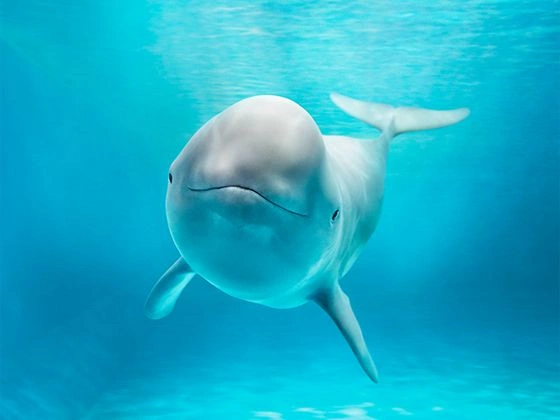
The beluga is a medium-sized toothed whale found mainly in Arctic and sub-Arctic waters. Adults are easy to recognize because they usually become completely white as they mature. Young belugas are darker gray, and their color gradually fades with age.
A beluga has a thick layer of blubber that helps protect it from freezing water. It also lacks a typical dorsal fin. Instead, it has a strong ridge along its back. This unusual shape is useful when swimming beneath sea ice because there is no tall fin to interfere with the ice above.
Another feature is the flexible neck. Unlike most whales, beluga neck vertebrae are not fused, allowing the animal to move its head from side to side and up or down. Its rounded forehead, called a melon, is also important because it helps focus sound used in echolocation. NOAA notes that belugas can produce whistles, squeals, moos, chirps, and clicks, earning them the nickname “canaries of the sea.”
Beluga Whale Facts: Where Do Beluga Whales Live?
Belugas are strongly associated with the Arctic Ocean and nearby seas. Their range includes waters around Alaska, Canada, Greenland, and Russia. They often use shallow coastal areas, bays, estuaries, and river mouths when seasonal food is available.
Sea ice plays an important role in their movements. Many populations shift their distribution as ice forms, breaks up, and changes the location of prey. In warmer seasons, belugas may gather in productive coastal areas. When conditions change, they can move toward other feeding or wintering areas.
Their habitat differs across populations. Some groups make long seasonal movements, while others remain within more limited regions. The Cook Inlet population in Alaska, for example, stays within Cook Inlet but changes where it spends time according to ice conditions, fish runs, and seasonal habitat needs.
This connection with coastal waters makes belugas sensitive to changes caused by human activity. Vessel traffic, construction, industrial development, contaminants, and underwater noise can interfere with habitat use and normal behavior. Because belugas depend heavily on sound, noise can be especially disruptive.
What Do Beluga Whales Eat?
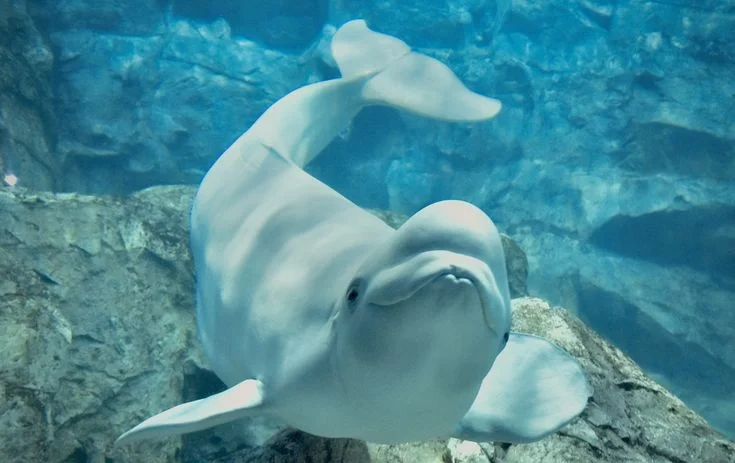
Belugas are opportunistic feeders with a varied diet. What they eat can differ by location, season, and prey availability. Their menu may include fish such as salmon, cod, herring, smelt, eulachon, and flatfish.
They also eat many bottom-dwelling and other marine invertebrates. These can include shrimp, crabs, squid, octopus, clams, snails, and marine worms. In some regions, belugas take advantage of seasonal fish runs, concentrating in areas where prey becomes abundant.
Their feeding style suits shallow, muddy, and sometimes dark environments. Echolocation helps them locate prey and navigate when visibility is poor. In places such as upper Cook Inlet, where glacial silt can make the water extremely cloudy, sound becomes particularly valuable for finding food and moving through the environment.
How Do Beluga Whales Communicate?
Communication is a fascinating part of beluga behavior. These whales are extremely vocal and use a wide range of sounds, including whistles, calls, pulsed sounds, and echolocation clicks.
They use sound to stay connected with other whales, coordinate movement, and respond to their surroundings. Scientists are still learning what each beluga call means, so it is better to describe their vocal system as complex rather than give every sound a human-like translation.
Recent research on Cook Inlet belugas found that calling behavior can vary with group size, behavior, the presence of calves, and tidal conditions. Researchers observed differences in the types and rates of calls made during traveling and other activities, showing that beluga communication is closely linked to social and environmental context.
Echolocation Gives Belugas a Sound-Based View
Belugas also use echolocation. They produce high-frequency clicks that travel through the water and bounce back when they meet an object. The returning echoes provide information about the object’s position and distance.
This biological sonar can help belugas find prey, avoid obstacles, locate other animals, and navigate in environments where sight is limited. Their melon helps focus outgoing sound, while specialized structures around the lower jaw and inner ear receive returning signals.
Beluga Whale Behavior and Social Life
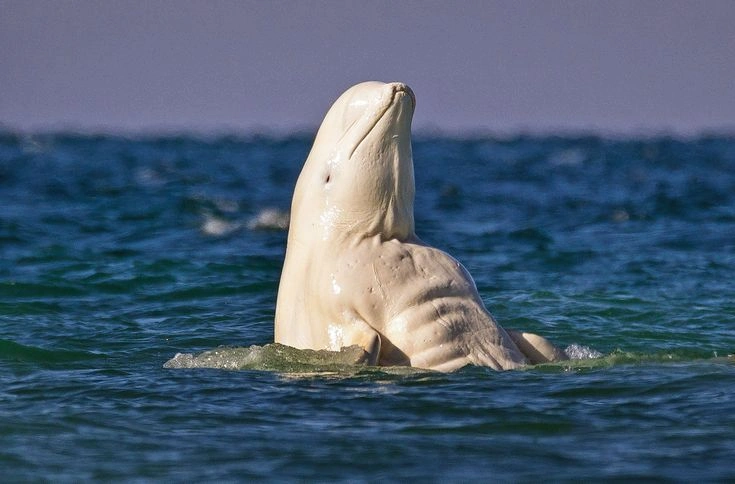
Belugas are social animals, and their group sizes vary considerably. They may be seen alone or in small groups, while favorable conditions can bring together hundreds of individuals.
Their social structure is flexible. NOAA reports that individual belugas can move between groups rather than remaining permanently tied to one pod. Mothers and calves also form important social relationships, and calves are closely associated with adults during their early development.
Belugas are active animals. They swim, dive, forage, travel together, and gather in shallow coastal areas. In summer, some populations return to familiar feeding and calving areas, showing a strong attachment to particular seasonal habitats.
Why Their White Color Matters
Young belugas are usually gray or gray-brown, but adults become white. This color is associated with Arctic life and may provide camouflage among sea ice. Their thick blubber adds another important adaptation, helping them retain body heat in extremely cold water.
Their lack of a large dorsal fin is another useful adaptation. A rigid fin could be inconvenient when moving beneath ice, while the smooth dorsal ridge allows the whale to pass through icy habitat more easily.
Are Beluga Whales Endangered?
viltnemnda: Beluga conservation status varies by population, so it is important not to treat all belugas as having the same level of risk. The species is listed as Near Threatened by the IUCN, while some populations face more serious pressures.
The Cook Inlet beluga population is a well-known example. NOAA reports that its abundance fell dramatically over several decades, although the latest estimate discussed by the agency suggests the population may be stabilizing or increasing. Continued monitoring is needed to understand whether that trend persists.
Major concerns include habitat degradation, changing prey availability, contaminants, climate-related changes, and underwater noise. Noise matters because belugas rely on hearing and sound for communication and echolocation.
Frequently Asked Questions
Why are beluga whales white?
Adult belugas are white, while young animals are generally darker. Their white coloration is an important adaptation to life in Arctic environments and helps distinguish adults from many other whale species.
Do beluga whales use echolocation?
Yes. Belugas are toothed whales and use echolocation clicks to gather information about objects and prey underwater. This ability is especially useful when visibility is poor or when they are moving through complex Arctic habitats.
What do beluga whales eat?
Belugas have a broad diet. Depending on their location and season, they can eat salmon, cod, herring, smelt, flatfish, shrimp, crabs, squid, octopus, clams, snails, and other marine animals.
Why are beluga whales called the canaries of the sea?
They have a remarkably varied vocal repertoire that includes whistles, chirps, squeals, calls, and clicks. Their frequent and varied sounds led to the nickname “canaries of the sea.”
How do beluga whales survive cold Arctic water?
Belugas rely on thick blubber for insulation and energy storage. Their body shape, dorsal ridge, seasonal movements, and other adaptations also help them function in cold waters and around sea ice.
Why is underwater noise a problem for belugas?
Sound is central to beluga communication and echolocation. Loud human-made noise from vessels, construction, and industrial activity can interfere with their normal acoustic behavior and may affect how they use important habitat.
