
Greenland animals range from polar bears on the sea ice to musk oxen on the tundra and narwhals in the dark Arctic water, and the island is one of the wildest places on Earth. If you are wondering which animals live in Greenland and where to see them, the short answer is this: polar bears, Arctic foxes and Arctic hares live on the ice and the tundra, musk oxen and caribou graze the valleys of the west, and whales, walruses and seals fill the fjords and the sea around the coasts.
Greenland is an autonomous territory within the Kingdom of Denmark, and it is the world’s largest island, most of it covered by a sheet of ice. This guide covers the species you are most likely to meet and where each one lives.
Key takeaways
- Greenland’s most iconic animals are the polar bear, musk ox, narwhal, beluga whale, Arctic fox, caribou and walrus.
- The polar bear is the world’s largest land predator, and it hunts seals on the sea ice around Greenland’s coasts.
- Musk oxen live on the tundra of the west and the north-east, and they are easiest to see around Kangerlussuaq.
- Greenland has very few true endemic animals, but its Arctic specialists are found in few other places.
- Summer is the best season for whales and seabirds, and winter is the best season for the northern lights and the sea ice.
What makes Greenland’s wildlife special
Greenland is a land of ice and sea. Most of the island is covered by an ice sheet, and the wildlife lives on the narrow ice-free coast, on the sea ice and in the cold water around it. That harsh setting is why the animals here are so specialised: thick fur, thick blubber, white winter coats and a life built around the seasons of the ice.
The island is also very thinly settled, with small towns scattered along the west coast and few roads between them. Travel is by boat, by plane or by helicopter, and large areas are visited only by hunters and researchers. That emptiness is why polar bears, narwhals and walruses still survive here. Like other tundra animals, Greenland’s land animals are built for cold and open ground, with thick coats and broad feet.
The great mammals of Greenland
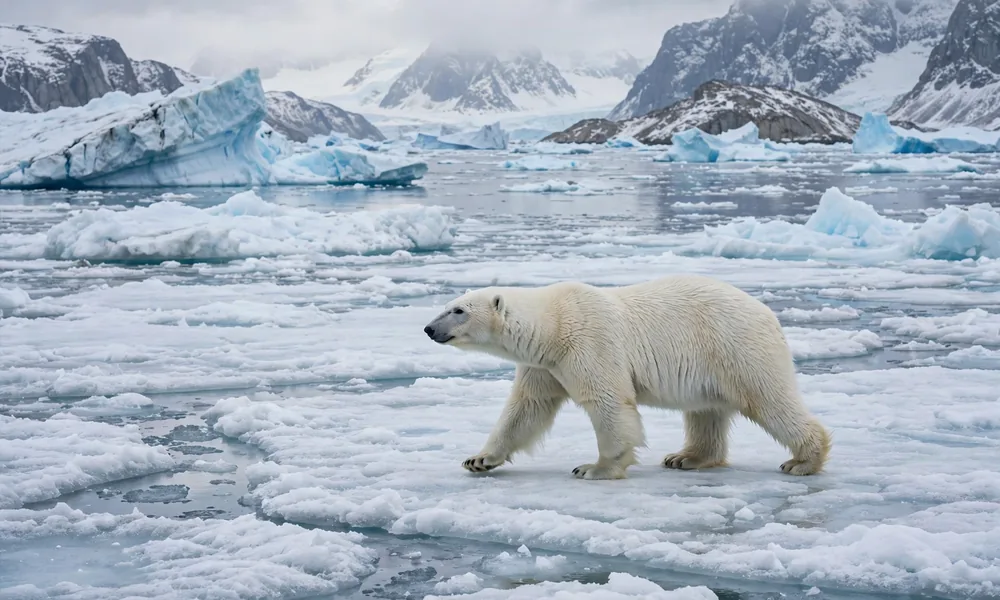
The polar bear is Greenland’s most famous animal and the world’s largest land predator. Polar bears live on the sea ice around the coasts, hunting ringed seals at their breathing holes and hauling out on the ice to rest. They are most often seen in the north and the east, where the sea ice lasts longest. A polar bear is a powerful and dangerous animal, and it should only ever be watched from a safe distance with a local guide.
Musk oxen are the great grazers of the Greenland tundra. These shaggy, heavy animals live in herds on the valleys and hills of the west and the north-east, feeding on grasses, willows and Arctic plants through the short summer and digging through the snow for food in winter. Musk oxen were brought to the west coast in the last century, and they now thrive there, especially around Kangerlussuaq. When threatened, a herd forms a circle with the calves in the middle and the adults facing outwards.
Caribou, the wild reindeer of North America, live in the valleys and hills of western Greenland, grazing on lichens, grasses and Arctic plants. Their herds move with the seasons. Reindeer in Greenland are smaller and paler than their relatives further south, and they are well suited to the thin Arctic vegetation.
Among the predators, the Arctic fox is the most widespread land hunter in Greenland. It lives all around the coasts, changing from white in winter to brown-grey in summer, and it hunts lemmings, birds and carrion on the tundra. Grey wolves are very rare in Greenland, living only in the far north-east.
Birds of the cliffs, tundra and sea
Greenland’s sea cliffs hold some of the largest seabird colonies in the North Atlantic. Little auks, small black-and-white seabirds, nest in their millions in the scree slopes of the north-west. Thick-billed murres nest on the cliff ledges in dense colonies, and black-legged kittiwakes, northern fulmars and glaucous gulls fill the sky around them.
On the tundra, the snowy owl hunts lemmings on the open ground, and the gyrfalcon, the largest falcon in the world, hunts ptarmigan and seabirds over the cliffs and valleys. Rock ptarmigan live on the tundra all year, turning white in winter, and snow buntings are among the first birds to return in spring.
Atlantic puffins breed in small numbers on the islands and cliffs of the west coast. White-tailed sea eagles, the largest bird of prey in Greenland, breed along the fjords of the west, fishing in the shallow water and along the shore.
Whales, walruses and life in the Arctic sea
Greenland’s waters hold some of the most remarkable whales on Earth. The narwhal, with the male’s long, spiralled tusk, lives in the cold water of the north and east, and it spends the winter under the sea ice. Beluga whales, white and sociable, gather in the fjords and bays of the west in summer, and their calls carry through the water.
Humpback whales feed in Disko Bay and the fjords of the west in summer, and their tails are often seen as they dive. Bowhead whales live in the cold water of the north, and they are among the longest-lived mammals on Earth. Minke whales and fin whales visit the west coast in summer too, feeding in the rich Arctic water.
Walruses haul out on the beaches and ice of the north, in groups that can number in the hundreds, and their tusks and whiskered faces are unmistakable. Seals are the most common marine mammals in Greenland: ringed seals live around the sea ice, bearded seals haul out on the ice floes, and harp seals visit the coasts in large numbers. Seals are the main prey of the polar bear.
Smaller animals of the tundra
The Arctic hare is the largest hare in the world, and it lives on the tundra of the north, gathering in groups on the hillsides and turning white in winter. It feeds on Arctic willows and grasses.
Lemmings are small, but they are the key to the whole Arctic food web. In good lemming years, snowy owls, Arctic foxes and gyrfalcons raise more young, and in poor years they struggle. Collared lemmings live across the tundra of the north. The Arctic fox is the most familiar small predator of the tundra.
Where to see Greenland’s wildlife
Disko Bay, around Ilulissat on the west coast, is the best place for whales. Humpback whales feed in the bay in summer, and boat trips from Ilulissat run among the icebergs to look for them. The fjords around Nuuk, the capital, hold beluga whales and seals.
Kangerlussuaq, at the head of a long fjord in the west, is the best place for musk oxen and caribou, with herds often seen from the road through the valley. The north-east holds the Northeast Greenland National Park, the largest national park in the world, where polar bears, musk oxen, Arctic foxes and walruses live in a vast, roadless wilderness. For polar bears, the sea ice of the north and the east is the best ground, and any trip there should be taken with an experienced local guide.
| Species | Where to look | Best season | How likely is a sighting |
|---|---|---|---|
| Polar bear | Sea ice of the north and east coasts | Winter and spring, on the ice | Low, only with a guide |
| Musk ox | Tundra valleys around Kangerlussuaq | June to September | Good |
| Narwhal | Cold water of the north and east | Summer | Very low |
| Humpback whale | Disko Bay around Ilulissat | June to September, from a boat | Good in summer |
| Arctic fox | Coasts and tundra across the island | All year | Fair |
| Caribou | Valleys and hills of western Greenland | Summer | Good in the west |
Best seasons for wildlife watching
Summer is the easiest season. The sea ice breaks up, the boats run, the whales arrive in Disko Bay, and the seabirds are at their colonies. The midnight sun in the north means you can watch wildlife late into the night, and the tundra is open for walking.
Autumn brings the first sea ice and the return of the dark, and the northern lights begin to fill the sky.
Winter is the season of the ice. The fjords freeze, the polar bears hunt on the sea ice, and the northern lights are at their best in the long dark. Travel is harder in winter, and the cold is serious. Spring brings the return of the birds, the first whales and the long days again, as the ice begins to break up along the coasts.
Staying safe around Greenland’s wildlife
Greenland’s wildlife demands real respect. Polar bears are dangerous, and they should never be approached: travel with a local guide in bear country, keep a lookout at all times, and never walk alone on the sea ice or the tundra in the north and east. Musk oxen can charge if they feel threatened, so keep well back. The cold is a danger of its own: dress for Arctic conditions, tell someone where you are going, and never travel on sea ice without local advice.
Wildlife watching checklist
- Book a local guide for polar bears, musk oxen and whale trips — they know where the animals are and how to keep you safe.
- Go out in summer for whales and seabirds.
- Bring binoculars, warm layers and waterproofs, and dress for Arctic cold even in summer.
- Keep well back from polar bears, musk oxen and walruses, and never approach a seal haul-out.
- Never feed wild animals, and never use food or calls to lure them closer for a photograph.
- Leave no trace: take your rubbish home and keep to marked paths in sensitive nesting and breeding areas.
Frequently asked questions
What is the most famous animal in Greenland?
The polar bear is the most famous, as the world’s largest land predator and the symbol of the Arctic. The narwhal, the musk ox and the humpback whale are also closely tied to Greenland.
Are there polar bears in Greenland?
Yes. Polar bears live on the sea ice around the coasts, mainly in the north and the east, where the ice lasts longest. They are dangerous and should only be watched from a safe distance with a local guide.
What animal lives only in Greenland?
Very few. Greenland has almost no true endemic animals, and most of its wildlife is shared with the wider Arctic. Its special species, such as the narwhal and the musk ox, are Arctic animals, not Greenland-only ones.
Where is the best place to see whales in Greenland?
Disko Bay, around Ilulissat on the west coast, is the best place. Humpback whales feed there in summer, and boat trips run among the icebergs to look for them.
When is the best time to see musk oxen in Greenland?
From June to September, when the tundra is open and the herds are grazing in the valleys. Kangerlussuaq in the west is the best place to look for them.
Conclusion
Greenland’s wildlife rewards those who travel far and plan carefully: polar bears on the sea ice, musk oxen on the tundra, narwhals in the dark water and humpbacks in Disko Bay are within reach if you go with a local guide.
The next step is to pick one species and one season — a summer whale trip in Disko Bay, a musk ox walk from Kangerlussuaq, or a winter journey onto the sea ice — and plan your visit around it.














