Swamp animals live in one of the most demanding habitats on Earth, where water, mud and dense vegetation shape daily life. What makes a swamp such a rich home for wildlife, and how do so many species survive in water that is often warm, murky and low in oxygen? The answer is adaptation: swamp animals have evolved ways to breathe, feed, hide and hunt in conditions that would challenge most land animals.
Key Takeaways
- A swamp is a wetland dominated by trees, with slow-moving or still water.
- Swamp animals cope with low oxygen, soft mud and changing water levels.
- Reptiles, birds, mammals, amphibians, fish and insects all play distinct roles.
- Many species are most active at dawn, dusk or night.
- Watch wildlife quietly, from a safe distance, without feeding animals.
What Is a Swamp?
A swamp is a wetland where the ground is saturated or covered by shallow water and woody plants, such as trees and shrubs, grow in or beside it. That sets it apart from a marsh, which is usually dominated by grasses and reeds, and from a bog, which is often more acidic and fed mainly by rain. Swamps can be freshwater or brackish, where river water meets the sea, and many change with the seasons as water levels rise and fall.
That slow, shallow water is the key to swamp life. It warms quickly, holds fallen leaves, and supports algae, insects and small fish. As plant matter breaks down, bacteria use up oxygen, so water near the mud can be very low in oxygen. Food is plentiful, though, and roots, reeds and fallen branches offer shelter. Famous swamps include the Everglades in Florida, the Okefenokee Swamp on the Georgia-Florida border, the Pantanal in South America and the mangrove swamps of South-East Asia and northern Australia.
How Swamp Animals Adapt
Life in a swamp rewards animals that can move through water and mud, breathe when oxygen is scarce, and find food in murky water. Catfish can gulp air at the surface when dissolved oxygen is low. Frogs absorb oxygen through moist skin, which is why they need damp surroundings and clean water. Some turtles slow their metabolism and absorb small amounts of oxygen through skin, helping them stay underwater for long periods.
Alligators and crocodiles have nostrils on top of the snout, so they can breathe while almost all of the body stays submerged. They can also close a flap at the back of the throat, letting them open their mouth underwater without flooding their lungs. Manatees, otters and beavers must surface to breathe, but they can hold their breath for several minutes. Webbed feet help otters, beavers and frogs swim and push through mud, while long legs let herons and egrets wade in shallow water. Catfish use barbels to find food in darkness, herons strike with a sharp bill, and alligators sense tiny ripples on the surface, even at night. Capybaras graze on water plants and spend much of the day partly submerged, staying cool and avoiding predators. For a closer look at this wetland mammal, see our guide to the capybara (https://viltnemnda.com/capybara/).
Reptiles: Alligators, Crocodiles, Turtles and Snakes
Reptiles are among the most visible swamp animals and sit near the top of many swamp food webs. The American alligator lives in freshwater swamps in the south-eastern United States, while the saltwater crocodile lives in mangrove swamps and estuaries across parts of Asia and Australia. Both are patient ambush hunters. Alligators dig ponds, known as gator holes, which hold water in dry periods and provide refuge for fish, frogs and wading birds.

Turtles bask on logs and feed on plants, insects, snails and small fish. Water snakes and the larger anaconda of South American swamps hunt fish, frogs, birds and small mammals. Most swamp snakes are not dangerous to people, but all wild snakes should be given space and never handled. Reptiles depend on the sun to warm their bodies, so basking sites matter. When water falls, they move to deeper pools; when floods arrive, they spread into newly flooded forest to hunt.
Birds: Herons, Egrets, Ibises and Kingfishers
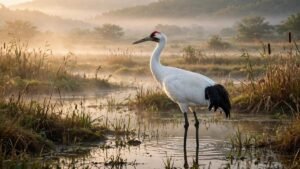
Wading birds are often the first swamp animals visitors notice, because they feed in open shallow water and move slowly enough to watch. The great blue heron, grey heron and great egret stand motionless before striking at fish, frogs and large insects. Ibises use a long, curved bill to probe mud for crabs and worms. Kingfishers perch above the water and dive for small fish, while ducks and geese feed on seeds, water plants and insects.
Many swamp birds nest in trees or reeds above the water, giving eggs and chicks some protection from ground predators. Colonies of herons and egrets, known as heronries, are noisy, busy places in the breeding season. Some birds stay year-round, while others arrive to breed and then move on. Their presence is often a sign of a healthy swamp: where wading birds feed well, fish, frogs and insects are usually plentiful too.
Mammals: Beavers, Otters, Manatees and Capybaras
Mammals may be harder to spot, but several species are central to how swamps work. Beavers dam slow streams, creating ponds that raise water levels, slow flooding and create habitat for fish, frogs, birds and insects. Their lodges, built from sticks and mud, have underwater entrances that keep the inside dry and safe.
River otters hunt fish, crabs and frogs, often in family groups. Dense fur keeps them warm, and a long tail helps them turn quickly. Manatees, also called sea cows, are large, gentle plant-eaters that graze on seagrass and water plants in warm coastal swamps and rivers. They move slowly and surface regularly to breathe. Capybaras live in groups beside rivers and swamps in South America, swim strongly, and use water as a refuge from jaguars and caimans. In cooler regions, moose wade into lakes and marshes to feed on water plants, as described in our guide to animals in Norway (https://viltnemnda.com/animals-in-norway/).
Amphibians, Fish and Insects
Amphibians, fish and insects may be smaller than alligators or manatees, but they drive much of the swamp food web. Frogs and toads breed in shallow water, where eggs and tadpoles feed fish, birds and snakes, while adult frogs eat vast numbers of insects. Their thin, moist skin makes them sensitive to pollution and drying out, so a healthy frog population is often a sign of clean water.
Catfish feed on the bottom and tolerate low oxygen. Gar and bowfin in North American swamps can breathe air at the surface and survive in warm, still water where other fish struggle. They feed on insects and smaller fish, and are eaten by herons, otters and alligators. Dragonflies hunt mosquitoes and midges in the air, while their nymphs hunt underwater. Mosquitoes are food for fish, frogs, birds and bats, and beetles and midges break down dead plants and recycle nutrients.
The Swamp Food Web
A swamp food web starts with plants — trees, reeds, grasses and algae — which capture sunlight and provide food and shelter. Dead leaves fall into the water, where bacteria, fungi and small invertebrates break them down. That rich base supports insects, snails and small fish, which feed frogs, wading birds, snakes and otters. At the top sit alligators and crocodiles, which eat fish, turtles, birds and mammals, and whose droppings return nutrients to the water.
Nothing in this web works alone. When beavers raise water levels, they create new feeding grounds for herons. When alligators keep ponds open in dry spells, they help fish and frogs survive until the rains return. A change in one part — a drop in water, a loss of trees, or a fall in insect numbers — can be felt across the whole system.
| Animal group | Typical examples | Main food | Key adaptation |
|---|---|---|---|
| Reptiles | Alligators, crocodiles, turtles, snakes | Fish, frogs, birds, mammals | Top nostrils, breath-holding |
| Birds | Herons, egrets, ibises, kingfishers | Fish, frogs, insects | Long legs and bills |
| Mammals | Beavers, otters, manatees, capybaras | Plants, fish, crabs, bark | Webbed feet, dam building |
| Amphibians | Frogs, toads, salamanders | Insects, invertebrates | Moist skin |
| Fish | Catfish, gar, bowfin | Insects, smaller fish | Air-gulping, barbels |
| Insects | Dragonflies, mosquitoes, beetles | Algae, smaller insects | Aquatic nymph stage |
Table: Main swamp animal groups, their food and their key adaptations to wetland life.
Swamps also store floodwater and release it slowly, reducing flooding downstream. Their plants and mud trap sediment and filter water, and their soils store carbon in waterlogged plant matter. Draining a swamp removes habitat in a way that is hard to reverse. Protecting a swamp usually means protecting its water. To explore how animals solve similar challenges elsewhere, see our guide to animal adaptations (https://viltnemnda.com/animal-adaptations/).
Watching Swamp Animals Safely
Swamps can be visited safely with care, but they demand more respect than a dry woodland walk. Use this checklist before and during a visit.
- Check the site first: confirm access, paths, water levels and warnings.
- Stay on paths and boardwalks: they protect plants and keep you out of deep mud.
- Keep a safe distance: use binoculars; never approach alligators, crocodiles or snakes.
- Do not feed wildlife: feeding changes behaviour and can make animals aggressive.
- Wear suitable clothing: closed shoes, long sleeves and insect repellent.
- Bring water and sun protection: swamps can be hot and humid.
- Watch where you step: logs, roots and wet boards can be slippery.
- Leave no trace: take rubbish home and keep noise low.
Frequently Asked Questions
What animals live in swamps?
Alligators and crocodiles, turtles, water snakes, herons, egrets, kingfishers, beavers, otters, manatees, capybaras, frogs, catfish, dragonflies and mosquitoes. The exact mix depends on region, water type and climate.
What is the difference between a swamp and a marsh?
A swamp is dominated by trees and woody plants, while a marsh is usually dominated by grasses and reeds. Both have shallow, slow-moving water, but their plant life differs.
Are swamps dangerous?
They can be, mainly because of deep water, soft mud, heat, insects and large animals such as alligators or crocodiles. Stay on marked paths, keep a safe distance and check local warnings first.
Do alligators and crocodiles live in the same swamps?
They can overlap in a few places, such as southern Florida, where alligators live in freshwater and crocodiles live mainly in brackish coastal water. In most of the world they live in different regions.
Why is swamp water low in oxygen?
As dead plants break down in warm, still water, bacteria use oxygen faster than it can be replaced from the air. Animals near the mud have evolved ways to breathe air or slow their metabolism.
When is the best time to see swamp animals?
Dawn and dusk are often best, when birds are feeding, frogs are calling and otters are active. Midday can be good for basking reptiles. Night visits should only be made on guided tours.
Conclusion
Swamp animals show how much life can thrive in a place that looks, at first, like little more than mud and still water. From alligators that keep ponds open in dry spells to beavers that build new wetlands, from herons that hunt in the shallows to dragonflies that patrol the air above, each species has found a way to breathe, move and feed in conditions that demand real adaptation.
If you want to see that world for yourself, start with a local wetland reserve or boardwalk trail, go at dawn or dusk, take binoculars, and watch quietly from a safe distance. Then compare what you see with other habitats in our guide to grassland animals (https://viltnemnda.com/grassland-animals/) — the contrast will show just how specialised swamp life really is.