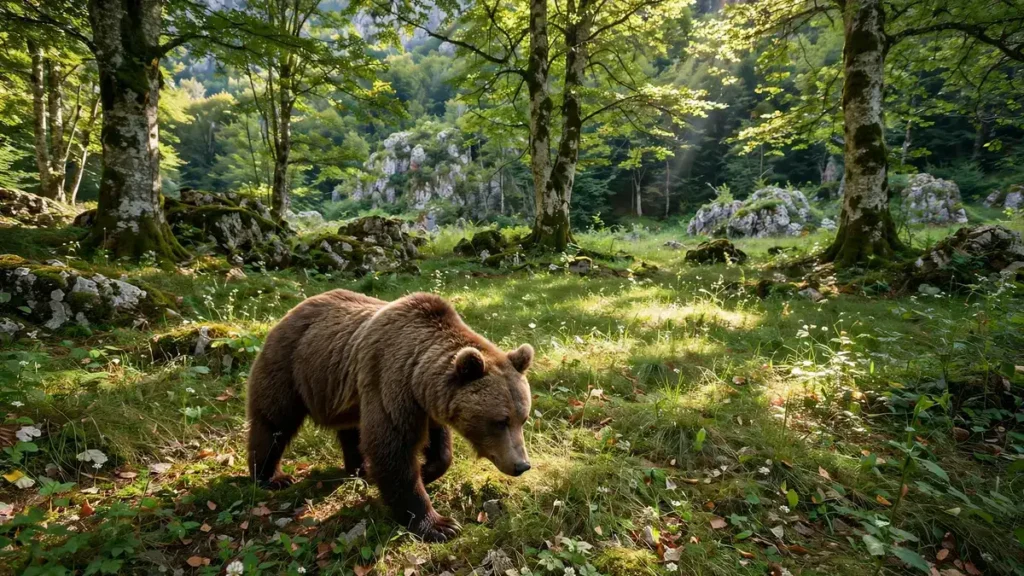
Croatia animals range from brown bears in the forests of Gorski Kotar to bottlenose dolphins in the clear waters of the Adriatic, and the country holds some of the best mountain and coastal wildlife in Europe. If you are wondering which animals live in Croatia and where to see them, the short answer is this: bears, wolves and lynx in the Dinaric mountains, griffon vultures on the island of Cres, dolphins and sea turtles along the coast, and chamois, wild boar and deer in the forests and high meadows.
Croatia is a country of contrasts, where the Dinaric mountains meet the Adriatic Sea in a single day’s drive. This guide covers the species you are most likely to meet, where each one lives and the best seasons to see them.
Key takeaways
- Croatia’s most iconic animals are the brown bear, grey wolf, Eurasian lynx, griffon vulture, bottlenose dolphin and chamois.
- The forests of Gorski Kotar and the Velebit mountains hold one of the largest brown bear populations in Europe, along with wolves and lynx.
- The island of Cres is one of the best places in Europe to see griffon vultures, which nest on the sea cliffs of the Kvarner Gulf.
- Bottlenose dolphins live along the whole Croatian coast, and the waters around Losinj and Cres are among the best places to see them.
- Early morning and late evening are the best times to spot large mammals, and spring and early summer are the best seasons for birds and dolphins.
What makes Croatia’s wildlife special
Croatia stretches from the Pannonian lowlands in the east to the Dinaric mountains and the Adriatic coast in the west. That range covers temperate forest, limestone karst, high mountain meadows, river floodplains and a long island coast, so the country holds species from several habitats at once.
Croatia has no endemic mammals, and that honesty matters: the country has no land mammal found nowhere else. What it has instead is something rarer in modern Europe — large, connected mountain forests where bears, wolves and lynx still live together in the wild. The forests of Gorski Kotar, Risnjak and Velebit form one of the largest areas of unbroken woodland in the region, and the karst landscape below them hides a whole world of cave life.
One remarkable exception lives underground: the olm, a blind cave salamander, lives only in the underground waters of the Dinaric karst, which Croatia shares with its neighbours. It is a pale, cave-dwelling animal that can live for many years in the dark, and it is almost never seen by visitors.
The great mammals of Croatia
The brown bear is Croatia’s largest land mammal and the animal most visitors hope to see. Bears live in the forests of Gorski Kotar, Risnjak and Velebit, feeding on berries, nuts and insects, and they are most often seen in the early morning or late evening. Guided bear-watching hides in Gorski Kotar give the best chance of a sighting.
Red deer and roe deer live in forests across the country, wild boar root through the woodland floor in family groups, and chamois live on the high rocky slopes of Velebit and the Dinaric peaks, sure-footed on cliffs and snowfields.
Among the predators, the grey wolf lives in the Dinaric mountains, hunting deer and wild boar in packs. The Eurasian lynx is rarer and shyer, hunting roe deer in the forests of Risnjak, Velebit and Gorski Kotar, where it was returned to the wild in the last century. Golden jackals have also spread along the coast and the lowlands in recent years.
Beavers have returned to the rivers of the north and east, and their dams now shape wetlands for frogs, dragonflies and water birds. Otters hunt along the same rivers and on quieter stretches of coast, and badgers and pine martens are common in the forests.
Birds, water and coast life
The griffon vulture is Croatia’s most spectacular bird, and the island of Cres is one of the best places in Europe to see it. The vultures nest on the sea cliffs of the Kvarner Gulf and soar over the coast on warm rising air, and a rescue centre on Cres cares for injured birds.
The white-tailed sea eagle is Croatia’s largest bird of prey. It breeds in the floodplain forests of the Danube and Sava and along the big lakes, and it is often seen from a boat or a lakeside hide. Golden eagles hunt over the mountains instead, and the rivers of the east hold white storks, herons and spoonbills.
The floodplains of the east are among the best birdwatching sites in the country. In spring the flooded meadows of Kopacki Rit and Lonjsko Polje fill with waders, ducks and geese, and the rare ferruginous duck and white-tailed eagle breed in the marshes. Cranes pass through in large numbers in spring and autumn.
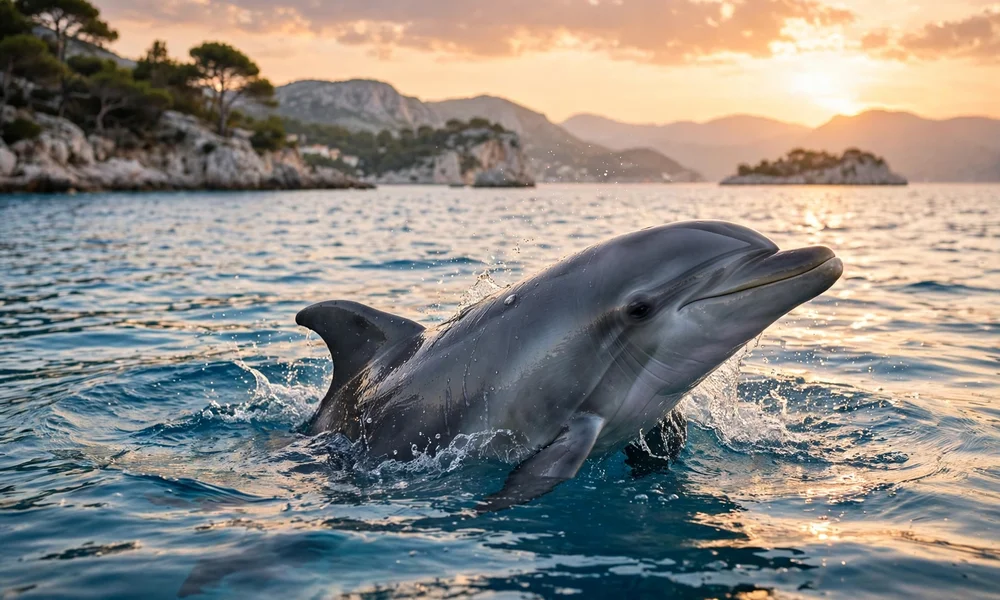
Along the coast, the Adriatic holds its own wildlife. Bottlenose dolphins live along the whole coast and are most often seen around Losinj and Cres, where a dedicated reserve protects them. Loggerhead sea turtles visit Croatian waters in summer, and the rare Mediterranean monk seal is an occasional visitor to the quieter islands.
Smaller animals and the wildlife of the mountains
Not all of Croatia’s wildlife is large. The chamois lives on the high rocky slopes of Velebit, a goat-antelope that is sure-footed on cliffs and snowfields. Marmots are absent from Croatia, but the mountain hare turns white in winter on the highest peaks, and the forests hold red squirrels, dormice and pine martens.
The karst landscape of the Dinaric mountains hides a world of cave animals, and the olm is the most famous of them all — a blind, cave-dwelling salamander that lives only in the underground waters of the region. Bats roost in the same caves in large numbers, and the limestone gorges of the coast hold colonies of swifts and crag martins.
The smaller animals of the coast are just as striking: lizards bask on dry stone walls, Hermann’s tortoises graze in the scrub of the islands, and the Dalmatian coast in summer is alive with butterflies, cicadas and dragonflies.
Where to see Croatia’s wildlife
Brown bears are easiest in Gorski Kotar, where guided hides and viewing areas give the best chance of a sighting, especially in the early morning. Wolves and lynx live in the same forests and on Velebit, though both are far harder to see than bears. Griffon vultures are best on the island of Cres, where the cliffs of the north coast hold the nesting colonies.
Dolphins are best around Losinj and Cres, where boat trips give the best chance of a sighting, and the floodplains of Kopacki Rit in spring are the single best birding destination in the country. The Velebit mountains are the place for chamois, golden eagles and high mountain wildlife.
| Species | Where to look | Best season | How likely is a sighting |
|---|---|---|---|
| Brown bear | Gorski Kotar forests and Risnjak | May to October, dawn and dusk | Good from a hide |
| Griffon vulture | Sea cliffs of Cres island | April to September | Good in season |
| Bottlenose dolphin | Waters around Losinj and Cres | May to September | Good from a boat |
| Grey wolf | Dinaric mountains and Velebit | Winter, dawn and dusk | Low, tracks more likely |
| White-tailed sea eagle | Kopacki Rit and the Sava floodplain | All year | Good from a boat or hide |
| Chamois | High slopes of Velebit | Summer and autumn | Fair with binoculars |
| Loggerhead sea turtle | Adriatic coast and island bays | June to September | Low, from a boat |
Best seasons for wildlife watching
Spring is the finest season. The floodplains of the east fill with waders and geese, the griffon vultures return to their cliff nests on Cres, the bears leave their dens and the mountains are full of birdsong. It is also the most sensitive season, so keep to paths, keep dogs on a lead and give every animal more space than you think it needs.
Summer is the easiest season for dolphins and vultures. The days are long, the sea is calm, and the dolphins are most active around Losinj and Cres. The mountains are at their greenest, and the chamois are out on the high slopes at dawn and dusk.
Autumn brings the deer rut, when red deer stags are at their most visible and vocal, and bears feed hard on berries and nuts before they den for the winter. Winter is the quiet season, and the hardest for watching, but bears are easier to track in the snow, wolf and lynx tracks show clearly in the forests, and the coast holds wintering ducks and gulls in large numbers.
Staying safe around Croatia’s wildlife
Croatia’s large animals are usually calm, but they deserve respect. Keep your distance from bears, wolves and wild boar, never approach a boar with piglets or walk between a sow and her young, and never try to feed or touch any wild animal. If you meet a bear, back away slowly, speak calmly and never run. Wild boar on the road are a real danger at dawn and dusk, so slow down on forest roads and watch the verges.
Wildlife watching checklist
- Book a local guide or a bear-watching hide in Gorski Kotar — they know where the bears feed.
- Go out at dawn or dusk for mammals, and plan Cres and Losinj trips for May to September, when the vultures and dolphins are at their best.
- Bring binoculars, warm layers and waterproofs, even in summer — mountain weather changes fast.
- Keep at least 50 metres from nesting birds and grazing deer, and far more from bears, wolves and wild boar with young.
- Never feed wild animals, and never use food or calls to lure them closer for a photograph.
- Leave no trace: take your rubbish home and keep to marked paths in sensitive habitats.
Frequently asked questions
What is the most famous animal in Croatia?
The brown bear is the most famous, and the forests of Gorski Kotar are one of the best places in Europe to see it in the wild. The griffon vulture is the best-loved bird, and the bottlenose dolphin is the most famous animal of the coast.
Are there bears and wolves in Croatia?
Yes. Brown bears live in the Dinaric mountains, mainly in Gorski Kotar, Risnjak and Velebit, and grey wolves live in the same mountains. Both are shy and avoid people.
What animal lives only in Croatia?
No land mammal lives only in Croatia. The olm, a blind cave salamander, lives only in the underground waters of the Dinaric karst, which Croatia shares with its neighbours.
When is the best time to see griffon vultures in Croatia?
The best time is from April to September, when the vultures soar over the sea cliffs of Cres island. The cliffs of the north coast hold the nesting colonies, and a local guide greatly improves the odds.
Can I see dolphins in Croatia?
Yes. Bottlenose dolphins live along the whole Croatian coast, and the waters around Losinj and Cres are among the best places to see them, usually from a boat trip in summer.
Is it safe to see bears in Croatia?
Bears are usually calm, but they are huge and fast, and they deserve respect. The safest way to see one is from a guided hide in Gorski Kotar, keeping a good distance.
Conclusion
Croatia’s wildlife rewards patience: brown bears in the forests of Gorski Kotar, griffon vultures over the cliffs of Cres and dolphins in the Adriatic are all within reach if you plan around the seasons and keep your distance.
The next step is to pick one species and one season — a dawn bear watch in Gorski Kotar, a summer dolphin trip around Losinj, or a spring birding visit to Kopacki Rit — and plan your visit around it.














