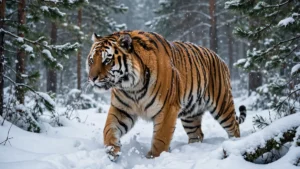
Hungary animals range from great bustards strutting across the open puszta to grey wolves in the forested hills of the north, and the country holds some of the best grassland and wetland wildlife in Europe. If you are wondering which animals live in Hungary and where to see them, the short answer is this: great bustards, red deer and wild boar on the plains, wolves and lynx in the northern hills, beavers and otters along the Danube and Tisza, and white-tailed eagles, cranes and storks in the marshes and lakes.
Hungary is a landlocked country of plains, rivers and low hills. This guide covers the species you are most likely to meet, where each one lives and the best seasons to see them.
Key takeaways
- Hungary’s most iconic animals are the great bustard, grey wolf, Eurasian lynx, beaver and white-tailed eagle.
- The Hortobagy puszta holds one of the largest great bustard populations in Europe, and autumn brings large flocks of common cranes.
- Wolves and lynx live in the forested hills of the north, including the Bukk, Aggtelek and Zemplen ranges, while beavers have returned to the Danube and Tisza.
- The Danube floodplain and Lake Tisza are among the best places in Europe for white-tailed eagles, herons and egrets.
- Early morning and late evening are the best times to spot large mammals, and spring and autumn are best for birds.
What makes Hungary’s wildlife special
Hungary sits in the Carpathian Basin, a wide lowland ringed by hills and mountains. The Great Hungarian Plain, or puszta, is a vast steppe of grassland, salt lakes and marshes, while the Danube and Tisza rivers wind through floodplain forests and reed beds, so the country holds species from several habitats at once.
Hungary has no endemic mammals, and that honesty matters: the country has no land mammal found nowhere else. What it has instead is something rarer in modern Europe — one of the largest surviving steppe landscapes on the continent, where grassland birds still live in the open. The Hortobagy National Park protects the largest continuous area of natural steppe in Europe, and the Danube floodplain at Gemenc holds one of the largest remaining floodplain forests on the river.
One small exception lives in the grasslands: the Hungarian meadow viper is a rare snake found only in Hungary, living in a few patches of undisturbed meadow. It is shy, hard to find and strictly protected.
The great mammals of Hungary
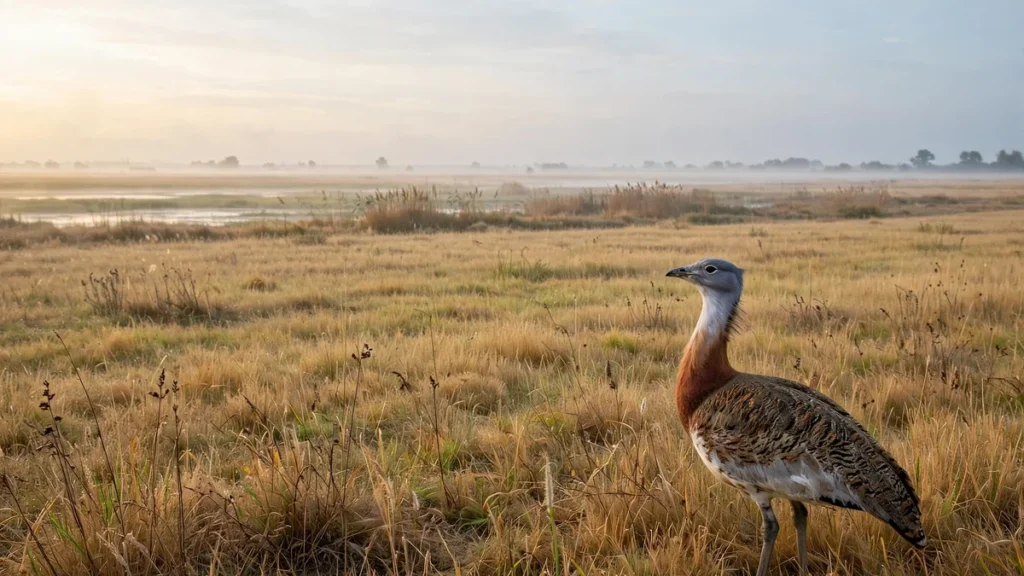
The great bustard is Hungary’s most famous bird and one of the heaviest flying birds in the world. Males gather on the puszta in spring to display, fanning their tails and puffing out their chests, and the Hortobagy holds one of the largest populations in Europe. The birds are shy and best watched from a hide.
Red deer are the largest land mammals most visitors will see, living in the forests of the north and the floodplains of the south, and the autumn rut fills the woods with roaring stags. Roe deer are widespread in farmland and forest edges, and wild boar root through the woodland floor in family groups.
Among the predators, the grey wolf lives in the forested hills of the north, hunting deer and wild boar in packs, and it has been spreading slowly as numbers recover. The Eurasian lynx is rarer and shyer, hunting roe deer in the forests of the Bukk and Aggtelek hills. Golden jackals have also spread across the southern lowlands, and they are most often heard at dusk rather than seen.
Beavers have returned to many Hungarian rivers and lakes, and their dams now shape wetlands for frogs, dragonflies and water birds. Otters hunt along the same rivers, and badgers and pine martens are common in the forests.
Birds of the puszta, marshes and lakes
The white stork is Hungary’s best-loved bird, and its return each spring is one of the great moments of the Hungarian year. White storks nest on rooftops, chimneys and specially built poles across the countryside, and the villages of the plain are the best places to see them.
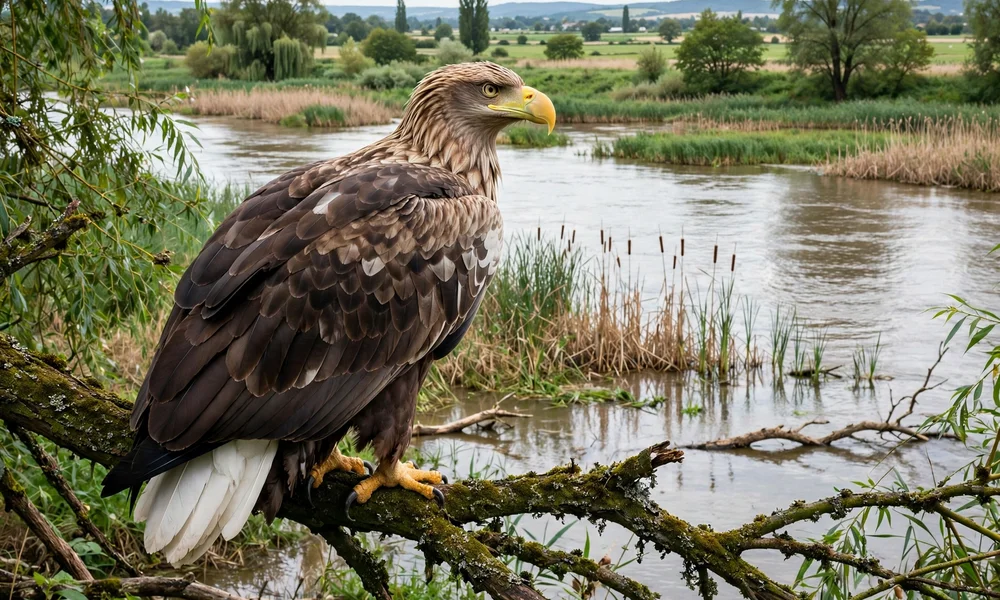
The white-tailed sea eagle is Hungary’s largest bird of prey. It breeds in the floodplain forests of the Danube and along the big lakes, and it is often seen from a boat or a lakeside hide. Golden eagles hunt over the hills of the north, and imperial eagles — one of Europe’s rarest eagles — breed on the plains.
The Hortobagy in autumn is one of the great bird spectacles in Europe, when large flocks of common cranes gather on the shallow lakes before migration. In spring the flooded meadows fill with waders, ducks and geese, and great egrets, spoonbills and glossy ibis feed in the marshes. Lake Tisza and Lake Fertos, shared with Austria, are among the best birdwatching sites in the country.
Beavers, otters and life in the rivers and lakes
Hungary’s rivers hold their own wildlife, and the beaver is the most visible of all. Beavers have spread back across the country, and their lodges and dams are easy to find along slow rivers and lake shores. Otters are shyer but live on many of the same waters, hunting fish at dawn and dusk.
The Danube and Tisza are corridors for wildlife. Their floodplains hold beavers, otters, deer and a rich mix of water birds, and the Danube floodplain forest at Gemenc is one of the largest of its kind in Europe. Herons and egrets fish in the backwaters, and kingfishers flash along the quieter channels.
The great lakes are havens for water birds and fish. Lake Balaton, the largest lake in Central Europe, has reed beds that shelter grebes, herons and ducks, while the shallows of Lake Tisza are among the best places in the country to watch egrets and spoonbills at close range.
Smaller animals and the wildlife of the grasslands
Not all of Hungary’s wildlife is large. The European ground squirrel, or souslik, stands upright on the short grass of the puszta, whistling a warning before it dives into its burrow. It is a key food for imperial eagles and saker falcons, and its colonies are a sign of healthy grassland.
The northern hills hold red squirrels, dormice and pine martens, and the red fox is common across the whole country, from farmland to forest edge. Bats roost in the caves of the Aggtelek hills, which hold some of the most important bat colonies in the region.
The puszta in summer is alive with insects, and the bee-eater and roller — two of Europe’s most colourful birds — nest in sandy banks and hunt over the grassland.
Where to see Hungary’s wildlife
Great bustards are easiest on the Hortobagy puszta, where guided walks give the best chance of a sighting in the spring display season. Wolves and lynx live in the northern hills, though both are far harder to see than bustards, and a local guide is the best way to look for their tracks.
White-tailed eagles are best in the Danube floodplain at Gemenc and around Lake Tisza, white storks in the villages of the plain, and cranes on the Hortobagy in autumn. The Bukk hills are the place for woodland birds and forest animals.
| Species | Where to look | Best season | How likely is a sighting |
|---|---|---|---|
| Great bustard | Hortobagy puszta grasslands | March to May, at dawn | Good with a guide |
| Common crane | Hortobagy shallow lakes | October to November | Good in season |
| White-tailed sea eagle | Danube floodplain and Lake Tisza | All year | Good from a boat or hide |
| Grey wolf | Bukk, Aggtelek and Zemplen hills | Winter, dawn and dusk | Low, tracks more likely |
| White stork | Villages and farmland across the plain | April to August | Good in season |
| Beaver | Danube and Tisza rivers and lakes | Spring and summer, at dusk | Fair, look for dams and lodges |
| Imperial eagle | Hortobagy and the northern lowlands | April to September | Low, needs a guide |
Best seasons for wildlife watching
Spring is the finest season. The white storks return to their nests, the great bustards display on the puszta, the marshes fill with waders and geese, and the floodplain forests are full of birdsong. It is also the most sensitive season, so keep to paths and give every animal more space than you think it needs.
Summer is the easiest season for bustards and beavers, with long days and animals out at dawn and dusk. The bee-eaters and rollers are at their most colourful, and the lakes are full of herons and egrets.
Autumn brings the crane migration to the Hortobagy and the deer rut, when red deer stags are at their most visible and vocal. Winter is the quiet season, and the hardest for watching, but bustards are easier to find against the bare grassland, wolf and lynx tracks show clearly in the snow of the northern hills, and the lakes hold wintering ducks and geese in large numbers.
Staying safe around Hungary’s wildlife
Hungary’s large animals are usually calm, but they deserve respect. Keep your distance from wolves, wild boar and deer with young, never approach a boar with piglets, and never try to feed or touch any wild animal. If you meet a wolf, stand your ground, make yourself look big and back away slowly, and never run. Wild boar on the road are a real danger at dawn and dusk, so slow down on forest roads and watch the verges.
Wildlife watching checklist
- Book a local guide or a bustard viewing walk on the Hortobagy.
- Go out at dawn or dusk for mammals, and plan stork and Hortobagy trips for April to June, when the marshes are at their best.
- Bring binoculars, warm layers and waterproofs, even in summer — the puszta wind can be cold.
- Keep at least 50 metres from nesting birds and grazing deer, and far more from wolves and wild boar with young.
- Never feed wild animals, and never use food or calls to lure them closer for a photograph.
- Leave no trace: take your rubbish home and keep to marked paths.
Frequently asked questions
What is the most famous animal in Hungary?
The great bustard is the most famous, and the Hortobagy puszta is one of the best places in Europe to see it. The white stork is the best-loved bird, and the grey wolf is the most famous predator.
Are there wolves and lynx in Hungary?
Yes. Grey wolves and Eurasian lynx live in the forested hills of the north, though both are shy and avoid people. Wolves are slowly spreading as numbers recover.
What animal lives only in Hungary?
No land mammal lives only in Hungary. The Hungarian meadow viper is a rare snake found only in Hungary.
When is the best time to see great bustards in Hungary?
The best time is in spring, from March to May, when the males display on the puszta at dawn, and a local guide greatly improves the odds.
Can I see white-tailed eagles in Hungary?
Yes. White-tailed eagles breed in the Danube floodplain forests and around the big lakes, and they are often seen from a boat or a lakeside hide.
Is it safe to see wolves in Hungary?
Wolves are shy and avoid people, and sightings are rare. The safest way to look for them is with a local guide in the northern hills, keeping a good distance.
Conclusion
Hungary’s wildlife rewards patience: great bustards on the open puszta, white-tailed eagles over the Danube floodplain and wolves in the northern hills are all within reach if you plan around the seasons.
The next step is to pick one species and one season — a dawn bustard walk on the Hortobagy, an autumn crane trip to the shallow lakes, or a spring birding visit to the Danube floodplain — and plan your visit around it.