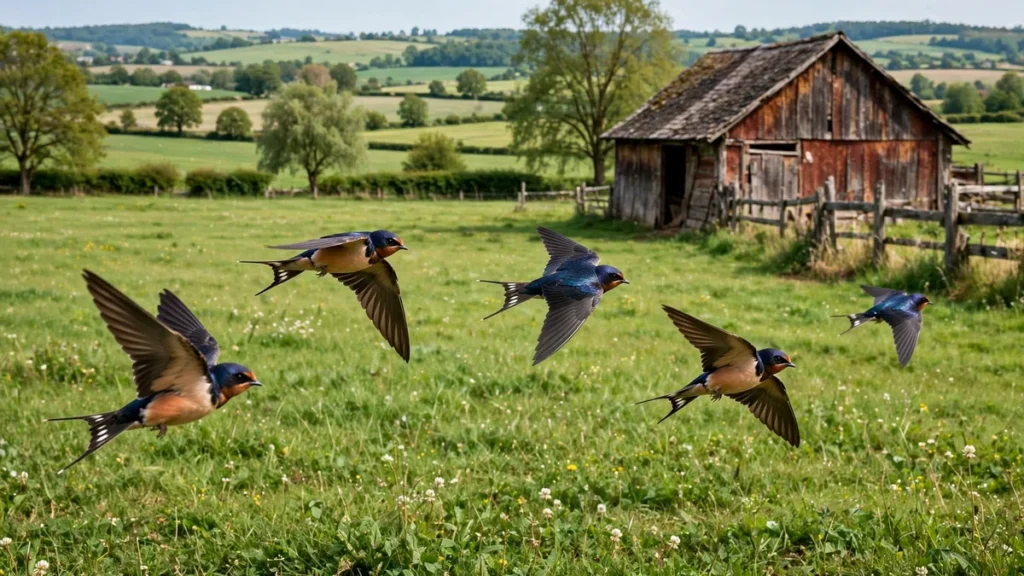
The barn swallow species number one, a single species called Hirundo rustica, and it is the fork-tailed swallow of barns and bridges, the most widespread swallow in the world. If you are asking how many barn swallow species there are, the answer is one: there is one recognised barn swallow species in the world, and every barn swallow alive today belongs to it.
The barn swallow lives across North America, Europe, Asia and Africa, in open fields, farmland and towns, and it nests in barns, stables, bridges and porches. Its steel-blue back, its red throat, its deeply forked tail and its habit of swooping low over meadows make it one of the best-loved birds in the world.
Key takeaways
- There is one barn swallow species, Hirundo rustica, a swallow of open country worldwide.
- Barn swallows measure 17 to 19 centimetres long and weigh between 16 and 22 grammes, with a deeply forked tail.
- Barn swallows build cup nests from mud and grass inside barns and under bridges, and they raise two broods a year.
- Barn swallows eat flying insects, catching flies, beetles and moths on the wing.
- Barn swallows are listed as Least Concern, and they are the most widespread swallow species on Earth.
What makes a barn swallow a barn swallow
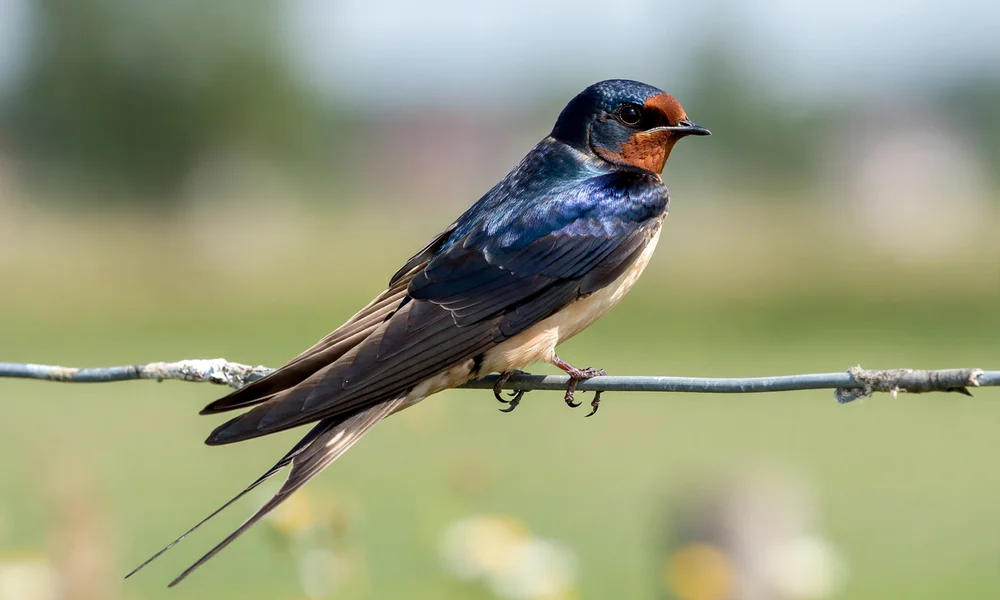
A barn swallow is a slim swallow with a steel-blue back and crown, a creamy white belly, a rusty-red throat and forehead, and a long deeply forked tail with white spots, and it measures 17 to 19 centimetres long, with a wingspan of 32 to 34 centimetres, and usually weighs between 16 and 22 grammes. The male has a longer tail and brighter colours than the female, and the young birds have shorter tails and paler throats.
The name comes from its habit of nesting in barns, and it has lived alongside people for thousands of years, nesting in stables, sheds and porches. Like other hummingbirds, the barn swallow is a bird that catches its food in the air, but it is a swallow, not a hummingbird, and it flies with long glides and sharp turns, swooping low over fields and ponds.
The barn swallow species and their relatives
There is one barn swallow species. It belongs to the genus Hirundo, the true swallows, and it has six subspecies spread across the northern hemisphere, with the European, American and Asian birds differing slightly in the colour of their bellies and the length of their tails. The barn swallow is the most widespread swallow in the world, breeding on every continent except Antarctica and Australia.
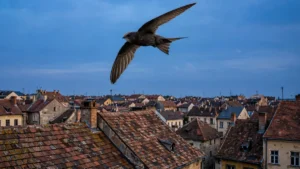
The tree swallow is the barn swallow’s closest relative in North America, a blue-green swallow that nests in tree holes and nest boxes, while the cliff swallow is a swallow that builds gourd-shaped mud nests in colonies under bridges and cliffs. The bank swallow is a small brown swallow that digs burrows in river banks, the purple martin is the largest swallow in North America, and the common swift is a sickle-winged bird that spends almost its whole life in the air.
| Type | Animal | Where it lives | Best-known food | Length or Weight |
|---|---|---|---|---|
| Species | Barn swallow (Hirundo rustica) | Open country worldwide | Flying insects | 17 to 19 cm long, 16 to 22 g |
| Close relative | Tree swallow | North American fields and wetlands | Flying insects | 13 to 15 cm long, 16 to 25 g |
| Close relative | Cliff swallow | North American cliffs and bridges | Flying insects | 13 to 15 cm long, 19 to 31 g |
| Close relative | Bank swallow | North American and European river banks | Flying insects | 12 to 13 cm long, 11 to 20 g |
| Close relative | Purple martin | North and South America | Flying insects | 19 to 20 cm long, 42 to 65 g |
| Close relative | Common swift | Europe, Asia and Africa | Flying insects | 16 to 17 cm long, 31 to 56 g |
| Close relative | House martin | Europe, Asia and Africa | Flying insects | 13 to 15 cm long, 13 to 23 g |
How barn swallows live
Barn swallows are creatures of the open sky. A barn swallow lives alone or in small groups in spring and summer, and in large flocks before migration, and it spends most of its waking hours in the air, feeding, drinking and even bathing on the wing. Like other peregrine falcons, the barn swallow is a bird of speed and grace, but it is a swallow, not a falcon, and it catches insects in its beak, not with talons, and it never hunts other birds.
Flying insects make up almost the whole diet, along with the odd spider or beetle snatched from a leaf, and a barn swallow eats by swooping through swarms of flies, beetles and moths, snapping them up in its wide beak. It feeds mostly in the morning and evening, when the insects are thickest over fields and ponds, and a single bird can catch hundreds of insects in a day.
Breeding is a busy season, and the pair builds a cup nest from mud pellets and grass inside a barn or under a bridge, and the female lays four or five white eggs with brown spots. She sits on the eggs for about 14 to 16 days, and both parents feed the chicks, which leave the nest after about three weeks. A pair may raise two broods in a single year, often reusing the same nest, and the young birds return to the same barn year after year. Barn swallows live for about 2 to 4 years in the wild, though some have lived for more than 11 years.
Where barn swallows live
The barn swallow lives across North America, Europe and Asia in summer, and in South America, Africa and southern Asia in winter, and in open fields, farmland, wetlands and towns, and it is most common where there are barns to nest in and insects to catch. It is one of the most widespread land birds in the world, breeding on every continent except Antarctica and Australia.
Open country with buildings is the key requirement. A barn swallow needs a barn, a bridge or a porch where it can build its mud nest out of the rain, with open fields nearby for hunting insects, so it follows the seasons as they change, and when the insects die off in autumn the birds fly thousands of kilometres south to where the insects are still flying.
Barn swallows are listed as Least Concern, and their numbers have stayed broadly stable, though some populations have fallen where old barns have been pulled down and fields have been built over. The main pressures are the loss of nesting sites, the use of pesticides that kill insects, and the loss of wetlands, though barn swallows are protected by law and they adapt well to life around people.
Best seasons for barn swallow watching
There is no closed season, because barn swallows are active all year, but the best time to look for them depends on where you go. In the north the best months are often April to August, when the birds are nesting in barns and swooping over the fields, and the young birds are learning to fly. In the south the best months are often October to March, when the winter flocks arrive from the north and gather over wetlands.
Staying safe around barn swallows
A barn swallow is a wild bird with a sharp beak and strong wings, and it can dive at a person who comes too close to its nest, though barn swallows almost never hurt people. Keep your distance, never touch a nest, and never take a chick from the ground, because a young swallow that has left the nest is still being fed by its parents nearby. If you see barn swallows while walking in a field, stay calm, stay still, and let them come to you, because swallows that are chased may abandon their nests for good.
Barn swallow watching checklist
A little preparation turns a country walk into a real chance of seeing a barn swallow, so pack for sun, rain and long quiet hours.
- Binoculars, because the birds are fast and best watched from a distance without disturbing them.
- A camera with a fast shutter, for the forked tail and the red throat in flight.
- A notebook, for the nest sites, because swallows return to the same barn year after year.
- A farm with open barns and ponds, where the swallows nest and hunt through the summer.
- A plan to be out in the morning or evening, when the swallows are most active and feeding.
- Patience and silence, because swallows are shy birds and a noisy group will send them away.
- A field guide to swallows, for telling a barn swallow from a tree swallow at a glance.
Frequently asked questions
How many barn swallow species are there?
There is one barn swallow species, Hirundo rustica. It has six subspecies spread across the northern hemisphere, but scientists now recognise it as a single species, and it is the most widespread swallow in the world.
Why do barn swallows nest in barns?
Barn swallows nest in barns because the buildings give them a dry sheltered place to build their mud nests, out of the rain and away from predators. They once nested in caves and on cliffs, but they moved into barns thousands of years ago, and now almost all of them nest in buildings made by people.
What do barn swallows eat?
Barn swallows eat flying insects, including flies, beetles, moths and midges, and they catch them on the wing. A single bird can catch hundreds of insects in a day, and they drink and bathe by skimming low over ponds.
How far do barn swallows migrate?
Very far. Barn swallows from North America fly to South America for the winter, and barn swallows from Europe fly to Africa, travelling thousands of kilometres each way. Some birds fly more than 10,000 kilometres in a single year.
How is this guide different from the American robin species guide?
This guide covers the single barn swallow species, a fork-tailed swallow that lives in barns and catches insects on the wing, while our American robin species guide covers the single American robin species, a garden thrush that lives across North America and eats earthworms. The barn swallow measures 17 to 19 centimetres and flies all day, and the American robin measures 23 to 28 centimetres and sings at dawn.
Are barn swallows endangered?
No. Barn swallows are listed as Least Concern, with hundreds of millions of birds, though some local populations have fallen where old barns have been pulled down and pesticides have killed their insect food. The loss of nesting sites and insects are the main threats to watch.
Conclusion
The barn swallow species shows how much grace one small bird can hold: a single species of fork-tailed swallow, with a steel-blue back, a red throat, and a life spent between the barn roof and the open sky.
If you go looking for one, go in the summer to a farm or a wetland, go quietly, and go with patience. Watch a barn swallow swoop low over a meadow and you will understand why it has earned its place as the most loved swallow in the world, and why keeping its barns standing matters most.