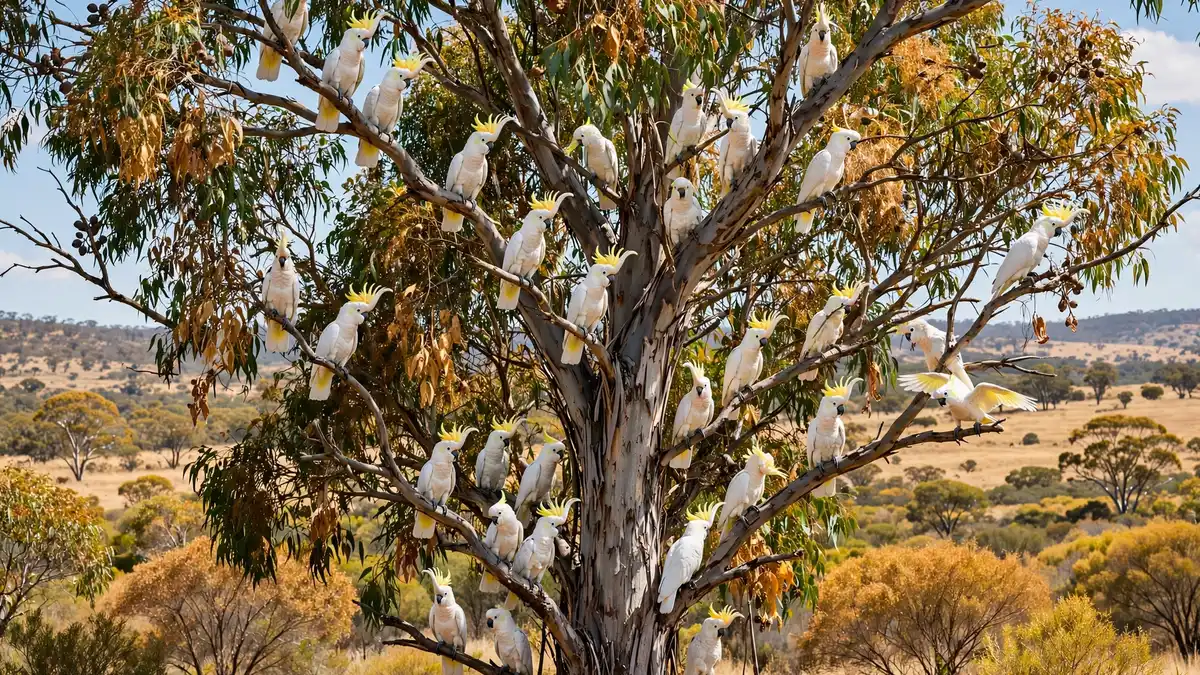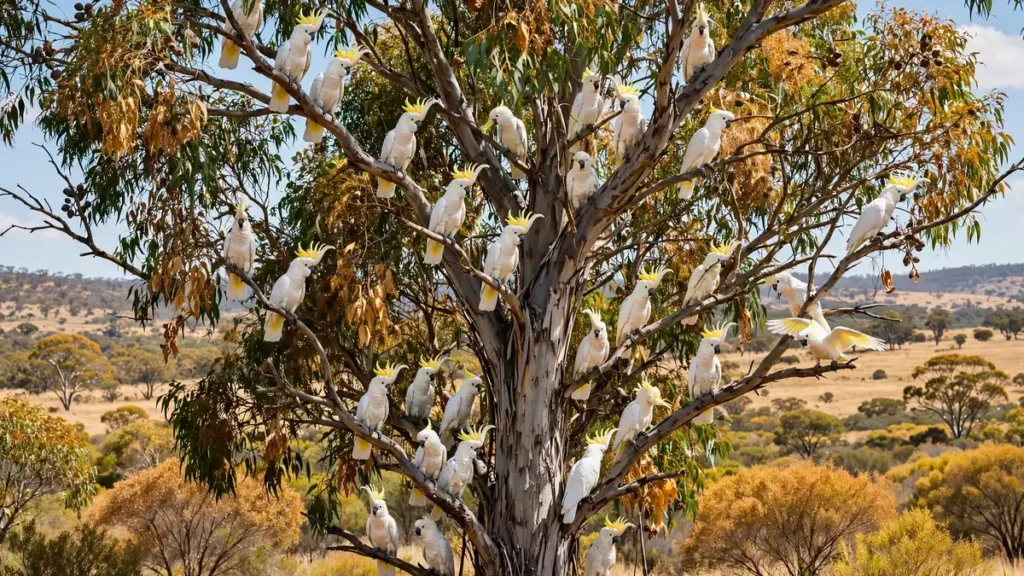
The cockatoo species number 22, a family of crested parrots called Cacatuidae, and they are the loud, clever and long-lived parrots of Australia and the islands around it, from the familiar white sulphur-crested cockatoo to the black palm cockatoo of New Guinea. If you are asking how many cockatoo species there are, the answer is 22: there are 22 recognised cockatoo species in the world, and every cockatoo alive today belongs to one of them.
The cockatoo lives across Australia, New Guinea, Indonesia, the Philippines and the Solomon Islands, in forests, woodland, savanna and city parks, where it gathers in noisy flocks that can be heard long before they are seen. It is one of the most recognisable parrots in the world, a bird with a movable crest, a powerful beak, and a memory that can last for decades.
Key takeaways
- There are 22 cockatoo species in the family Cacatuidae, in seven genera.
- Cockatoos range from the cockatiel at about 30 centimetres to the palm cockatoo at about 60 centimetres long.
- Cockatoos eat mostly seeds, nuts, fruit, roots and flowers, with some insect larvae.
- Cockatoos nest in tree hollows, and both parents share the incubation of one to three eggs.
- Large cockatoos can live 40 to 60 years in the wild and more than 80 years in captivity.
What makes a cockatoo a cockatoo
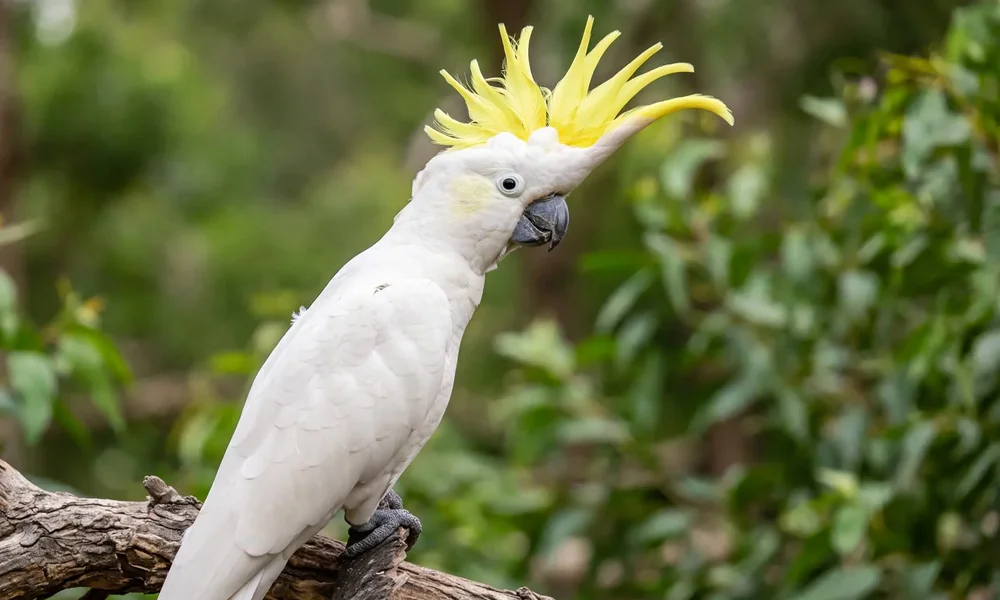
A cockatoo is a medium to large parrot with a movable crest of feathers that it can raise and lower, a strong curved beak, and zygodactyl feet, with two toes facing forward and two facing back, and it measures about 30 to 60 centimetres long and usually weighs between 300 grammes and 1.2 kilogrammes. The crest sets it apart from every other parrot: it rises when the bird is alarmed or excited, and falls flat when the bird is calm.
The cockatoo is also set apart by three features no other parrot shares. It has a gall bladder, which other parrots do not have, it produces a fine powder down that keeps its feathers waterproof and coats everything around it, and it has no green or blue in its plumage, because it lacks the feather structure that makes those colours, so cockatoos are white, grey, black, pink or yellow, and never green. Like blue jays, the cockatoo is a clever and social bird, but it is far louder and longer-lived, and it can learn to copy words and open latches.
The cockatoo species and their relatives
There are 22 cockatoo species. They belong to the family Cacatuidae and fall into seven genera, from the white cockatoos of the genus Cacatua to the black cockatoos, the gang-gang cockatoo, the galah and the cockatiel. The cockatiel is the smallest cockatoo of all, a slim grey bird that many people keep as a pet without ever knowing it is a cockatoo at all.
The sulphur-crested cockatoo is the most familiar of the family, a white bird with a yellow crest that lives across eastern and northern Australia, while the palm cockatoo is the largest, a black bird with red cheek patches that lives in New Guinea and the far north of Queensland. The yellow-crested cockatoo is the most threatened, listed as Critically Endangered after years of trapping for the pet trade, and the Major Mitchell’s cockatoo, pink and white with a red and yellow crest, is one of the most beautiful birds in Australia.
| Type | Animal | Where it lives | Best-known food | Length or Weight |
|---|---|---|---|---|
| Group | Cockatoos (family Cacatuidae) | Australia, New Guinea, Indonesia and nearby islands | Seeds, nuts and fruit | 30 to 60 cm long, 300 g to 1.2 kg |
| Species | Sulphur-crested cockatoo | Eastern and northern Australia, New Guinea | Seeds, nuts, fruit and roots | About 45 to 50 cm long, 800 g to 1 kg |
| Species | Palm cockatoo | New Guinea and far north Queensland | Hard nuts, seeds and fruit | About 55 to 60 cm long, about 1 kg |
| Species | Major Mitchell’s cockatoo | Dry inland Australia | Seeds, fruit and roots | About 35 to 40 cm long, 300 to 400 g |
| Species | Yellow-crested cockatoo | Indonesia and East Timor | Seeds, nuts, fruit and berries | About 33 cm long, about 300 g |
| Species | Galah | Across Australia | Seeds, grain and grass | About 35 cm long, 300 to 400 g |
| Species | Cockatiel | Inland Australia | Seeds and grass | About 30 cm long, 80 to 100 g |
How cockatoos live
Cockatoos are creatures of the flock and the treetops. A cockatoo lives in noisy flocks that feed, roost and travel together, and some flocks hold hundreds of birds, with sulphur-crested cockatoos gathering in huge screaming flocks at dawn and dusk. The cockatoo is a strong flier, but it spends much of its day perched or on foot, climbing through the branches with its beak and feet.
Seeds and nuts make up most of the diet, along with fruit, roots, flowers and buds, and a cockatoo eats by holding its food in one foot and biting it open with its beak. It feeds mostly in the morning and late afternoon, when the flocks come down to feed on grass seed and fallen fruit.
Breeding is a long and careful season, and the pair nests in a hollow in an old tree, often lined with wood chips the pair chews from inside the cavity, and the female lays one to three eggs in the hollow. Both parents take turns sitting on the eggs for about 20 to 30 days, and the chicks stay in the nest for six to fifteen weeks, depending on the species, before they fledge. The young birds then stay with their parents for months, learning where food is and how to open it.
Cockatoos are among the cleverest of all birds: a Goffin’s cockatoo can make and use simple tools, and a sulphur-crested cockatoo can learn to open bins and latches. This cleverness is also why cockatoos are among the most often surrendered pet birds, because a bird that lives for 60 years and screams at dawn needs far more time and company than most owners expect.
Where cockatoos live
The cockatoo lives across Australia, New Guinea, Indonesia, the Philippines and the Solomon Islands, and nowhere else in the wild, with the greatest number of species in Australia itself. It lives in forests, woodland, savanna and farmland, and it has taken well to city life, with sulphur-crested cockatoos now common in the parks of Sydney, Melbourne and Brisbane.
Old trees and open feeding ground are the key requirements. A cockatoo needs a hollow in an old tree for nesting, and returns to the same hollow year after year, so when the old trees are cut down the birds struggle to raise their chicks. The galah lives across the whole of Australia, while the palm cockatoo lives only in the rainforests of New Guinea and the far north of Queensland.
Cockatoos face very different fortunes from species to species. The sulphur-crested cockatoo and the galah are common and widespread, but the yellow-crested cockatoo is listed as Critically Endangered, after years of trapping for the pet trade emptied its island forests, and the palm cockatoo is listed as Vulnerable. The main pressures are the loss of old nesting trees and trapping for the pet trade, though most wild trade is now restricted by international law.
Best seasons for cockatoo watching
There is no closed season, because cockatoos are active all year, but the best months are often March to May and September to November, when the flocks are feeding on the ground and the birds are easy to find in open country. In the dry season the flocks gather in large numbers at waterholes, so a visit then shows the cockatoo at its noisiest and most social.
Staying safe around cockatoos
A cockatoo is a wild animal with a powerful beak and a loud voice, and it can give a painful bite to a person who comes too close, though cockatoos almost never attack people. A cornered cockatoo may bite hard enough to break skin. Keep your distance, never handle a wild cockatoo, and never feed one by hand, because a bird that learns to take food from people may become bold and bite.
Cockatoo watching checklist
A little preparation turns a visit to the Australian bush into a real chance of seeing a cockatoo.
- Sun protection and a hat, for standing in open country under the Australian sun.
- Binoculars, because the flocks are large and the birds are best watched from a distance.
- A camera with a zoom lens, for the raised crest and the powerful beak without getting close.
- A visit to a eucalyptus woodland at dawn, when the flocks are loudest and easiest to find.
- A plan to be out in the morning, when the cockatoos are most active and feeding on the ground.
- Patience and silence, because cockatoos are wary birds and a noisy group will send them away.
- A field guide to Australian birds, for telling a sulphur-crested cockatoo from a yellow-crested cockatoo at a glance.
Frequently asked questions
How many cockatoo species are there?
There are 22 cockatoo species in the family Cacatuidae, in seven genera. They live across Australia, New Guinea, Indonesia, the Philippines and the Solomon Islands, from the cockatiel at about 30 centimetres to the palm cockatoo at about 60 centimetres.
Why do cockatoos raise their crests?
Cockatoos raise their crests when they are alarmed or excited, and lower them when they are calm. The crest is a signal to other cockatoos, and a bird with its crest raised is telling the flock that something has caught its attention, whether it is a predator, a rival, or a new source of food.
What do cockatoos eat?
Cockatoos eat mostly seeds and nuts, along with fruit, roots, flowers and buds, and some insect larvae dug out of wood. They hold food in one foot and bite it open with their strong curved beak, spending hours each day chewing bark and digging seeds out of cones and pods.
Can cockatoos talk?
Yes, many cockatoos can learn to copy human words and sounds, and some learn dozens of words. They are among the best mimics of all parrots, but they copy sounds without knowing what the words mean, and their natural call is a loud harsh scream that carries a long way.
How is this guide different from the chinstrap penguin species guide?
This guide covers the 22 cockatoo species, a family of crested parrots that live in the trees of Australia and nearby islands and eat seeds and nuts, while our chinstrap penguin species guide covers the single chinstrap penguin species, a flightless seabird that lives on the Antarctic Peninsula and eats almost nothing but krill. The cockatoo flies and climbs and can live for more than 80 years, and the chinstrap penguin swims and lives for about 15 to 20 years.
Are cockatoos endangered?
It depends on the species. The sulphur-crested cockatoo and the galah are common, but the yellow-crested cockatoo is Critically Endangered and the palm cockatoo is Vulnerable. The loss of old nesting trees and trapping for the pet trade are the main threats.
Conclusion
The cockatoo species show how much character one family of birds can hold: 22 species of crested parrot, with a movable crest and a powerful beak, living between the treetops of Australia and the feeding grounds below.
If you go looking for one, go to a eucalyptus woodland at dawn, go quietly, and go with patience. Watch one raise its yellow crest and scream across the treetops and you will understand why keeping its old nesting trees standing matters most.