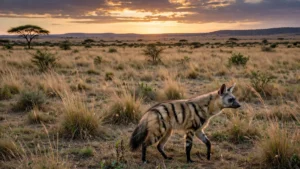
Fox species include the red fox of Europe and North America, the Arctic fox of the far north, the fennec fox of the Sahara, and nine more true foxes, plus close kin like the grey fox. If you are wondering how many fox species there are, the short answer is this: there are 12 true fox species in the genus Vulpes, and a handful of other canids called foxes, ranging from desert dunes to Arctic tundra.
This guide covers the best-known fox species, how they hunt, how they raise kits, and where to see them.
Key takeaways
- There are 12 true fox species in the genus Vulpes, from the red fox to the fennec fox.
- The red fox has the widest range of any land carnivore.
- The Arctic fox turns white in winter and brown in summer.
- The fennec fox is the smallest canid, with ears up to 15 centimetres long.
- Foxes hunt mainly by hearing, and they can hear a mouse moving under snow.
What is a fox?
A fox is a small to medium-sized canid, a member of the dog family, with a pointed muzzle, large upright ears and a long, bushy tail. True foxes belong to the genus Vulpes, which holds 12 species. A few other canids are also called foxes, including the grey fox and the bat-eared fox, but they belong to different genera.
The red fox: the most widespread fox
The red fox is the largest and most widespread fox species. It lives across North America, Europe, Asia and North Africa, and it was introduced to Australia in the 1800s. No other land carnivore has a wider range. Red foxes weigh 5 to 7 kilograms, with a reddish coat, a white-tipped bushy tail, black legs and black-backed ears.
Red foxes live in woods, farmland, moorland, mountains and towns. They eat voles, mice, rabbits, birds, insects, fruit and carrion, changing their diet with the seasons. In winter they hunt voles under the snow, and in autumn they cache food for later.
The Arctic fox: white in winter, brown in summer
The Arctic fox lives further north than any other land mammal, across the tundra of Alaska, Canada, Greenland, Iceland, Scandinavia and Russia. It is a small fox, weighing 3 to 4 kilograms. Arctic foxes can survive temperatures of minus 50 degrees Celsius.
Arctic foxes change colour with the seasons. In winter their coat is white, so they blend into the snow, and in summer it turns brown or grey. Their main food is lemmings, and their numbers rise and fall with the lemming population. When lemmings are scarce, they follow polar bears and scavenge from seal kills.
Fennec foxes and the desert foxes
The fennec fox is the smallest canid in the world, weighing only 1 to 1.5 kilograms. It lives in the Sahara and the deserts of North Africa, and it is unmistakable: a tiny, sandy fox with ears up to 15 centimetres long. Its ears hear insects and small rodents moving underground, and they lose heat.
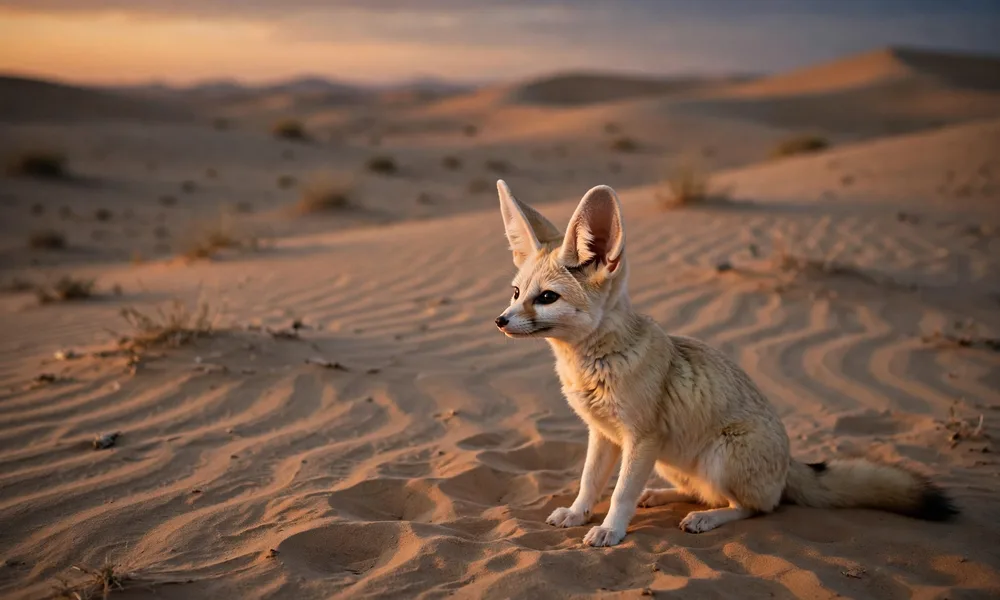
Fennec foxes are nocturnal, resting in burrows during the heat of the day and hunting at night. They eat insects, lizards, small rodents, eggs and fruit, and they need almost no drinking water, getting most of their moisture from their food. Their thick, sandy fur keeps them warm on cold desert nights, and their furry paws protect their feet from hot sand.
Other desert foxes live in the dry lands of Africa and Asia. Rüppell’s fox lives in the deserts of North Africa and the Middle East, and the pale fox lives in the Sahel, south of the Sahara. Blanford’s fox lives in rocky deserts and mountains. Like the desert animals that share their home, desert foxes save water and hunt at night.
Corsac, kit, swift and the steppe foxes
The corsac fox lives on the steppes and semi-deserts of Central Asia, from Kazakhstan to Mongolia. It is a pale, sandy fox with a thick winter coat, and it is nomadic, moving across the steppe as food becomes scarce. Corsac foxes often shelter in the burrows of marmots and ground squirrels.
The kit fox and the swift fox are the small foxes of North America. The kit fox lives in the deserts of the south-western United States and Mexico. The swift fox lives on the prairies of the central United States and Canada, weighs 2 to 3 kilograms, and can run at 60 kilometres per hour.
Other true foxes are less well known. The Cape fox lives in southern Africa, the Bengal fox in India, and the Tibetan sand fox on the high plateau of Tibet, above 4,000 metres. The Tibetan sand fox hunts pikas, the small rabbit-like animals of the high plateau.
Grey foxes, bat-eared foxes and close kin
The grey fox is the most unusual fox in the Americas. It is the only canid that regularly climbs trees, using its strong, curved claws to climb trunks and branches. Grey foxes live across North and Central America, in woods and rocky country. They have a grizzled grey coat and a black-tipped tail.
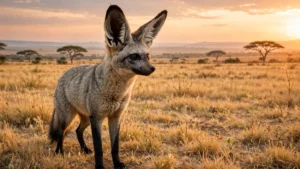
The bat-eared fox lives on the savannas of eastern and southern Africa. It has huge ears, like the fennec, but it uses them mainly for hearing termites, its main food. Bat-eared foxes eat harvester termites, which they find by listening for them underground.
The crab-eating fox of South America is another close kin. It lives in grasslands and forests from Colombia to Argentina, and it eats crabs, small mammals, birds, insects and fruit. Despite its name, crabs are only a small part of its diet in most places.
How foxes hunt
Foxes hunt mainly by hearing. A red fox can hear a mouse moving under snow from several metres away, and it can pinpoint the sound well enough to pounce on the exact spot. The fox leaps high into the air, front paws first, and dives nose-first through the snow to catch its prey.
Research suggests that red foxes may also use the Earth’s magnetic field when they hunt. In a study of foxes pouncing on prey hidden under snow, the foxes were most successful when they jumped towards the north-east. The idea is still debated.
Like the predators of other habitats, foxes are patient hunters. They stalk, pause, listen, and then strike. They also cache food, burying surplus prey and returning to it later, and a fox remembers where it has buried food. Foxes are not strong enough to take large prey, so they focus on small animals.
Dens, kits and family life
Foxes raise their young in dens, which are often old badger setts or rabbit burrows that the vixen has enlarged. The vixen gives birth in spring, usually to four to six kits. The kits are born blind and helpless, and they stay in the den for the first four weeks.
The kits emerge from the den at about four weeks old, and they spend the summer playing outside the den, learning to hunt and to fight. The dog fox brings food to the den, and the vixen teaches the kits to hunt. By autumn, the kits leave the den and find territories of their own.
Where to see foxes
Red foxes are the easiest foxes to see, and they live across Europe, North America and Asia. In Britain, they are common in woods, farmland and towns, and they are often seen at dawn and dusk. Look along field edges, woodland rides and quiet lanes.
Arctic foxes are best seen on the tundra of Iceland, Svalbard and northern Scandinavia. Fennec foxes are best seen on a night drive in the Sahara, in Morocco or Tunisia. Grey foxes are best seen in the woods of the southern United States, and bat-eared foxes on the savannas of Kenya and Tanzania. Like the urban animals of towns and cities, town foxes are easiest to see at night, in gardens and parks.
| Species | Where it lives | Size | Best-known fact |
|---|---|---|---|
| Red fox | North America, Europe, Asia, North Africa | 5 to 7 kg | Widest range of any land carnivore |
| Arctic fox | Arctic tundra | 3 to 4 kg | Turns white in winter |
| Fennec fox | Sahara and North Africa | 1 to 1.5 kg | Smallest canid; ears to 15 cm |
| Grey fox | North and Central America | 3 to 5 kg | Only canid that climbs trees |
| Corsac fox | Steppes of Central Asia | 2 to 4 kg | Nomadic; shelters in burrows |
| Bat-eared fox | Savannas of Africa | 3 to 5 kg | Eats a million termites a year |
Living with foxes
Foxes and people have lived side by side for centuries. Foxes take chickens and game birds, dig in gardens and raid bins, yet they also eat rats, mice and rabbits. The best way to live with foxes is to secure bins, protect poultry and leave them alone. Foxes face their own threats: sarcoptic mange can kill them, road traffic kills many young foxes, the fennec fox is caught for the pet trade, and the Arctic fox is losing ground to the red fox as the north warms.
Fox species checklist
- Learn the 12 true foxes of Vulpes; grey and bat-eared foxes are close kin.
- Watch red foxes at dawn or dusk along field edges and quiet lanes.
- Look for Arctic foxes on the tundra of Iceland or Svalbard in summer.
- Listen for a red fox pouncing on voles under snow.
- Never feed a fox: fed foxes lose their fear of people.
- Secure bins and poultry, and give every fox space.
Frequently asked questions
How many fox species are there?
There are 12 true fox species in the genus Vulpes, from the red fox to the fennec fox. Other canids called foxes, like the grey fox and the bat-eared fox, belong to different genera.
How is this guide different from the urban animals guide?
This guide covers foxes worldwide, all species, from the Arctic fox of the tundra to the fennec fox of the Sahara. The urban animals guide covers all the animals that live in towns and cities.
How is this guide different from the predator animals guide?
The predator animals guide covers hunters of many kinds, from wolves to eagles. This guide is a species-level guide to foxes only, covering every fox species and where to see it.
Can foxes really hear mice under snow?
Yes. A red fox can hear a mouse moving under snow from several metres away, and it can pinpoint the sound well enough to pounce on the exact spot.
Do foxes climb trees?
Grey foxes do. The grey fox is the only canid that regularly climbs trees, using its strong, curved claws. Red foxes and other true foxes do not climb.
Are foxes dangerous to people?
Foxes are shy of people and they are not dangerous, though they can carry rabies and mange, so never touch a fox. A fox that seems tame or unafraid may be ill, and it should be left alone.
Conclusion
Fox species range from the red fox of Europe and North America to the Arctic fox of the far north, and from the fennec fox of the Sahara to the bat-eared fox of the African savanna. Each has its own home and coat, but all share the same design: a small, sharp-eared hunter with a bushy tail.
Next, pick one species and one place — red foxes at dawn on a field edge, Arctic foxes on the tundra of Iceland, or fennec foxes on a night drive in the Sahara — and watch them quietly, at dawn or dusk, when foxes are at their best.