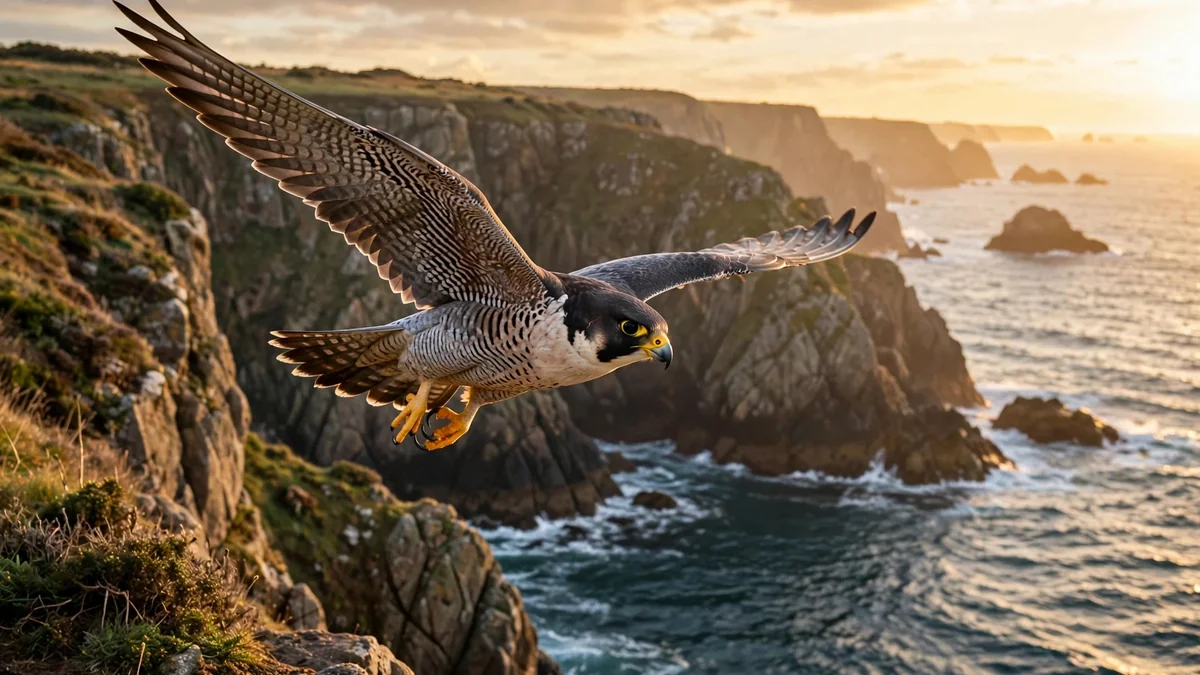
Falcon species are the fastest birds on Earth, from the peregrine falcon that stoops at more than 300 kilometres per hour to the kestrel that hovers over a roadside verge and the merlin that chases small birds across the moors. If you are wondering which falcon species exist and what makes a falcon different from other birds of prey, the short answer is this: falcons are compact, long-winged hunters with hooked beaks and a notched “tooth” on the upper beak, and they catch their prey on the wing with breathtaking speed and precision.
Key takeaways
- Falcon species are fast, compact birds of prey that hunt mostly in flight, catching birds, bats and insects on the wing.
- The peregrine, kestrel, merlin, gyrfalcon, saker, lanner, hobby and prairie falcon are the best-known species.
- The peregrine falcon is the fastest animal in the world, stooping at more than 300 kilometres per hour.
- Falcons have a “tomial tooth” on the upper beak, a small notch used to kill prey, which eagles and hawks lack.
- Open country, coasts, cliffs and city skylines are the best places to see falcons, at dawn and dusk when their prey is active.
What makes a falcon a falcon
A falcon is a bird of prey with long, pointed wings, a short hooked beak and a compact, muscular body built for speed. Unlike eagles and hawks, which have broad, fingered wings for soaring, falcons have stiff, scythe-shaped wings that let them fly fast and manoeuvre sharply in the air. Their tails are long and narrow, and they flap quickly in short bursts between glides.
The most distinctive feature of a falcon is its beak. The upper beak carries a small projection called the tomial tooth, which fits into a notch in the lower beak. Falcons use this tooth to sever the neck of their prey, killing it with a bite rather than with their feet, as eagles and hawks do.
All falcon species belong to the genus Falco, which holds around 40 species worldwide. They live on every continent except Antarctica, from Arctic tundra to tropical forest, and from remote cliffs to the centres of great cities. Most falcons are medium-sized birds, smaller than eagles, and in nearly every species the female is noticeably larger than the male.
The great falcons of the world
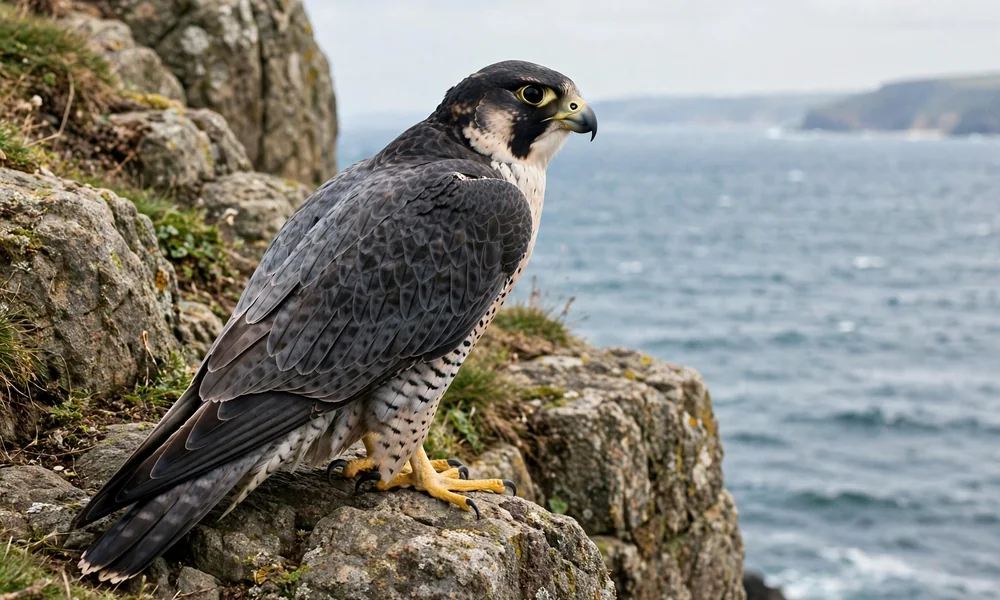
The peregrine falcon is the most famous falcon species of all, and the fastest animal on Earth. It lives on every continent except Antarctica, from Arctic cliffs to city towers, and it hunts other birds in the air, striking them in a stoop that can reach more than 300 kilometres per hour. The peregrine is slate-grey above and pale below with dark barring, and it has a dark “moustache” stripe below each eye. Once driven to the edge of extinction by pesticides, it has recovered in many countries and now nests on cathedrals, office towers and bridges in cities around the world.
The common kestrel is the falcon most people see first. It is a small chestnut-brown falcon with a grey head and a long tail, famous for hovering over fields and roadside verges, its wings beating hard and its tail fanned, watching for voles and mice below. Kestrels live across Europe, Asia and Africa, and they are common in open farmland, heathland and city parks.
The merlin is a small, fast falcon of the northern moors and coasts. It is barely larger than a blackbird, dark and compact, and it chases small birds in a low, twisting flight that follows every turn of its prey. Merlins live across the northern parts of Europe, Asia and North America, hunting skylarks, pipits and waders over moorland, marsh and shore.
The gyrfalcon is the largest falcon species in the world, a powerful bird of the Arctic tundra and the far north. It is bigger and heavier than the peregrine, with broader wings, and it comes in several colours, from dark grey-brown to nearly white in the far north. Gyrfalcons hunt ptarmigan, grouse and seabirds across the tundra, and they are among the rarest and most sought-after falcons for birdwatchers to see.
The saker falcon is a large falcon of the steppes and open grasslands of Central Asia and Eastern Europe, a brown bird with a pale head that hunts ground squirrels, birds and small mammals. The lanner falcon is a similar bird of Africa and the Mediterranean, hunting birds and bats in open country. The hobby is a small, swift falcon that catches dragonflies and swallows in the air over wetlands and heathland, and the prairie falcon is a pale falcon of the deserts and canyons of western North America.
Speed and hunting: how falcons catch their prey
Falcons hunt in the air, and speed is their weapon. The peregrine stoops from great height, folding its wings and dropping on its prey at more than 300 kilometres per hour, striking with its feet and killing with a bite from its beak. The impact alone can stun or kill a bird as large as a pigeon. A special cone of bone inside the peregrine’s nostrils slows the rush of air at high speed, so the bird can still breathe during the dive.
Other falcons hunt differently. The kestrel hovers over the ground, watching for voles and mice, and the merlin chases small birds in a twisting, low pursuit. The hobby catches dragonflies and swallows in the air, plucking them from the sky with its feet, and the gyrfalcon hunts ptarmigan with long, powerful chases across the tundra. Among the predators of the bird world, falcons are unusual in catching almost all of their food in flight.
Falcons have extraordinary eyesight, several times sharper than ours, and they can spot a bird from more than a kilometre away. Their eyes face forward, giving them the depth perception needed to judge a dive, and they see ultraviolet light, which helps them track the urine trails of voles across a field.
Where falcons live
Falcons live in almost every habitat on Earth. Peregrines nest on cliffs and tall buildings, from the sea cliffs of the north to the skyscrapers of New York and London. Kestrels live in open farmland and grassland, and merlins hunt over moorland and marsh. Gyrfalcons live in the Arctic tundra, where few other birds of prey can survive the winter, and prairie falcons live in the deserts and canyons of western North America.
Many falcon species migrate. Northern populations of peregrines and merlins travel thousands of kilometres to warmer countries for the winter, and hobbies fly from Europe to Africa and back each year. The mountain animals of the high ridges include the peregrine at the top of the food chain, and the urban animals of the city skyline include the peregrine too, nesting on towers where it hunts pigeons and starlings.
Falcons and people
People have kept and trained falcons for thousands of years. Falconry, the art of hunting with trained birds of prey, is one of the oldest forms of hunting in the world, practised for more than 4,000 years in the Middle East and Asia. Peregrines, gyrfalcons and sakers are the most prized falconry birds, and the tradition is still alive in many countries today.
The peregrine’s recovery is one of the great conservation stories. By the 1960s, the pesticide DDT had thinned the shells of peregrine eggs so badly that the birds were close to extinction in many countries. After DDT was banned and captive breeding programmes released thousands of young birds, peregrines returned to cliffs and cities across Europe and North America. The saker falcon, by contrast, is still under pressure in parts of its range, from the loss of grassland and from trapping for falconry.
| Species | Where it lives | Best-known prey | Wingspan |
|---|---|---|---|
| Peregrine falcon | Worldwide, except Antarctica | Pigeons, ducks, starlings | 1.2 metres |
| Common kestrel | Europe, Asia, Africa | Voles, mice, insects | 0.8 metres |
| Merlin | Northern Europe, Asia, North America | Skylarks, pipits, waders | 0.6 metres |
| Gyrfalcon | Arctic tundra of the far north | Ptarmigan, grouse, seabirds | 1.5 metres |
| Saker falcon | Steppes of Central Asia and Eastern Europe | Ground squirrels, birds | 1.3 metres |
| Lanner falcon | Africa and the Mediterranean | Birds, bats | 1.1 metres |
| Hobby | Europe, Asia, Africa | Dragonflies, swallows | 0.8 metres |
| Prairie falcon | Deserts and canyons of western North America | Ground squirrels, small birds | 1.1 metres |
Best seasons for falcon watching
Spring and autumn are the finest seasons for falcons, when migrating birds are on the move and falcons gather at coastal headlands and mountain passes to follow them. In spring, peregrines are displaying over their territories and feeding young at the nest, and hobbies return from Africa to hunt dragonflies over the wetlands.
Winter is the best season for merlins on the coast, when they hunt waders and skylarks over the marshes.
Staying safe around falcons
Falcons are wild animals, and they deserve respect. Never approach a nest, never use a drone near a cliff where falcons are breeding, and never leave food or rubbish where wild animals can reach it. Watch with binoculars or a telescope rather than walking closer: a disturbed falcon may abandon its nest, so the best view is always the distant one.
Falcon watching checklist
- Watch the cliffs and tall buildings at dawn for peregrines.
- Look over fields and roadside verges for kestrels hovering.
- Scan the moors and marshes in winter for merlins chasing small birds.
- Watch the wetlands at dusk in summer for hobbies catching dragonflies.
- Never approach a nest, never use a drone near a breeding cliff, and always watch with binoculars.
- Leave no trace: take your rubbish home and keep to marked paths.
Frequently asked questions
What is the fastest falcon species?
The peregrine falcon is the fastest falcon species, and the fastest animal in the world, stooping at more than 300 kilometres per hour. The gyrfalcon is the largest falcon species, but it is not as fast in a dive as the peregrine.
How is this guide different from the eagle species guide?
This guide covers falcons, which are compact, long-winged hunters that kill with a bite from their notched beak and catch most of their prey in the air. The eagle species guide covers eagles, which are much larger birds with broad wings and huge talons that kill with their feet, hunting by soaring over mountains, rivers and savannas.
How many falcon species are there?
There are around 40 falcon species in the genus Falco, living on every continent except Antarctica. The best-known are the peregrine, kestrel, merlin, gyrfalcon, saker, lanner, hobby and prairie falcon.
Do falcons mate for life?
Many falcon species pair for life, and a pair will return to the same cliff or nest site year after year. Peregrines in particular are known for their loyalty to a single nesting ledge, sometimes for many years.
What do kestrels eat?
Kestrels eat mostly voles and mice, along with small birds, insects and earthworms. They hunt by hovering over fields and roadside verges, watching for movement below, then dropping in a short dive.
Where is the best place to see a peregrine falcon?
Peregrines are best on sea cliffs and tall city buildings at dawn, when they hunt pigeons and starlings. Many cities now have nest cameras on their peregrine pairs, and coastal headlands are excellent in spring and autumn migration.
Conclusion
Falcon species are the speedsters of the bird world: peregrines stooping at more than 300 kilometres per hour, kestrels hovering over the fields, merlins chasing small birds across the moors and gyrfalcons hunting ptarmigan in the Arctic.
The next step is to pick one species and one season — a spring morning on a sea cliff, a summer evening over the wetlands for hobbies, or a winter walk on the marshes for merlins — and plan your visit around it.