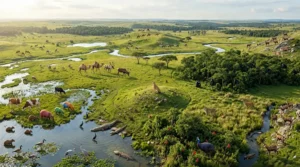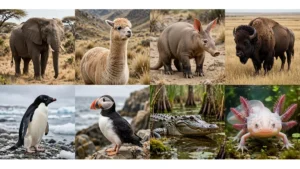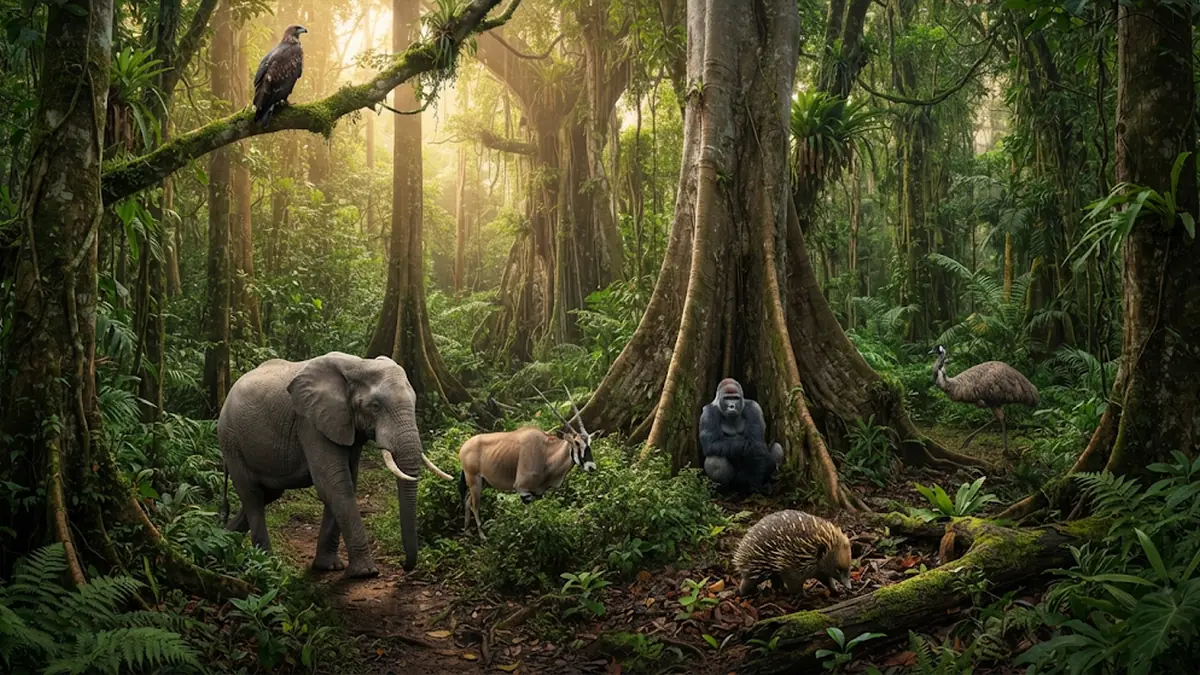
Animals that start with the letter E include some of the most recognizable creatures on Earth: the elephant, eagle, elk, emu, and emperor penguin. They also include stranger stars, such as the electric eel, the echidna, and the tiny Etruscan shrew. This guide covers well-known E animals, sorted into mammals, birds, reptiles, amphibians, fish, invertebrates, insects, prehistoric animals, and mythical creatures.
Each entry gives the scientific name, family, habitat, range, size, diet, lifespan, and conservation status. A short key fact follows. If you are working through the alphabet, you can also read our guides to animals that start with A, animals that start with B, and animals that start with C.
Many E names begin with a place or a direction, such as Eastern, Eurasian, and European. These words are clues. They tell you where an animal lives, and they help scientists tell it apart from close relatives elsewhere in the world.
Mammals That Start With E
Mammals are warm-blooded animals that feed their young milk. They belong to the larger group of vertebrates, animals with backbones. The E list stretches from the world’s largest land animal to one of its smallest mammals, and from the egg-laying echidna to the forest-roaming Eurasian lynx.
Echidna
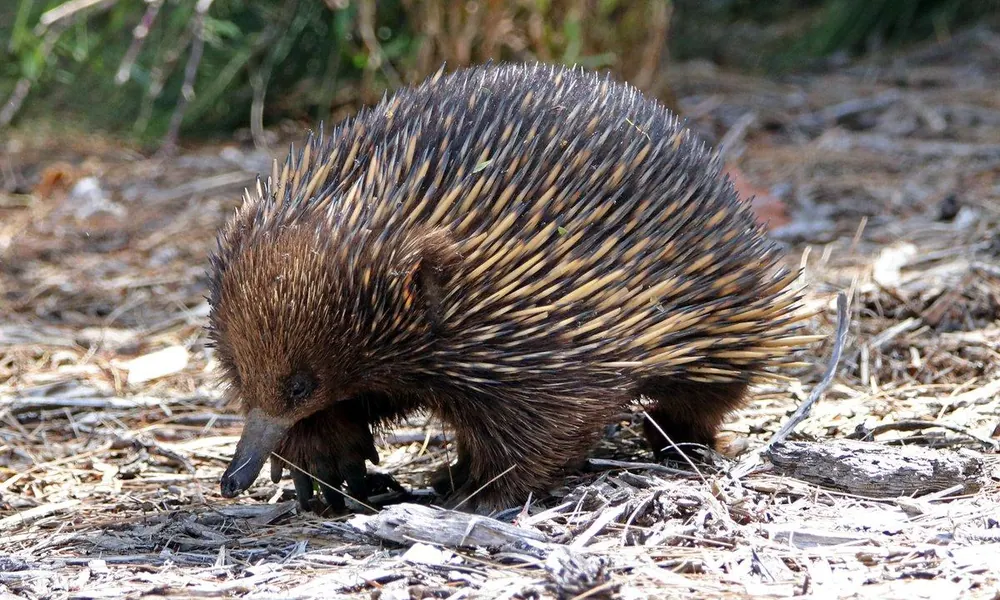
- Scientific Name: Tachyglossus aculeatus (short-beaked echidna example)
- Family: Tachyglossidae
- Habitat: Forests, woodlands, scrub, grasslands, and deserts
- Range: Australia and New Guinea, depending on species
- Size and Weight: About 30–45 cm long; roughly 2–7 kg for the short-beaked echidna
- Diet: Ants, termites, and other insects; long-beaked species also eat earthworms
- Lifespan: Roughly 14–16 years in the wild; longer in captivity
- Conservation Status: Varies by species; the short-beaked echidna is Least Concern, while long-beaked species face greater threats
- Key Fact: Echidnas are egg-laying mammals, one of only a few mammal groups that lay eggs instead of giving birth to live young.
Eland
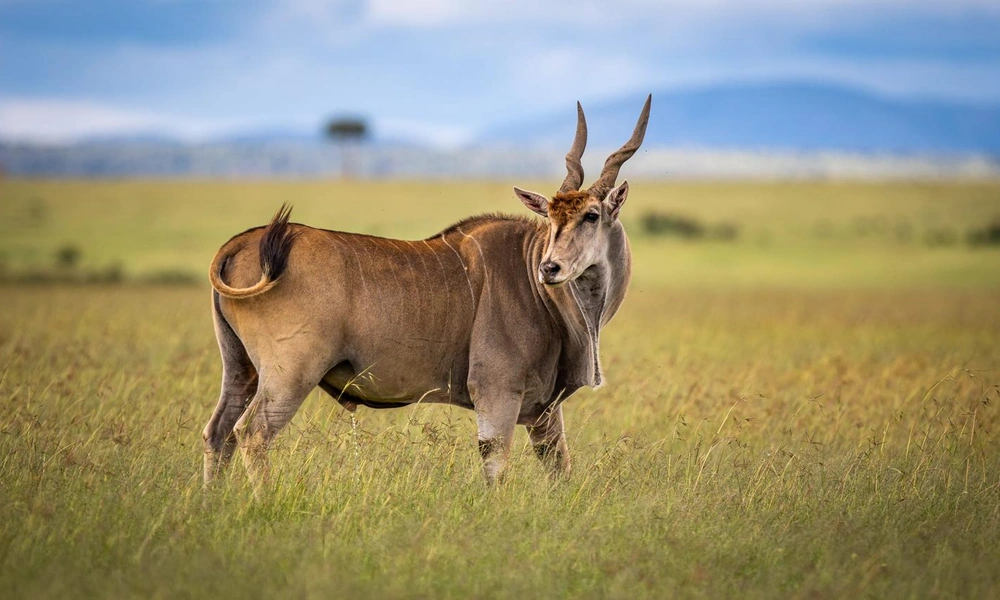
- Scientific Name: Taurotragus oryx (common eland example)
- Family: Bovidae
- Habitat: Savannas, grasslands, open woodland, and semi-desert
- Range: Eastern and southern Africa
- Size and Weight: About 1.3–1.8 m tall at the shoulder; roughly 300–900 kg
- Diet: Grasses, leaves, shrubs, herbs, and fruit
- Lifespan: About 15–20 years
- Conservation Status: Least Concern
- Key Fact: Elands are among the largest antelopes in the world and are surprisingly good jumpers for such heavy animals.
Elephant
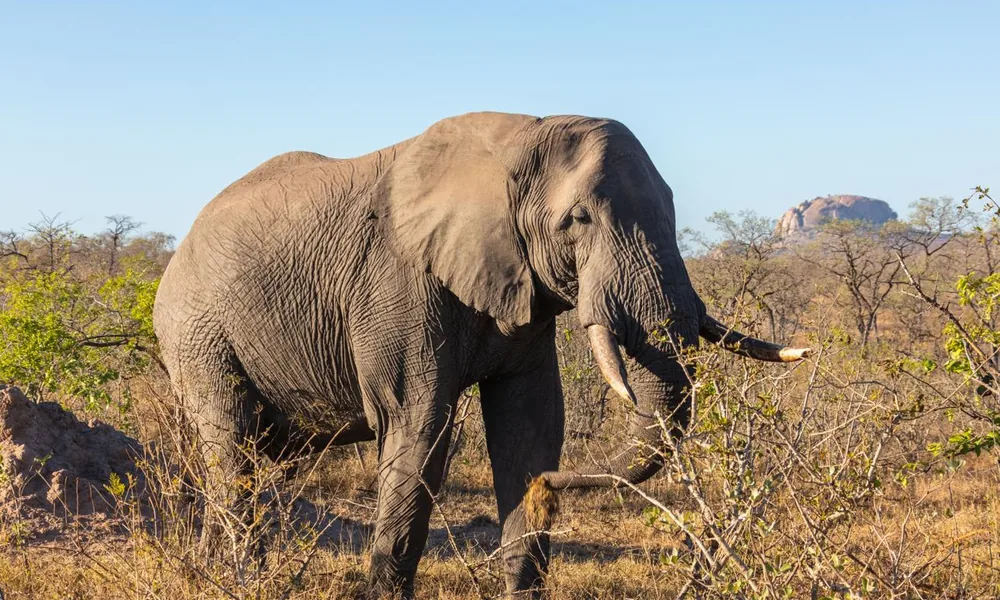
- Scientific Name: Elephantidae (Loxodonta africana, Loxodonta cyclotis, and Elephas maximus)
- Family: Elephantidae
- Habitat: Savannas, tropical forests, grasslands, and swamps
- Range: Sub-Saharan Africa and parts of South and Southeast Asia
- Size and Weight: About 2.5–4 m tall at the shoulder; roughly 2,700–6,000 kg, depending on species
- Diet: Grasses, leaves, bark, fruit, and roots
- Lifespan: About 60–70 years
- Conservation Status: The African bush elephant and Asian elephant are Endangered; the African forest elephant is Critically Endangered
- Key Fact: Elephants are the largest living land animals, and there are three living species: the African bush elephant, the African forest elephant, and the Asian elephant.
Elephant Seal
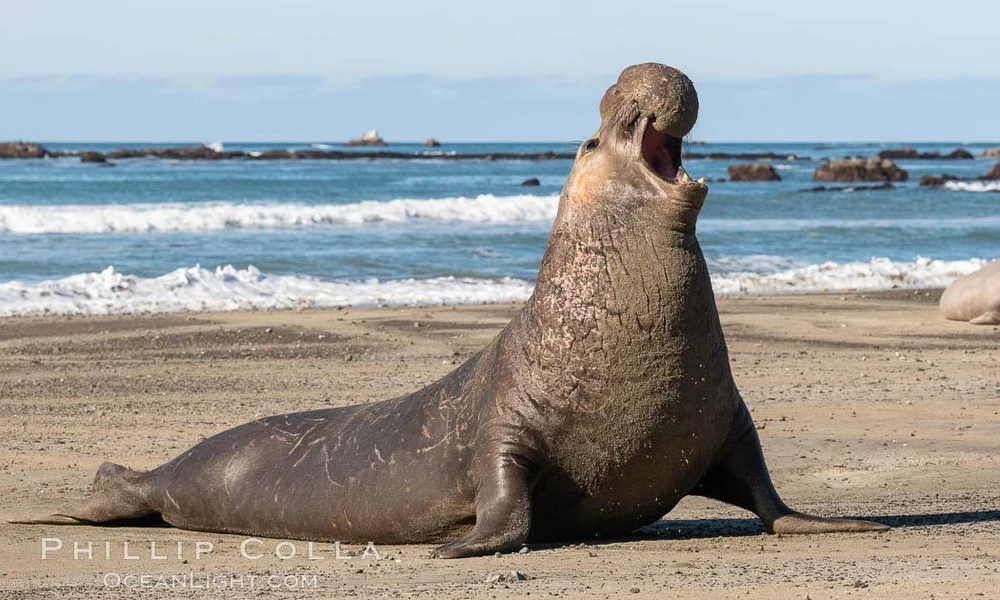
- Scientific Name: Mirounga spp.
- Family: Phocidae
- Habitat: Open ocean, coastal beaches, and islands
- Range: The northern species lives along the Pacific coast of North America; the southern species lives in the Southern Ocean and on sub-Antarctic islands
- Size and Weight: Males can reach about 4–6 m long and more than 2,000 kg, depending on species; females are much smaller
- Diet: Fish, squid, rays, and small sharks
- Lifespan: About 14–20 years, depending on sex and species
- Conservation Status: Least Concern
- Key Fact: Males are named for their large, trunk-like noses, and elephant seals can dive more than 1,000 m deep while hunting.
Elephant Shrew
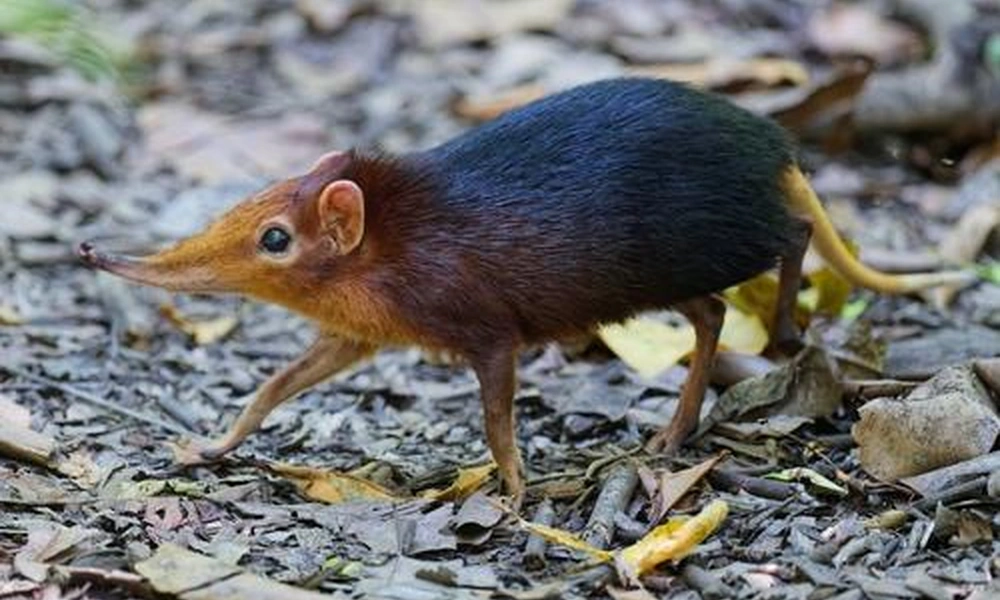
- Scientific Name: Macroscelididae (Elephantulus spp. are common examples)
- Family: Macroscelididae
- Habitat: Forests, savannas, scrubland, rocky areas, and deserts
- Range: Africa
- Size and Weight: About 10–30 cm long, plus a tail; roughly 25–700 g, depending on species
- Diet: Insects, worms, spiders, and some plant material
- Lifespan: Varies by species; often a few years in the wild
- Conservation Status: Varies by species; some are threatened
- Key Fact: Despite the name, elephant shrews are not true shrews. They are more closely related to elephants, and they are also known as sengis.
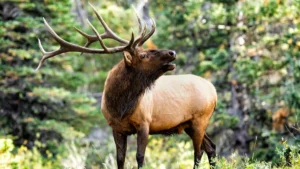
Elk
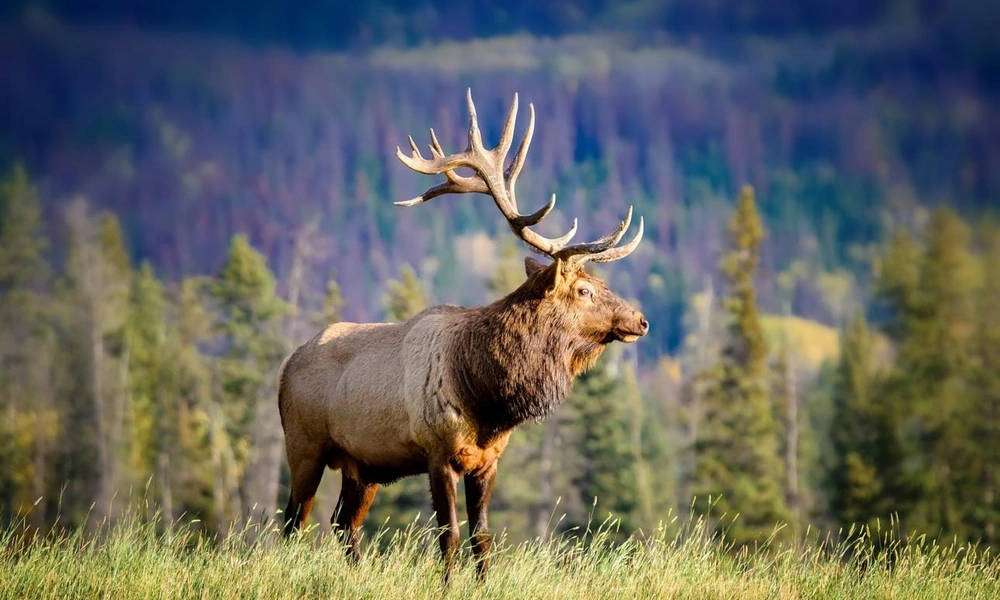
- Scientific Name: Cervus canadensis
- Family: Cervidae
- Habitat: Forests, meadows, grasslands, and mountain foothills
- Range: North America and parts of East Asia, with introduced populations elsewhere
- Size and Weight: About 1.6–2.7 m long; roughly 200–500 kg
- Diet: Grasses, plants, leaves, bark, and shrubs
- Lifespan: About 10–13 years in the wild
- Conservation Status: Least Concern
- Key Fact: Male elk grow large antlers each year and shed them every winter.
Ermine
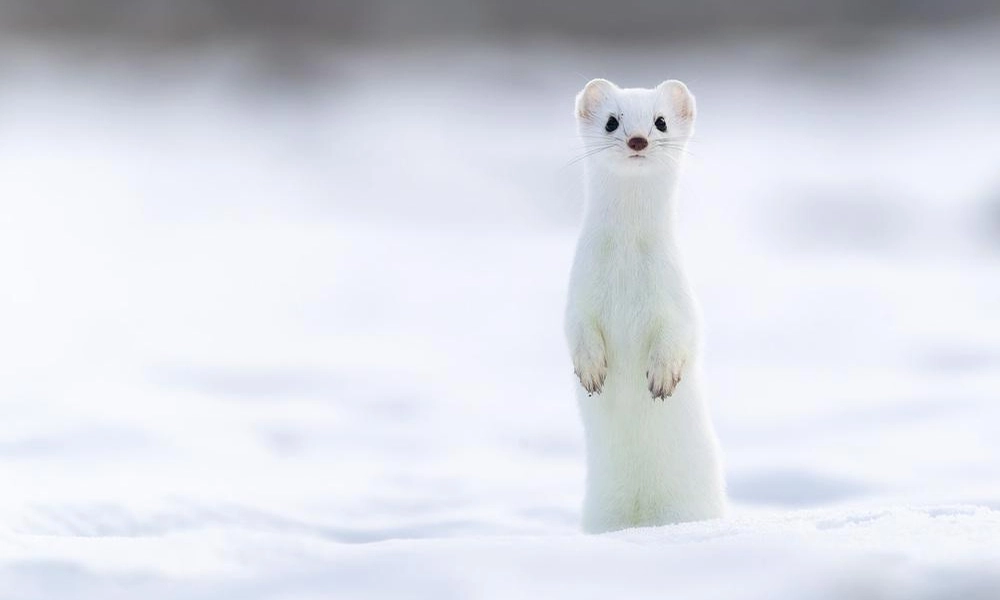
- Scientific Name: Mustela erminea
- Family: Mustelidae
- Habitat: Forests, grasslands, tundra, farmland, and wetlands
- Range: Eurasia and northern North America; introduced to New Zealand
- Size and Weight: About 17–33 cm long, plus a short tail; roughly 25–365 g, with males larger than females
- Diet: Voles, mice, rabbits, birds, and eggs
- Lifespan: Usually 1–3 years in the wild
- Conservation Status: Least Concern
- Key Fact: In cold regions, the ermine’s coat turns white in winter, keeping only a black tip on its tail. In summer it is brown, and it is also called a stoat.
Eastern Gorilla
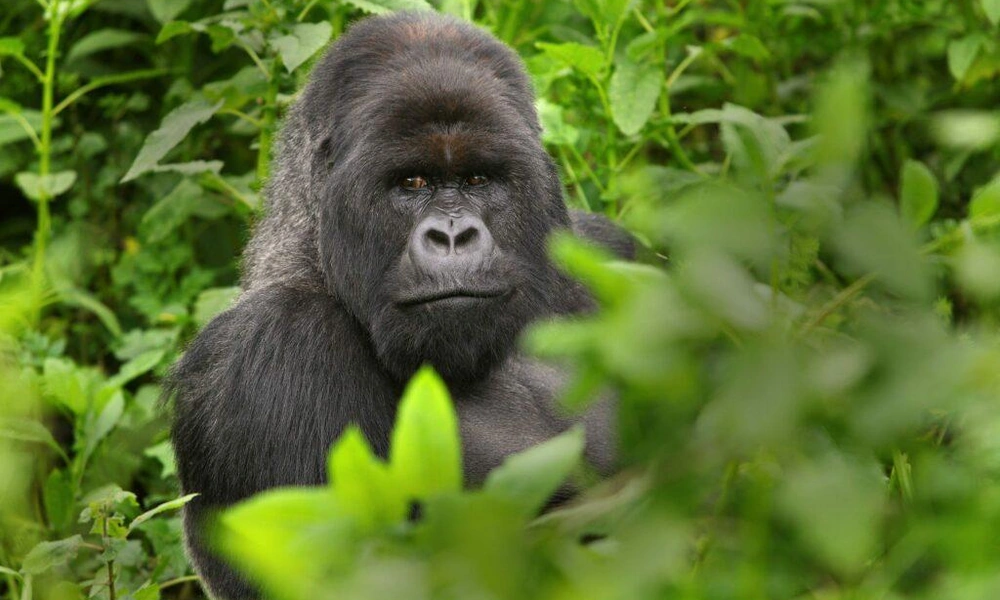
- Scientific Name: Gorilla beringei
- Family: Hominidae
- Habitat: Mountain and lowland tropical forests
- Range: Eastern Democratic Republic of the Congo, Rwanda, and Uganda
- Size and Weight: About 1.2–1.8 m tall; roughly 70–220 kg
- Diet: Leaves, stems, shoots, fruit, and bark
- Lifespan: About 35 years in the wild
- Conservation Status: Critically Endangered
- Key Fact: The eastern gorilla is the largest living primate, and illegal hunting and habitat loss threaten its survival.
Eastern Gray Squirrel
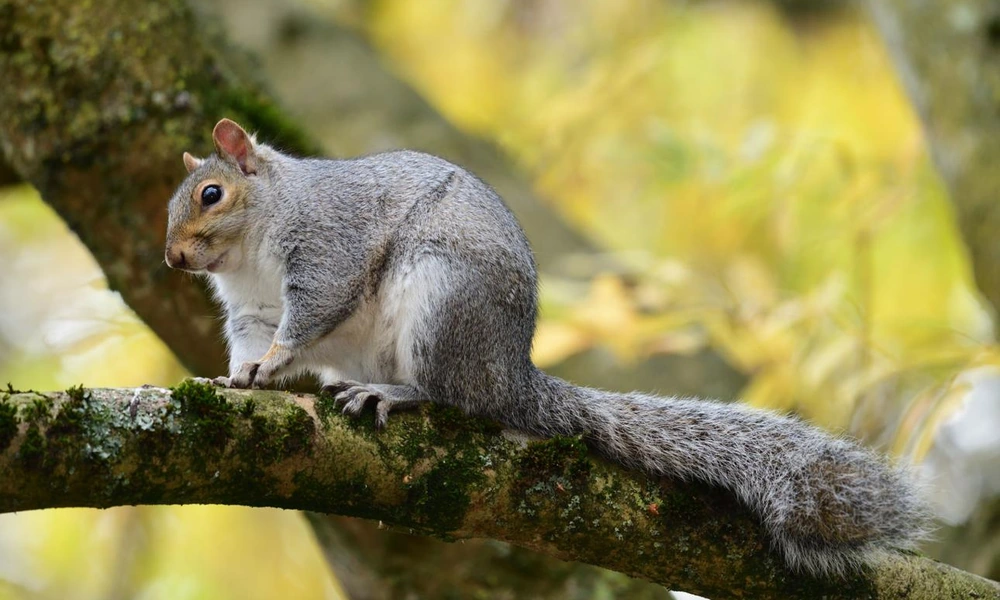
- Scientific Name: Sciurus carolinensis
- Family: Sciuridae
- Habitat: Deciduous and mixed forests, parks, and gardens
- Range: Eastern North America; introduced to the United Kingdom, Ireland, Italy, and South Africa
- Size and Weight: About 23–30 cm long, plus a 20–24 cm tail; roughly 400–700 g
- Diet: Nuts, seeds, acorns, fruit, buds, and fungi
- Lifespan: Around 6 years on average in the wild; some live longer
- Conservation Status: Least Concern
- Key Fact: Eastern gray squirrels bury thousands of nuts, and the ones they forget often grow into new trees, which makes them important forest planters.
Edible Dormouse
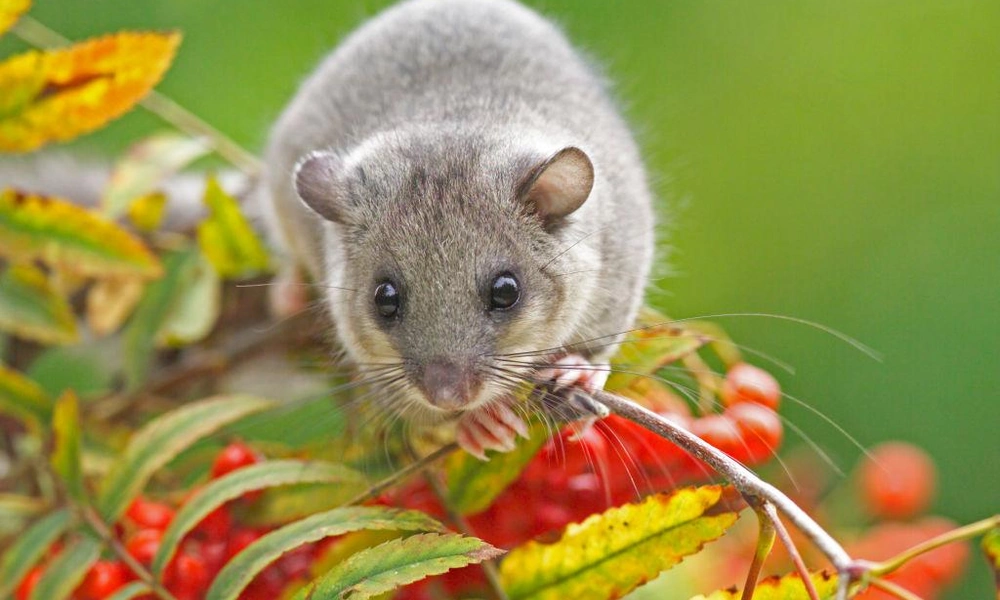
- Scientific Name: Glis glis
- Family: Gliridae
- Habitat: Deciduous and mixed forests, orchards, and gardens
- Range: Much of Europe and parts of western Asia
- Size and Weight: About 13–19 cm long, plus a bushy tail; roughly 70–200 g
- Diet: Seeds, nuts, fruit, buds, insects, and bird eggs
- Lifespan: About 9–12 years
- Conservation Status: Least Concern
- Key Fact: The edible dormouse gets its name from the ancient Romans, who ate it as a delicacy, and it hibernates for many months each year.
Egyptian Fruit Bat
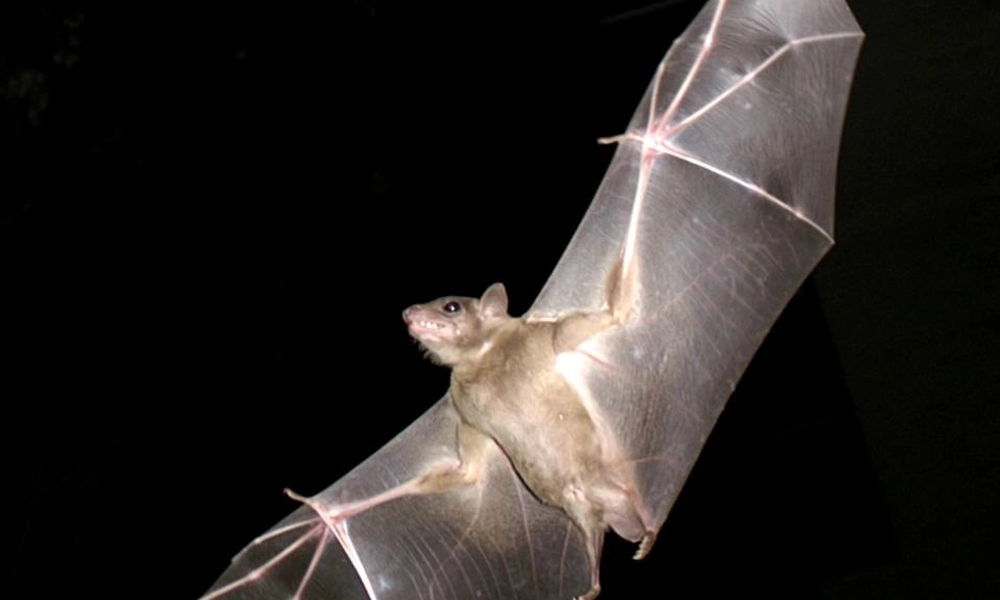
- Scientific Name: Rousettus aegyptiacus
- Family: Pteropodidae
- Habitat: Caves, rock crevices, old tombs, mines, and areas near fruit trees
- Range: Africa, the Middle East, and parts of southern Asia
- Size and Weight: About 14–19 cm long; wingspan about 60 cm; roughly 80–170 g
- Diet: Fruit and nectar
- Lifespan: Up to about 20 years
- Conservation Status: Least Concern
- Key Fact: The Egyptian fruit bat finds its way in the dark by making clicking sounds with its tongue, unlike most bats, which use their voice box.
Ethiopian Wolf
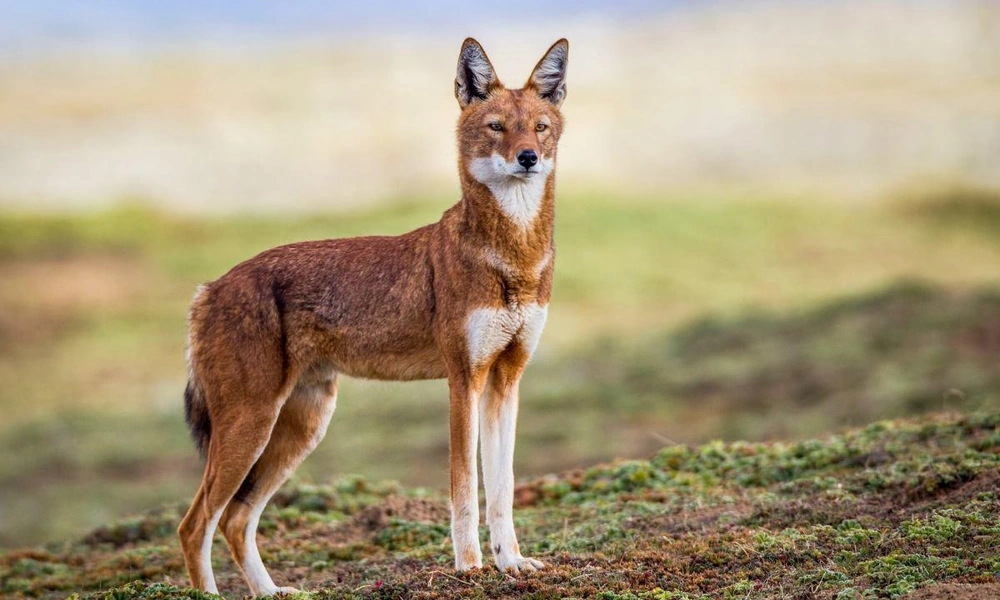
- Scientific Name: Canis simensis
- Family: Canidae
- Habitat: High-altitude grasslands and heathlands
- Range: Ethiopian Highlands
- Size and Weight: About 90–100 cm long; roughly 11–20 kg
- Diet: Mainly rodents, especially giant mole-rats and grass rats
- Lifespan: About 6–8 years in the wild
- Conservation Status: Endangered
- Key Fact: The Ethiopian wolf is one of the rarest canids in the world, and unlike most wolves, it hunts mostly small rodents. Compare it with other wolves in our wolf habitat guide.
Etruscan Shrew
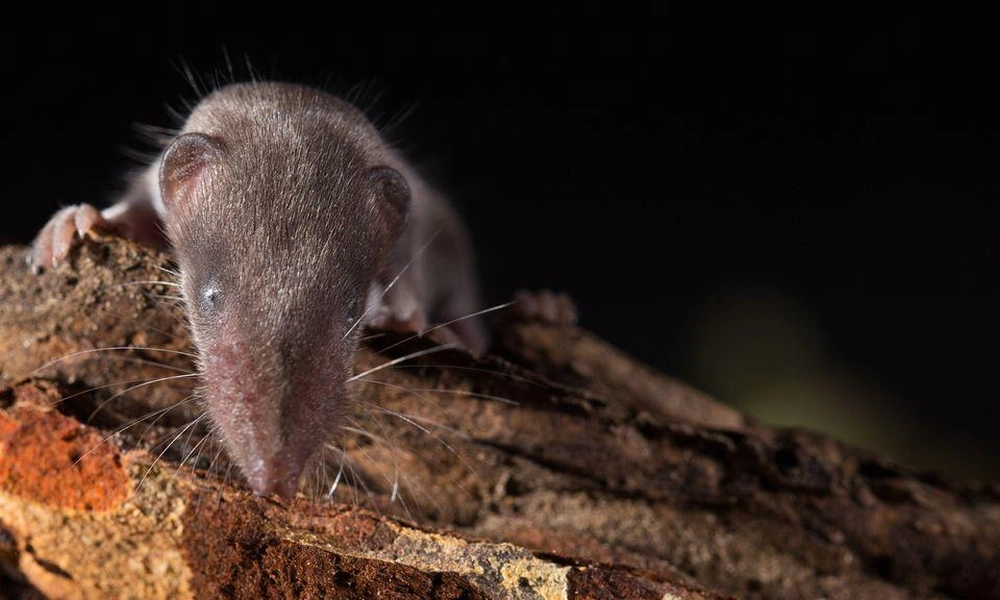
- Scientific Name: Suncus etruscus
- Family: Soricidae
- Habitat: Woodlands, scrub, olive groves, rocky hillsides, and gardens
- Range: The Mediterranean region, southern Europe, North Africa, and parts of Asia
- Size and Weight: About 3.5–5 cm long, plus a short tail; roughly 1.2–2.7 g
- Diet: Insects, spiders, and other small invertebrates
- Lifespan: About 2 years
- Conservation Status: Least Concern
- Key Fact: The Etruscan shrew is one of the smallest living mammals by mass, and it must eat often to fuel its tiny, fast-working body.
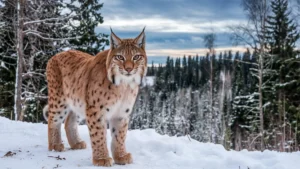
Eurasian Lynx
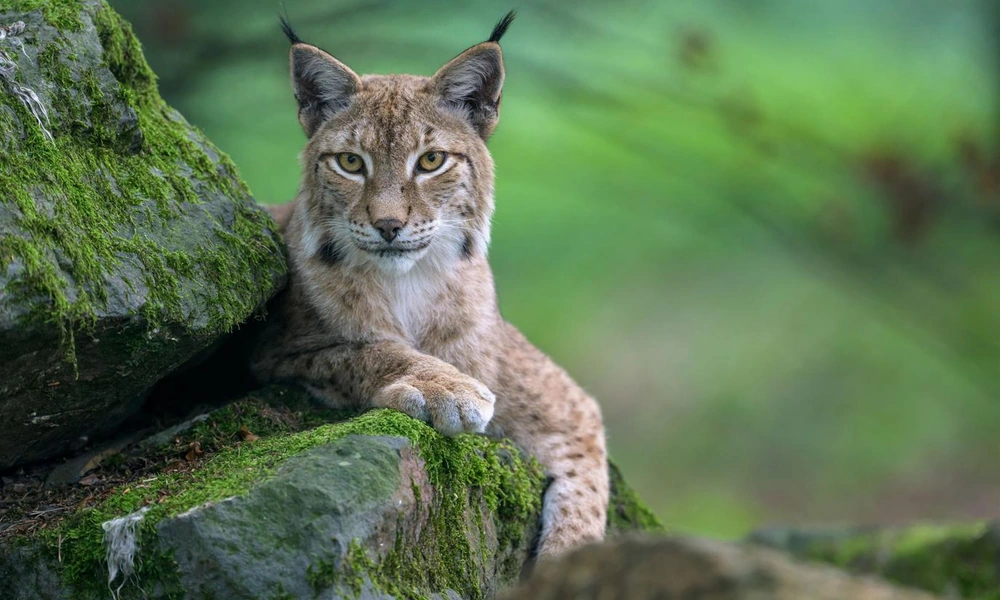
- Scientific Name: Lynx lynx
- Family: Felidae
- Habitat: Forests, rocky areas, mountains, and steppe
- Range: Europe, Russia, Central Asia, and East Asia
- Size and Weight: About 80–130 cm long; roughly 18–30 kg
- Diet: Roe deer, hares, small hoofed animals, rodents, and birds
- Lifespan: About 10–15 years in the wild
- Conservation Status: Least Concern
- Key Fact: The Eurasian lynx is the largest of the lynx species and Europe’s third-largest predator after the brown bear and the wolf.
European badgers
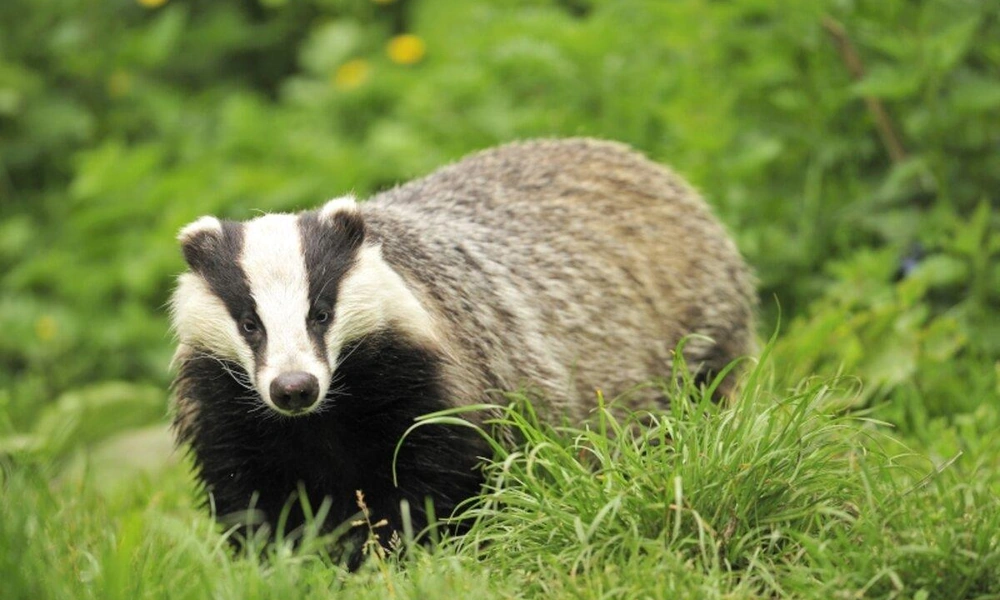
- Scientific Name: Meles meles
- Family: Mustelidae
- Habitat: Woodlands, farmland, hedgerows, and grassland
- Range: Most of Europe and parts of western Asia
- Size and Weight: About 60–90 cm long; roughly 7–17 kg
- Diet: Earthworms, insects, fruit, roots, and small mammals
- Lifespan: Usually several years in the wild; up to about 14 years in captivity
- Conservation Status: Least Concern
- Key Fact: European badgers live in underground burrow systems called setts, which can be used and expanded for many generations.
European Hare
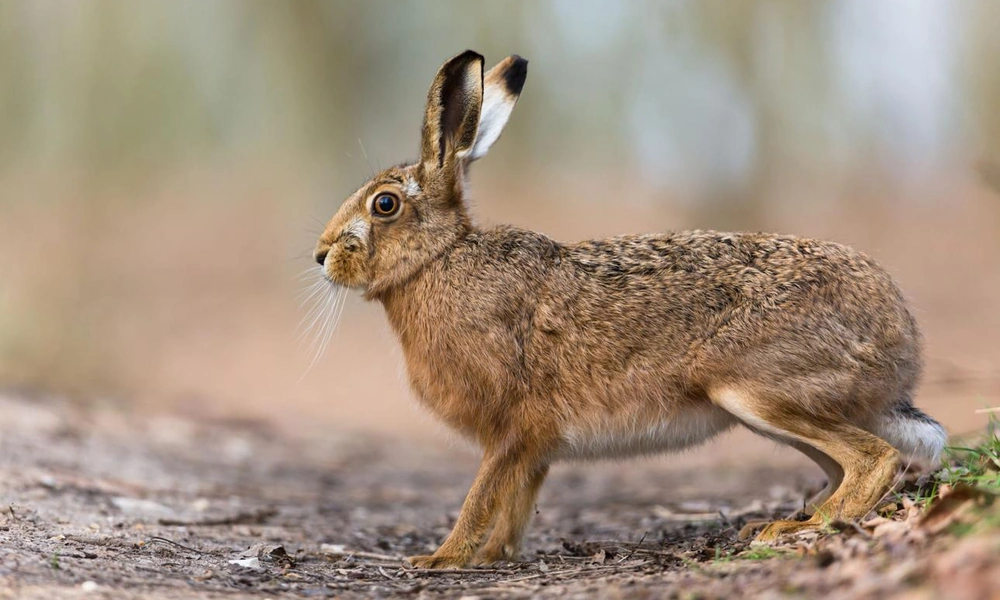
- Scientific Name: Lepus europaeus
- Family: Leporidae
- Habitat: Open farmland, grasslands, meadows, and woodland edges
- Range: Europe and parts of western Asia; introduced to other regions
- Size and Weight: About 60–75 cm long; roughly 3–6 kg
- Diet: Grasses, herbs, crops, twigs, and bark
- Lifespan: Usually 3–5 years in the wild
- Conservation Status: Least Concern
- Key Fact: Hares do not dig burrows, and their young are born furred and with open eyes. Learn how hares differ from rabbits in our rabbit habitat guide.
European Hedgehog
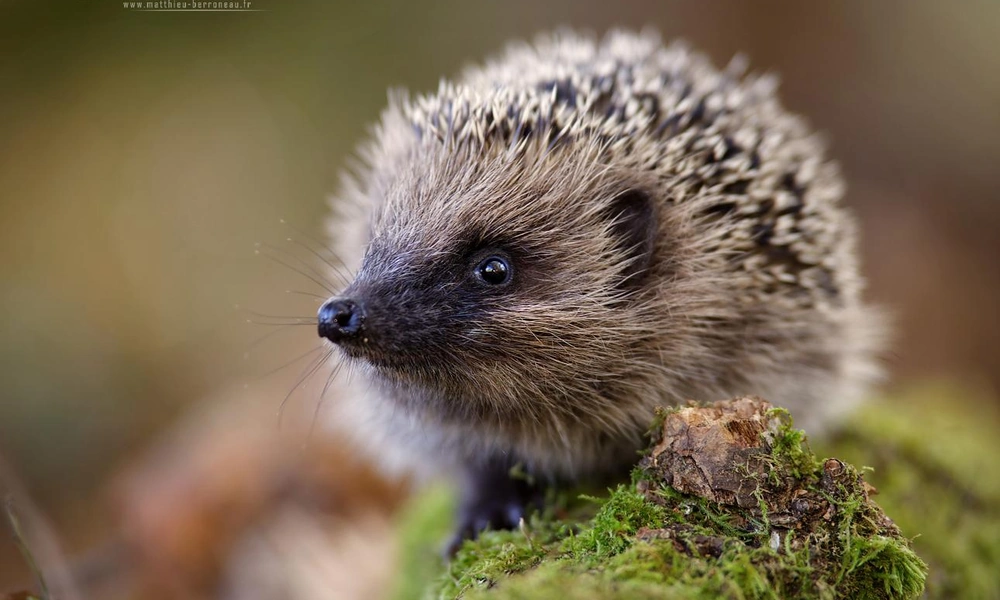
- Scientific Name: Erinaceus europaeus
- Family: Erinaceidae
- Habitat: Woodland edges, hedgerows, gardens, and grassland
- Range: Western, central, and northern Europe; introduced to New Zealand
- Size and Weight: About 20–30 cm long; roughly 400–1,200 g
- Diet: Insects, beetles, earthworms, slugs, and eggs
- Lifespan: About 2–5 years in the wild
- Conservation Status: Near Threatened
- Key Fact: When threatened, the European hedgehog curls into a tight ball covered in thousands of spines, and it hibernates through the winter.
European Mink
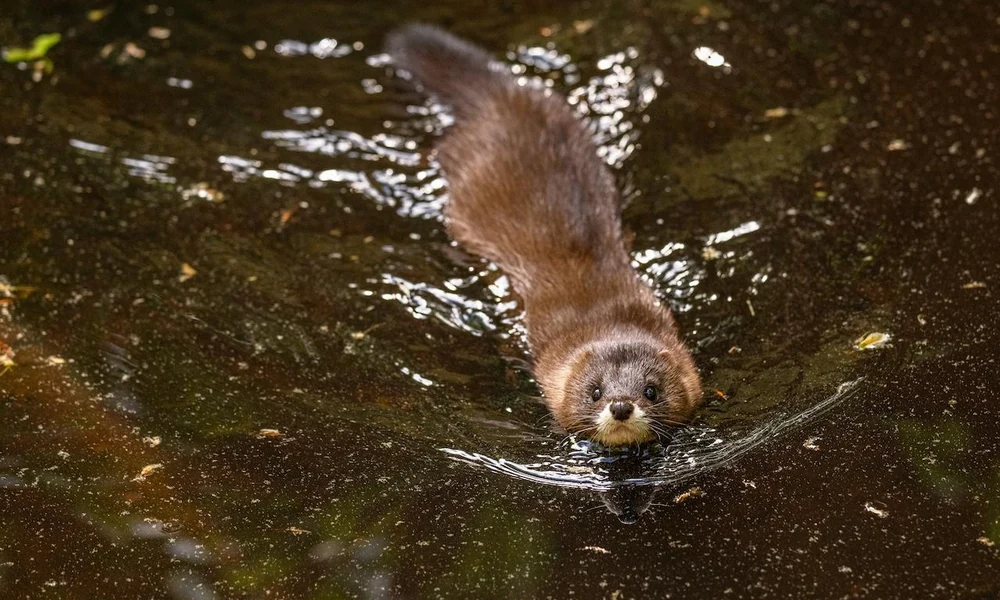
- Scientific Name: Mustela lutreola
- Family: Mustelidae
- Habitat: Freshwater wetlands, riverbanks, marshes, and dense vegetation near water
- Range: Small, scattered populations in parts of Europe, including France, Spain, Romania, and Russia
- Size and Weight: About 30–45 cm long; roughly 400–800 g
- Diet: Fish, amphibians, small mammals, birds, crayfish, and insects
- Lifespan: Roughly 4–6 years
- Conservation Status: Critically Endangered
- Key Fact: The European mink is one of Europe’s most endangered mammals, threatened by habitat loss and competition from the introduced American mink.
Birds That Start With E
Birds are feathered animals that lay eggs, and most can fly. The E list includes powerful hunters like the eagle, tiny songbirds like the European robin, and flightless giants like the emu and the emperor penguin. To compare birds of prey, see our hawk guide and our guide to owl types.
Eagle
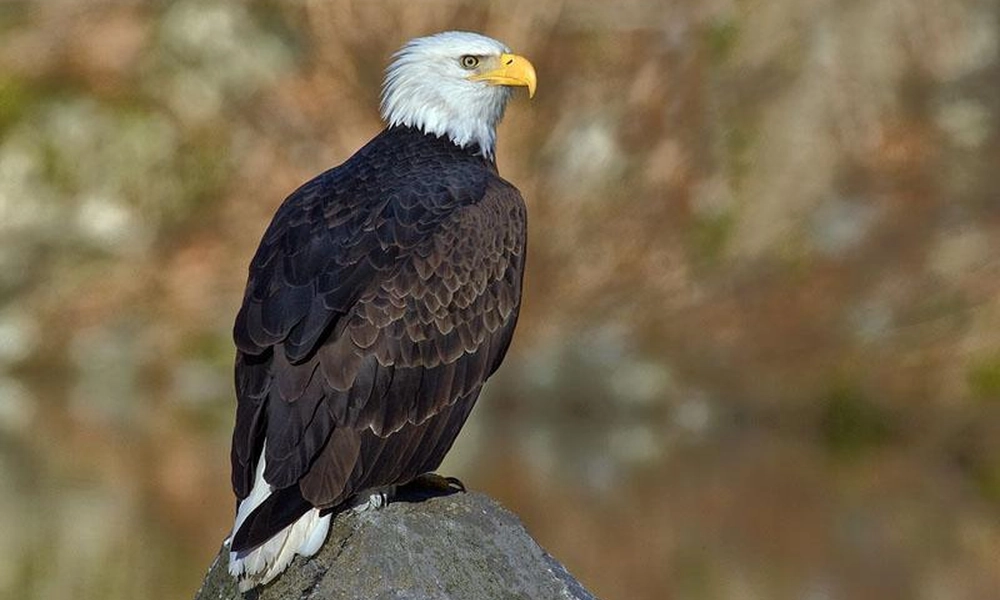
- Scientific Name: Accipitridae (eagle species)
- Family: Accipitridae
- Habitat: Mountains, forests, coasts, wetlands, and open land
- Range: Every continent except Antarctica
- Size and Weight: Varies greatly by species; about 45–105 cm long, with wingspans from about 1 m to more than 2 m
- Diet: Fish, mammals, birds, reptiles, and carrion
- Lifespan: Often 20–30 years
- Conservation Status: Varies by species
- Key Fact: Eagles have extremely sharp eyesight, which helps them spot prey from far away. Compare them with other raptors in our hawk guide.
Eastern Bluebird
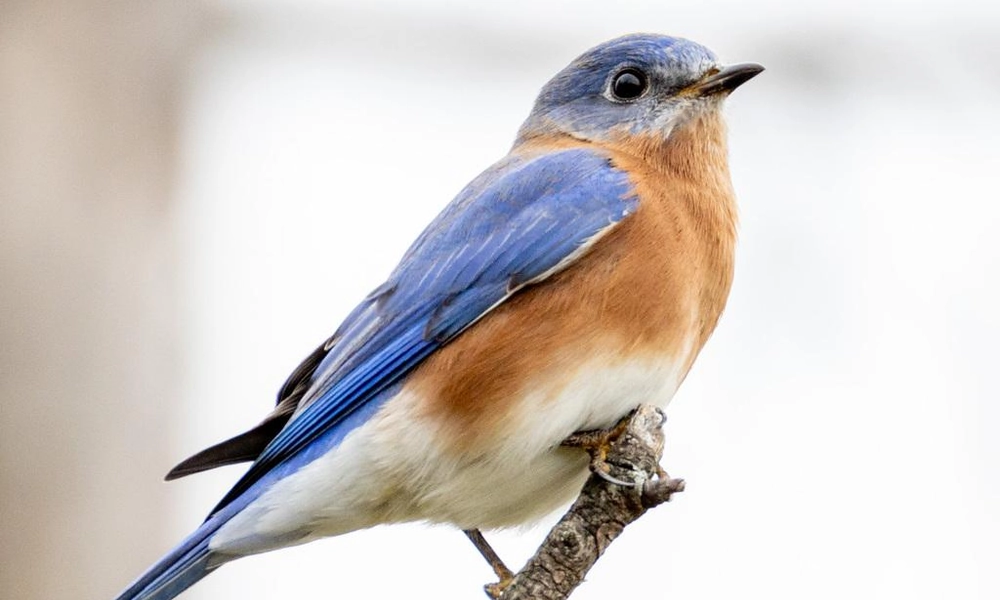
- Scientific Name: Sialia sialis
- Family: Turdidae
- Habitat: Open woodland, farmland, orchards, and meadows with scattered trees
- Range: Eastern North America, extending into Mexico and Central America
- Size and Weight: About 16–21 cm long; roughly 27–34 g
- Diet: Insects, berries, and fruit
- Lifespan: Often several years in the wild; some live up to about 10 years
- Conservation Status: Least Concern
- Key Fact: The male’s bright blue feathers make this small thrush a favorite of birdwatchers, and it readily nests in cavities and nest boxes.
Eastern Screech Owl
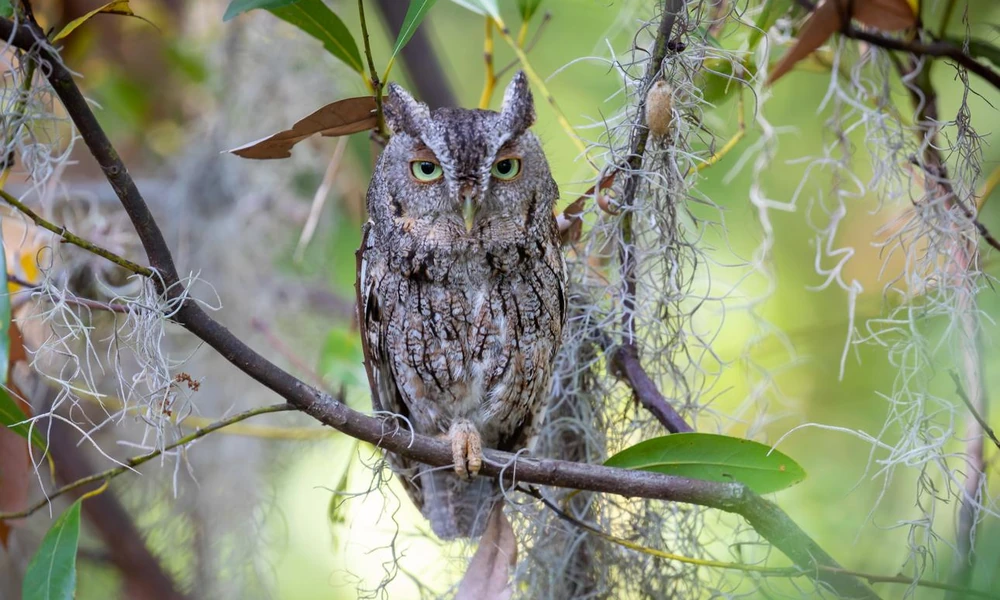
- Scientific Name: Megascops asio
- Family: Strigidae
- Habitat: Woodlands, suburbs, parks, and orchards
- Range: Eastern North America
- Size and Weight: About 16–25 cm long; roughly 120–250 g
- Diet: Insects, small mammals, birds, earthworms, and frogs
- Lifespan: Several years in the wild; some live into their teens
- Conservation Status: Least Concern
- Key Fact: Eastern screech owls come in two main color forms, red and gray, and they have adapted well to life near people. See more in our guide to owl types.
Egret
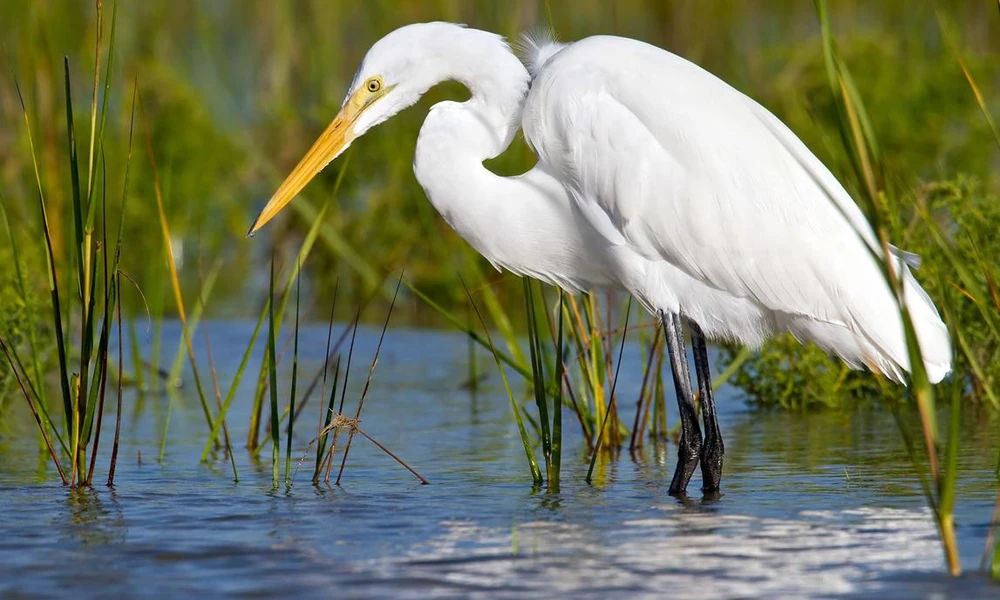
- Scientific Name: Ardea alba (great egret example)
- Family: Ardeidae
- Habitat: Wetlands, marshes, lake shores, tidal flats, and rice fields
- Range: Temperate and tropical regions worldwide, depending on species
- Size and Weight: About 80–105 cm long; roughly 0.7–1.5 kg for the great egret
- Diet: Fish, frogs, crustaceans, insects, and small reptiles
- Lifespan: Often about 15 years or more
- Conservation Status: Least Concern
- Key Fact: Egrets grow delicate plumes during the breeding season, and the hunt for those feathers in the past helped inspire early bird conservation efforts.
Egyptian Goose
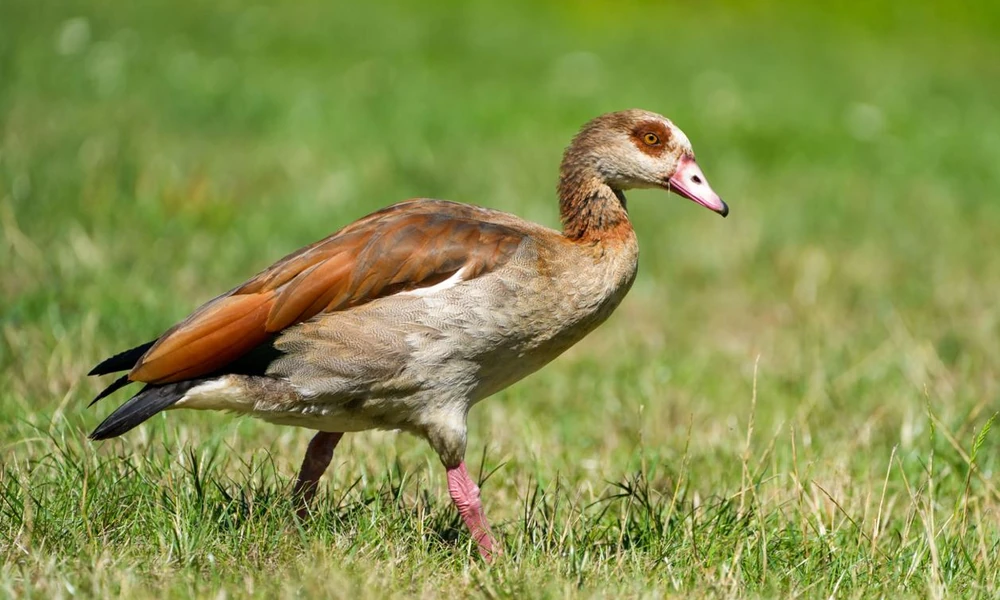
- Scientific Name: Alopochen aegyptiaca
- Family: Anatidae
- Habitat: Lakes, rivers, wetlands, grasslands, and parks
- Range: Native to Africa; introduced to parts of Europe and North America
- Size and Weight: About 63–73 cm long; roughly 1.5–2.5 kg
- Diet: Grasses, seeds, leaves, grain, and some insects
- Lifespan: Up to about 15 years
- Conservation Status: Least Concern
- Key Fact: The ancient Egyptians considered this goose sacred, and it appears in much of their art.
Egyptian Vulture
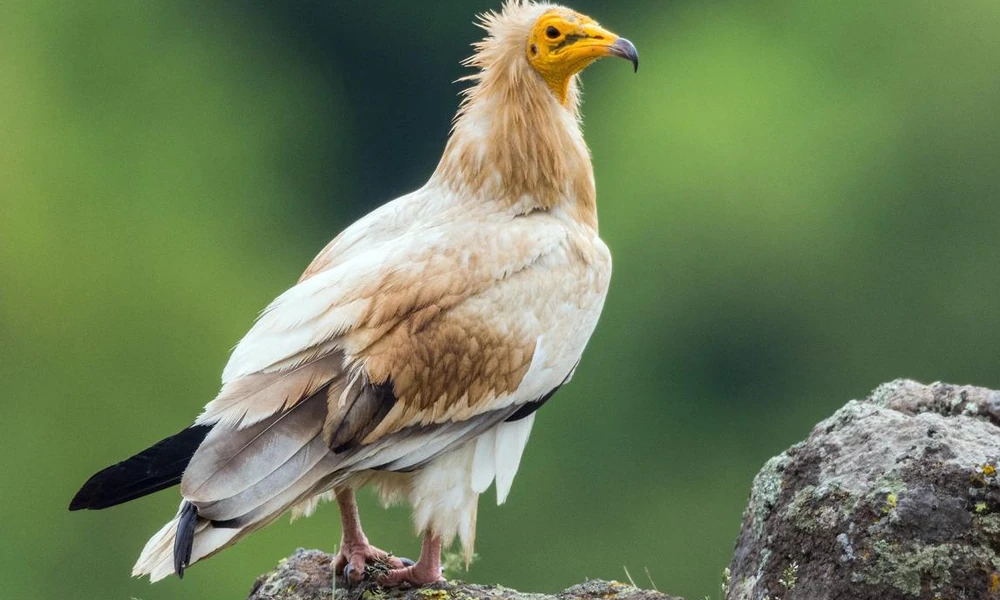
- Scientific Name: Neophron percnopterus
- Family: Accipitridae
- Habitat: Open country, cliffs, rocky hills, semi-desert, and areas near towns
- Range: Southern Europe, Africa, the Middle East, and South Asia
- Size and Weight: About 55–65 cm long; wingspan about 1.5–1.8 m; roughly 1.5–2.4 kg
- Diet: Carrion, eggs, insects, and scraps
- Lifespan: Up to about 30 years; longer in captivity
- Conservation Status: Endangered
- Key Fact: The Egyptian vulture is one of the few birds known to use tools, as it drops or throws stones to crack open eggs.
Eider
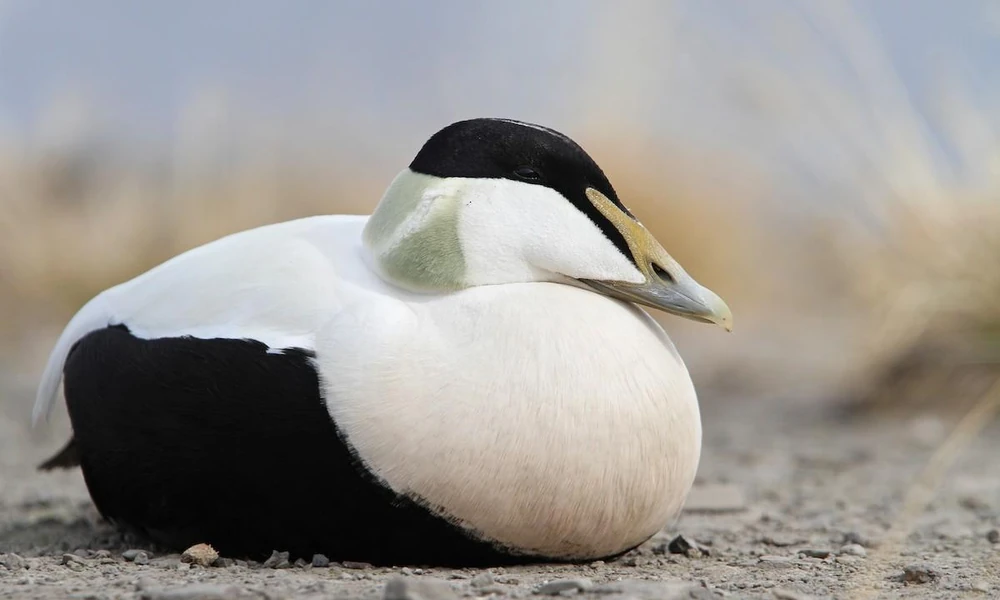
- Scientific Name: Somateria mollissima (common eider example)
- Family: Anatidae
- Habitat: Arctic and temperate coasts, rocky shores, islands, and shallow seas
- Range: Northern North America, Europe, and northern Asia
- Size and Weight: About 50–70 cm long; roughly 1.2–2.8 kg
- Diet: Mussels, crabs, sea urchins, and other mollusks and crustaceans
- Lifespan: Often 10 years or more
- Conservation Status: Near Threatened for the common eider
- Key Fact: Female eiders line their nests with soft down feathers, which people have long collected as eiderdown for warm bedding and jackets.
Elf Owl
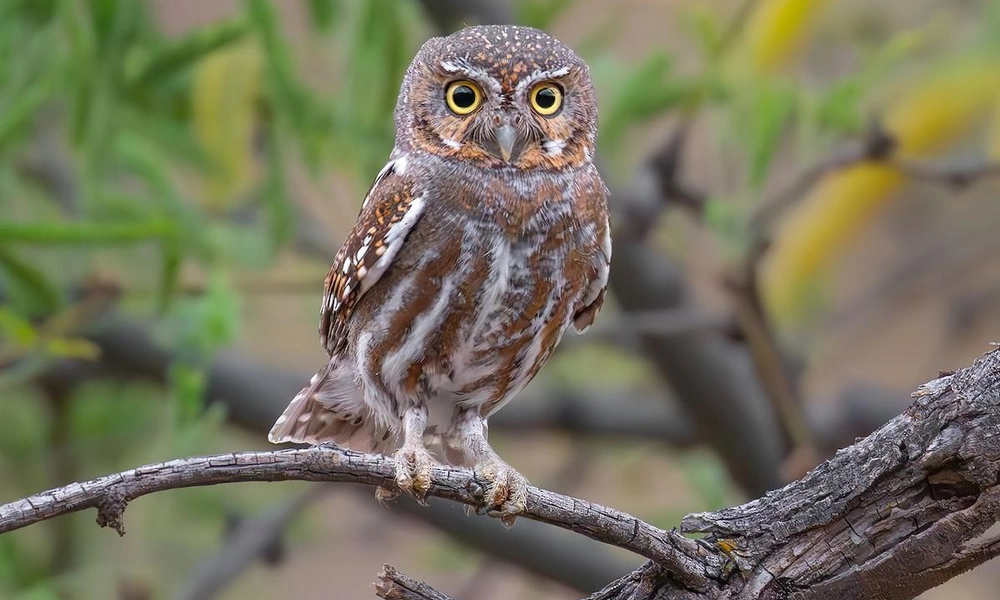
- Scientific Name: Micrathene whitneyi
- Family: Strigidae
- Habitat: Desert scrub, saguaro cactus deserts, oak woodlands, and canyons
- Range: Southwestern United States and Mexico
- Size and Weight: About 12–15 cm long; roughly 31–50 g
- Diet: Insects, scorpions, and spiders
- Lifespan: Several years in the wild
- Conservation Status: Least Concern
- Key Fact: The elf owl is one of the smallest owls in the world, and it often nests in old woodpecker holes in saguaro cactus. Find other small hunters in our guide to owl types.
Emperor Penguin
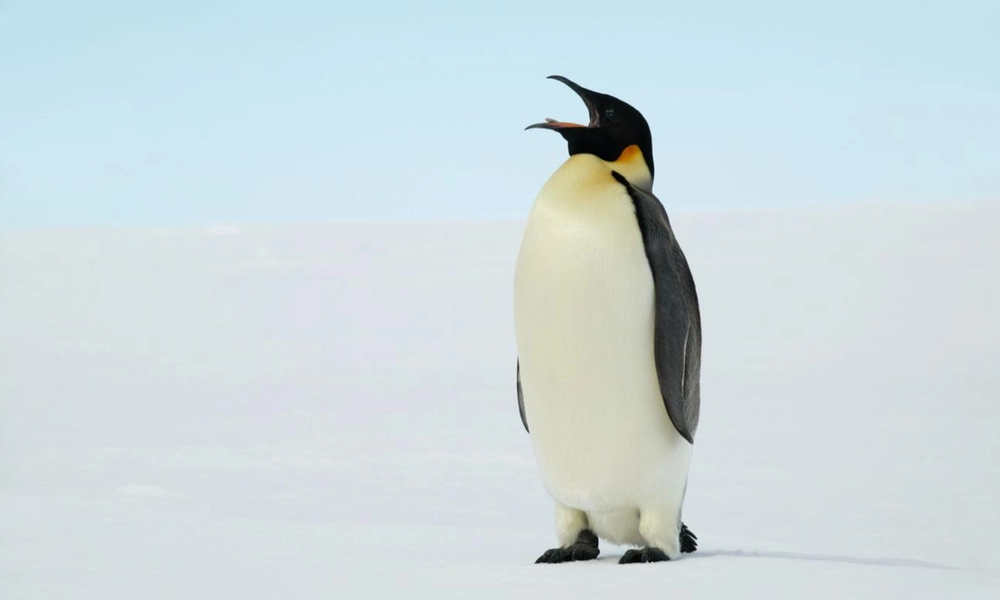
- Scientific Name: Aptenodytes forsteri
- Family: Spheniscidae
- Habitat: Antarctic sea ice and the surrounding ocean
- Range: Antarctica and nearby waters
- Size and Weight: About 1.1–1.3 m tall; roughly 22–45 kg
- Diet: Fish, squid, and krill
- Lifespan: About 15–20 years in the wild
- Conservation Status: Near Threatened
- Key Fact: The emperor penguin is the tallest and heaviest penguin, and the males keep the egg warm through the harsh Antarctic winter.
Emu
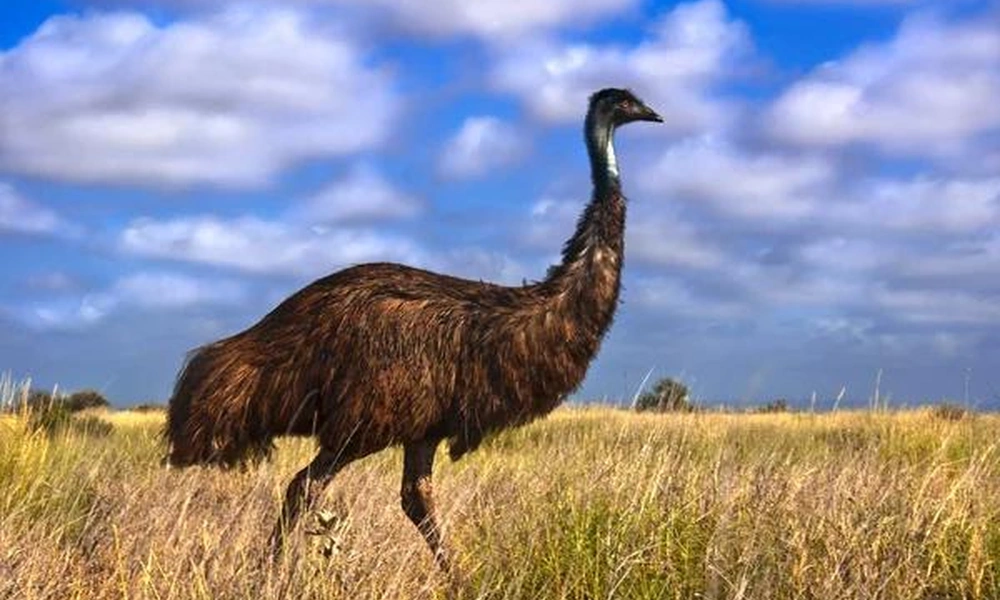
- Scientific Name: Dromaius novaehollandiae
- Family: Dromaiidae
- Habitat: Open woodland, grasslands, savanna, scrub, and semi-desert
- Range: Australia
- Size and Weight: About 1.5–1.9 m tall; roughly 18–60 kg
- Diet: Fruit, seeds, flowers, shoots, and insects
- Lifespan: About 10–20 years
- Conservation Status: Least Concern
- Key Fact: The emu is the second-tallest living bird after the ostrich and can travel long distances in search of food. Its rainforest cousin is covered in our cassowary guide, and you can explore more open-country animals in our list of grassland animals.
Eurasian Blue Tit
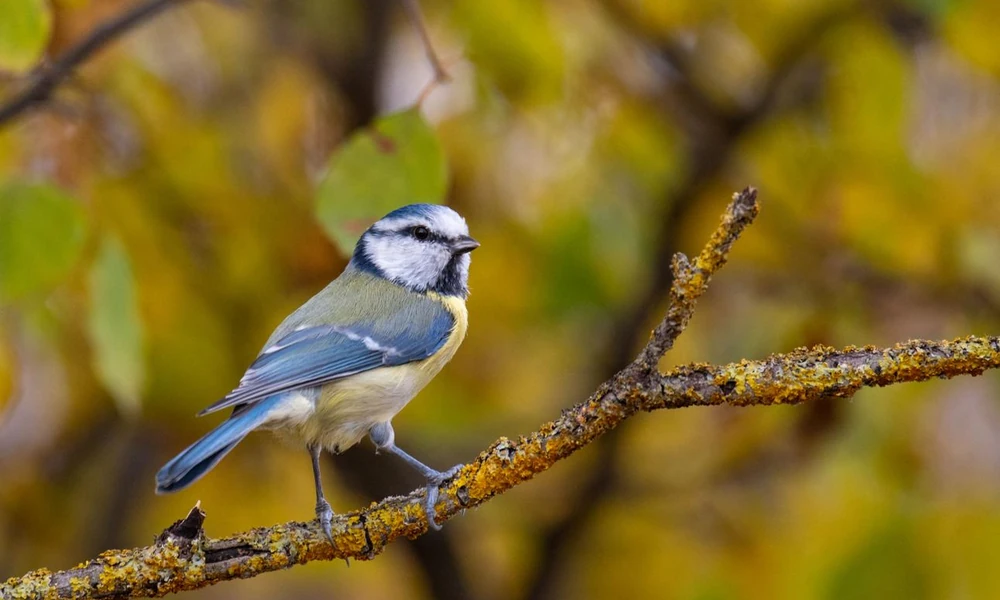
- Scientific Name: Cyanistes caeruleus
- Family: Paridae
- Habitat: Woodlands, parks, gardens, and hedgerows
- Range: Europe, western Asia, and parts of North Africa
- Size and Weight: About 11–12 cm long; roughly 9–12 g
- Diet: Insects, caterpillars, seeds, nuts, and suet
- Lifespan: Usually about 2–3 years; some live much longer
- Conservation Status: Least Concern
- Key Fact: The Eurasian blue tit is famous for its acrobatic skills and can hang upside down while searching branches for food.
Eurasian Eagle-Owl
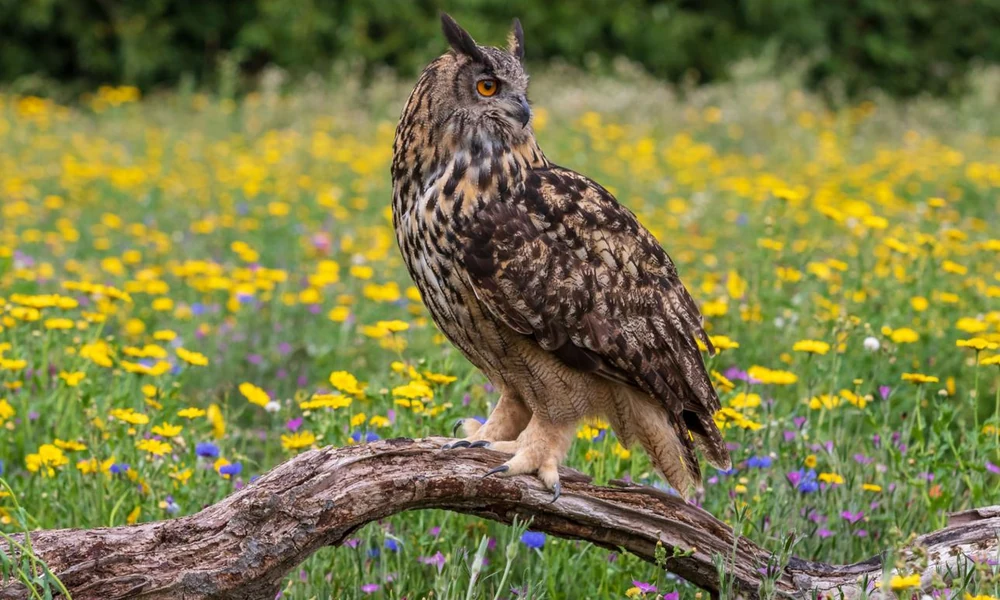
- Scientific Name: Bubo bubo
- Family: Strigidae
- Habitat: Forests, rocky cliffs, mountains, steppe, and semi-desert
- Range: Europe, Asia, and parts of North Africa
- Size and Weight: About 58–75 cm long; wingspan up to about 1.9 m; roughly 1.5–4 kg
- Diet: Rabbits, hares, rodents, birds, hedgehogs, and other mammals
- Lifespan: Often 15–20 years in the wild; longer in captivity
- Conservation Status: Least Concern
- Key Fact: The Eurasian eagle-owl, also called the Uhu, is one of the largest owl species in the world. Learn more about other owls in our guide to owl types.
Eurasian Magpie
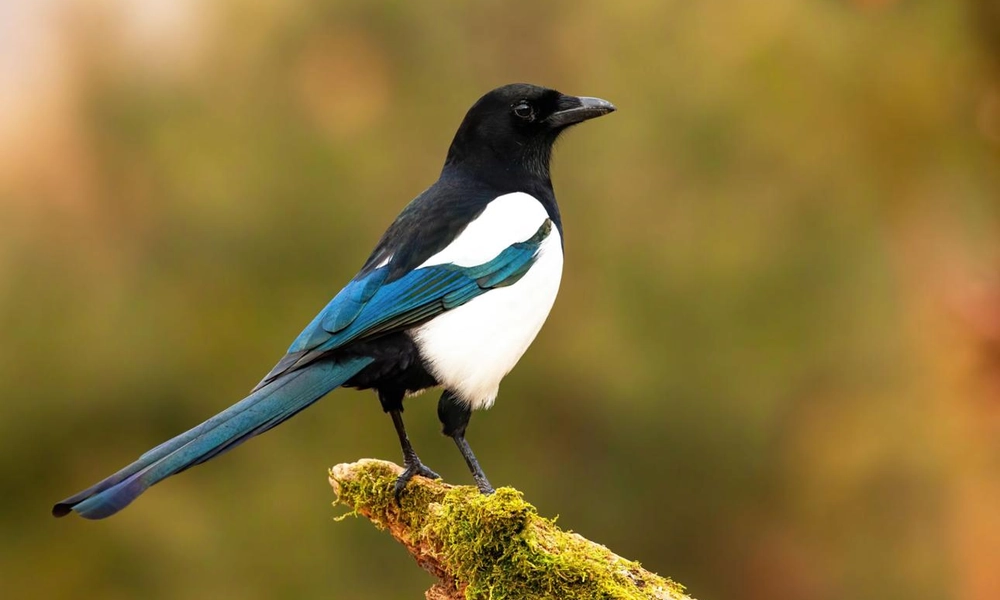
- Scientific Name: Pica pica
- Family: Corvidae
- Habitat: Farmland, open woodland, hedgerows, parks, and towns
- Range: Europe and much of Asia, plus parts of North Africa
- Size and Weight: About 44–51 cm long, including its long tail; roughly 200–250 g
- Diet: Insects, seeds, fruit, eggs, small animals, carrion, and scraps
- Lifespan: Often 3–5 years in the wild; some live much longer
- Conservation Status: Least Concern
- Key Fact: Magpies are among the few animals that have passed the mirror test, a sign they may recognize themselves. They belong to the same family as the raven.
European Goldfinch
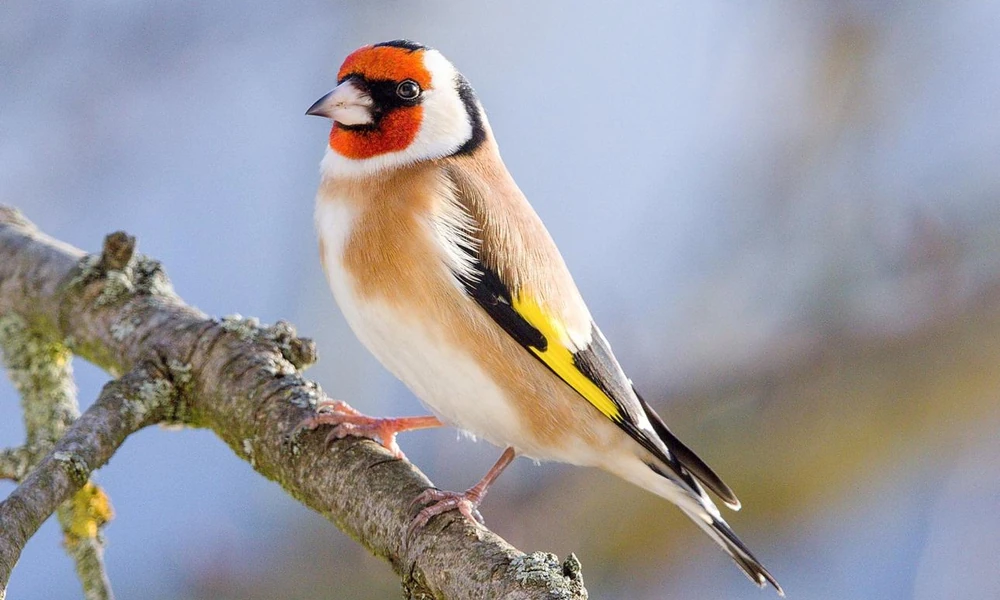
- Scientific Name: Carduelis carduelis
- Family: Fringillidae
- Habitat: Open woodland, farmland, gardens, parks, and scrub
- Range: Europe, North Africa, and western and central Asia; introduced to Australia, New Zealand, and Uruguay
- Size and Weight: About 12–13.5 cm long; roughly 14–19 g
- Diet: Seeds, especially from thistles and teasels, plus some insects
- Lifespan: Usually a few years in the wild
- Conservation Status: Least Concern
- Key Fact: The goldfinch’s long, thin beak lets it pull seeds out of thistle heads that other small birds cannot reach.
European Robin
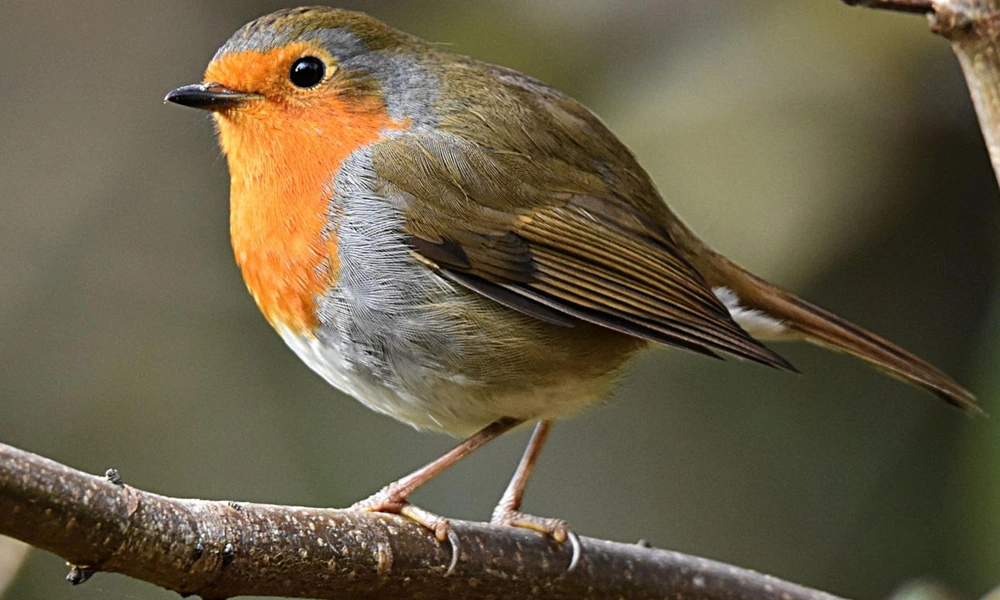
- Scientific Name: Erithacus rubecula
- Family: Muscicapidae
- Habitat: Woodlands, hedgerows, gardens, and parks
- Range: Europe, western Asia, and North Africa
- Size and Weight: About 12.5–14 cm long; roughly 14–21 g
- Diet: Insects, worms, spiders, berries, and seeds
- Lifespan: Often 1–2 years on average; some live several years
- Conservation Status: Least Concern
- Key Fact: European robins sing and defend their territories even in winter, and the bright orange-red breast is easy to spot.
Reptiles That Start With E
Reptiles are cold-blooded animals with scaly skin. Most lay eggs, and they depend on outside heat to warm their bodies. The E list includes some of the most venomous snakes in the world, as well as a long-lived tortoise from the Galápagos. Many of their traits are examples of animal adaptations.
Eastern Box Turtle
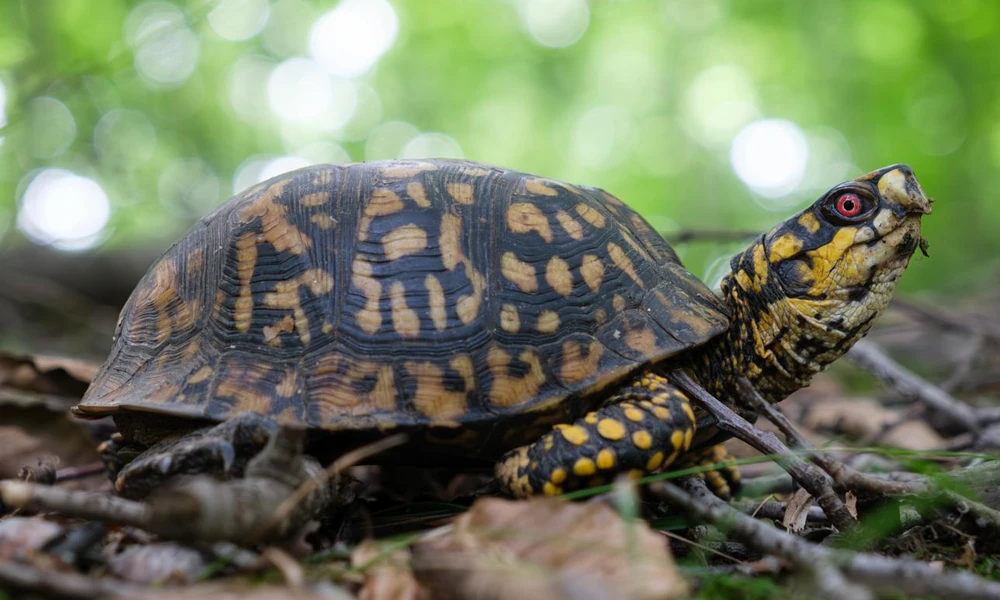
- Scientific Name: Terrapene carolina carolina
- Family: Emydidae
- Habitat: Deciduous and mixed forests, meadows, and wetland edges
- Range: Eastern United States
- Size and Weight: Shell about 11–15 cm long; usually under 1 kg
- Diet: Insects, worms, slugs, berries, mushrooms, and other plants
- Lifespan: Often 40–50 years; some may live longer
- Conservation Status: The common box turtle species is listed as Vulnerable
- Key Fact: Eastern box turtles can close their shells tightly using a hinged lower shell, and they are slow to mature and extremely long-lived.
Eastern Brown Snake
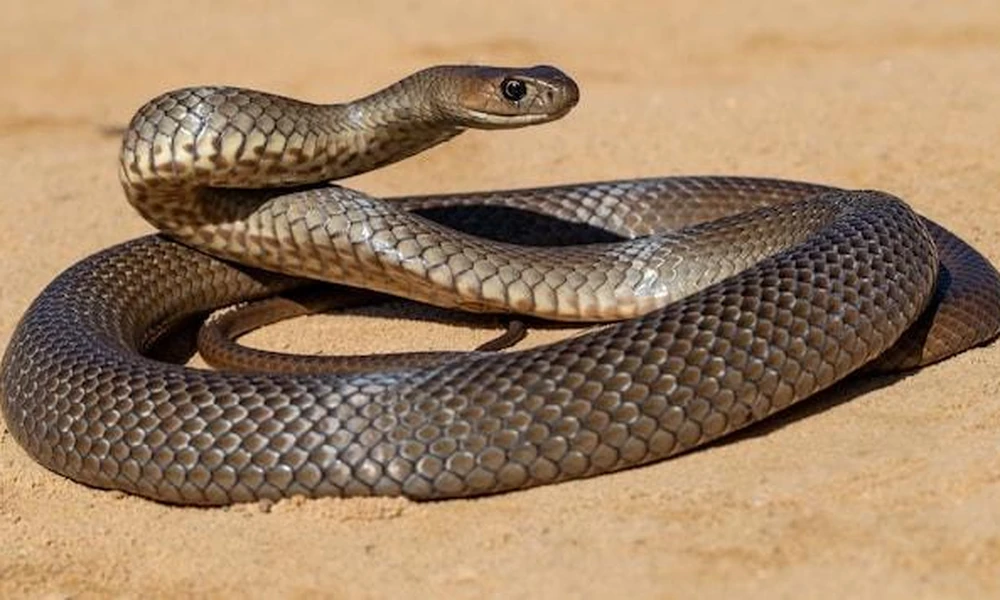
- Scientific Name: Pseudonaja textilis
- Family: Elapidae
- Habitat: Grasslands, farmland, open woodland, dry scrub, and areas near towns
- Range: Eastern and central Australia and southern New Guinea
- Size and Weight: Commonly about 1.5–2 m long
- Diet: Rodents, frogs, lizards, birds, and eggs
- Lifespan: Roughly 10 years or more
- Conservation Status: Least Concern
- Key Fact: The eastern brown snake is one of the most venomous land snakes in the world and is responsible for many snakebite deaths in Australia.
Eastern Diamondback Rattlesnake
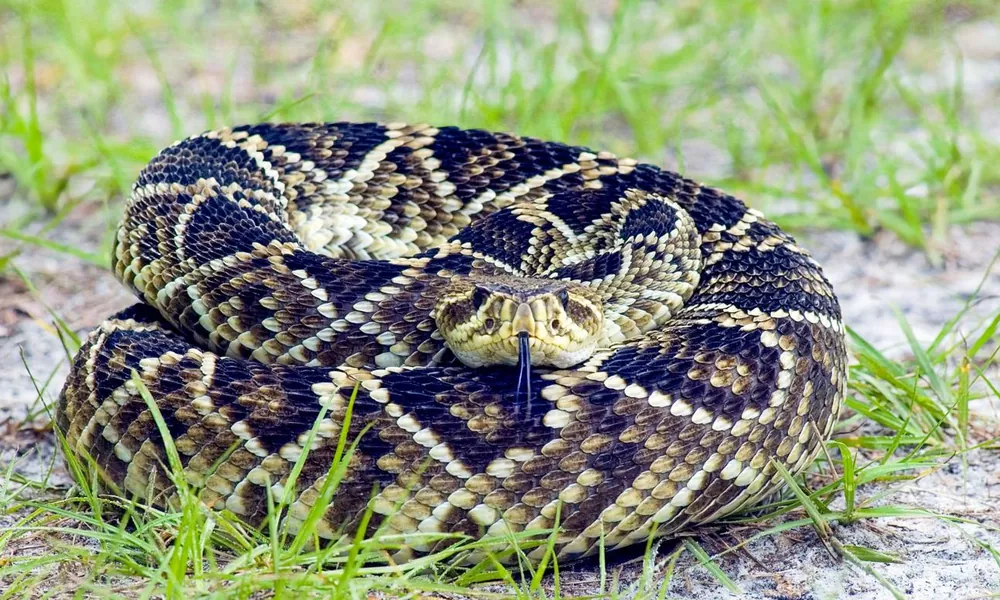
- Scientific Name: Crotalus adamanteus
- Family: Viperidae
- Habitat: Pine flatwoods, sandy woodlands, coastal scrub, and palmetto thickets
- Range: Southeastern United States
- Size and Weight: About 1–2 m long, with some larger; roughly 2–5 kg
- Diet: Rabbits, rodents, and birds
- Lifespan: About 10–20 years
- Conservation Status: Least Concern on the IUCN Red List, though declining in parts of its range
- Key Fact: This is the largest rattlesnake species and has a reputation as the most dangerous venomous snake in North America.
Eastern Green Mamba
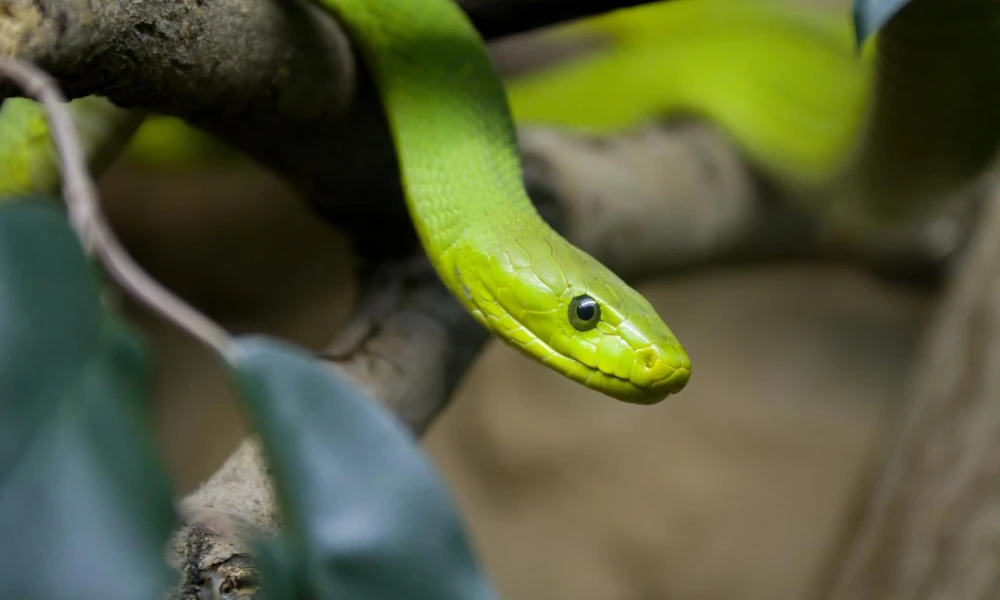
- Scientific Name: Dendroaspis angusticeps
- Family: Elapidae
- Habitat: Coastal forests, thickets, and tree canopies
- Range: Coastal regions of southern East Africa
- Size and Weight: About 1.8–2.5 m long
- Diet: Birds, eggs, small mammals, and lizards
- Lifespan: Often more than 10 years in captivity
- Conservation Status: Least Concern
- Key Fact: The eastern green mamba is highly venomous but shy and elusive, and it spends much of its time in trees.
Eastern Hognose Snake
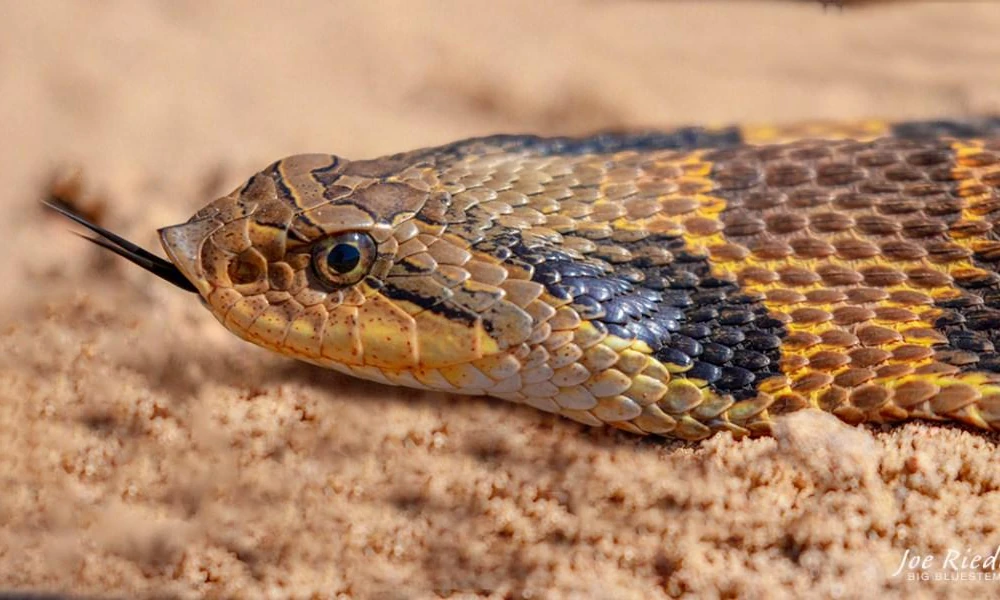
- Scientific Name: Heterodon platirhinos
- Family: Colubridae
- Habitat: Sandy soils, forests, fields, and floodplains
- Range: Eastern and central United States and southern Canada
- Size and Weight: About 50–115 cm long
- Diet: Mainly toads, plus frogs and salamanders
- Lifespan: Often 10 years or more in captivity
- Conservation Status: Least Concern
- Key Fact: When threatened, the eastern hognose snake spreads its neck, hisses, and may even play dead. Its mild venom is used on amphibian prey and is not a serious danger to people.
Eastern Indigo Snake
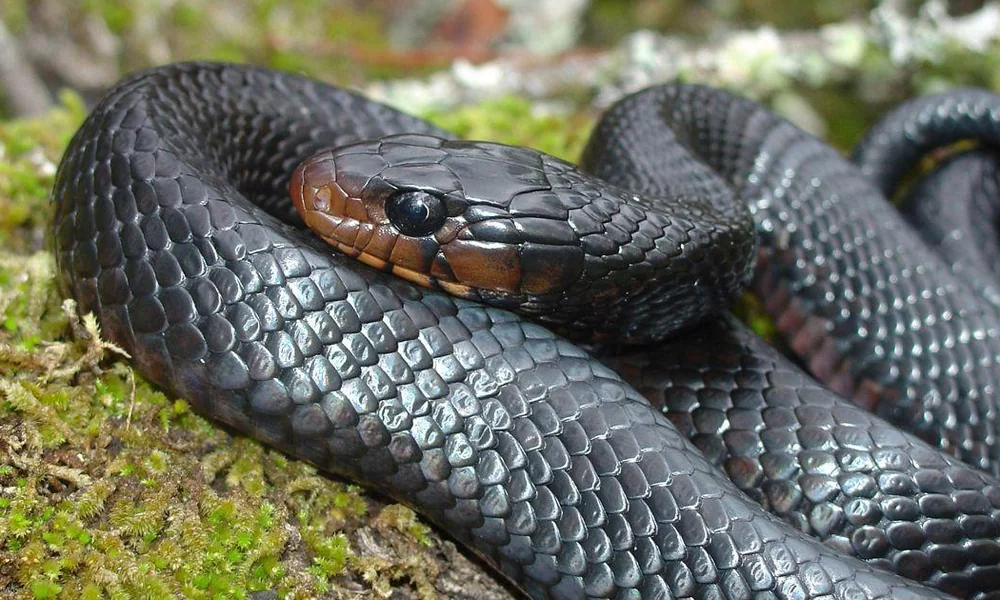
- Scientific Name: Drymarchon couperi
- Family: Colubridae
- Habitat: Pine flatwoods, sandhills, hammocks, and gopher tortoise burrows
- Range: Southeastern Georgia and Florida in the United States
- Size and Weight: About 1.5–2.6 m long; roughly 2–5 kg
- Diet: Snakes, lizards, frogs, turtles, small mammals, and birds
- Lifespan: Often 10–20 years
- Conservation Status: Listed as Threatened under the United States Endangered Species Act
- Key Fact: The eastern indigo snake is the longest native snake species in the United States, and it is nonvenomous.
Egyptian Cobra
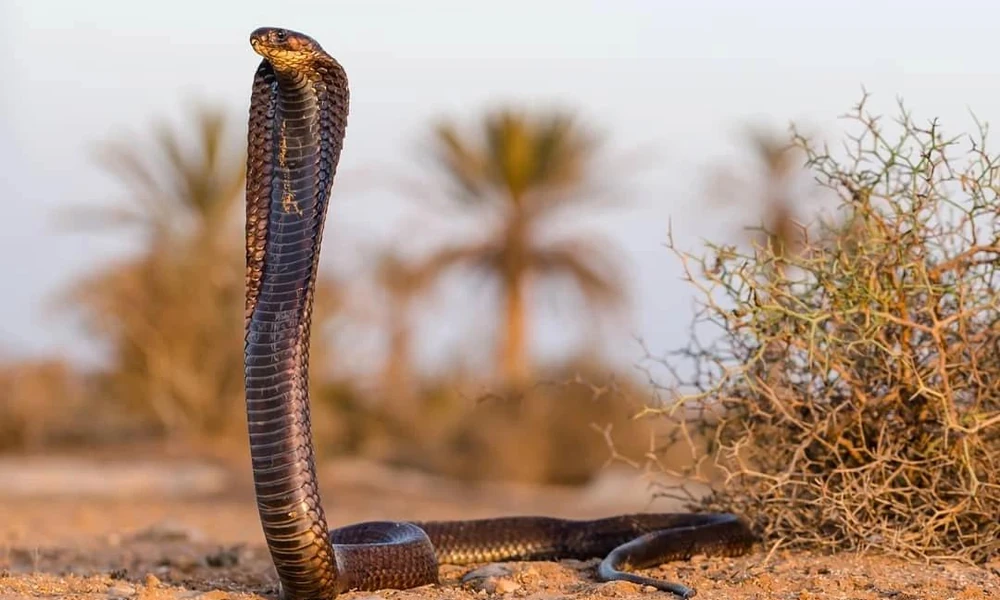
- Scientific Name: Naja haje
- Family: Elapidae
- Habitat: Savannas, semi-desert, scrubland, and irrigated farmland
- Range: North Africa and parts of sub-Saharan Africa
- Size and Weight: Typically about 1.4–2 m long; some reach more
- Diet: Rodents, birds, eggs, toads, lizards, and other snakes
- Lifespan: Up to about 20 years in captivity
- Conservation Status: Least Concern
- Key Fact: The Egyptian cobra is one of the largest cobras in Africa, and it is often linked to the royal cobra symbol of ancient Egypt.
Española Giant Tortoise
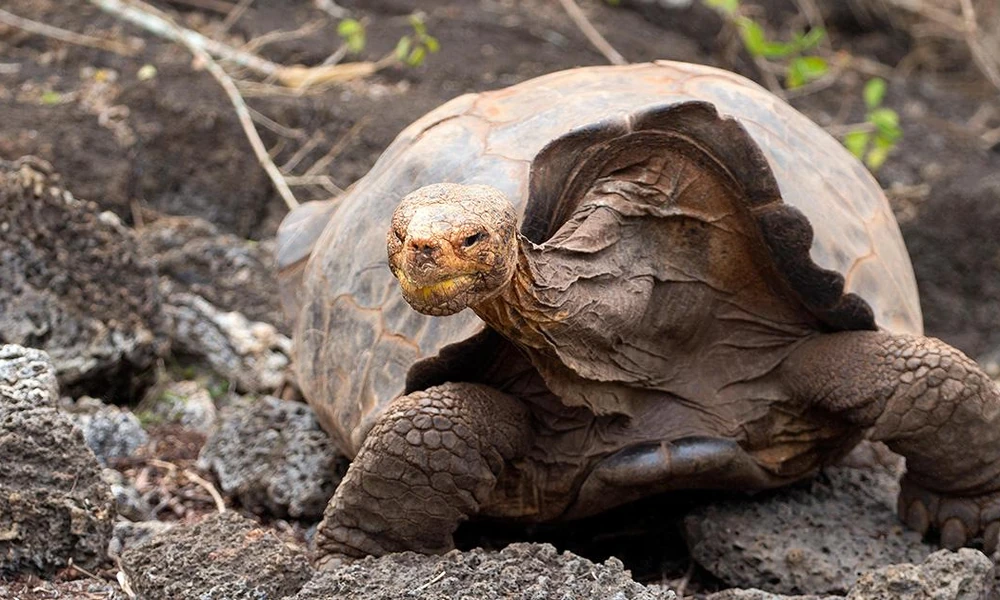
- Scientific Name: Chelonoidis hoodensis
- Family: Testudinidae
- Habitat: Dry lowland scrub and arid vegetation
- Range: Española Island in the Galápagos, Ecuador
- Size and Weight: A saddle-shaped shell; adults weigh tens of kilograms
- Diet: Cactus pads, grasses, leaves, and fruit
- Lifespan: Often 100 years or more
- Conservation Status: Critically Endangered, though conservation breeding has helped it recover
- Key Fact: A breeding program rescued this tortoise after only about 15 adults remained, making it one of the best-known conservation success stories.
Amphibians That Start With E
Amphibians live part of their lives in water and part on land. Their thin, moist skin is why most of them stay close to water. The E list includes a tiny treefrog, a brightly colored newt, and a loud European climber.
Eastern Dwarf Treefrog
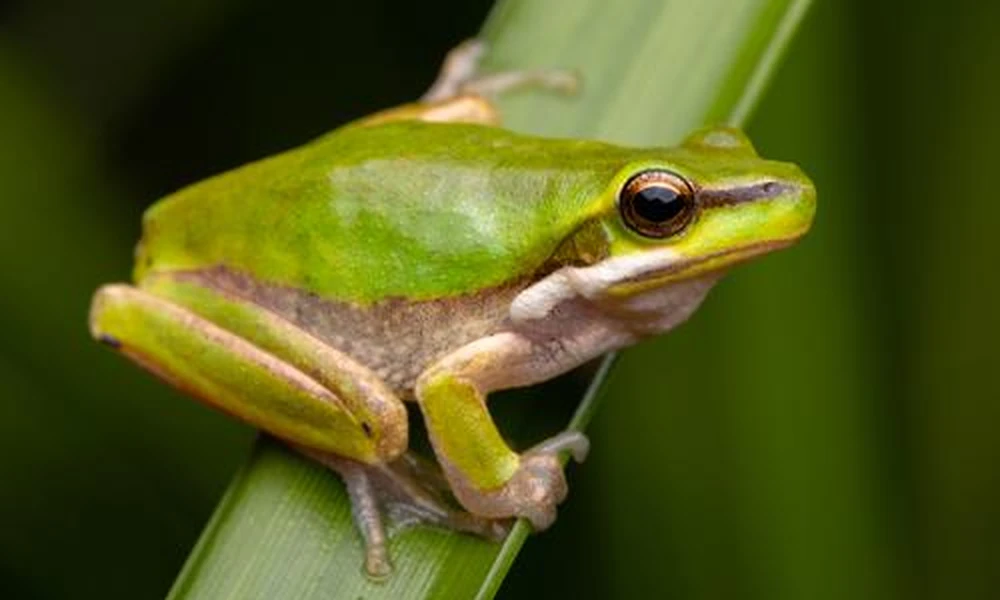
- Scientific Name: Dryophytes ocularis
- Family: Hylidae
- Habitat: Wet pine flatwoods, marshes, ponds, and shrubby wetlands
- Range: Southeastern United States
- Size and Weight: About 1.6–2.5 cm long
- Diet: Small insects and spiders
- Lifespan: A few years
- Conservation Status: Least Concern
- Key Fact: The eastern dwarf treefrog is one of the smallest treefrogs in North America.
Emperor Newt
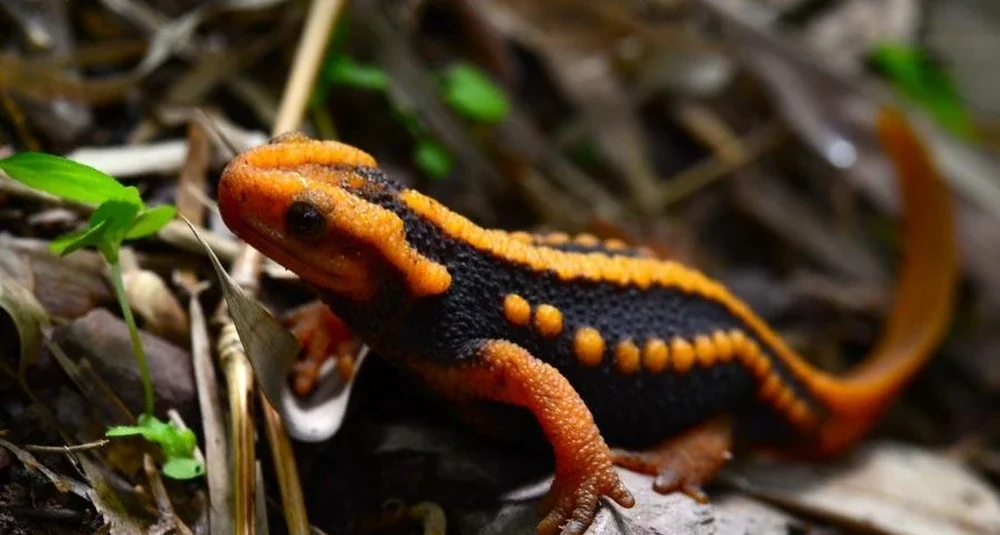
- Scientific Name: Tylototriton shanjing
- Family: Salamandridae
- Habitat: Forest ponds, streams, and the moist forest floor
- Range: Southwestern China, in Yunnan Province
- Size and Weight: About 15–20 cm long
- Diet: Insects, worms, snails, and other small invertebrates
- Lifespan: Roughly 10 years or more in captivity
- Conservation Status: Varies by assessment; habitat loss and the pet trade threaten some emperor newt species
- Key Fact: The emperor newt has bright orange, warty ridges on a dark body, a color pattern that warns predators it is not a safe meal.
European Tree Frog
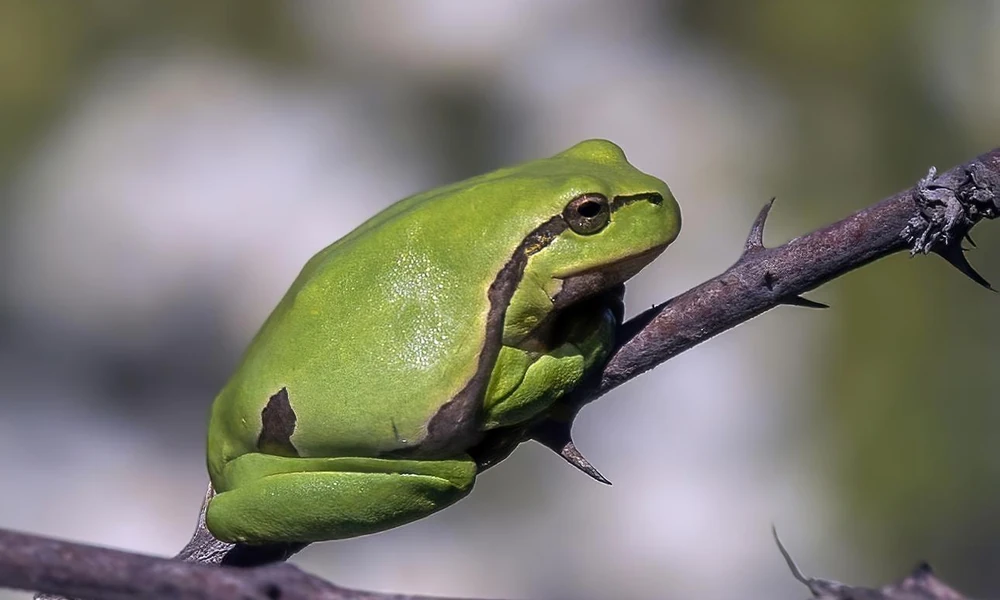
- Scientific Name: Hyla arborea
- Family: Hylidae
- Habitat: Woodlands, hedgerows, meadows, and areas near ponds
- Range: Europe and parts of western Asia
- Size and Weight: About 3–5 cm long
- Diet: Insects, spiders, and other small invertebrates
- Lifespan: Around 5–6 years in the wild
- Conservation Status: Least Concern
- Key Fact: European tree frogs have sticky toe pads for climbing, and males call loudly during the breeding season.
Fish That Start With E
Fish breathe through gills and live in water for their whole lives. The E list includes a shell-crushing ray, a famous shocker, and a reef beauty whose young look nothing like the adults.
Eagle Ray
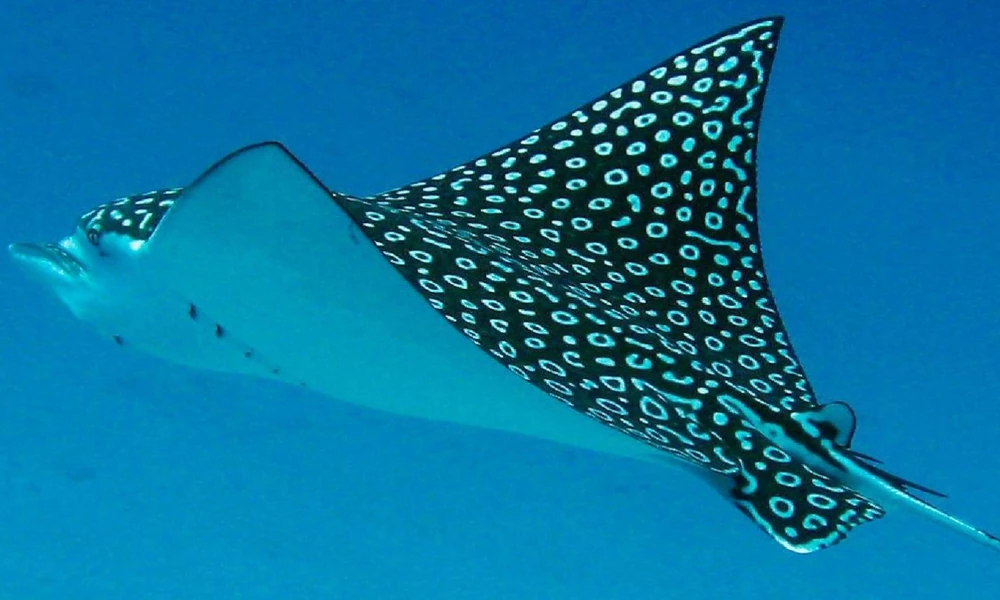
- Scientific Name: Myliobatidae (spotted eagle ray, Aetobatus narinari, is a well-known example)
- Family: Myliobatidae
- Habitat: Coastal waters, reefs, bays, and open ocean
- Range: Tropical and temperate seas worldwide
- Size and Weight: Varies by species; the spotted eagle ray reaches a disc width of about 2–3 m
- Diet: Clams, oysters, snails, and crustaceans
- Lifespan: Around 15–25 years
- Conservation Status: Varies by species; the spotted eagle ray is Endangered
- Key Fact: Eagle rays have flat, plate-like teeth for crushing shells, and they sometimes leap out of the water.
Eel
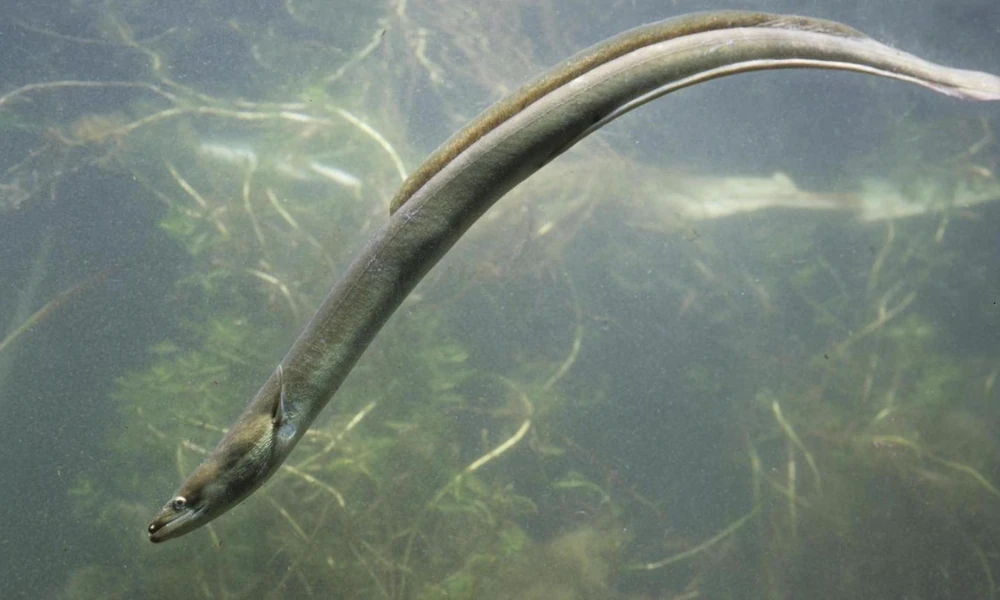
- Scientific Name: Anguilliformes
- Family: Varies by species
- Habitat: Rivers, lakes, estuaries, oceans, and reefs
- Range: Worldwide, except polar waters
- Size and Weight: From about 10 cm to more than 3 m, depending on species
- Diet: Fish, crustaceans, worms, and mollusks
- Lifespan: Varies by species; some live for decades
- Conservation Status: Varies by species; the European eel is Critically Endangered
- Key Fact: Some eels, such as the European eel, travel thousands of kilometers to spawn in the Sargasso Sea.
Electric Eel
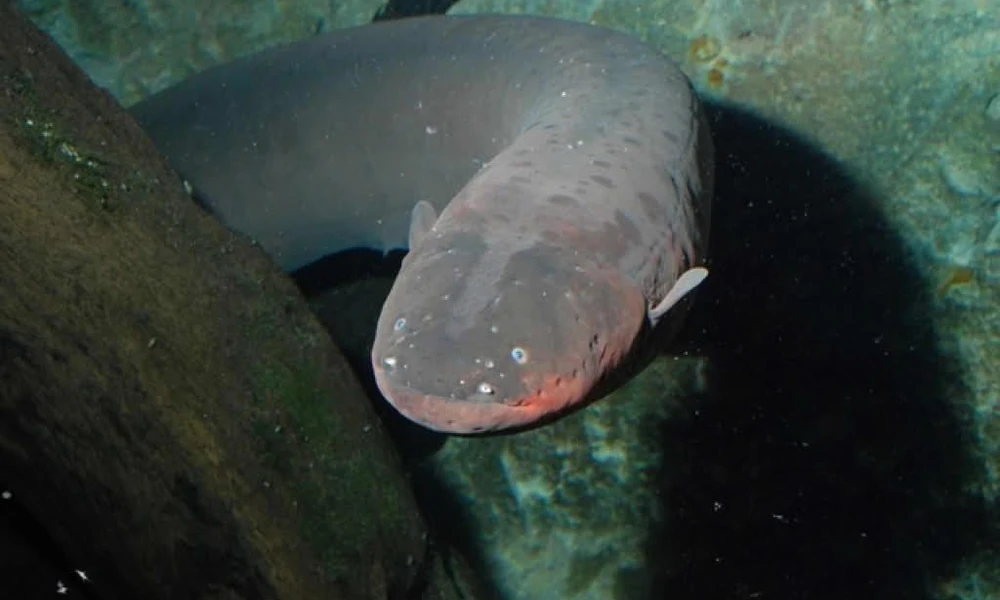
- Scientific Name: Electrophorus electricus
- Family: Gymnotidae
- Habitat: Slow-moving rivers, muddy waters, swamps, and floodplains
- Range: Amazon and Orinoco basins of South America
- Size and Weight: Up to about 2–2.5 m long; up to about 20 kg
- Diet: Fish, crustaceans, amphibians, and other small animals
- Lifespan: About 10–15 years
- Conservation Status: Least Concern
- Key Fact: The electric eel is not a true eel but a type of knifefish, and some species can discharge more than 800 volts to stun prey or defend themselves.
Emperor Angelfish
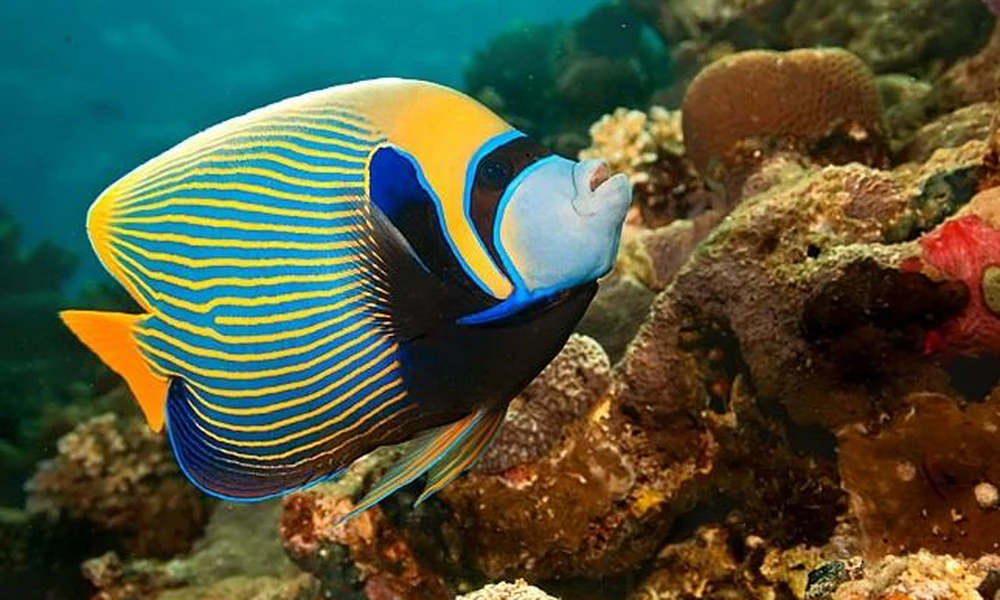
- Scientific Name: Pomacanthus imperator
- Family: Pomacanthidae
- Habitat: Coral reefs, lagoons, and reef crevices
- Range: Indo-Pacific, from the Red Sea to the central Pacific
- Size and Weight: Up to about 40 cm long
- Diet: Sponges, algae, tunicates, and plankton
- Lifespan: Up to about 20 years
- Conservation Status: Least Concern
- Key Fact: Young emperor angelfish have blue-and-white circle patterns that look completely different from the yellow-and-blue stripes of adults.
Sea and Freshwater Invertebrates That Start With E
Invertebrates are animals without backbones, and they make up most of the animal kingdom. This group includes crabs, corals, limpets, and shrimp.
Edible Crab
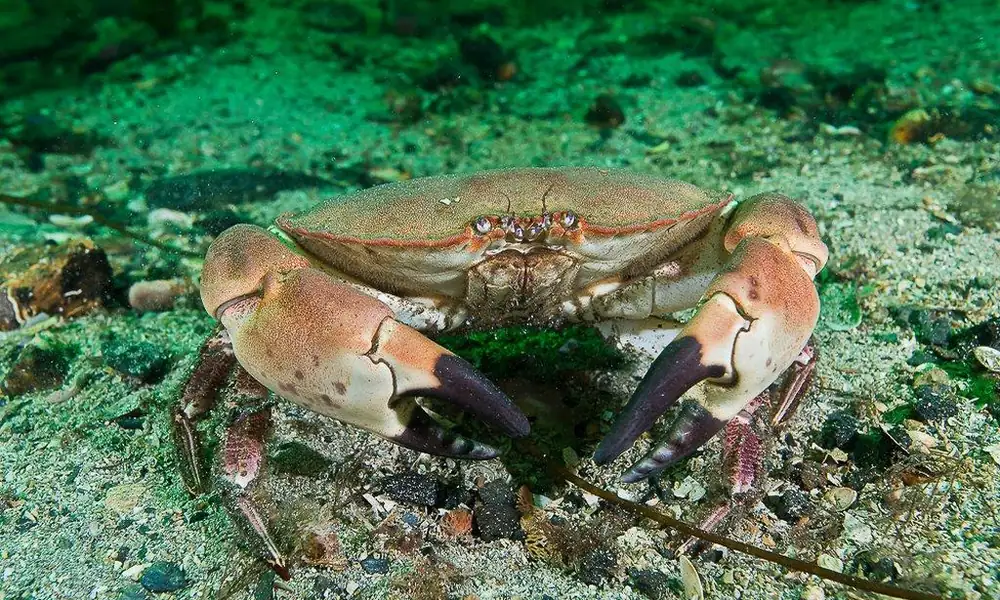
- Scientific Name: Cancer pagurus
- Family: Cancridae
- Habitat: Rocky seabeds, sandy bottoms, and shallow coastal waters
- Range: Northeast Atlantic, from Norway to northwest Africa
- Size and Weight: Shell commonly up to about 25 cm wide
- Diet: Mussels, clams, crustaceans, and worms
- Lifespan: Often 20 years or more
- Conservation Status: Not currently assessed; managed as a commercial fishery in many regions
- Key Fact: The edible crab is one of the most important commercial crabs in Europe, and its powerful claws can crush shellfish.
Eelgrass Limpet
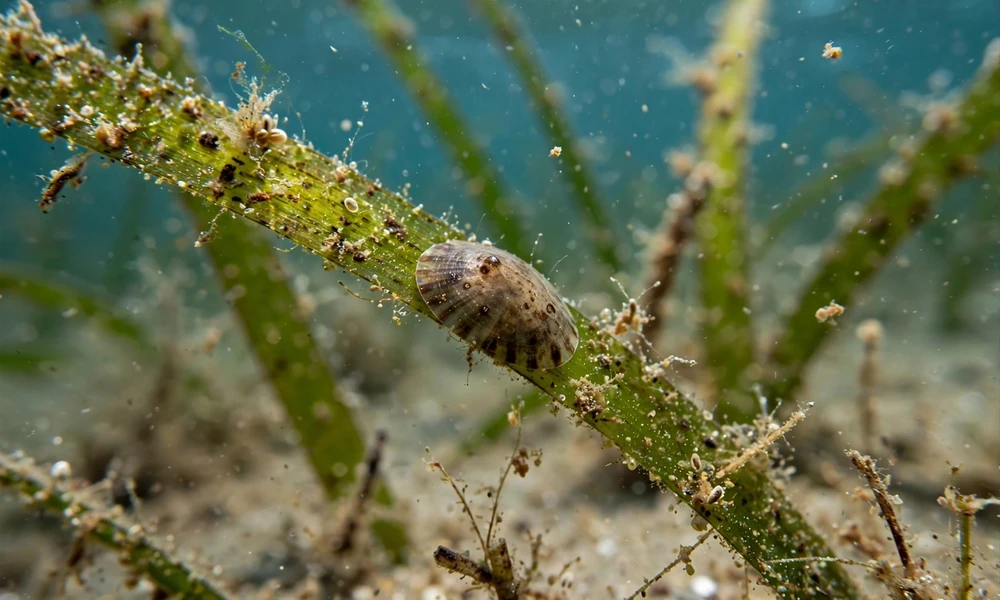
- Scientific Name: Lottia alveus
- Family: Lottiidae
- Habitat: Blades of eelgrass in shallow bays
- Range: Atlantic coasts of North America
- Size and Weight: About 1 cm long
- Diet: Microscopic algae growing on eelgrass blades
- Lifespan: Believed to be short-lived
- Conservation Status: Atlantic populations were wiped out in the 1930s; the species is considered extinct or critically threatened, depending on the assessment
- Key Fact: The eelgrass limpet shows how one disease affecting eelgrass can wipe out a species that depends on it.
Elkhorn Coral

- Scientific Name: Acropora palmata
- Family: Acroporidae
- Habitat: Shallow, wave-swept reef crests and fore reefs
- Range: Caribbean Sea, Florida Keys, Gulf of Mexico, and the Bahamas
- Size and Weight: Colonies can grow several meters across, with thick branches shaped like elk antlers
- Diet: Tiny plankton and energy from symbiotic algae
- Lifespan: Colonies can live for decades or longer
- Conservation Status: Critically Endangered
- Key Fact: Elkhorn coral is a major reef builder in the Caribbean, but its populations have fallen sharply because of disease, bleaching, and storms.
Emperor Shrimp
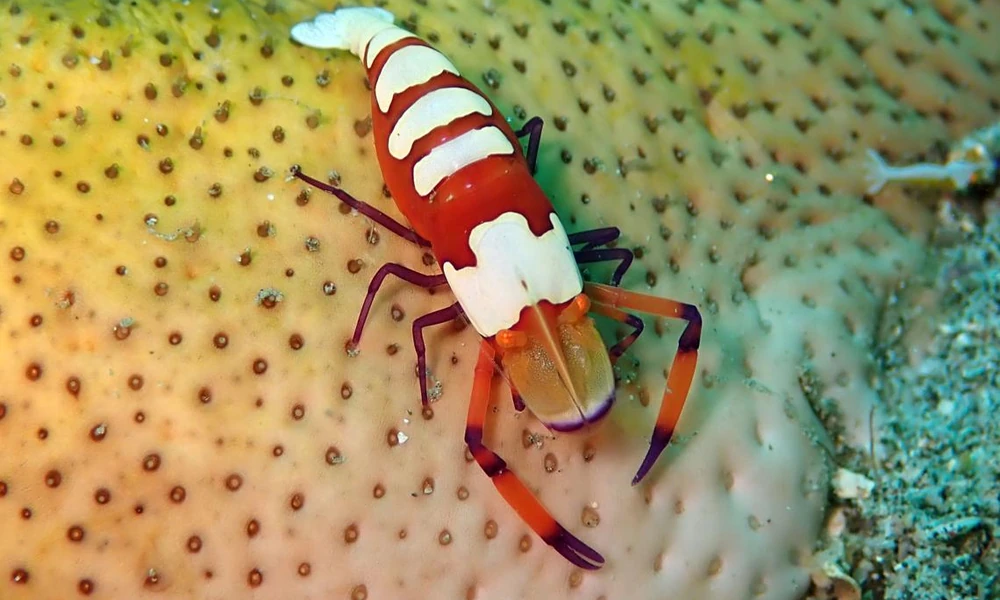
- Scientific Name: Zenopontonia rex
- Family: Palaemonidae
- Habitat: Coral reefs, living on sea cucumbers and large sea slugs
- Range: Indo-Pacific
- Size and Weight: About 1.5–2 cm long
- Diet: Plankton, mucus, and food particles from its host
- Lifespan: Not well documented
- Conservation Status: Not assessed
- Key Fact: The emperor shrimp rides on the bodies of sea cucumbers and sea slugs, using them for transport and food scraps.
European Green Crab
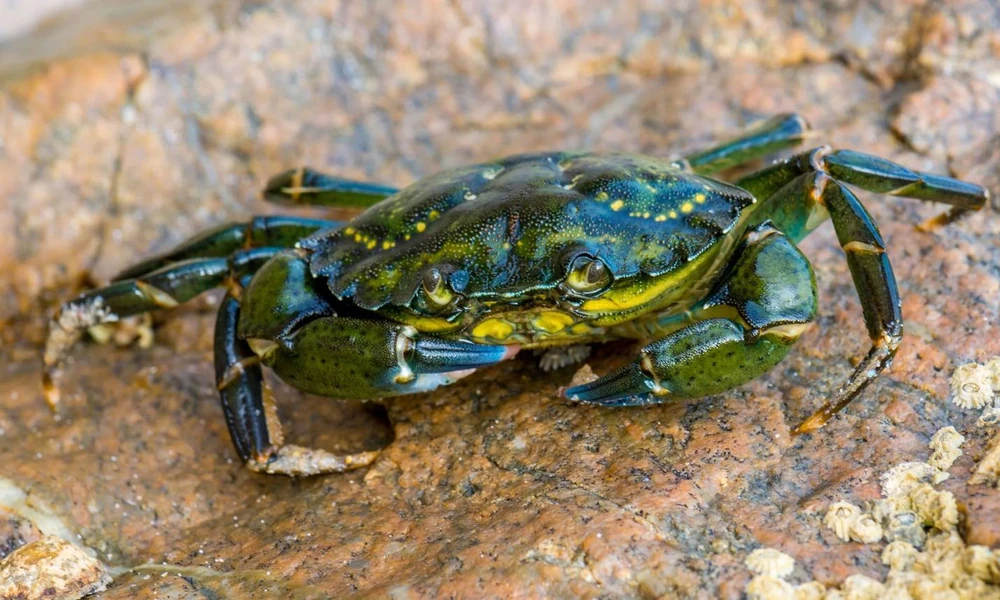
- Scientific Name: Carcinus maenas
- Family: Carcinidae
- Habitat: Rocky shores, estuaries, salt marshes, tide pools, and eelgrass beds
- Range: Native to Europe and North Africa; invasive in North America, South Africa, Australia, and Japan
- Size and Weight: Shell up to about 6–9 cm wide
- Diet: Mussels, clams, oysters, small crustaceans, worms, and algae
- Lifespan: About 4–7 years
- Conservation Status: Not threatened; listed among the world’s 100 worst invasive species
- Key Fact: Outside its home range, the European green crab damages shellfish beds and eelgrass habitats.
Insects and Creepy Crawlies That Start With E
Insects have six legs and three body parts. This group also includes the earthworm, which is not an insect but a soil-dwelling worm, and the emperor scorpion, which is an arachnid.
Earthworm
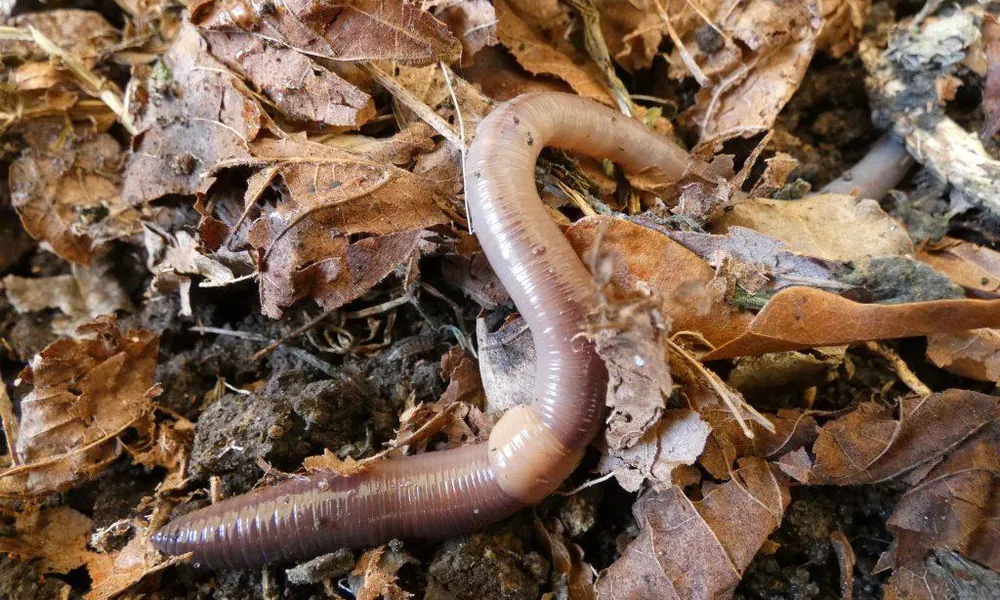
- Scientific Name: Lumbricus terrestris (common earthworm example)
- Family: Lumbricidae
- Habitat: Soil in gardens, forests, fields, and compost
- Range: Worldwide, except polar regions and deserts
- Size and Weight: Commonly about 10–30 cm long; some species are much larger
- Diet: Decaying plant matter, organic material, and soil microbes
- Lifespan: From about 1 year to several years, depending on species
- Conservation Status: Varies by species
- Key Fact: Earthworms loosen soil and recycle nutrients, which helps plants grow.
Earwig
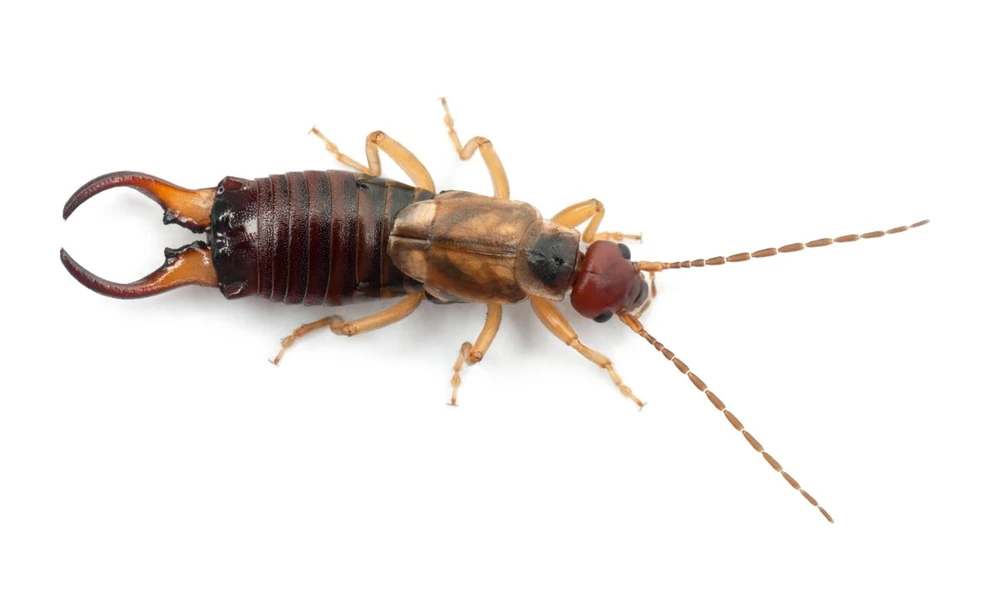
- Scientific Name: Forficula auricularia (common earwig example)
- Family: Forficulidae
- Habitat: Gardens, leaf litter, under bark, and damp crevices
- Range: Native to Europe; introduced to North America and other regions
- Size and Weight: About 1–2.5 cm long
- Diet: Insects, aphids, plants, fungi, and decaying matter
- Lifespan: About 1 year
- Conservation Status: Not threatened; common
- Key Fact: Female earwigs guard their eggs and young, which is rare among insects. Despite the myth, earwigs do not normally crawl into people’s ears.
Emerald Cockroach Wasp
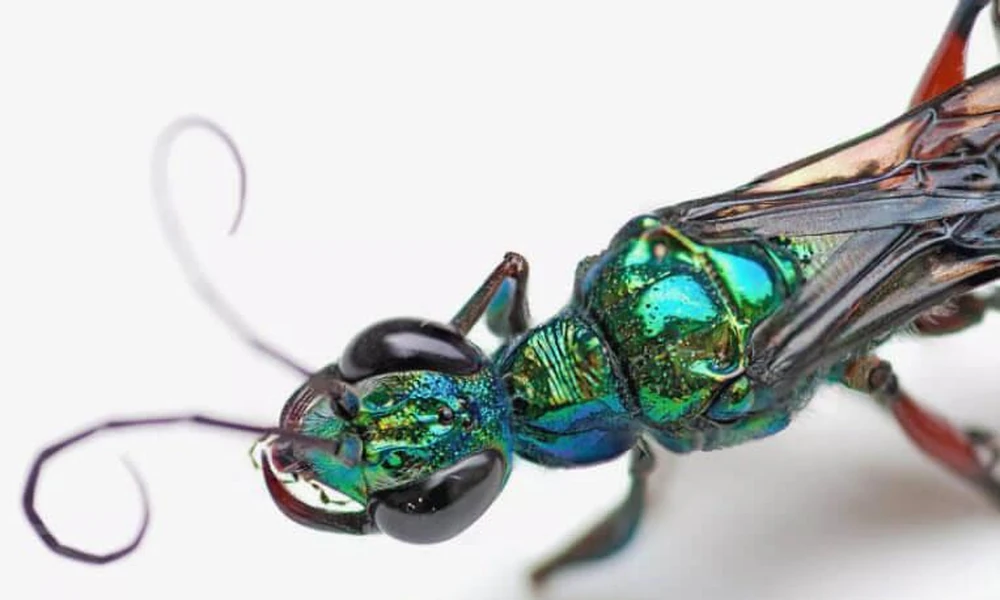
- Scientific Name: Ampulex compressa
- Family: Ampulicidae
- Habitat: Tropical forests and gardens
- Range: Africa, South and Southeast Asia, and the Pacific; introduced to Hawaii and the Americas
- Size and Weight: About 2 cm long
- Diet: Adults feed on nectar; larvae feed on a cockroach
- Lifespan: Weeks to a few months
- Conservation Status: Not assessed
- Key Fact: The wasp stings a cockroach so it becomes docile, then guides it to a burrow where the wasp lays an egg.
Emperor Dragonfly
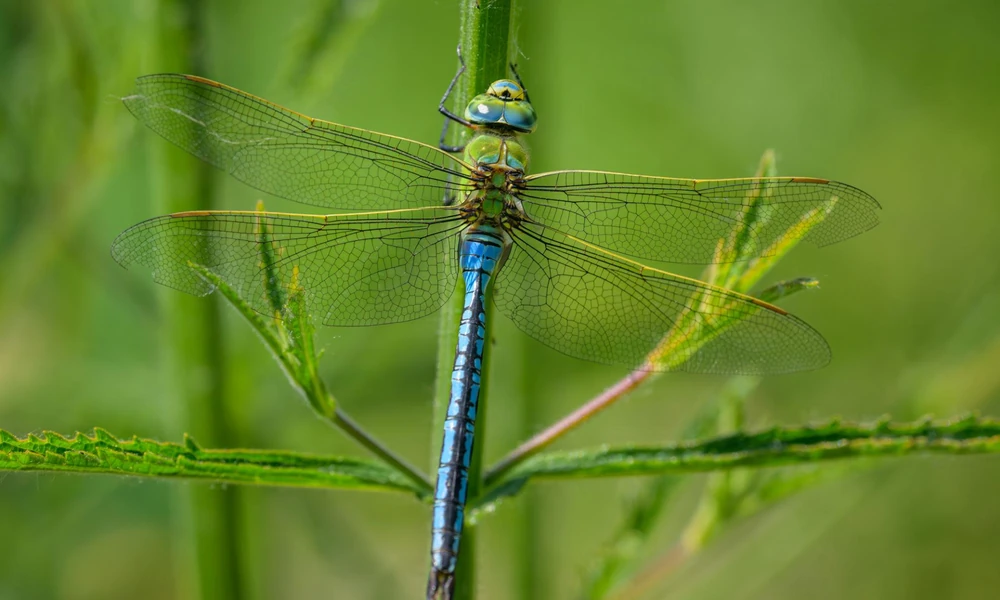
- Scientific Name: Anax imperator
- Family: Aeshnidae
- Habitat: Ponds, lakes, slow rivers, canals, and gravel pits
- Range: Europe, Africa, and parts of Asia
- Size and Weight: About 7.5–8.5 cm long; wingspan about 10–11 cm
- Diet: Flying insects as adults; tadpoles, small fish, and insect larvae as larvae
- Lifespan: Larvae live 1–2 years; adults live weeks to a couple of months
- Conservation Status: Least Concern
- Key Fact: The emperor dragonfly is one of the largest dragonflies in Europe, and males patrol and defend pond territories.
Emperor Scorpion
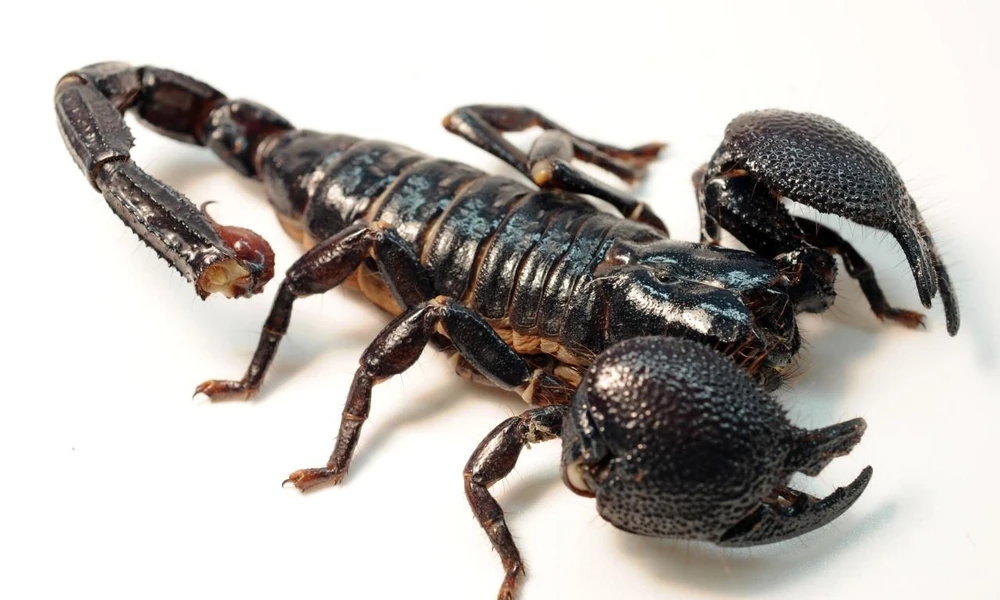
- Scientific Name: Pandinus imperator
- Family: Scorpionidae
- Habitat: Tropical rainforests, savannas, and termite mounds
- Range: West Africa
- Size and Weight: Up to about 20 cm long; roughly 30 g
- Diet: Insects, spiders, lizards, and small mammals
- Lifespan: About 6–8 years
- Conservation Status: Listed on CITES Appendix II, which controls international trade
- Key Fact: The emperor scorpion is one of the largest scorpions, and its venom is generally considered mild to people.
European Hornet
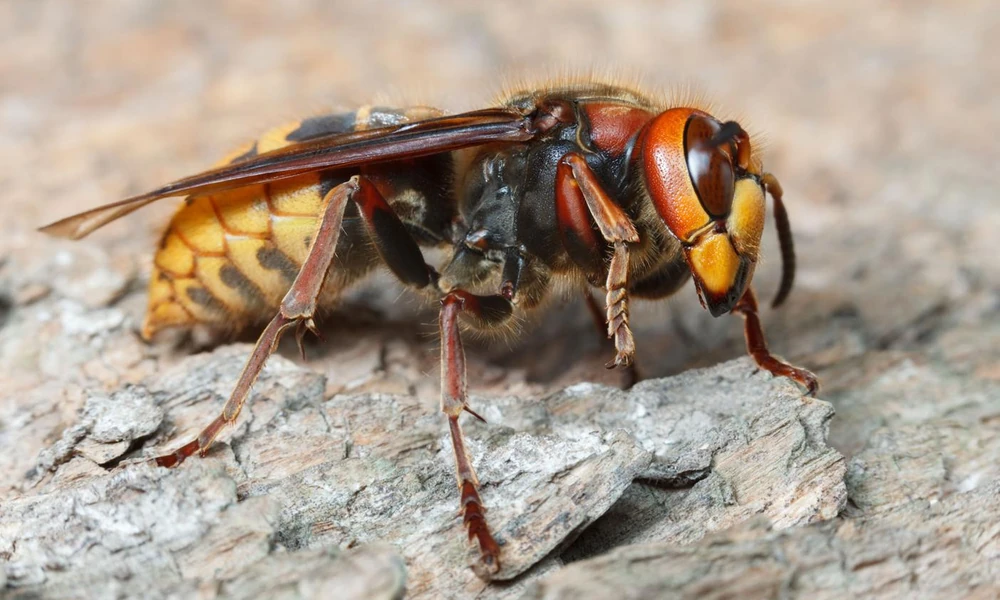
- Scientific Name: Vespa crabro
- Family: Vespidae
- Habitat: Woodlands, forest edges, orchards, gardens, and hollow trees
- Range: Europe and western Asia; introduced to eastern North America
- Size and Weight: Workers about 2.5–3.5 cm long; queens up to about 4 cm
- Diet: Insects, caterpillars, sap, and fruit
- Lifespan: Workers live weeks; queens up to about 1 year
- Conservation Status: Varies by region; protected in some countries
- Key Fact: The European hornet is the largest social wasp in Europe, and it is generally less aggressive than its reputation suggests. Read more in our hornet guide.
Eyed Click Beetle
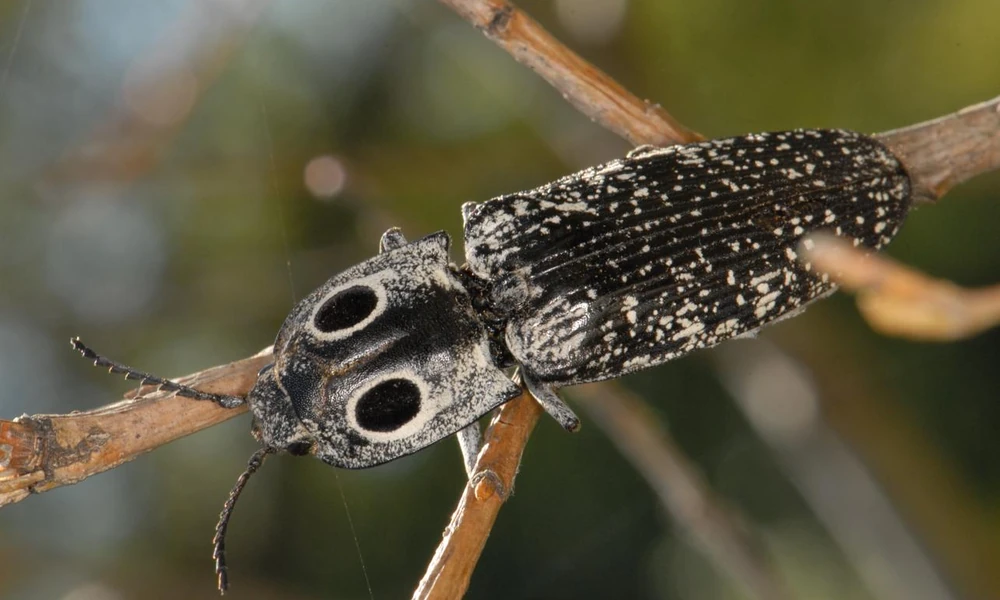
- Scientific Name: Alaus oculatus
- Family: Elateridae
- Habitat: Forests, rotting logs, and woodlands
- Range: Eastern North America
- Size and Weight: About 2.5–4.5 cm long
- Diet: Adults feed on sap and nectar; larvae hunt wood-boring insects in rotting wood
- Lifespan: Larvae live several years; adults live weeks
- Conservation Status: Not assessed
- Key Fact: Large eyespots on its back scare off predators, and a clicking motion can flip the beetle into the air.
Prehistoric Animals That Start With E
Prehistoric animals lived long before humans and are known mainly from fossils. These four E animals include a duck-billed dinosaur, a long-necked sea reptile, a giant rhino, and one of the earliest dinosaurs.
Edmontosaurus
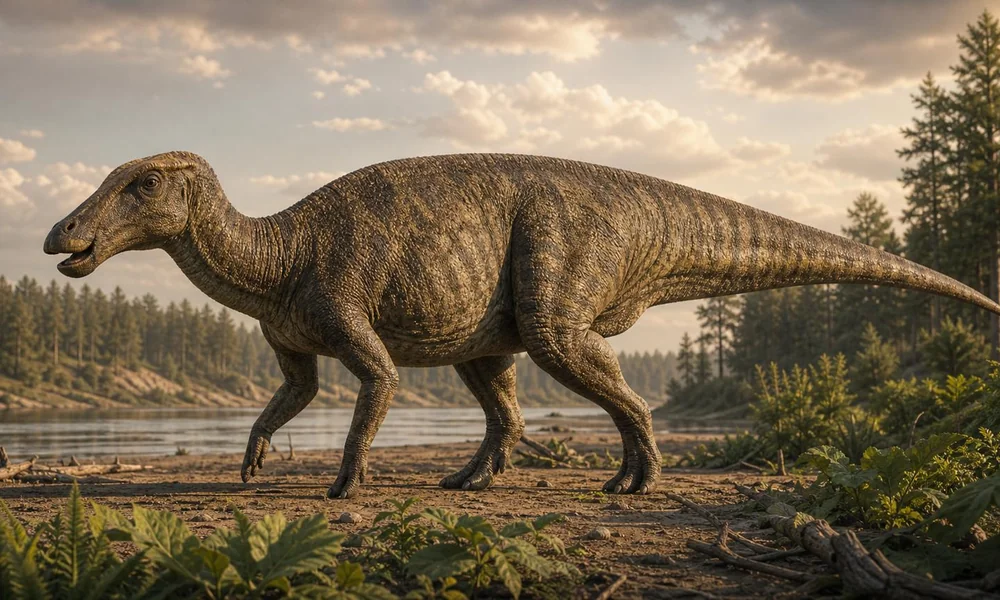
- Scientific Name: Edmontosaurus annectens and Edmontosaurus regalis
- Family: Hadrosauridae
- Habitat: Floodplains, river deltas, and coastal plains of the Late Cretaceous
- Range: Western North America
- Size and Weight: About 9–12 m long; roughly 3–4 tonnes
- Diet: Plants, including conifers and leaves
- Lifespan: Unknown
- Conservation Status: Extinct
- Key Fact: Edmontosaurus was a duck-billed dinosaur, and some fossils preserve remarkable skin impressions.
Elasmosaurus
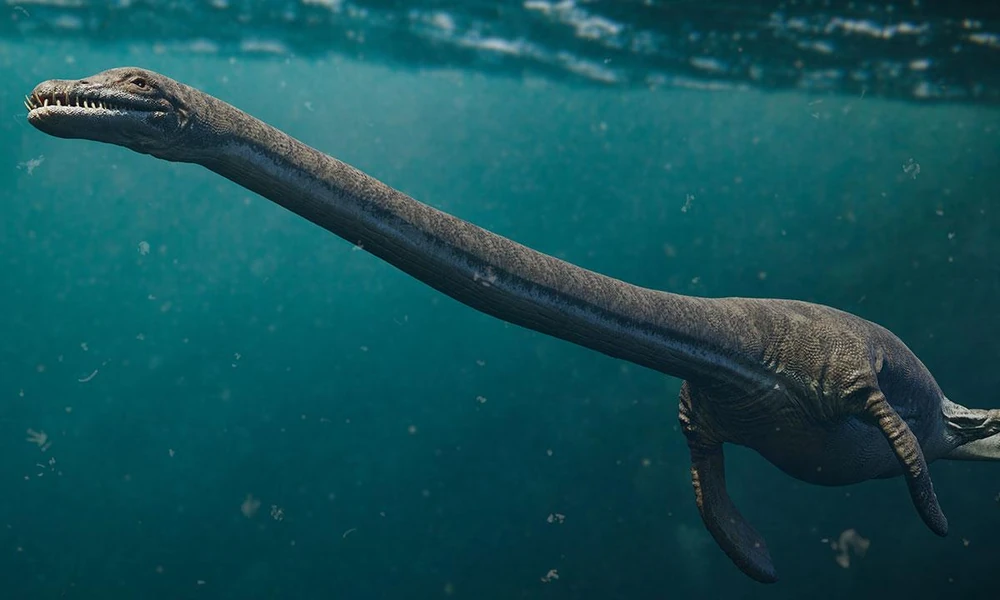
- Scientific Name: Elasmosaurus platyurus
- Family: Elasmosauridae
- Habitat: Warm, shallow seas of the Late Cretaceous
- Range: Kansas, United States, once part of a large inland sea
- Size and Weight: About 10–13 m long
- Diet: Fish, squid, and other small marine animals
- Lifespan: Unknown
- Conservation Status: Extinct
- Key Fact: Elasmosaurus was a marine reptile, not a dinosaur, and its extremely long neck contained more than 70 bones.
Elasmotherium
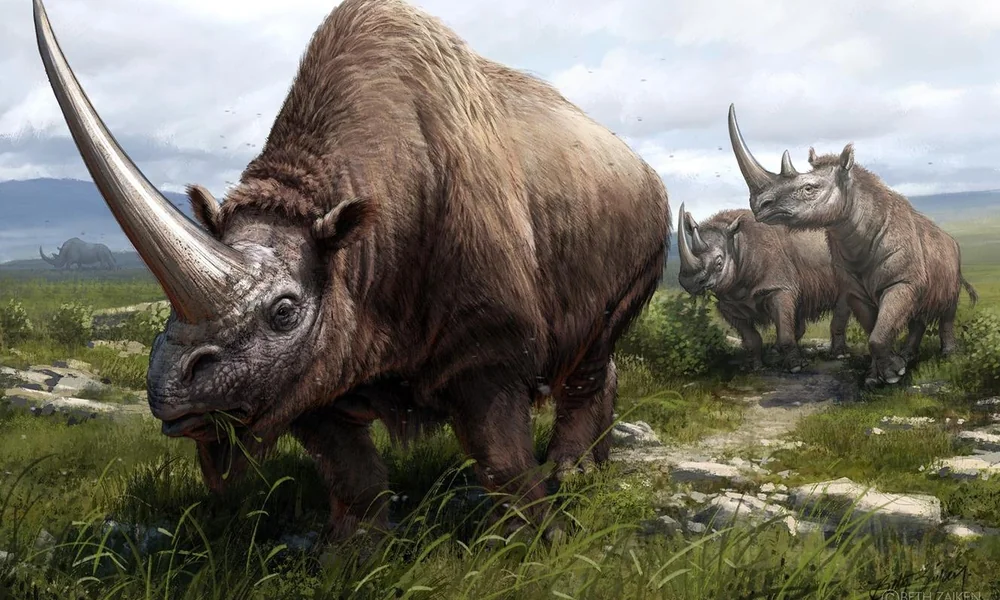
- Scientific Name: Elasmotherium sibiricum
- Family: Rhinocerotidae
- Habitat: Steppe grasslands
- Range: Eurasia, including Russia, Kazakhstan, and Mongolia
- Size and Weight: About 4.5 m long; roughly 3.5–4.5 tonnes, though estimates vary
- Diet: Grasses
- Lifespan: Unknown
- Conservation Status: Extinct
- Key Fact: Elasmotherium, often called the Siberian unicorn, had one huge horn and may have survived until about 39,000 years ago.
Eoraptor
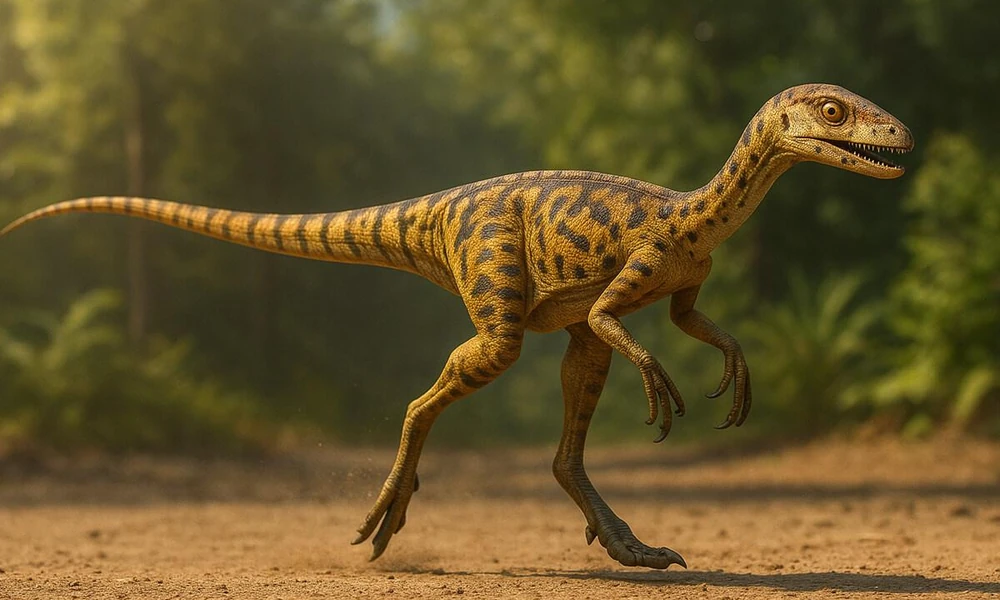
- Scientific Name: Eoraptor lunensis
- Family: Uncertain; an early member of the dinosaur lineage
- Habitat: River floodplains of the Late Triassic
- Range: Argentina
- Size and Weight: About 1 m long; roughly 10 kg
- Diet: Likely small animals and plants
- Lifespan: Unknown
- Conservation Status: Extinct
- Key Fact: Eoraptor is one of the oldest known dinosaurs, and its name means “dawn plunderer.”
Mythical Animals That Start With E
Mythical creatures come from legends and folklore, not from the living world. People invented them to explain fears, mysteries, and the natural world. None of these animals has ever been proven to exist.
Eale
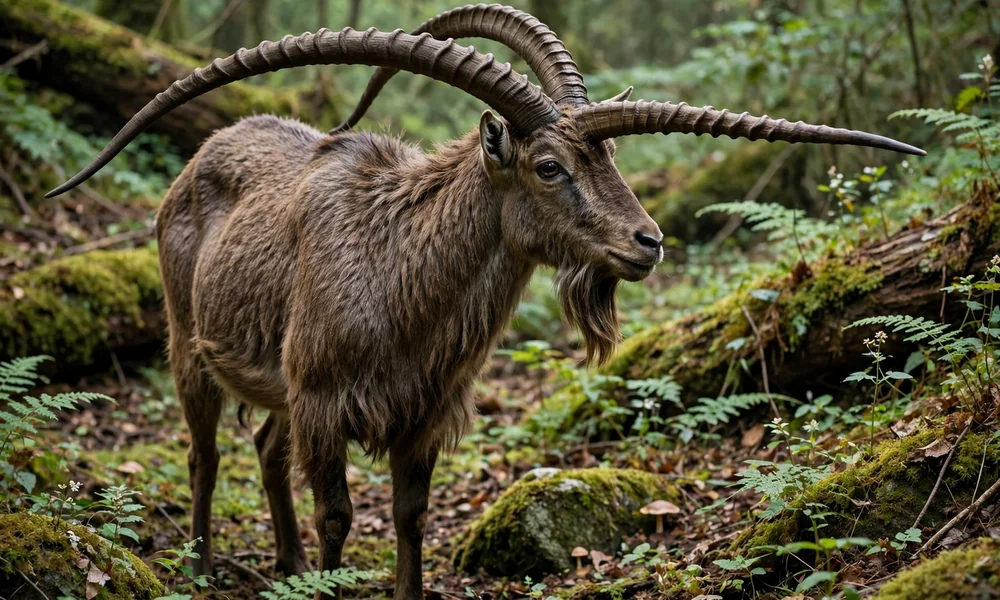
- Scientific Name: None; legendary creature
- Family: None; ancient and medieval folklore
- Habitat: Legendary lands of Ethiopia in old writings
- Range: Ancient natural history writings and European heraldry
- Size and Weight: Varies by depiction
- Diet: Varies by story
- Lifespan: Mythological
- Conservation Status: Mythical; not a real animal
- Key Fact: The eale was described as having horns that could swivel independently, so it could aim one forward and one backward in a fight.
Eikthyrnir
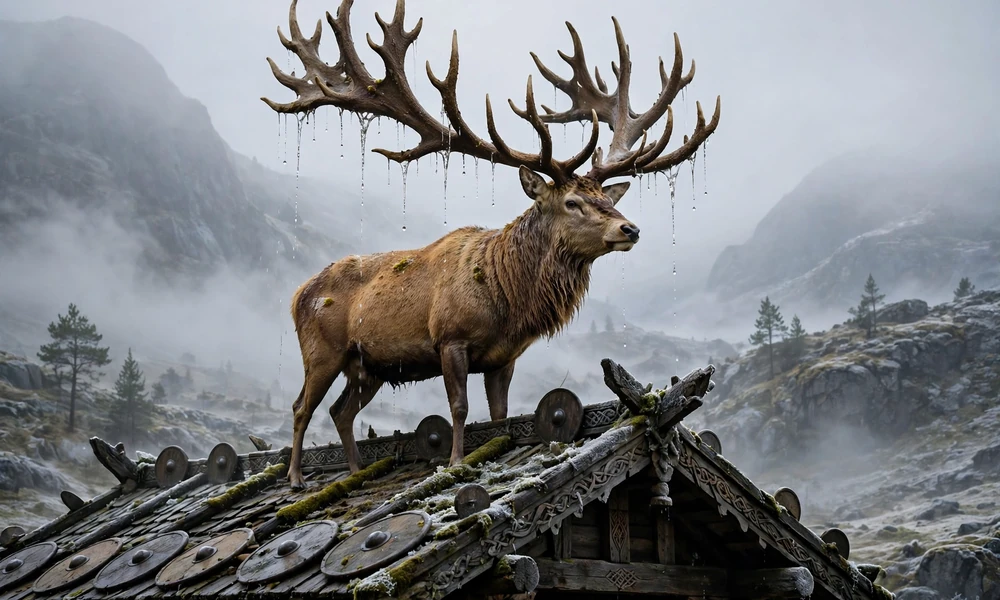
- Scientific Name: None; mythological creature
- Family: None; Norse mythology
- Habitat: The roof of Valhalla in Norse mythology
- Range: Norse mythology
- Size and Weight: Depicted as a large stag
- Diet: Leaves from a sacred tree
- Lifespan: Mythological
- Conservation Status: Mythical; not a real animal
- Key Fact: In Norse myth, water drips from Eikthyrnir’s antlers and flows into a spring that feeds the rivers of the world.
Enfield
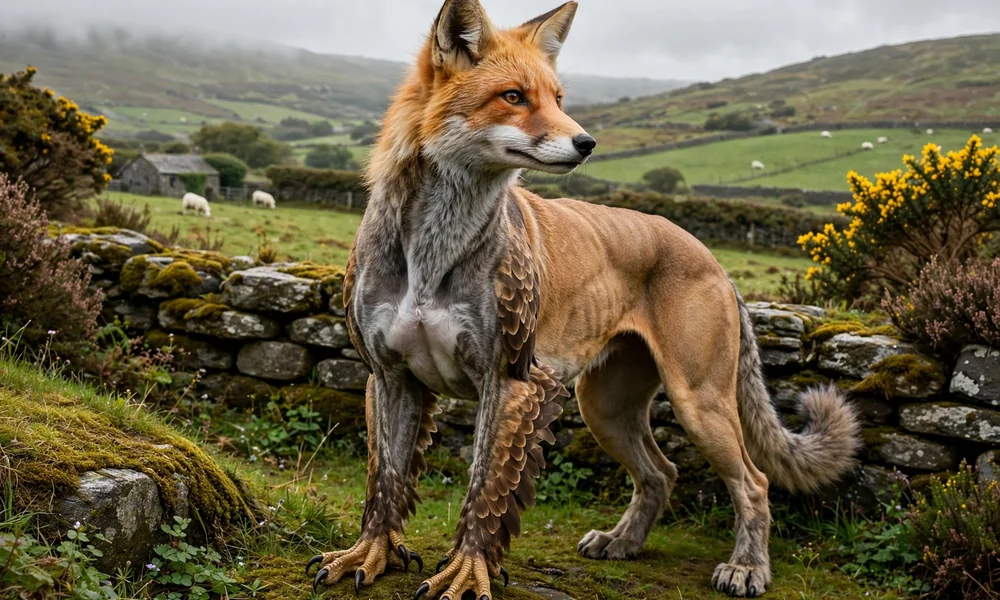
- Scientific Name: None; heraldic creature
- Family: None; European heraldry
- Habitat: Coats of arms and heraldic art
- Range: European and Irish heraldry
- Size and Weight: Varies by depiction
- Diet: Varies by story
- Lifespan: Mythological
- Conservation Status: Mythical; not a real animal
- Key Fact: The enfield is usually shown as a mix of animals, with a fox’s head, eagle’s talons, a greyhound’s chest, a lion’s body, and a wolf’s hindquarters.
Erymanthian Boar
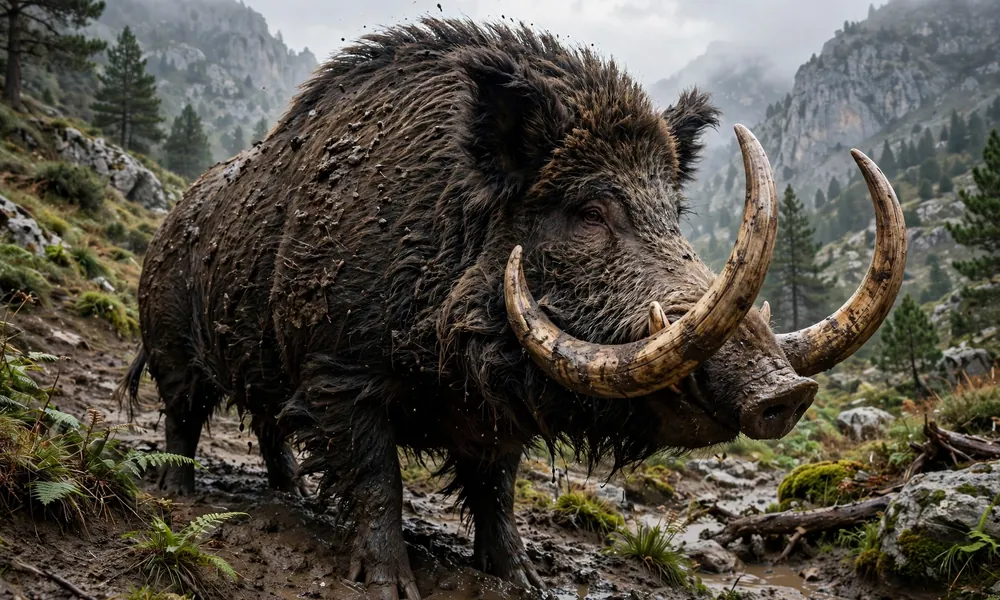
- Scientific Name: None; mythological creature
- Family: None; Greek mythology
- Habitat: Mount Erymanthos in Arcadia, Greece
- Range: Ancient Greek mythology
- Size and Weight: Depicted as a giant, powerful boar
- Diet: Varies by story
- Lifespan: Mythological
- Conservation Status: Mythical; not a real animal
- Key Fact: Capturing the Erymanthian Boar alive was one of the twelve labors of the hero Heracles.
Frequently Asked Questions
Why is the elephant missing from some lists of E animals?
“Elephant” is a group name, not a full species name. The three living species are the African bush elephant, the African forest elephant, and the Asian elephant, and none of those names starts with E. Lists that count only full species names leave elephants out, while lists that use everyday names include them.
Why do so many E animals have names that start with Eastern, Eurasian, or European?
These words describe where an animal lives. “Eastern” often separates an animal from a close relative in the west, such as the eastern bluebird. “Eurasian” means the animal lives across both Europe and Asia, and “European” means it lives mainly in Europe. This is why so many E animals share these opening words.
What is the biggest animal that starts with E?
Elephants are the largest living land animals. Among the other E animals, the southern elephant seal is among the heaviest meat-eating mammals, the emperor penguin is the tallest and heaviest penguin, and the eastern gorilla is the largest living primate.
What is the smallest animal that starts with E?
The Etruscan shrew is one of the smallest living mammals by mass, weighing only a few grams. The elf owl is one of the smallest owls, the eastern dwarf treefrog is one of the smallest treefrogs in North America, and the emperor shrimp is only about 2 cm long.
Which E animals are endangered?
The eastern gorilla, European mink, elkhorn coral, and Española giant tortoise are Critically Endangered, and the Ethiopian wolf and Egyptian vulture are Endangered. The African bush elephant and Asian elephant are Endangered, and the African forest elephant is Critically Endangered. The emperor penguin is Near Threatened.
Which E animals have names that mislead?
Several do. An elephant shrew is not a true shrew, and an electric eel is not a true eel but a knifefish. An earthworm is a worm, not an insect, and an eagle ray is a fish, not a bird. In North America, an elk is a wapiti, but in parts of Europe, people use the word “elk” for the moose.
Which E animals can be dangerous to people?
The eastern brown snake, Egyptian cobra, eastern green mamba, and eastern diamondback rattlesnake are venomous. Electric eels can deliver strong shocks, European hornets can sting painfully, and elephants and male elephant seals can be dangerous if approached. Most of these animals avoid people when given space, so watching from a safe distance is always best.