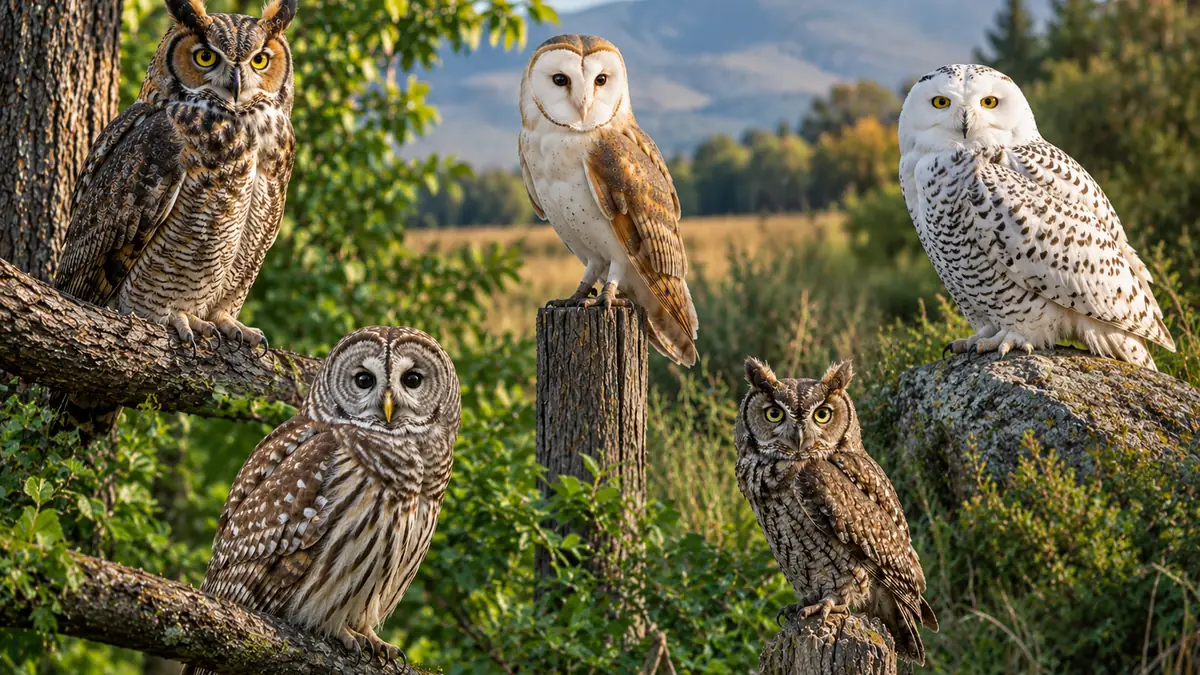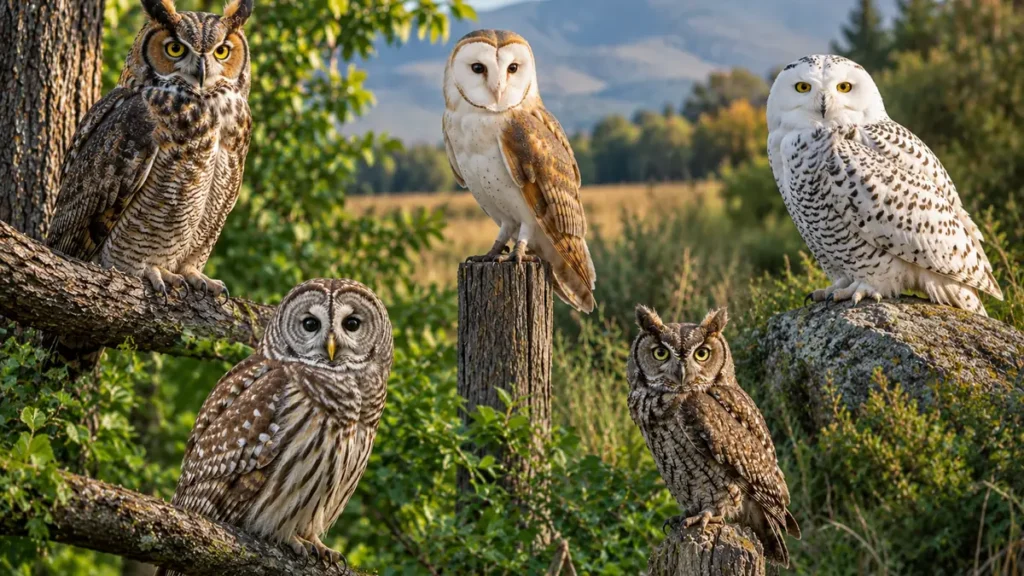
The forest is quiet. A mouse moves beneath a layer of fallen leaves, searching for seeds in the darkness. Somewhere above, a bird sits motionless on a branch, its large eyes scanning the ground. The mouse hears nothing unusual. Then a shadow slips between the trees, wings barely disturbing the air.
The hunt is over in seconds.
This is the world of the owl, one of nature’s most specialized nocturnal hunters. With remarkable hearing, excellent low-light vision, powerful talons, and feathers adapted for quiet flight, owls have developed a way of life that allows many species to hunt when other birds are resting.
But not every owl hunts at night, and not every species lives in a deep forest. Some hunt over open grasslands, others inhabit deserts and wetlands, and a few are active during daylight. From the tiny elf owl to the powerful great horned owl, these birds occupy a surprising range of habitats.
Owls are birds of prey belonging to the order Strigiformes. Most species hunt at night or around dawn and dusk, feeding on animals such as rodents, insects, birds, reptiles, and other small prey. Their role as predators helps maintain ecological balance, while their unusual adaptations make them among the most fascinating birds in the world.
What Is an Owl?
An owl is a bird of prey recognized by its forward-facing eyes, rounded facial disc, hooked beak, and strong feet equipped with sharp talons.
Owls belong to two main living families: Tytonidae, which includes barn owls, and Strigidae, which includes most other familiar owls, such as great horned owls, screech-owls, and snowy owls.
Although individual species differ greatly in size, coloring, and behavior, they share adaptations that help them locate, capture, and consume prey.
Their eyes face forward, giving them overlapping fields of vision that help with depth perception. Their feet can deliver a powerful grip, and their beaks are designed to tear food apart.
Many species also have exceptionally sensitive hearing. For an owl hunting in darkness, the faint rustle of a mouse can reveal far more than the eye alone could detect.
The owl’s familiar appearance is not just a collection of unusual features. Each part of its body contributes to a hunting strategy refined over generations.
Types of Owls Found Around the World
Owls live on every continent except Antarctica. Different species have adapted to tropical forests, northern woodlands, open farmland, deserts, mountains, and even urban environments.
Here are some of the best-known owl species, particularly those familiar to North American readers.
1. Great Horned Owl
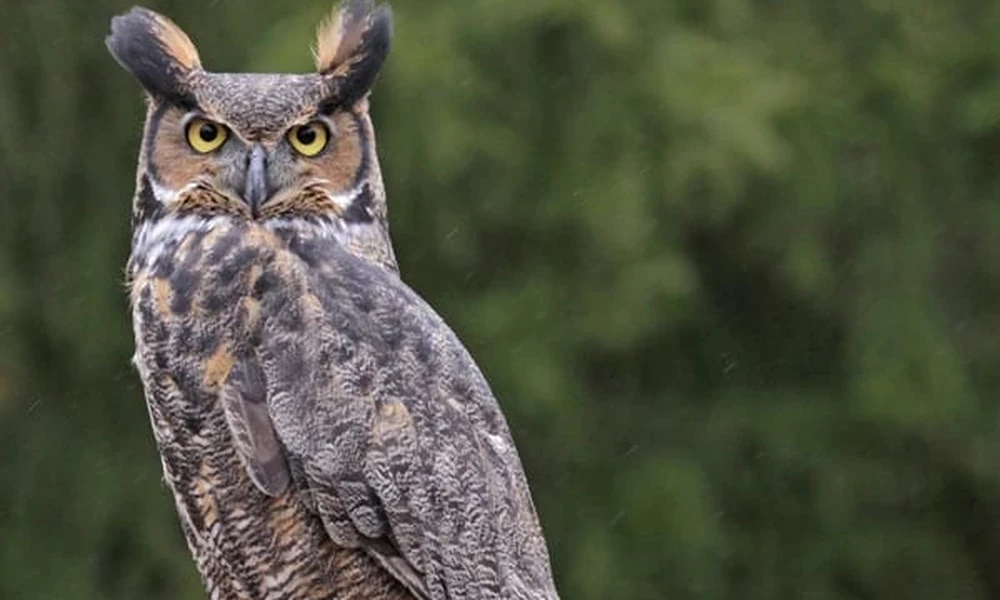
The great horned owl (Bubo virginianus) is one of North America’s most widespread and recognizable owls.
It has prominent feather tufts that resemble horns, large yellow eyes, and a deep, resonant call. Its plumage usually consists of mottled brown, gray, and cream patterns that help it blend into tree bark and surrounding vegetation.
Despite its association with forests, the great horned owl can inhabit deserts, wetlands, grasslands, woodlands, and suburban areas.
It is a powerful and adaptable predator. Its diet includes rabbits, rodents, birds, reptiles, and other available animals. It may even prey on other owls.
Unlike many smaller species, the great horned owl can tackle relatively large prey. Its combination of strength, versatility, and broad habitat tolerance has helped it thrive across much of the Americas.
2. Barn Owl
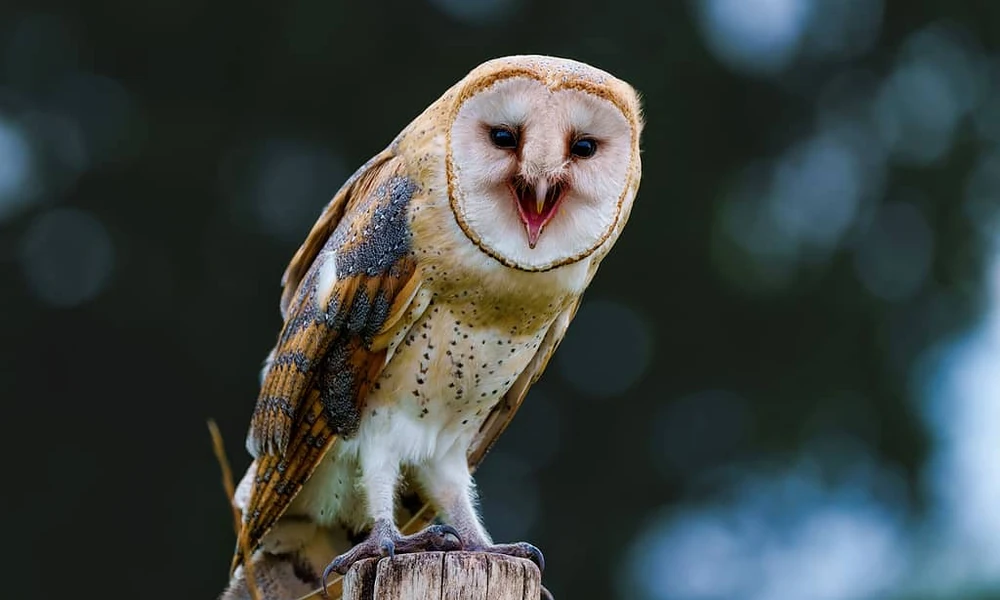
The barn owl (Tyto alba) is famous for its pale, heart-shaped face and ghostlike appearance in low light.
Its upperparts are generally golden or buff-colored, while the underside is often pale, with variation among individuals and populations.
Barn owls commonly hunt over grasslands, agricultural fields, marsh edges, and other open areas where small mammals are abundant. They frequently nest in cavities, barns, abandoned buildings, and suitable nest boxes.
Their hearing is particularly important for hunting. The heart-shaped facial disc helps direct sound toward the ears, allowing a barn owl to locate prey with remarkable accuracy.
A barn owl may catch mice and voles that remain almost invisible beneath vegetation. By hunting rodents, it can provide a valuable natural form of pest control in suitable agricultural landscapes.
3. Snowy Owl
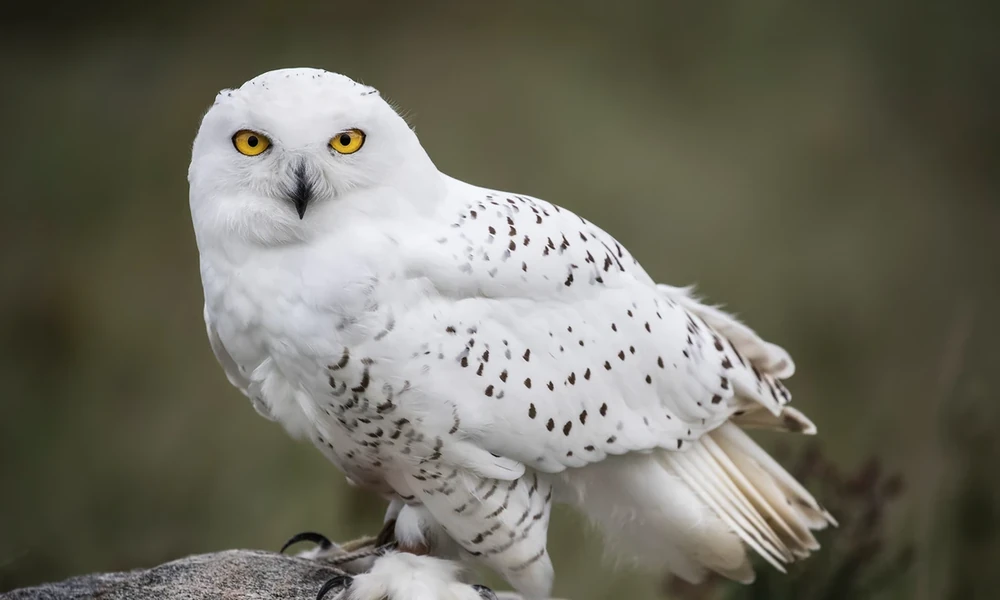
The snowy owl (Bubo scandiacus) is one of the most distinctive owls because of its pale plumage and association with Arctic environments.
Adult males are often nearly white, while females and younger birds typically show more dark barring. Their coloration provides camouflage against snowy landscapes, although the amount of white varies.
Snowy owls breed in Arctic tundra, where they hunt lemmings and other small animals. They may also take birds, including waterbirds, depending on availability.
Unlike many owls, snowy owls frequently hunt during daylight. In the Arctic summer, when daylight can last for much of the day, being active in brighter conditions is not unusual.
In some winters, snowy owls move farther south when food availability, breeding success, and other ecological conditions influence their movements. These appearances can bring them into coastal areas, grasslands, airports, and open fields.
4. Barred Owl
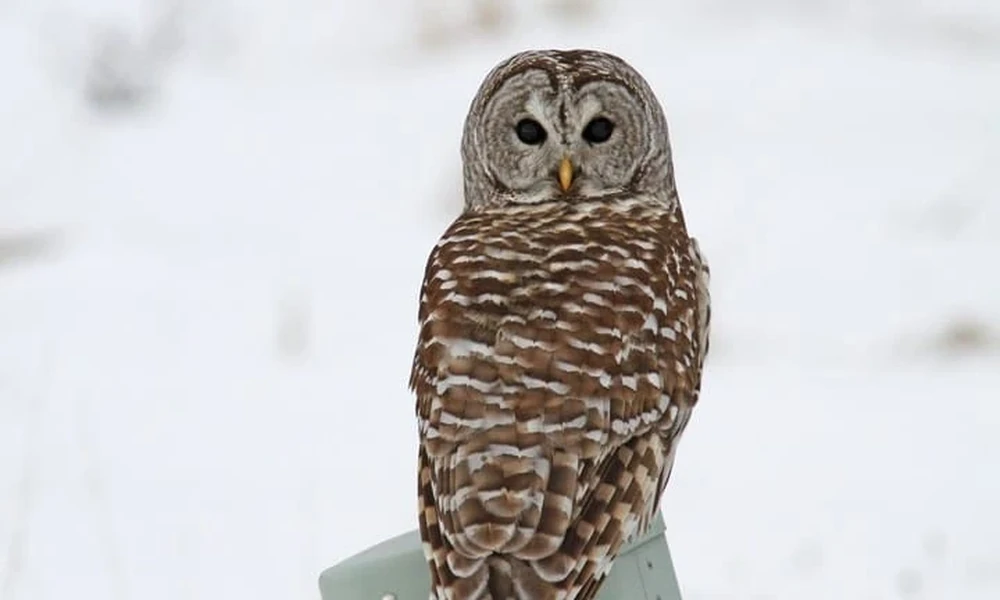
The barred owl (Strix varia) is a familiar resident of many mature forests in eastern North America and parts of western North America.
Its rounded head lacks the prominent ear tufts seen on a great horned owl. Dark horizontal bars across the upper chest and vertical streaks lower on the body help distinguish it from similar species.
Its call is famously expressive, often described as a series of hoots that sound like a question followed by an answer. The familiar pattern has inspired memorable phrases used by birdwatchers, although actual calls vary.
Barred owls hunt rodents, frogs, insects, birds, and other small animals. They are comfortable in wooded environments with mature trees and suitable nesting sites.
Their presence can be detected by sound long before the bird itself is visible. In a quiet forest, a barred owl’s call may carry across considerable distances.
5. Eastern and Western Screech-Owls
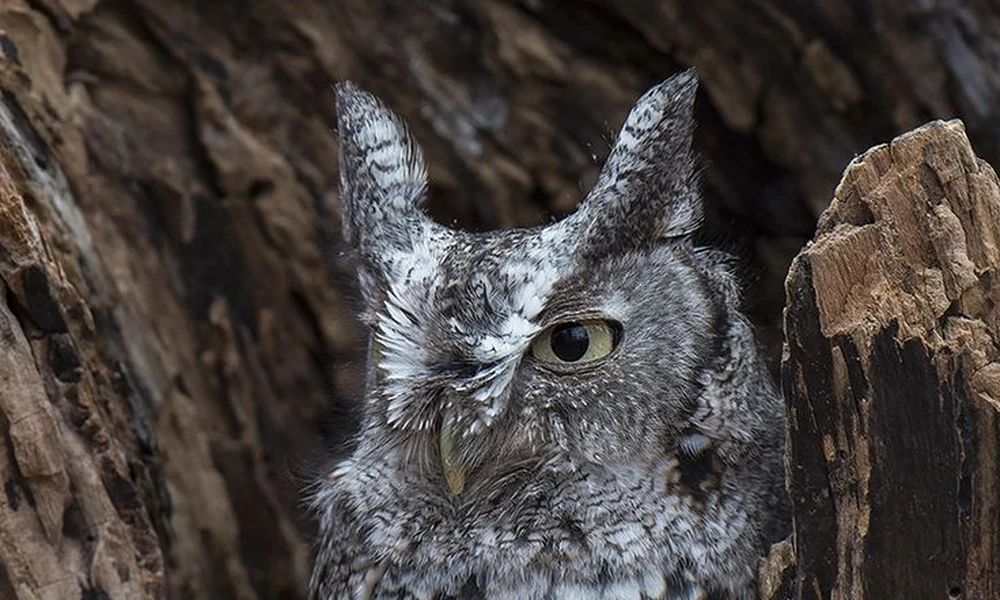
Eastern screech-owls (Megascops asio) and western screech-owls (Megascops kennicottii) are small owls found in different regions of North America.
Their compact bodies, short ear tufts, and intricate gray, brown, or reddish plumage help them disappear against tree trunks.
Despite their names, screech-owls do not always produce a harsh screech. Their vocalizations can include trills, whistles, and other calls.
These owls often use tree cavities for shelter and nesting. They eat insects, small mammals, birds, and other prey, with the exact diet depending on the species and local environment.
Because they can live in wooded neighborhoods and parks, screech-owls sometimes occupy areas close to people without being noticed.
6. Burrowing Owl
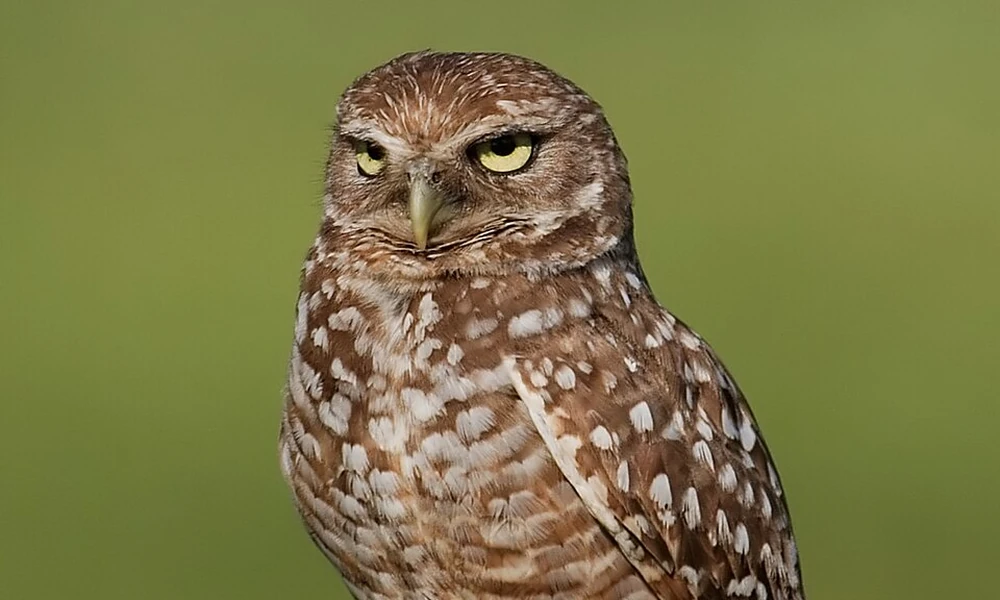
The burrowing owl (Athene cunicularia) breaks the familiar image of an owl living high in a tree.
It occupies open grasslands, deserts, and other landscapes with suitable ground burrows. It may use burrows excavated by prairie dogs or other animals, although nesting behavior varies by location.
Burrowing owls have long legs, relatively small bodies, and bright yellow eyes. They are often active during the day, particularly around dawn and dusk.
Their diet includes insects and small vertebrates. Unlike many owls, they may spend considerable time standing on the ground near their burrows.
Habitat loss and the decline of burrowing mammals can affect these owls because suitable nesting and shelter sites are essential to their survival.
7. Great Gray Owl
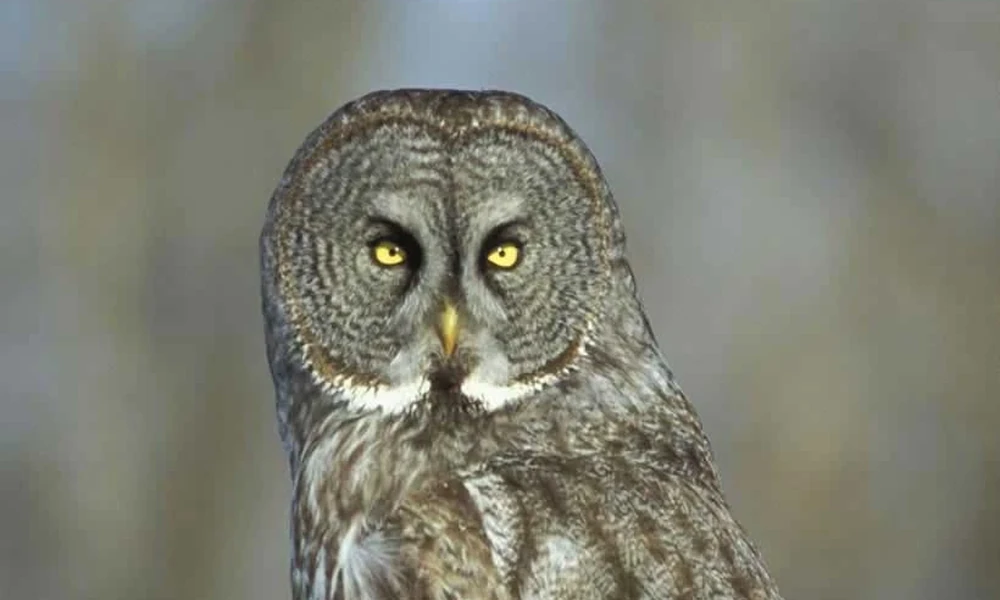
The great gray owl (Strix nebulosa) is a large owl associated with boreal forests and other wooded regions across parts of the Northern Hemisphere.
Its broad facial disc, yellow eyes, and long-looking body give it an imposing appearance. Much of its apparent size comes from its thick plumage rather than exceptional body weight.
Great gray owls frequently hunt small mammals. Their hearing helps them locate prey beneath snow or vegetation, and they can plunge through loose snow to reach an animal moving below the surface.
This ability illustrates why hearing is so important to owls. Even when prey cannot be seen, sound can reveal its position.
8. Elf Owl
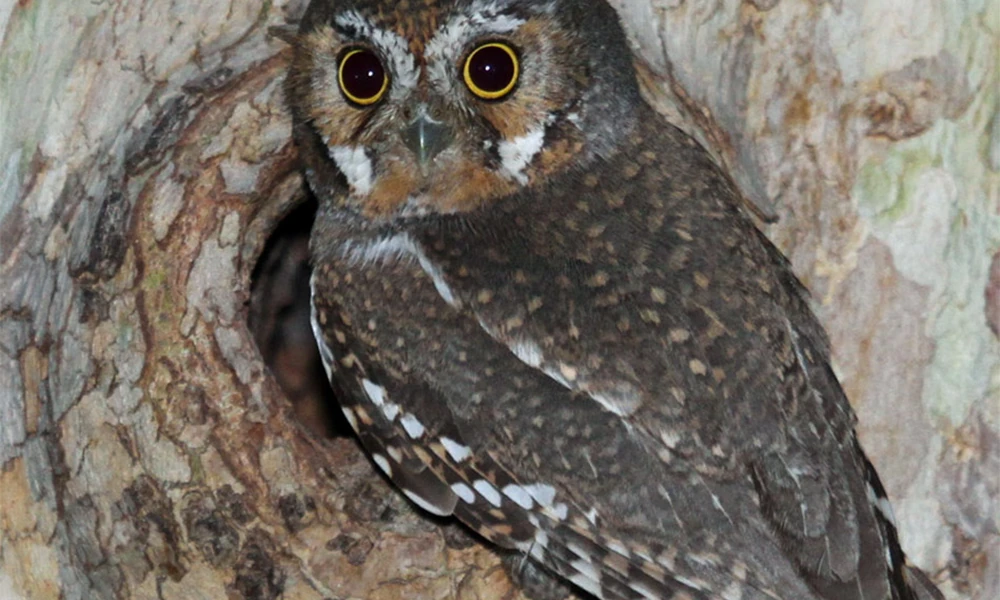
The elf owl (Micrathene whitneyi) is one of the smallest owl species in the world.
It lives in parts of the southwestern United States and Mexico, often using cavities in trees and cacti. Its small size allows it to exploit food sources unavailable to larger predators.
Elf owls feed heavily on insects and other small invertebrates, including moths, beetles, and crickets.
Their existence is a reminder that owls are not all large hunters of mice and rabbits. Some specialize in capturing tiny prey and survive in environments that look harsh to much larger animals.
9. Long-Eared Owl

The long-eared owl (Asio otus) has tall feather tufts and a slender appearance.
It often roosts in dense vegetation during the day, where its patterned plumage helps conceal it. At night, it may hunt over open ground for small mammals.
Long-eared owls can be difficult to spot even when they are present in an area. Their camouflage and secretive habits make listening for their calls a useful way to detect them.
10. Short-Eared Owl
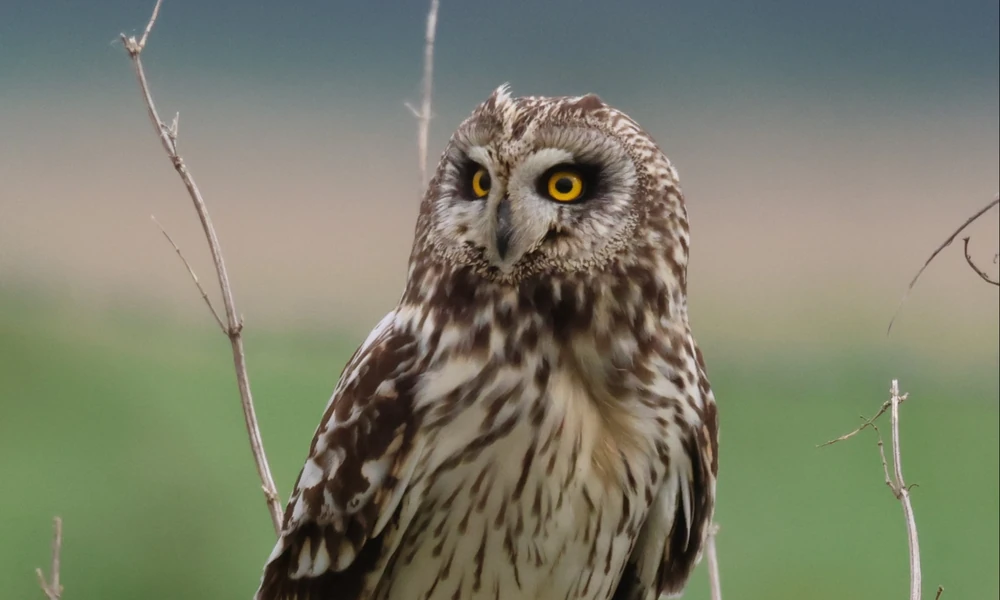
The short-eared owl (Asio flammeus) is strongly associated with open country, including grasslands, marshes, and tundra.
It often hunts during daylight or around dusk, flying low over vegetation while searching for rodents. Its flight can appear buoyant, with wingbeats and glides that distinguish it from many other birds.
Because it relies on open landscapes, changes in grassland management and the loss of suitable habitat can affect local populations.
These ten species demonstrate how diverse owls can be. Some depend on mature forests, others hunt across open fields, and some survive in arid landscapes where insects form a major part of the diet.
Why Do Owls Have Such Large Eyes?
An owl’s large eyes help it gather light in conditions when visibility is poor.
Many owls are active at night, when detecting movement requires adaptations different from those of animals that hunt in full sunlight. Their eyes contain many light-sensitive rod cells, which are particularly useful in dim conditions.
Their forward-facing placement also creates overlapping visual fields, helping owls judge distances when approaching prey.
However, large eyes come with a trade-off. Owl eyes are relatively fixed in their sockets, so an owl cannot roll them around as freely as a person can move their eyes.
To compensate, owls can rotate their heads through a wide range of motion. They cannot turn their heads a complete 360 degrees, as popular myths sometimes suggest, but they can rotate them by roughly 270 degrees.
Special adaptations in the neck and blood supply help make these movements possible without interrupting circulation to the brain.
The result is an animal that can keep its gaze directed toward a target while turning its head to scan the surroundings.
How Can Owls Hear a Mouse in the Dark?
An owl’s hearing is one of its most important hunting tools.
The facial disc surrounding the eyes is made of specially arranged feathers that help funnel sound toward the ears. In several species, the ear openings are positioned asymmetrically, meaning one is higher than the other.
This arrangement allows the owl’s brain to compare small differences in the timing and intensity of sounds reaching each ear.
From these differences, the owl can estimate where a sound originates, including whether it comes from above, below, or to one side.
Imagine a mouse moving beneath dry leaves on a dark forest floor. A human standing nearby might hear only faint rustling. A hunting owl may use that sound to narrow down the mouse’s location and prepare an accurate strike.
Some owls can locate prey using sound even when visual cues are severely limited, including prey concealed beneath snow.
Not every owl has identical hearing abilities, and different species rely on their senses in different ways. Nevertheless, the combination of sensitive hearing and specialized facial feathers is a defining feature of many owl hunters.
Why Do Owls Fly Almost Silently?
Many owls have wing feathers adapted to reduce the noise associated with flight.
The leading edges of their flight feathers can have comb-like structures, while the trailing edges may have soft fringes. Their feather surfaces are also exceptionally soft.
Together, these features help reduce sound produced by moving air and feathers rubbing against one another.
Quiet flight is especially useful when an owl approaches prey that might otherwise detect its wingbeats. It may also help the owl hear small sounds without its own flight noise interfering.
Scientists continue to study the relative importance of these possible benefits. Silent flight is not literally perfect silence, and the degree of noise reduction varies among owl species.
Still, it is a remarkable adaptation. By reducing the sound of its approach, an owl can move through the air while preserving the auditory information it needs to hunt.
What Do Owls Eat?
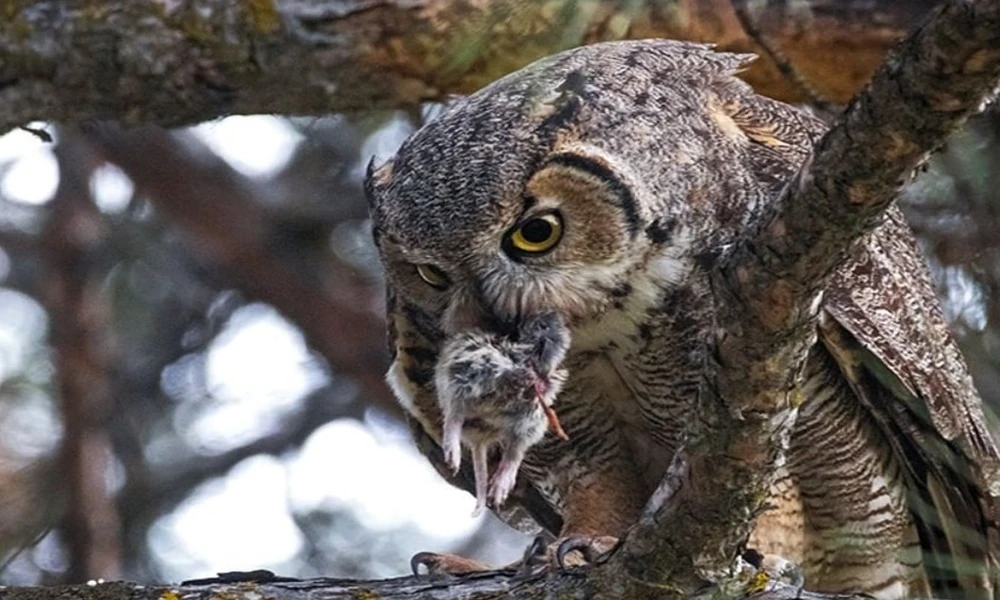
Owls are carnivorous birds of prey, but their diets vary substantially with body size, habitat, and species.
A small owl that specializes in insects has very different dietary needs from a large eagle-owl capable of catching mammals and birds.
Common owl prey includes:
- Mice, voles, and other rodents
- Shrews and other small mammals
- Insects, beetles, moths, and grasshoppers
- Small birds and occasionally larger birds
- Frogs, salamanders, and other amphibians
- Lizards and snakes
- Fish and crustaceans in some species
- Rabbits and other relatively large prey for powerful owls
Barn owls frequently consume rodents. Great horned owls have a more varied diet and can take prey ranging from small rodents to rabbits and birds. Elf owls depend heavily on insects, while some fish-owls and fishing owls are adapted to hunting aquatic prey.
How Do Owls Eat Their Prey?
Owls use their feet and talons to seize prey. Their hooked beaks help tear food into manageable pieces.
Small prey may be swallowed whole, while larger animals are torn apart before being eaten.
Unlike mammals, owls do not chew food with teeth. Instead, they digest the edible portions and later regurgitate indigestible material, such as bones, fur, feathers, and insect exoskeletons, in compact masses called pellets.
These pellets often collect beneath favored perches or nesting sites.
Researchers can examine owl pellets to identify prey remains. The bones and other materials provide clues about what an owl has been eating, making pellets a useful tool for studying diets and local small-mammal communities.
Where Do Owls Live?
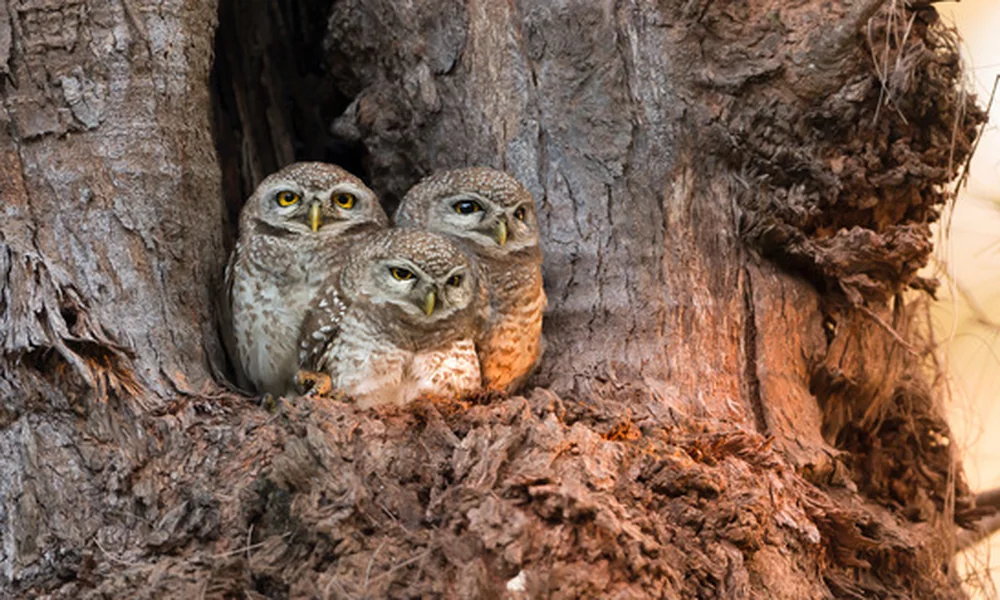
Owls inhabit a broad range of environments. The most suitable habitat depends on the species and the availability of food, shelter, and nesting sites.
Forests and Woodlands
Forests provide tree cavities, nesting locations, resting perches, and prey such as rodents and small birds.
Great horned owls and barred owls are examples of species that use wooded environments, although both can occupy a wider range of habitats.
Mature trees can be particularly important because cavities and large branches offer shelter and potential nesting sites.
Grasslands and Farmland
Open habitats provide hunting opportunities for species such as barn owls, short-eared owls, and burrowing owls.
Grasslands can support rodents and insects, giving owls a dependable source of prey when the habitat remains healthy.
However, removing field margins, destroying burrows, and converting grasslands into other land uses can reduce food availability and nesting opportunities.
Deserts and Dry Landscapes
Some owls are well adapted to arid regions. Elf owls and burrowing owls, for example, occur in parts of the southwestern United States and Mexico.
In these environments, owls may use tree cavities, cactus cavities, or underground burrows, depending on the species.
Their survival depends on access to suitable shelter and enough prey to meet their energy requirements.
Cities and Suburbs
Some owl species adapt to parks, golf courses, cemeteries, wooded neighborhoods, and other urban green spaces.
A great horned owl may nest in a city park, while a screech-owl may shelter in a tree cavity in a residential garden.
Urban environments can provide food and nesting sites, but they also create risks. Vehicle collisions, habitat fragmentation, rodenticides, and disturbance can threaten owls living near people.
Are Owls Nocturnal?
Most owls are primarily nocturnal, meaning they are most active at night. Others are crepuscular, becoming active around dawn and dusk, while some regularly hunt during daylight.
Their activity patterns reflect their species, prey, habitat, and local conditions.
Snowy owls and burrowing owls are familiar examples of species that can be active during the day. Great gray owls may hunt in daylight as well as during darker periods, especially when conditions favor it.
It is therefore inaccurate to assume that every owl sleeps all day and hunts exclusively at night.
Many owls rest during daylight hours because this pattern suits their hunting strategy. Their camouflage allows them to remain concealed while resting in trees, cavities, or dense vegetation.
At night, their senses and hunting adaptations become especially valuable.
What Sounds Do Owls Make?
Owls use a variety of vocalizations to communicate. Hooting is the best-known, but their calls can include whistles, trills, screeches, barks, clicks, and raspy cries.
Different species produce distinctive sounds.
Great horned owls often give deep hoots. Barred owls are known for their rhythmic series of calls, while screech-owls produce trills and descending whistles. Barn owls may emit harsh screeches rather than the familiar hoots associated with owl imagery.
Owls call for several reasons, including defending territory, attracting mates, maintaining contact between partners, and communicating with their young.
During breeding season, the sounds of an owl may carry through a neighborhood or forest long after sunset.
Hearing an owl does not always mean one is nearby. Sound can travel across open ground, and calls may seem closer or farther away than the bird actually is.
How Do Owls Raise Their Young?
Owl breeding behavior differs by species, but most rely on protected nesting sites and parental care.
Many owls do not construct elaborate nests. Instead, they use tree cavities, abandoned nests built by other birds, rocky ledges, burrows, or other suitable locations.
Barn owls may nest in cavities or nest boxes, while burrowing owls use underground burrows. Great horned owls often use existing nests rather than building a new structure from scratch.
The female typically lays eggs and incubates them, while the male often supplies food during the early stages of nesting. The precise division of care varies among species and circumstances.
Young owls hatch covered in down and depend on their parents for warmth, protection, and food. As they grow, they develop feathers and begin moving around the nesting site.
Some young owls leave the nest before they can fly well. A fledgling may be found on a branch or on the ground, appearing awkward and vulnerable. Its parents may still be nearby, continuing to feed and protect it.
What Should You Do If You Find a Baby Owl?
Keep your distance and keep pets away. A young owl outside its nest is not necessarily abandoned.
If it is fully feathered and appears alert, observe from a distance while seeking advice from a local wildlife rehabilitator if you are concerned.
If the bird is visibly injured, weak, or in immediate danger, contact a licensed wildlife rehabilitator or wildlife authority. Do not attempt to raise it yourself, offer food or water, or keep it as a pet.
If the bird is in a dangerous location, professional guidance can help determine whether it needs assistance and how to move it safely.
Owls are wild birds of prey, and in many places they are protected by law. Handling or possessing one may require special authorization.
Do Owls Have Any Natural Predators?
Adult owls are predators themselves, but they are not completely safe from other animals.
The risks vary according to species, size, age, and habitat. Eggs and young owls are especially vulnerable because they cannot escape as easily as adults.
Potential threats include:
- Larger owls, including great horned owls
- Hawks and eagles
- Mammalian predators such as foxes and raccoons
- Snakes that can reach nests or young birds
- Domestic cats and other introduced predators in some environments
Owls also face non-predatory threats, including collisions with vehicles, habitat loss, electrocution, and exposure to rodenticides.
Because owls often hunt animals that have consumed poison bait, toxic chemicals can move through the food chain. A poisoned rodent may become a meal for an owl, exposing the bird to substances that can cause serious harm.
This is one reason wildlife-friendly pest management matters. Reducing rodent problems should not unintentionally endanger the predators that help control rodent populations naturally.
Are Owls Dangerous to Humans?
Owls generally avoid people and are not considered a serious threat when observed from a respectful distance.
However, they are wild predators equipped with strong feet, sharp talons, and hooked beaks. An owl that feels threatened, is handled, or is defending its nest may strike defensively.
During nesting season, some individuals may dive toward people who approach too closely. This behavior is generally associated with defending eggs or young rather than seeking humans as prey.
To reduce the chance of conflict:
- Observe owls from a distance.
- Never try to touch, capture, or feed a wild owl.
- Keep pets away from nests and roosting sites.
- Avoid disturbing an owl that is injured or behaving unusually.
- Contact a wildlife rehabilitator or wildlife authority if an owl needs assistance.
If an owl strikes or scratches you, wash the wound thoroughly and seek medical advice, particularly if the injury is deep or becomes inflamed.
An owl perched in a tree or calling at night is not a reason for alarm. Respecting its space is usually enough to keep both people and birds safe.
Why Are Owls Important to the Environment?
Owls play an important role in food webs because many species feed on rodents and other small animals.
In some agricultural landscapes, barn owls can help reduce local rodent populations by hunting mice and voles. Other species consume insects, birds, reptiles, amphibians, and small mammals, depending on their ecological niche.
Their effects extend beyond the animals they eat. Owls are part of a larger network of predators and prey, and changes in their populations can reflect changes in the surrounding ecosystem.
A decline in suitable nesting trees, for example, may affect cavity-nesting owls. A reduction in grassland prey may influence species that hunt in open fields. Pesticides and rodenticides can create additional risks.
Protecting owls therefore involves more than protecting individual birds. It means conserving the habitats, food sources, and nesting sites that allow them to survive.
Maintaining mature trees, protecting grasslands, reducing unnecessary pesticide use, and avoiding disturbance around active nests can all help support owl populations.
Are Owls Endangered?
There is no single conservation status that applies to every owl. Some species remain widespread, while others face substantial declines or have small, vulnerable populations.
The main threats vary by species and region, but they often include:
- Habitat loss and fragmentation
- Declining prey availability
- Rodenticide poisoning
- Vehicle collisions
- Disturbance near nesting sites
- Climate-related changes in habitat and prey
- Illegal capture or persecution in some regions
The burrowing owl, for example, can be affected by the loss of open grasslands and suitable burrows. Forest-dependent species may struggle when old trees and nesting cavities disappear.
Conservation needs to match the species. Protecting a forest owl requires different measures from protecting an owl that depends on open grasslands or desert burrows.
For people who want to help, practical steps include keeping outdoor cats indoors where possible, reducing rodenticide use, preserving native vegetation, and reporting injured owls to qualified wildlife professionals.
Owls are resilient in many environments, but they cannot survive indefinitely without adequate habitat and food.
Frequently Asked Questions About Owls
What do owls eat?
Owls are carnivores. Depending on the species, they eat rodents, insects, birds, frogs, reptiles, fish, and other small animals. Larger owls can take relatively large prey, while tiny species may feed mainly on insects.
Why do owls hoot at night?
Owls hoot to communicate with mates, defend territories, maintain contact, and signal their presence. Calls vary by species and may be especially frequent during breeding season.
Can owls see in complete darkness?
No animal can see without any available light using ordinary vision. Owls are highly adapted to low-light conditions, but they also rely heavily on hearing to locate prey when visibility is poor.
Can owls turn their heads all the way around?
No. Owls cannot turn their heads 360 degrees. Many can rotate their heads by roughly 270 degrees, allowing them to look around without moving their bodies as much.
Why do owls fly so quietly?
Many owl species have specialized feather structures that reduce the noise of flight. Their soft feather surfaces and fringed edges help suppress sound, which can support hunting and reduce interference with their hearing.
Are all owls nocturnal?
No. Many are active at night, but some hunt during daylight or around dawn and dusk. Snowy owls and burrowing owls are examples of species that can be active in the daytime.
Where do owls sleep during the day?
Depending on the species, owls rest in tree branches, dense foliage, tree cavities, burrows, rocky crevices, or sheltered structures. Their camouflage helps them remain concealed while resting.
Do owls mate for life?
Some owl pairs may remain together for multiple breeding seasons, but this behavior varies among species and individuals. It is not accurate to assume that every owl forms a lifelong pair.
Are owls good for gardens and farms?
Many owls eat rodents and other animals that people consider pests. They can contribute to natural pest control, although their impact depends on the species, prey availability, and local environment.
What should I do if an owl is in my yard?
Observe it quietly from a distance and keep pets away. If it appears healthy, it may simply be resting or hunting. If it is injured, trapped, or clearly in distress, contact a wildlife rehabilitator or local wildlife authority.
The Quiet Hunter of the Night
An owl can sit for hours without attracting attention. Its feathers blend into the tree, its body remains almost motionless, and its eyes follow movements most people would never notice in the dark.
Then, when the moment is right, it takes flight.
That quiet movement is only one part of a remarkable life. Owls use specialized hearing to locate prey, powerful feet to capture it, and different hunting strategies to survive in forests, grasslands, deserts, and cities.
They also depend on habitats that people can easily overlook: a hollow tree, an open field filled with small mammals, or a burrow hidden in the grass.
The next time you hear an owl calling after sunset, remember that the sound is part of a much larger story. Somewhere nearby, a wild bird may be searching for food, defending its territory, or communicating with its mate.
Owls are not mysterious because they possess supernatural powers. They are fascinating because evolution has equipped them to thrive in a world where darkness, silence, and patience can make the difference between survival and failure.