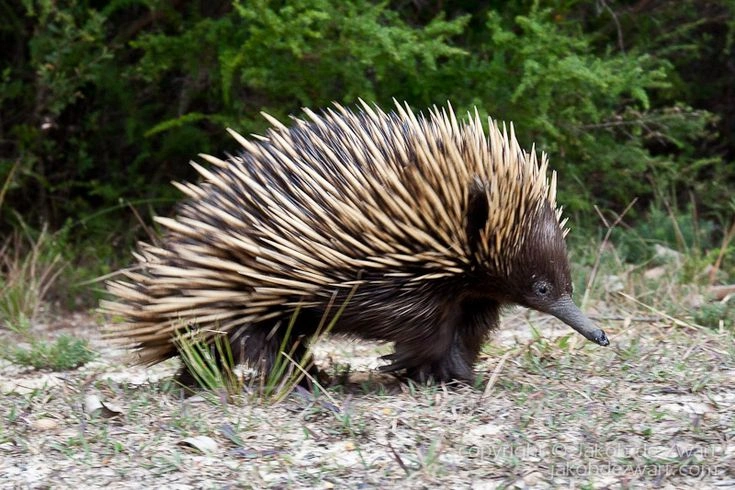
Echidna Facts look like a mix of several animals: a long snout, a coat of sharp spines, powerful digging feet, and a body that belongs to one of the oldest surviving mammal lineages. Echidnas are mammals that lay eggs, making their reproductive system completely different from that of most mammals.
For Viltnemnda readers, these Echidna Facts offer a closer look at how this quiet Australian animal lives. Almost every part of an echidna’s life shows a clever adaptation to its environment.
Key Takeaways
- Echidnas are egg-laying mammals called monotremes.
- The short-beaked echidna lives across a wide range of Australian habitats.
- Ants and termites make up much of its natural diet.
- It has no teeth and uses a long, sticky tongue to collect prey.
- Its spines are modified hairs and provide important protection.
- A threatened echidna may dig, hide, or curl into a defensive ball.
- Females usually lay one leathery egg at a time.
- The baby echidna, called a puggle, hatches after about 10 days.
- Milk comes through specialised skin pores rather than nipples.
- As the puggle develops spines, it moves from the pouch into a nursery burrow.
What Is an Echidna?
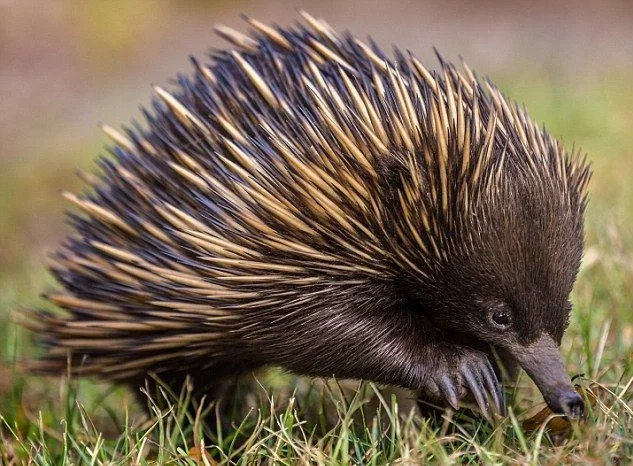
An echidna is a monotreme, meaning it is an egg-laying mammal. Living monotremes include echidnas and the platypus. The short-beaked echidna, Tachyglossus aculeatus, is the only echidna species found in Australia, while three long-beaked echidna species occur in New Guinea.
The short-beaked echidna is usually about 40 to 55 centimetres long, although size varies. Its most noticeable features are its pointed snout, short legs, strong claws, coarse fur, and spines covering much of its back and sides. Unlike many familiar mammals, it has no teeth.
That combination can make the echidna seem almost prehistoric, but its body is highly specialised. Its claws are made for digging, its tongue is built for collecting insects, and its spines provide protection when danger appears.
Where Do Echidnas Live?
Short-beaked echidnas are remarkably adaptable. They occur across Australia, including Tasmania, and can live in forests, woodlands, heath, grasslands, deserts, and other habitats. They are also found in lowland parts of New Guinea.
An echidna does not need a perfectly soft landscape to survive. Its strong front claws can break into soil, rotting wood, termite mounds, and other places where food may be hiding. It can shelter in hollow logs, rock crevices, burrows, tree-root spaces, or thick vegetation.
This wide habitat range is one reason the short-beaked echidna is considered one of Australia’s most widespread native mammals. Even so, seeing one in the wild is not always easy. Echidnas are generally quiet and solitary, and their natural camouflage can help them disappear into surrounding vegetation.
What Do Echidnas Eat?
The main foods in an echidna’s diet are ants and termites. It may also consume other small invertebrates, including worms, beetle larvae, and similar prey.
Instead of chasing insects, an echidna usually searches for nests and colonies. Its strong claws help tear open logs, soil, and termite mounds. Once it finds prey, its long sticky tongue moves rapidly in and out to collect the insects.
Echidnas have no teeth, so they use specialised structures inside the mouth to help process food before swallowing. Their snout is also more than a simple nose. It contains sensory receptors that help detect electrical signals produced by small prey, giving the animal another way to locate food.
This feeding system explains the echidna’s unusual shape. The long snout reaches into narrow spaces, the claws do the heavy digging, and the tongue does the collecting.
Why Does an Echidna Have Spines?
An echidna’s spines are one of its best-known features, and they are mainly a defence against predators. Each spine is a modified hair, and the back is also covered with fur between the quills.
When an echidna feels threatened, it may run, dig rapidly, or curl into a tight defensive ball. In that position, its face and limbs are tucked away while the sharp spines point outward. It can also bury itself so that a predator has difficulty grabbing it.
The spines are not the animal’s only protection. Its powerful digging ability is extremely important. An echidna can push into soil surprisingly quickly, leaving a predator with little to grab.
Male echidnas also have spurs on their hind legs, but these are not venomous. This is an important difference from the venomous spur of a male platypus.
How Do Echidnas Reproduce?
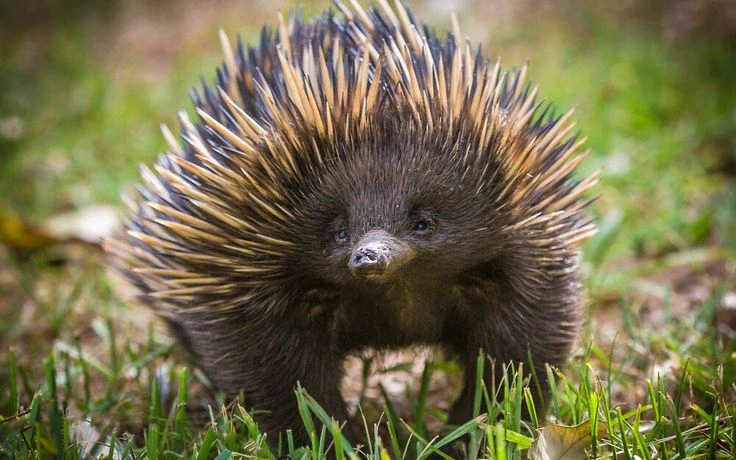
This is where echidna biology becomes especially unusual. Echidnas are monotremes, so the female produces an egg rather than giving birth to a fully developed mammal.
During breeding, males may follow a female in a line, sometimes with several males involved. Research on short-beaked echidnas has documented courtship behaviours such as following, sniffing, pawing, digging near the female, and positioning the body for mating.
After mating, the female lays a single soft-shelled, leathery egg. The egg is placed in a temporary pouch that develops during the breeding period. It remains there for roughly 10 days before hatching.
The hatchling is tiny, blind, and hairless. It is called a puggle, and it begins life in a remarkably vulnerable condition.
How Does a Baby Echidna Get Milk?
A baby echidna does not nurse from ordinary nipples because female monotremes do not have teats. Instead, milk is released through specialised pores in the mother’s skin.
After hatching, the puggle stays in the mother’s pouch-like fold and feeds from these milk patches. It remains there while it is very small and vulnerable.
As the puggle grows, its spines begin to develop. At that point, staying inside the mother’s pouch becomes impractical because the baby is becoming prickly. The mother moves it into a protected nursery burrow.
She continues returning to feed the young puggle while it develops. Depending on the source and stage being described, the early pouch period lasts around two to three months, followed by a longer period of development in the burrow. This gradual transition gives the young echidna time to become stronger before it becomes independent.
How Do Echidnas Protect Their Young?
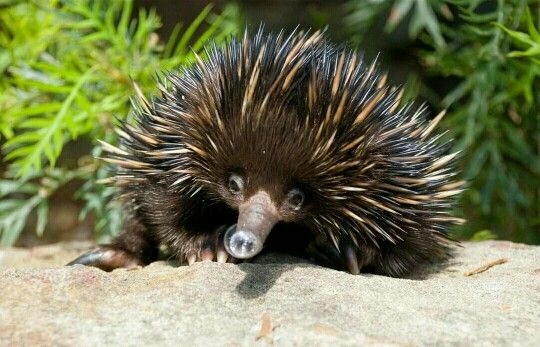
The nursery burrow is an important part of the echidna’s parenting strategy. Instead of carrying a growing, increasingly spiny baby everywhere, the mother leaves it in a protected underground space and returns periodically to provide milk.
This behaviour is especially interesting because the puggle remains dependent long after it leaves the pouch. It continues developing underground until it is large and capable enough to emerge.
Echidna breeding is also difficult to observe in the wild. Their solitary behaviour and underground nursery habits mean that many details are easier to document in controlled research settings than through direct observation outdoors.
Echidna Facts: Are Echidnas Dangerous?
Echidnas are generally shy rather than aggressive. Their spines may look intimidating, but their usual response to disturbance is to escape, dig, or curl up for protection.
A common misconception is that echidnas can inject venom with their hind-leg spurs. They cannot. Their spurs are non-venomous, although they remain a distinctive feature of the species.
For people, the bigger concern is usually the other way around: human activity can create risks for echidnas. Roads, domestic dogs and cats, foxes, and habitat changes can harm them. Young echidnas are particularly vulnerable to some predators.
What Reliable Echidna Research Shows
The facts in this guide are based on information from established wildlife and scientific sources, including the Australian Museum, Australian government environment agencies, CSIRO-linked research, and zoological organisations. These sources document echidna anatomy, habitat, feeding behaviour, reproduction, and development.
One detail worth remembering is that echidna biology is still an active research subject. Wild breeding behaviour can be difficult to observe, so researchers continue to refine what is known about courtship, reproduction, movement, and development. Where timing differs between sources, this article uses approximate ranges rather than presenting one number as universal.
Frequently Asked Questions
Are echidnas mammals?
Yes. Echidnas are mammals because they have hair and produce milk for their young. They are also monotremes, a small group of mammals that lay eggs.
Do echidnas lay eggs?
Yes. A female short-beaked echidna normally lays one soft-shelled egg during a breeding cycle. The egg hatches after roughly 10 days.
What do echidnas eat?
Echidnas mainly eat ants and termites. They can also eat other small invertebrates, including worms and beetle larvae, using their sticky tongue.
Why do echidnas have spines?
Their spines are modified hairs that provide protection. When threatened, an echidna can curl into a ball or dig into the ground, leaving the sharp spines exposed.
What is a baby echidna called?
A baby echidna is called a puggle. It hatches from an egg, feeds on milk released through specialised pores, and later develops spines before moving into a nursery burrow.
Where can echidnas be found?
Short-beaked echidnas are found across Australia, including Tasmania, and also in parts of New Guinea. They can live in forests, grasslands, heath, deserts, and other environments.
