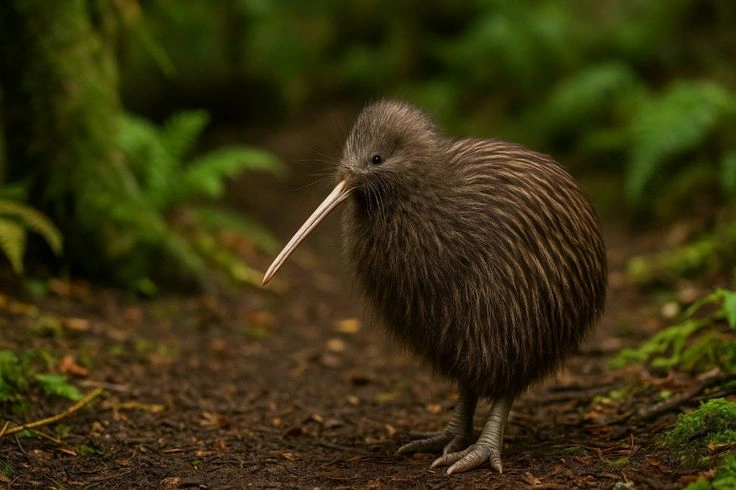
Kiwi Bird Facts: The kiwi is one of the strangest and most fascinating birds on Earth. It cannot fly, has tiny wings, no visible tail, shaggy feathers, strong legs, and nostrils near the tip of its long bill. Instead of relying mainly on sight, it uses smell and touch to search for food on the forest floor.
Native only to New Zealand, kiwi have evolved in ways that make them look almost more like small mammals than birds. Their unusual body, nighttime lifestyle, enormous eggs, and independent chicks make the species especially interesting to wildlife lovers.
On Viltnemnda, these kiwi bird facts offer a closer look at where these birds live, what they eat, how they reproduce, and why their unusual adaptations matter.
What Is a Kiwi Bird?
A kiwi is a small, flightless bird belonging to the ratite group. There are five recognized kiwi species: brown kiwi, great spotted kiwi or roroa, little spotted kiwi, rowi, and tokoeka. All are native to New Zealand, although their habitats and conservation situations differ.
Kiwi are mostly nocturnal, meaning they are generally active after dark and spend much of the daytime resting in burrows or sheltered areas. Their strong legs allow them to walk and run across forest floors while searching for insects, worms, and other food.
Unlike many birds, kiwi have loose, hair-like feathers. They also lack a traditional tail, while their wings are extremely small and unsuitable for flight. These features are part of what makes kiwi so unusual among living birds.
Key Takeaways
- Kiwi are flightless birds found naturally only in New Zealand.
- There are five recognized kiwi species.
- They are mainly nocturnal and spend much of their active time foraging on the ground.
- Their diet includes worms, insects, grubs, berries, seeds, and other available food.
- Kiwi have nostrils near the tip of their bills, an extremely unusual bird adaptation.
- Their eggs are exceptionally large compared with the female’s body size.
- Male kiwi commonly take the main role in incubating eggs.
- Kiwi chicks hatch feathered and become independent remarkably early.
- Dogs, stoats, cats, and ferrets are major threats to kiwi survival.
- Predator control and protected habitats are important parts of kiwi conservation.
Where Do Kiwi Birds Live?
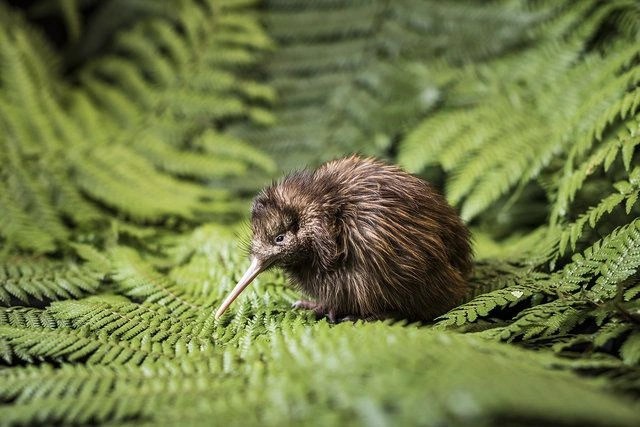
Kiwi live only in New Zealand. Their habitats can include native forests, dense shrubland, wetlands, plantations, rough pasture, and other areas where there is enough food and suitable shelter.
Different kiwi species occupy different parts of New Zealand. Brown kiwi, for example, are found across areas of the North Island, while other species occur on the South Island, Stewart Island/Rakiura, and offshore islands.
Their daytime shelters can be surprisingly simple. A kiwi may rest inside a natural burrow, hollow log, dense vegetation, or another protected space. What matters most is that the location provides safety and access to suitable feeding areas.
Habitat protection has become especially important because kiwi evolved without the same types of land predators that later arrived in New Zealand. Introduced predators now create serious risks for both adults and chicks.
Why Do Kiwi Prefer Forest Floors?
Kiwi are perfectly suited to searching through leaf litter, soil, roots, and low vegetation. Instead of flying between trees, they spend their lives close to the ground.
Their powerful legs help them move through thick vegetation, while their long bill allows them to probe soil and leaf litter for hidden prey.
This ground-based lifestyle also explains why kiwi need safe habitats. A bird that spends most of its time on the ground can be particularly vulnerable to introduced mammals and dogs.
What Do Kiwi Birds Eat?
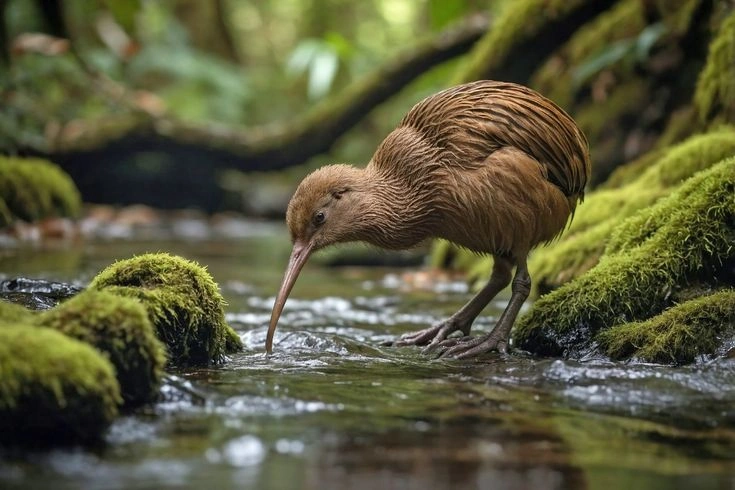
Kiwi are omnivorous foragers with a diet that mainly consists of small animals and plant material. Their food can include earthworms, insects, grubs, spiders, fallen fruit, berries, seeds, and other available plant material.
Their feeding style is one of the most impressive examples of kiwi adaptation. Instead of simply looking for prey, kiwi use their highly developed sense of smell and sensitive bill to locate food hidden beneath leaves or soil.
The nostrils are positioned unusually close to the tip of the bill. This is unique among birds and helps kiwi detect scents while they probe the ground. Sensory structures around the bill also help them detect movement and investigate potential food.
How Do Kiwi Find Food at Night?
Kiwi usually forage after dark, when their surroundings are difficult to see clearly. Their small eyes are not their strongest hunting tool.
Instead, they combine smell, hearing, touch, and sensitive whisker-like feathers around the face to investigate their surroundings. The result is a feeding strategy that works extremely well in dark forest environments.
Why Can’t Kiwi Birds Fly?
Kiwi are completely flightless. Their wings are tiny, and their bodies are built more for walking and digging than flying.
Their powerful legs are especially important because kiwi spend so much time moving across the ground. They also have relatively heavy, marrow-filled bones, another feature that differs from many flying birds.
Kiwi evolved in an environment where native land mammals were largely absent. With fewer terrestrial predators and no strong need to escape danger through flight, their ancestors developed a very different body plan.
Today, however, flightlessness makes kiwi more vulnerable to introduced predators. Dogs, cats, stoats, and ferrets can pose serious threats, particularly to young birds.
Kiwi Eggs Are Surprisingly Huge
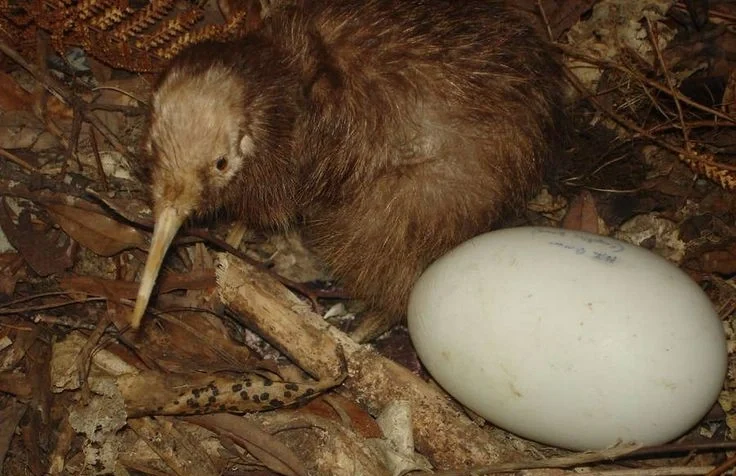
One of the most remarkable kiwi bird facts is the size of their eggs. Relative to the female’s body, a kiwi egg is enormous.
A typical kiwi egg can represent around 15% to 20% of the female’s body weight, depending on the species and individual. That is an extraordinary investment for a bird of this size.
Most kiwi species generally lay one egg at a time. Brown kiwi are somewhat different and can produce more than one egg in a clutch and may have more than one clutch in a year.
Who Incubates the Kiwi Egg?
In many kiwi species, the male takes the main responsibility for incubating the egg. Incubation lasts for roughly 70 days, although the exact period can vary.
The long incubation period is another unusual part of kiwi reproduction. Once the chick hatches, it does not receive the typical feeding routine seen in many other birds.
Instead, the newborn chick relies on a yolk reserve that provides nourishment during its first days. It begins exploring outside the burrow when it is only a few days old and learns to find food on its own.
Kiwi Chicks Are Surprisingly Independent
Kiwi chicks hatch with feathers and are far more independent than many other baby birds.
Parents do not regularly feed their chicks after hatching. The young kiwi must begin finding food itself, using the same basic foraging abilities that adults depend on.
This does not mean the chick is completely separated from its parents immediately. Young kiwi can remain within their parents’ territory while gradually becoming more independent.
Their unusual development is closely connected to the kiwi’s evolutionary history and ground-dwelling lifestyle.
The Unique Adaptations That Make Kiwi Special
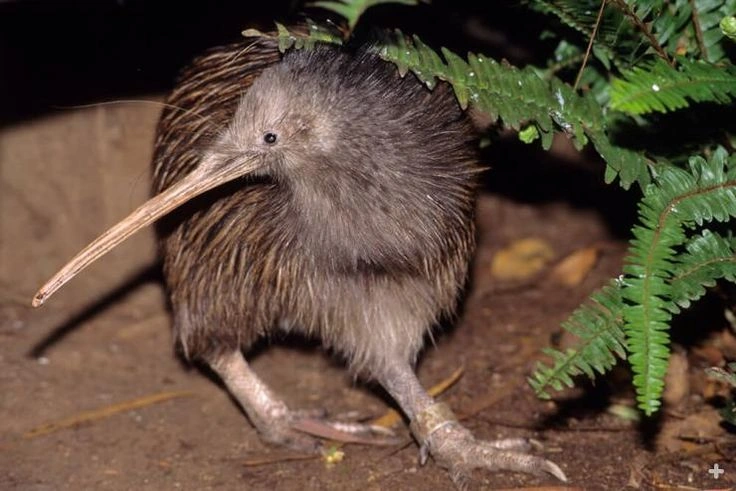
Kiwi have several adaptations that make them stand out from almost every other bird.
Nostrils at the Tip of the Bill
Kiwi are the only birds known for having nostrils positioned at the tip of the bill. This placement helps them detect scents close to the ground while searching for hidden food.
Hair-Like Feathers
Their feathers are loose, soft, and shaggy rather than sleek like the feathers of many flying birds. This gives kiwi their distinctive furry appearance.
Strong Legs
Kiwi have powerful legs that help them walk, dig, investigate soil, and defend their territory. Their legs are an essential part of their survival because they cannot rely on flight.
Whisker-Like Feathers
Sensitive whisker-like feathers around the face help kiwi feel their surroundings, particularly while moving through vegetation and darkness.
Excellent Sense of Smell
For a bird, kiwi have an unusually strong sense of smell. This ability is extremely useful because much of their food is hidden beneath soil, leaves, or vegetation.
Together, these adaptations allow kiwi to succeed without many of the traits normally associated with birds.
Are Kiwi Birds Endangered?
Kiwi face serious conservation challenges. New Zealand’s Department of Conservation currently estimates that about 70,000 kiwi remain, with populations differing considerably among species and locations.
Predation is one of the biggest problems. Stoats, dogs, cats, and ferrets can kill kiwi, especially young birds. Habitat loss and other human-related pressures can add further challenges.
Conservation programmes now focus on predator control, habitat protection, monitoring, captive management, and carefully managed breeding and release programmes.
How Are Kiwi Being Protected?
One important conservation approach is Operation Nest Egg. Under this programme, selected kiwi eggs or chicks are raised under protection until the young birds become large enough to have a better chance against predators before returning to suitable habitat.
Predator-controlled areas, predator-free islands, community projects, and iwi-led conservation programmes also play important roles in protecting kiwi populations.
These efforts show that conservation can make a real difference. Where kiwi receive effective protection, populations can recover and expand.
E-E-A-T Note
The information in this article is based on established wildlife information from the New Zealand Department of Conservation, Smithsonian’s National Zoo and Conservation Biology Institute, WWF-New Zealand, and Te Ara Encyclopedia of New Zealand. These sources provide documented information about kiwi biology, habitat, feeding behavior, reproduction, adaptations, and conservation.
Frequently Asked Questions
1. Where do kiwi birds naturally live?
Kiwi birds are naturally found only in New Zealand. Different species occupy different islands and regions, using forests, shrubland, wetlands, plantations, and other suitable habitats.
2. What do kiwi birds eat?
Kiwi mainly eat worms, insects, grubs, spiders, berries, fallen fruit, seeds, and other plant material. They use their strong sense of smell and sensitive bills to locate food on and beneath the forest floor.
3. Why are kiwi birds unable to fly?
Kiwi have extremely small wings and a body structure adapted for walking rather than flying. Their ancestors evolved in New Zealand with relatively few native land mammals, reducing the evolutionary need for flight.
4. How big is a kiwi egg?
A kiwi egg is exceptionally large compared with the female’s body. It can account for roughly 15% to 20% of her body weight, making it one of the most remarkable bird eggs by body-size ratio.
5. Are kiwi birds active during the day?
Kiwi are primarily nocturnal. They usually rest in protected shelters during daylight and come out after dark to search for food, explore their territory, and interact with other kiwi.
6. Why are kiwi birds important?
Kiwi are an iconic part of New Zealand’s natural heritage and are culturally significant to Māori. Protecting kiwi also supports wider conservation efforts because their survival depends on healthy habitats and effective control of introduced predators.
