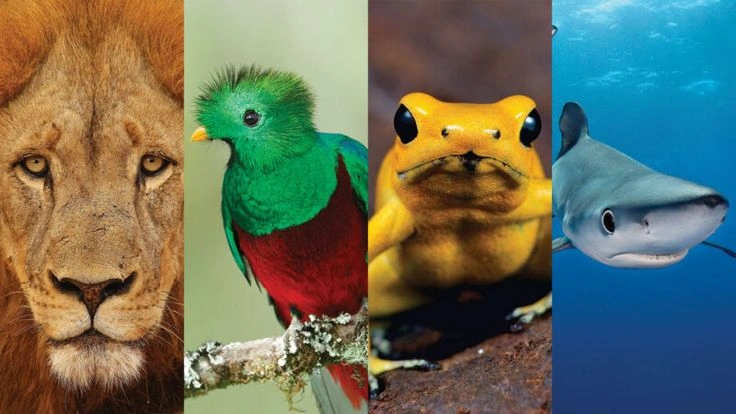
There is something strangely familiar about vertebrates. A bird landing on a fence. A fish disappearing beneath the surface of a pond. A frog sitting perfectly still beside a stream. A cat stretching in a patch of sunlight. A deer watching from the edge of a forest.
They may look completely different from one another, but deep inside, they share one important feature: a backbone.
That simple structure is one of the defining features of vertebrates, a huge and remarkably diverse group of animals that includes mammals, birds, reptiles, amphibians, and fish.
Vertebrates live almost everywhere on Earth. They swim through oceans, fly over forests, crawl across deserts, climb trees, burrow underground, and walk through cities alongside us. So what exactly makes an animal a vertebrate?
What Are Vertebrates?
Vertebrates are animals that have a vertebral column, commonly called a backbone. The backbone is made up of a series of bones or other supportive structures called vertebrae. Together, these form part of the animal’s internal skeleton and help protect the spinal cord.
The spinal cord is connected to the brain and forms a major part of the nervous system. This gives vertebrates a powerful combination of support, movement, and nervous-system protection. But a backbone is only part of the story.
Most vertebrates also have an internal skeleton, a well-developed head and brain, paired sensory organs, and complex organ systems. And despite all these similarities, the group contains an astonishing range of animals. A tiny fish can be a vertebrate.
So can an elephant. A hummingbird. A crocodile. A frog. A whale. A human. The differences between them are enormous. Their shared anatomy is what connects them.
The Five Major Groups of Vertebrates
Vertebrates are commonly divided into five familiar groups:
- Fish
- Amphibians
- Reptiles
- Birds
- Mammals
Each group took a different evolutionary path, developing features that helped its members survive in particular environments.
Let’s look at them one by one.
1. Fish
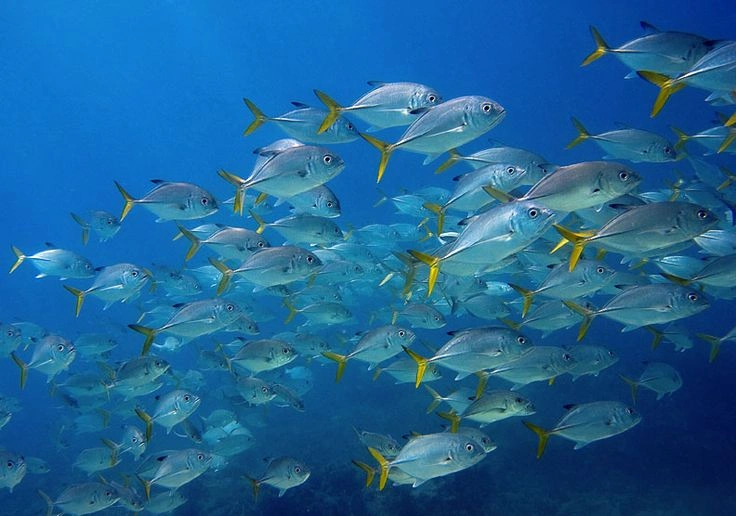
Fish are the vertebrates most closely associated with water. They live in oceans, rivers, lakes, streams, ponds, caves, and even some temporary bodies of water. From a tiny colorful reef fish to a massive whale shark, fish come in an incredible variety of shapes and sizes.
Most fish breathe using gills. Instead of breathing air directly with lungs like humans do, their gills extract dissolved oxygen from water as it passes across delicate tissues.
This is one reason fish cannot simply live on land. Their respiratory systems are adapted to an underwater environment. Most fish are also ectothermic, meaning their body temperature is largely influenced by the surrounding environment.
Fish have been evolving for hundreds of millions of years, and modern fish represent many different evolutionary branches. Some have skeletons made primarily of bone. Others, such as sharks and rays, have skeletons made mainly of cartilage.
What Makes a Fish a Vertebrate?
The answer is the same basic feature: an internal vertebral column. A fish’s backbone runs along its body and supports the nervous system.
The skeleton also provides attachment points for muscles, allowing the fish to move through water. Watch a fish swim closely and you can see how beautifully these structures work together. Its body bends from side to side.
Muscles push against the water. Fins help control direction and stability. The backbone acts as part of the flexible framework behind the movement. It is a remarkably efficient design.
2. Amphibians
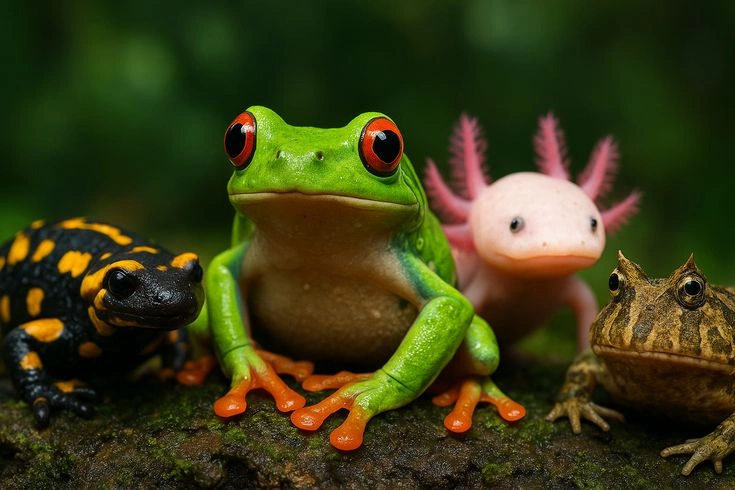
Amphibians occupy an unusual place in the animal kingdom.
They are strongly connected to both water and land.
Frogs, toads, salamanders, and newts belong to this group.
Many amphibians begin life in water.
A frog, for example, starts life as a tadpole. At this stage, it looks nothing like the adult animal.
- It has a tail.
- It lives in water.
- It uses gills.
Then something extraordinary happens. As the tadpole develops, its body changes. Legs appear. Its tail is gradually absorbed. Its respiratory system changes. Eventually, the young frog can leave the water and spend much of its life on land.
This transformation is called metamorphosis.
Amphibian Skin Is Special
One of the most interesting things about amphibians is their skin. Many amphibians have thin, moist skin that can play an important role in breathing and maintaining moisture. That also makes them vulnerable to environmental changes.
Pollution, habitat destruction, disease, changes in water quality, and climate-related changes can affect amphibian populations.
Because they often depend on both aquatic and terrestrial environments, amphibians can be particularly sensitive to changes in their surroundings.
A quiet pond may look ordinary to us. To a frog, it can be an entire world. A nursery. A hunting ground. A place to escape predators. A place to reproduce. And, for part of its life, a home.
3. Reptiles
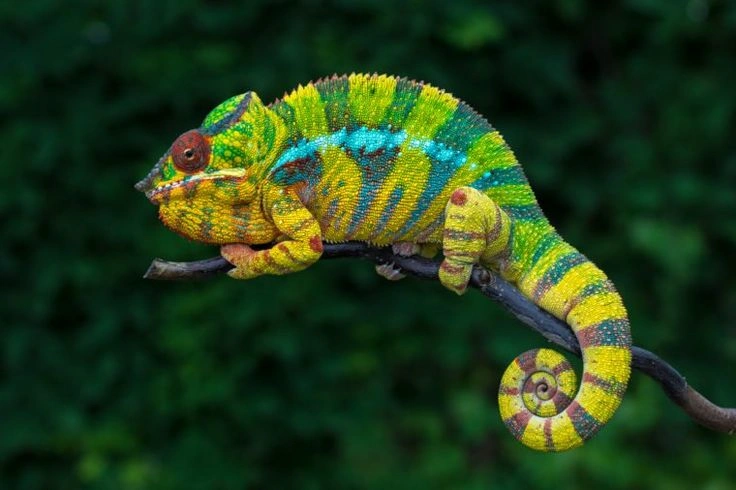
Reptiles include snakes, lizards, turtles, tortoises, crocodilians, and several other groups. They are vertebrates adapted primarily for life on land, although some reptiles spend much of their lives in water.
One feature commonly associated with reptiles is their skin. Most reptiles have dry skin covered by scales or other protective structures. This helps reduce water loss.
That matters enormously for an animal living in a hot or dry environment. Imagine a lizard sitting on a sun-warmed rock. It may appear completely motionless. But it isn’t necessarily doing nothing.
The animal may be regulating its body temperature, watching for prey, avoiding predators, and waiting for the right moment to move. Reptiles are generally ectothermic, so their body temperature is strongly influenced by their surroundings.
This is why basking is so common. he sun becomes part of the animal’s daily routine.
Snakes Are Vertebrates Too
A snake can look almost impossibly different from animals such as dogs or birds. There are no visible legs. No arms. No obvious feet. Yet underneath that long body is a vertebrate skeleton. Snakes have many vertebrae, connected to ribs and powerful muscles.
Instead of walking, they use coordinated body movements to push against surfaces and move forward. Their bodies are essentially a long, flexible chain of vertebrae and muscles. That is one reason snakes can squeeze through surprisingly small spaces and move across complicated terrain.
4. Birds
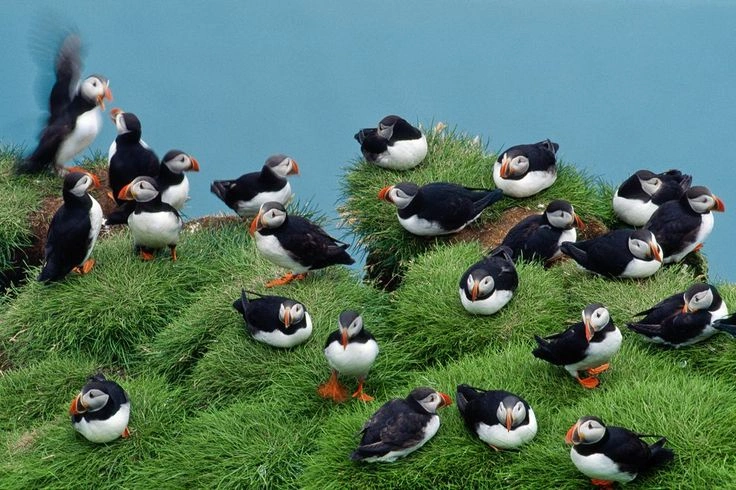
Birds are vertebrates, even though their skeletons and bodies can seem completely unlike those of other animals. A sparrow, eagle, penguin, owl, or hummingbird all belongs to the same broad vertebrate group.
Birds have backbones, internal skeletons, brains, lungs, and highly developed sensory systems. They also have feathers. Feathers are one of the defining features of modern birds.
They provide insulation, help with flight in flying species, contribute to communication, and can play important roles in courtship and camouflage.
Birds Have Lightweight but Strong Skeletons
Flying places enormous demands on an animal. A bird needs enough strength to support its body but also needs a body design that makes flight possible. Many flying birds have bones that are lightweight and contain air-filled spaces.
Their bodies are also shaped around powerful flight muscles. Then there are the wings. Watch a bird take off and the mechanics become almost hypnotic.
The wings sweep downward. The tail adjusts. The body rises. For a moment, an animal that weighs only a few hundred grams is moving through the air with extraordinary control. Flight has allowed birds to occupy habitats that would be inaccessible to many land animals.
They can cross mountains, oceans, forests, deserts, and cities. Some migrate thousands of kilometers between breeding and wintering grounds.
5. Mammals
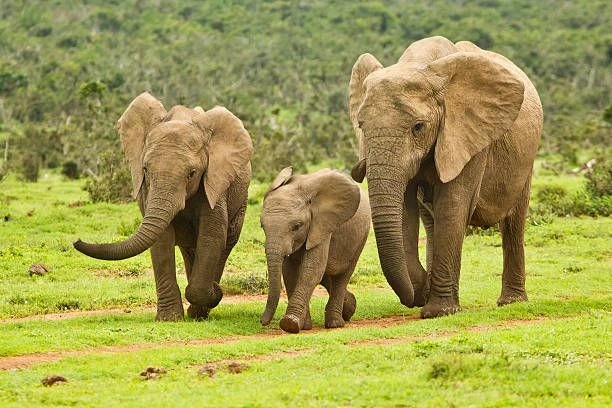
Mammals may be the vertebrate group humans notice most often because we belong to it. Dogs, cats, elephants, bats, whales, horses, bears, monkeys, mice, and humans are all mammals. Mammals share several important characteristics.
Most have hair or fur at some stage of life. Female mammals produce milk to feed their young. Mammals are also endothermic, meaning they generate much of their body heat internally and generally maintain a relatively stable body temperature.
But mammals are far more diverse than the animals we commonly see around homes and farms. Some mammals live underground. Some spend nearly their entire lives in trees.
Some can fly. Some live in the ocean. Some weigh only a few grams. Others weigh several tons.
Whales Are Mammals
This surprises many people when they first learn it. A whale looks like a giant fish. It swims like a fish. It lives in the ocean. Yet it is a mammal. Whales breathe air using lungs. They give birth to live young.
They feed their offspring with milk. And they must regularly come to the surface to breathe. The resemblance between whales and fish is a beautiful example of how different groups of animals can independently develop similar body shapes when living in similar environments.
A whale has the body of a swimmer, but the biology of a mammal.
The Vertebrate Skeleton
The backbone is only one part of the vertebrate skeleton. Most vertebrates also have skulls, ribs, limbs or limb-related structures, and a complex arrangement of bones or cartilage.
The skeleton gives the body shape. It protects delicate organs. It provides support. And it gives muscles something to pull against.
Think about a human running. Muscles contract. Bones move. Joints allow controlled motion. The spine supports the body while protecting the spinal cord.
Now think about a bird flying or a fish swimming. The exact structures differ, but the basic principle remains: A skeleton gives muscles a framework for movement.
Why Is the Backbone Important?
The vertebral column does several jobs at once. First, it supports the body. Second, it helps protect the spinal cord. Third, it provides a framework for muscles and movement.
The spinal cord is particularly important. It carries signals between the brain and the rest of the body. When an animal decides to move, the nervous system coordinates an enormous amount of activity.
A rabbit hears something. Its brain processes the sound. Muscles receive signals. Its legs push against the ground.
In a fraction of a second, the rabbit may disappear into the vegetation. That reaction is made possible by an integrated nervous and skeletal system.
Vertebrates vs. Invertebrates
The animal kingdom contains both vertebrates and invertebrates. The simplest distinction is easy: Vertebrates have a vertebral column; invertebrates do not.
But that doesn’t mean invertebrates are simple animals. Quite the opposite. Insects, spiders, octopuses, jellyfish, worms, crabs, snails, and countless other animals are invertebrates.
- Some have sophisticated nervous systems.
- Some have complex eyes.
- Some can solve problems.
- Some build elaborate structures.
- Some live in enormous colonies.
The absence of a backbone does not mean an animal is primitive or unimportant. It simply means its body evolved along a different path.
How Did Vertebrates Evolve?
The earliest vertebrate history stretches back hundreds of millions of years. Early vertebrates were aquatic animals. Over enormous spans of evolutionary time, vertebrate lineages diversified.
Some remained in water. Others eventually adapted to life on land. From ancient vertebrate groups came lineages that eventually produced amphibians, reptiles, birds, and mammals.
Evolution did not follow a straight ladder. It was more like a branching tree. One lineage split. Then another. Some branches survived.
Others disappeared. Some produced extraordinary new adaptations. Others remained relatively specialized. The vertebrates alive today are the surviving branches of an enormously long evolutionary history.
How Vertebrates Adapt to Different Habitats
One of the most fascinating things about vertebrates is how differently they can solve the same basic problems.
- Every animal needs food.
- Every animal needs to avoid danger.
- Every animal needs to reproduce.
- Every animal has to cope with its environment.
But the solutions can be wildly different.
- A polar bear survives cold conditions with thick fur and substantial body fat.
- A camel is adapted to life in arid environments.
- A penguin uses specialized feathers and body fat to cope with cold water.
- A bat uses echolocation to navigate and find prey.
- A fish uses gills to extract oxygen from water.
- A frog can use its moist skin as part of its respiratory system.
Different environments create different challenges. Evolution has produced an astonishing collection of answers.
Vertebrate Senses
Vertebrates have highly developed sensory systems, but not every species experiences the world in the same way. Humans rely heavily on vision.
- Dogs have an exceptional sense of smell.
- Many birds have remarkable visual abilities.
- Bats can use echolocation.
- Some fish detect movement and pressure changes through structures associated with the lateral line system.
- Snakes can detect chemical signals and, in some species, sense heat.
The world an animal experiences depends partly on its senses. A forest that looks quiet to a person may be full of information for another animal. There are scents in the air, vibrations in the ground, movement in the leaves and sounds beyond our hearing range. Some animals can even detect electrical signals in water. They don’t simply live in their environments. They constantly read them.
You can see how this works in different ways when looking at species such as the sun bear. Its strong sense of smell, climbing ability and other physical adaptations help it find food and move through dense forest. What seems like a normal forest to us can be a much more detailed world to an animal living there.
Vertebrates and Their Young
The way vertebrates reproduce and raise their young varies enormously. Many fish release eggs into water. Some amphibians lay eggs in ponds or streams. Many reptiles lay eggs, although reproductive strategies vary widely. Birds lay eggs and often provide extensive parental care.
Mammals generally give birth to live young and feed them milk. Parental behavior can be remarkably complex. Birds may build nests, incubate eggs, feed chicks, and defend them from predators. Mammals may spend months or years teaching their young how to survive. Even animals that provide little parental care are shaped by reproductive strategies that have evolved over immense periods.
Why Vertebrates Matter
Vertebrates are not just a convenient biological category. They are major parts of ecosystems around the world. Fish influence aquatic food webs. Birds transport seeds and pollinate plants. Amphibians connect aquatic and terrestrial ecosystems. Reptiles act as predators and prey.
Mammals influence vegetation, seed dispersal, nutrient cycling, and food webs. Remove important vertebrate species from an ecosystem and the effects can spread outward. A predator disappears. Prey populations change. Vegetation may increase or decrease. Other species respond. Nature is connected by relationships that are often invisible until something changes.
Vertebrates in Everyday Life
You don’t need to travel to a rainforest or go on safari to encounter vertebrates. They are everywhere. A pigeon walking across a parking lot. A squirrel climbing a tree. A fish in a pond. A lizard resting against a warm wall. A dog sleeping beside a doorway. A bird calling from a rooftop.
Even the animals we see every day can become fascinating once we stop treating them as background scenery. Look closely at a bird sometime. Notice how often it turns its head. Watch how it reacts to another bird. Pay attention to its feet. Listen to its calls. Suddenly, the ordinary animal becomes a little less ordinary.
The Incredible Variety of Vertebrates
It is easy to think of vertebrates as one familiar group because humans encounter them so frequently. But consider the range. A hummingbird can hover near a flower. A blue whale can cross an ocean. A gecko can climb surfaces that seem impossible. A frog can transform from an aquatic tadpole into a land-dwelling adult.
A snake can move without legs. A bat can navigate darkness using sound. An elephant can communicate over long distances. A salmon can return toward the waters where it began life. All of these animals belong to the same broad vertebrate world. The backbone is the common thread. Everything else is an extraordinary variation on that theme.
Final Thought
The next time you see a bird, fish, frog, snake, or mammal, take a second look. That animal is carrying a piece of evolutionary history inside its body. Its backbone, nervous system, muscles, senses, and organs are the result of countless generations of change.
A fish moving through dark water. A bird crossing an open sky. A frog waiting beside a pond. A fox slipping through a forest at night. A whale rising through the ocean. Different lives. Different bodies. Different worlds. Yet beneath all that variety is the same remarkable idea: a vertebrate is an animal built around a backbone, and that simple structure helped open the door to one of the most diverse chapters in the history of life.
