The butterflyfish species is the bright, disc-shaped fish that turns a coral reef into something closer to a garden than a seascape. If you are asking what a butterflyfish is, the short answer is a member of the family Chaetodontidae, a group of around 120 small reef fish found in warm seas around the world, most of them between 12 and 22 centimetres long. They are the fish that hover in pairs above the coral, picking at polyps with a tiny, pointed snout, their bodies striped, banded or spotted in yellow, white, black and orange. They do not chase prey across open water, they do not hunt in packs, and they do not grow large. What they do, all day and every day, is patrol a small patch of reef, feeding, pairing and defending their corner with a quiet, stubborn persistence.
Most people meet a butterflyfish while snorkelling, and the meeting is usually a gentle one. You drift over a shallow reef in the Red Sea, off the coast of Bali or above a coral garden in the Caribbean, and there they are, two small fish moving together through the clear water, never far apart, never in a hurry. They are not shy, exactly, but they are watchful, and if you swim too close they slip behind a coral head and wait for you to pass. That calm, paired life on the reef is the heart of this guide: how a family of small fish makes its living from coral, how it finds a mate and keeps one, and why the health of the reef and the health of the butterflyfish are the same story told twice.
Key takeaways
- The butterflyfish species belongs to the family Chaetodontidae, a group of around 120 small reef fish, most of them between 12 and 22 centimetres long.
- Butterflyfish are disc-shaped, deep-bodied fish with a small pointed snout, and many species wear bold bands, spots or a dark stripe across the eye.
- Most species live in pairs on coral reefs, often staying with the same mate for life, and they defend a small feeding territory together.
- They eat coral polyps, small worms, crustaceans and algae, and some species feed on nothing but coral polyps.
- They are harmless to people, listed mostly as Least Concern, but they depend on living coral, so reef loss and coral bleaching hit them hard.
The butterflyfish species and their relatives
Butterflyfish belong to the family Chaetodontidae, a name that comes from the Greek words for comb and tooth, a nod to the fine, brush-like teeth that line their small mouths. The family sits within the order Perciformes, the great sprawling order of perch-like fish, and it holds about 120 species spread across 12 genera, though the count shifts a little as scientists split old species and describe new ones. The best-known genus is Chaetodon, which holds most of the familiar reef species, while the long-snouted bannerfish sit in their own genera nearby. National Geographic keeps a live profile of the butterflyfish on its animals pages, and it gives the family a short, bright introduction, but it leaves plenty of room for a deeper look, which is the gap this guide fills: the pairing, the feeding, the breeding and the reef-by-reef detail that a short profile cannot carry.
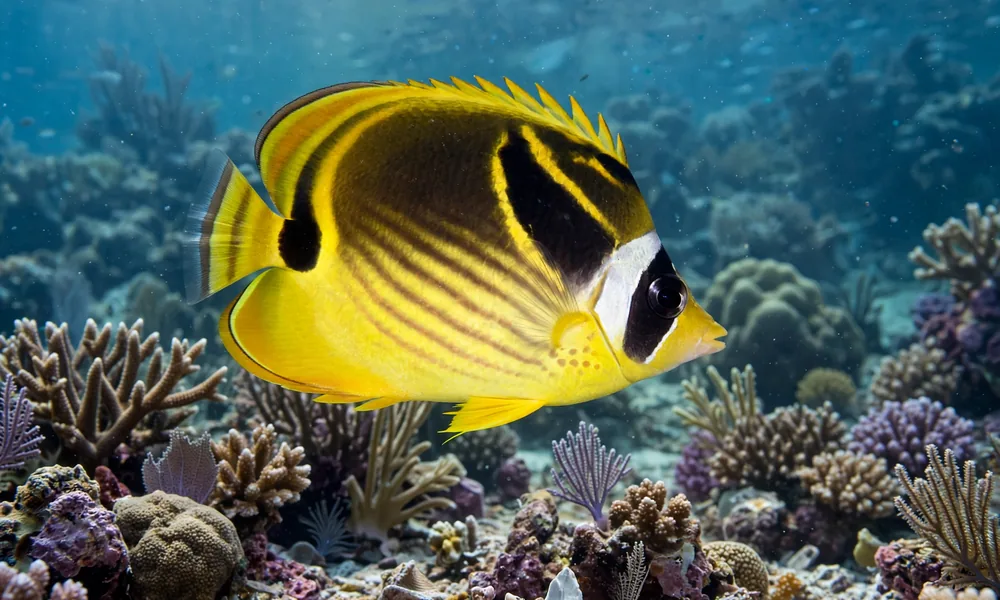
The raccoon butterflyfish, Chaetodon lunula, is the lead species of this guide, and it is a good ambassador for the family. It is a bold, handsome fish with a black band across the eye like a mask, a yellow body and a dark patch on the tail, and it is found across the Indo-Pacific, from the Red Sea and the east coast of Africa to Hawaii and the Galapagos. It grows to about 20 centimetres, it is active by day and it rests in reef crevices at night, and it is one of the few butterflyfish that will sometimes feed after dark as well. If you have seen a butterflyfish on a reef holiday, there is a fair chance it was a raccoon butterflyfish, or one of its close cousins in the same genus.
| Type | Animal | Where it lives | Best-known food | Length or Weight |
|---|---|---|---|---|
| Family | Butterflyfishes (Chaetodontidae) | Tropical reefs worldwide | Coral polyps and small invertebrates | About 12 cm to 22 cm long |
| Genus | Butterflyfishes (Chaetodon) | Indo-Pacific and Atlantic reefs | Coral polyps, worms and small crustaceans | About 12 cm to 22 cm long |
| Species | Raccoon butterflyfish (Chaetodon lunula) | Indo-Pacific reefs | Coral polyps and small invertebrates | About 12 cm to 20 cm long |
| Species | Milletseed butterflyfish (Chaetodon miliaris) | Hawaiian reefs | Plankton, algae and small invertebrates | About 12 cm to 18 cm long |
| Species | Longnose butterflyfish (Forcipiger flavissimus) | Indo-Pacific reefs | Small worms and crustaceans from crevices | About 15 cm to 22 cm long |
| Species | Four-eye butterflyfish (Chaetodon capistratus) | Western Atlantic reefs | Coral polyps and small invertebrates | About 10 cm to 15 cm long |
The closest relatives of the butterflyfish are the angelfish, and the two families are often confused by snorkellers. Like the angelfish, a butterflyfish is a deep-bodied, brightly coloured reef fish, but the angelfish grows much larger, often to 30 centimetres or more, and it carries a sharp spine on its gill cover that a butterflyfish lacks.
Within the family, the species sort themselves by what they eat and where they feed, and the differences are worth knowing. The raccoon butterflyfish is a generalist, happy with coral polyps, worms and small crustaceans, while the milletseed butterflyfish of Hawaii drifts in loose schools and picks plankton from the water, a habit that is unusual in the family. The longnose butterflyfish, with its drawn-out snout, reaches into cracks and crevices that other butterflyfish cannot reach, and the four-eye butterflyfish of the western Atlantic carries a large dark spot near its tail that looks like a second eye, a trick that confuses predators about which end is the head. Each species is a small variation on the same theme, and each one fits a slightly different corner of the reef.
What a butterflyfish looks like
A butterflyfish is a small, deep-bodied fish, almost as tall as it is long, with a flattened shape like a disc or a leaf. Most species measure between 12 and 22 centimetres from snout to tail, and the body is thin from side to side, which lets the fish slip between coral branches and into narrow gaps where a rounder fish could not follow. The dorsal and anal fins are long and flowing, running along much of the body, and when the fish spreads them it looks larger than it is, a trick that makes it harder for a predator to swallow. The tail is small and fan-shaped, and it gives short, precise bursts of speed rather than long chases.
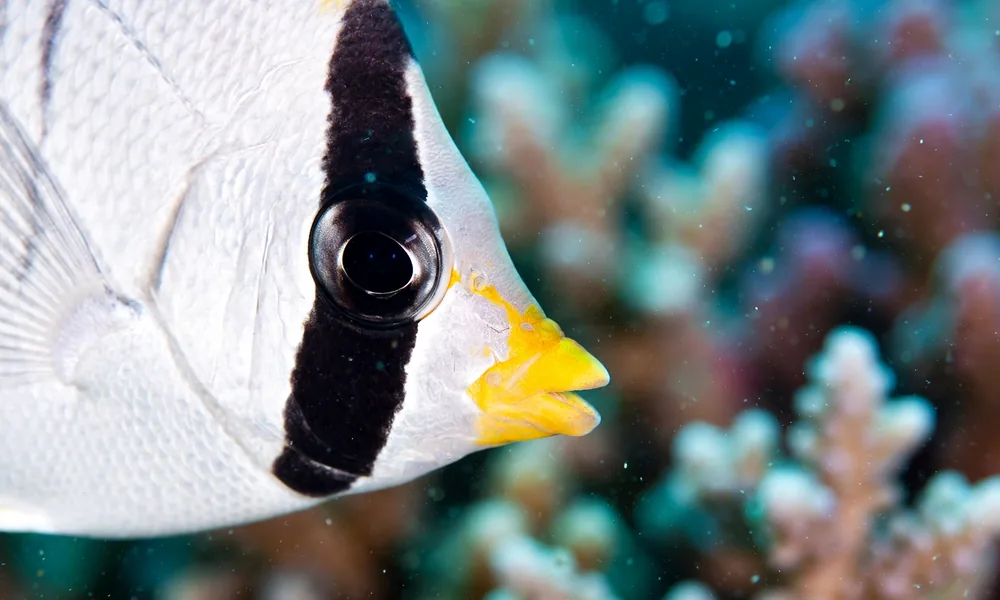
The colours are the first thing anyone notices, and they are unmistakable once you have seen them. A raccoon butterflyfish wears a bold black band across the eye, a yellow body and a dark patch on the tail, while a threadfin butterflyfish is yellow and white with black bars, and a four-eye butterflyfish is pale grey with a dark spot near the tail that looks like an eye. The patterns vary from species to species, but the logic is the same: strong bands and spots break up the outline of the fish against the reef, and the dark band across the real eye hides the one feature a predator looks for first.
The mouth is small and set at the end of a short, pointed snout, and it is made for picking rather than biting. Inside it are rows of fine, comb-like teeth, the feature that gives the family its scientific name, and those teeth are perfect for nipping coral polyps, plucking tiny worms from the reef and scraping algae from rock. The longnose butterflyfish takes the idea further, with a snout drawn out into a tube that can reach into cracks and pull out animals that other fish cannot reach. It is a precise, delicate tool, and it is the reason a butterflyfish feeds the way it does, one careful nip at a time.
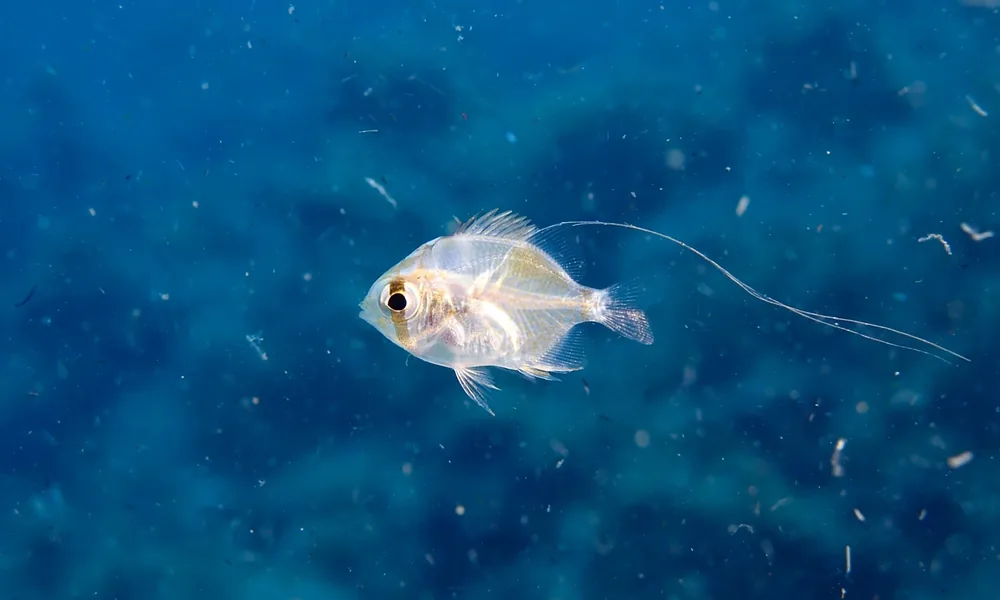
Males and females look much alike, and telling them apart by eye is hard even for people who study them. In most species the two sexes are the same size and the same colour, and the only reliable differences are internal, or in behaviour during the breeding season. Juveniles are a different story: young butterflyfish are often brighter than adults, with sharper bands and sometimes a large dark spot on the dorsal fin that fades as they grow. The young of some species also carry a long trailing thread from the dorsal fin, a filament that may help them drift in open water before they settle on a reef.
Where butterflyfish live
Butterflyfish live on coral reefs in warm, shallow seas, in a band of ocean that runs around the tropics. The greatest number of species is found in the Indo-Pacific, from the Red Sea and the east coast of Africa, across the Indian Ocean and the Coral Triangle of South-East Asia, to the reefs of Australia, Japan and Hawaii. The Atlantic holds its own smaller set of species, including the four-eye butterflyfish of the Caribbean and the reef butterflyfish of the western Atlantic, and a few species live in the eastern Pacific, off the coasts of Mexico and Central America. Wherever there is warm, clear water and living coral, there is a good chance a butterflyfish is nearby.
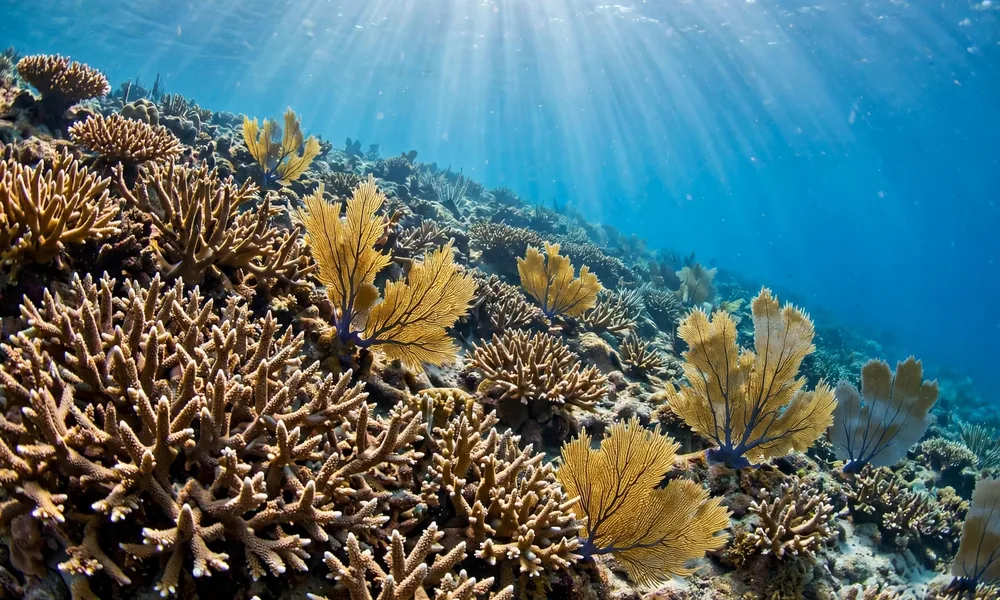
The habitat they choose is the reef itself, and they are rarely found far from it. Most species live in water between 1 and 30 metres deep, on the reef slope, the reef flat and the lagoon, where the coral is richest and the light is strongest. They favour areas with plenty of branching and table coral, which gives them both food and shelter, and they are less common on bare sand or open rock, where there is little to eat and nowhere to hide. A butterflyfish spends its whole life within a small patch of reef, sometimes no larger than a few dozen square metres, and it knows every coral head and every crevice in that patch the way you know the rooms of your own house.

Depth matters, but not in the way it does for a deep-sea fish. Butterflyfish are shallow-water animals, and most of them stay above 30 metres, where the sunlight reaches the coral and the polyps they feed on are thickest. A few species go deeper, to 60 metres or more on the reef slope, and the fish that live deep are often paler and less brightly marked than their shallow cousins. The water temperature matters too: butterflyfish need warm water, usually above 20 degrees Celsius, and they are absent from cold seas altogether.
The reef is not one place but many, and different species pick different corners of it. The raccoon butterflyfish is a generalist of the reef slope and the lagoon, happy in water a few metres deep, while the longnose butterflyfish haunts the deeper reef edge, where the coral grows in ledges and overhangs. The milletseed butterflyfish of Hawaii schools over the reef in open water, a habit that sets it apart from its solitary cousins, and the four-eye butterflyfish of the Caribbean works the shallow reef flats, where the coral is low and the water is warm. Each species has its patch, and each patch is defended.
What butterflyfish eat
Butterflyfish are pickers, not hunters, and their diet is written on the reef itself. The everyday food is coral polyps, the tiny soft animals that build the reef, and a butterflyfish will move from coral head to coral head, nipping one polyp at a time with its small, precise mouth. A single fish may take hundreds of nips in a day, and a pair working the same patch can strip a surprising amount of coral in a season. They also eat small worms, tiny crustaceans, sea anemones and algae, and a few species take plankton from the water, but coral is the heart of the diet for most of them, and it is the reason they never stray far from a living reef.

What sets the butterflyfish apart is how fussy some species are. The chevron butterflyfish and the ornate butterflyfish are obligate corallivores, which means they eat almost nothing but coral polyps, and they will starve rather than switch to another food if the coral dies. The raccoon butterflyfish is more flexible, and it will take worms, small crustaceans and algae when coral is scarce, which is one reason it is so widespread. Like the blue tang, a butterflyfish grazes the reef rather than hunting in open water, but the tang is an algae-eater that scrapes the rock clean, while the butterflyfish is a polyp-picker that takes the living coral itself, one tiny animal at a time.
Feeding is a daytime affair, and it follows the rhythm of the reef. Butterflyfish feed most actively in the morning and the late afternoon, when the light is good and the polyps are extended, and they rest in the heat of midday, sheltering in the shade of a coral head. A butterflyfish that is feeding well is a busy fish, moving constantly, and a fish that has stopped feeding is usually a fish in trouble, because a butterflyfish that cannot find coral has nowhere else to turn.
How butterflyfish behave
Butterflyfish are daytime fish, and their day is a quiet round of feeding, patrolling and staying close to a mate. They wake at dawn, leave the crevice where they slept, and move out onto the reef to feed, and they spend the day working their patch in a slow, unhurried way, never rushing, never chasing. They are not strong swimmers, and they do not need to be: their life is lived within a few dozen metres of reef, and speed matters less than knowing every coral head and every hiding place. When a larger fish passes, a butterflyfish will often turn sideways and spread its fins, making itself look larger and harder to swallow, and if that fails it will dart behind the nearest coral and wait.
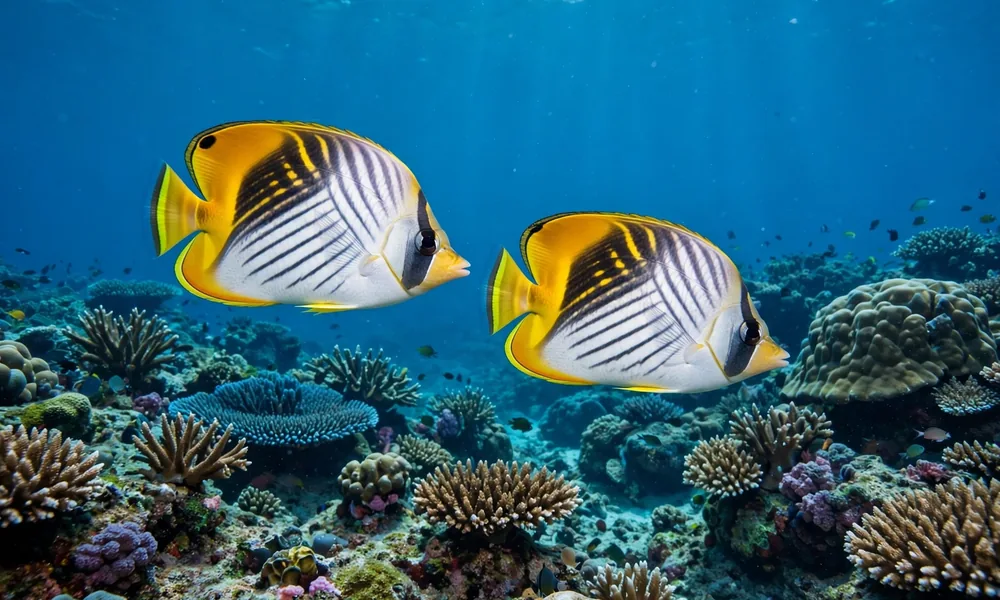
The most famous behaviour in the family is pairing. Many butterflyfish form monogamous pairs, and the two fish stay together for months or years, feeding side by side, defending the same patch of reef and sleeping in the same crevice at night. If one fish of a pair is taken by a predator, the other will often stay on the same patch alone, and it may take a long time to find a new mate. The bond is not sentimental in the human sense, but it is practical: two fish can defend a feeding patch better than one, and a pair that knows its reef can feed more efficiently than two strangers. Some species are solitary, and a few school in loose groups, but the pair is the classic butterflyfish arrangement, and it is the one snorkellers see most often.
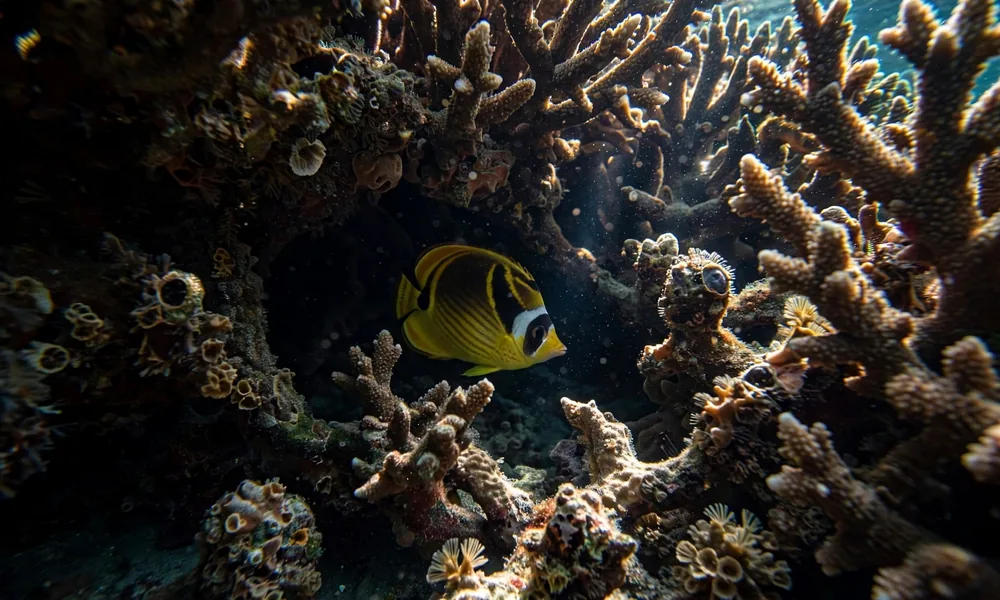
When a butterflyfish is threatened, it does not behave like a fish that wants to fight. Its first response is to freeze, relying on its bands and spots to break up its outline against the coral, and if that fails it will dart into the nearest crevice and stay there, fins folded, until the danger passes. The false eyespot on the tail of the four-eye butterflyfish is part of the same trick: a predator that strikes at the tail spot misses the head entirely, and the fish escapes with a torn fin instead of a torn throat. Butterflyfish have no venom, no spines worth fearing and no bite that matters to a person, and their whole defence is built on being hard to see, hard to catch and hard to swallow.
Breeding and life cycle
Butterflyfish breed by scattering their eggs into open water, and the timing is set by the moon and the season. Most species spawn at dusk, when the light is fading and the plankton-feeding fish that would eat the eggs are settling down for the night. A pair will rise together from the reef, side by side, and release a cloud of tiny eggs and sperm into the water, and then they will sink back to the reef and carry on as if nothing had happened. The eggs are small, round and buoyant, and they drift with the current, and a single spawning can release thousands of them, though only a tiny fraction will ever survive to adulthood.
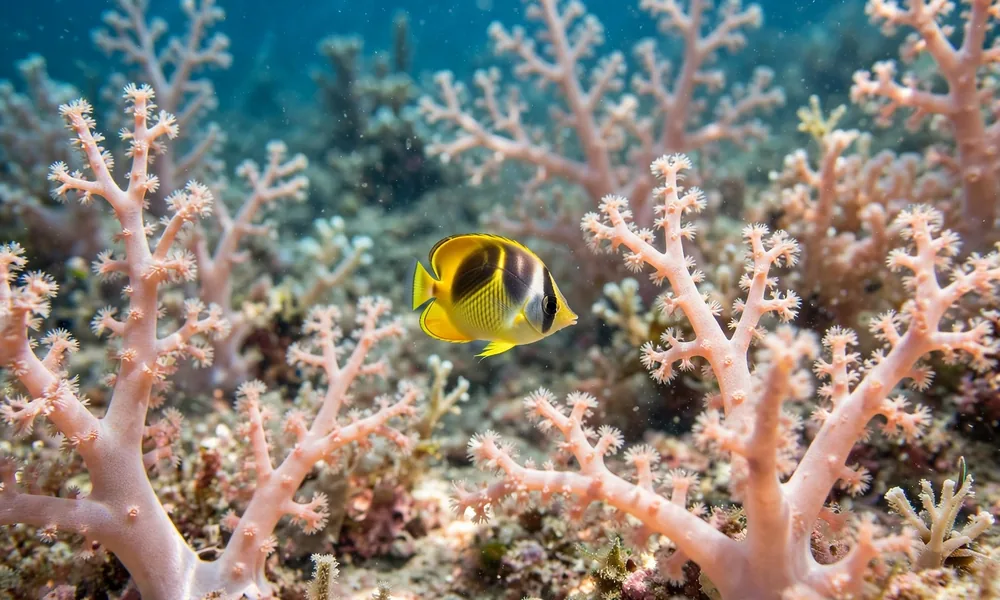
The eggs hatch within a day or two, and the larvae drift in the plankton for weeks, carried by the currents far from the reef where they were born. Butterflyfish larvae are unusual among reef fish: they wear a kind of armour, with bony plates on the head and a long, trailing filament from the dorsal fin, and this stage, called the tholichthys stage, is so distinctive that scientists once thought the larvae were a separate species. After several weeks in open water, the larvae settle onto a reef, lose their armour and their filament, and become small, bright juveniles, ready to find a patch of coral and start feeding on their own.
Growth is steady, and a butterflyfish reaches breeding size in its second or third year, when it is close to full length. The lifespan in the wild is thought to be around five to ten years, though animals that survive the dangerous first year, when they are small enough to be eaten by almost anything, can live considerably longer. The young are independent from the day they settle, able to feed and hide within hours, and they grow fast in their first year, shedding their bright juvenile colours for the adult pattern as they lengthen.
Conservation status
Most butterflyfish are listed as Least Concern by the International Union for Conservation of Nature, and the reasoning is straightforward: they have a large range, they are still common on many reefs, and they breed well enough to replace themselves. That broad picture hides a more worrying local one, and it is worth understanding both sides, because the butterflyfish is one of the reef fish most tied to the fate of living coral. A fish that eats coral polyps cannot live where the coral has died, and a reef that loses its coral loses its butterflyfish within a season or two.
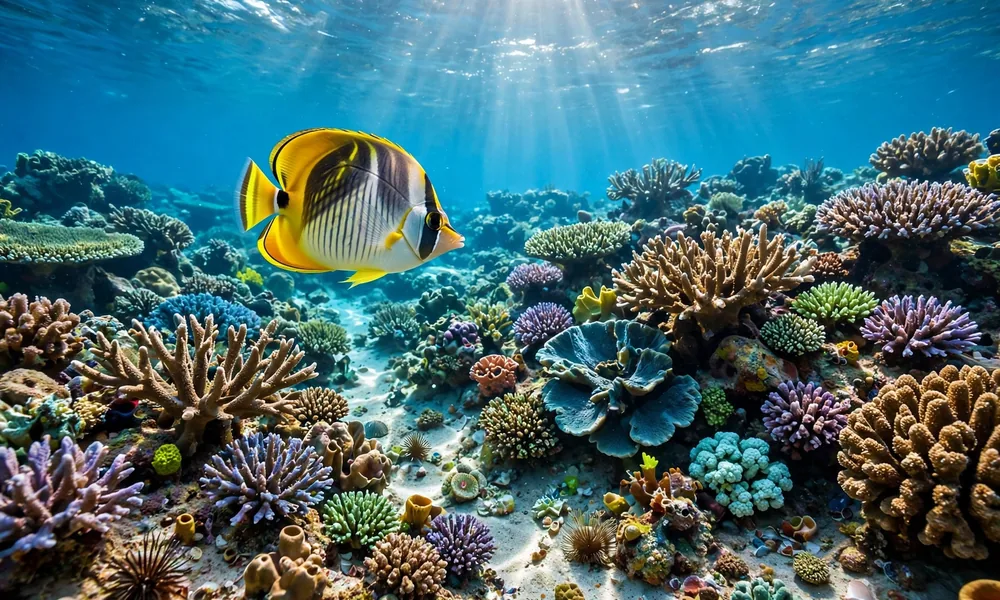
The main pressure is the loss of coral itself. When a reef bleaches, the coral polyps die or are expelled, and the butterflyfish that feed on them lose their food overnight. The obligate corallivores are hit first and hardest, and on reefs that have bleached badly, their numbers can fall by half or more within a year. The aquarium trade is a second pressure, as butterflyfish are taken in large numbers for home tanks, and many of them do not survive the journey, or they starve in captivity because their diet of live coral polyps is so hard to provide. Like the clownfish, a butterflyfish is a popular aquarium fish, but the clownfish can be bred in captivity and fed on prepared food, while the butterflyfish is far harder to keep, and far more of them are taken from the wild.
The most useful conservation work is practical, and it is the same work that helps the whole reef. Protecting coral from bleaching means cutting the warming that causes it, and protecting reefs from overfishing, pollution and careless anchoring keeps the coral alive for the fish that depend on it. Marine protected areas, where fishing and collecting are limited, give butterflyfish a safe patch to feed and breed in, and they give the coral a chance to recover after a bleaching event.
Best seasons for butterflyfish watching
The best time to look for a butterflyfish is the dry season, when the seas are calm and the water is clearest, and the fish are out feeding for much of the day. In the Indo-Pacific that usually means the months from about November to April, when the monsoon has eased and the visibility on the reef can reach 30 metres or more. In the Caribbean the best months are similar, from about December to May, when the trade winds are steady and the water is warm and clear. Butterflyfish are present on the reef all year round, and they do not migrate, so there is no wrong season in the strict sense, but a calm, clear day in the dry season will show you far more fish than a rough day in the wet season.
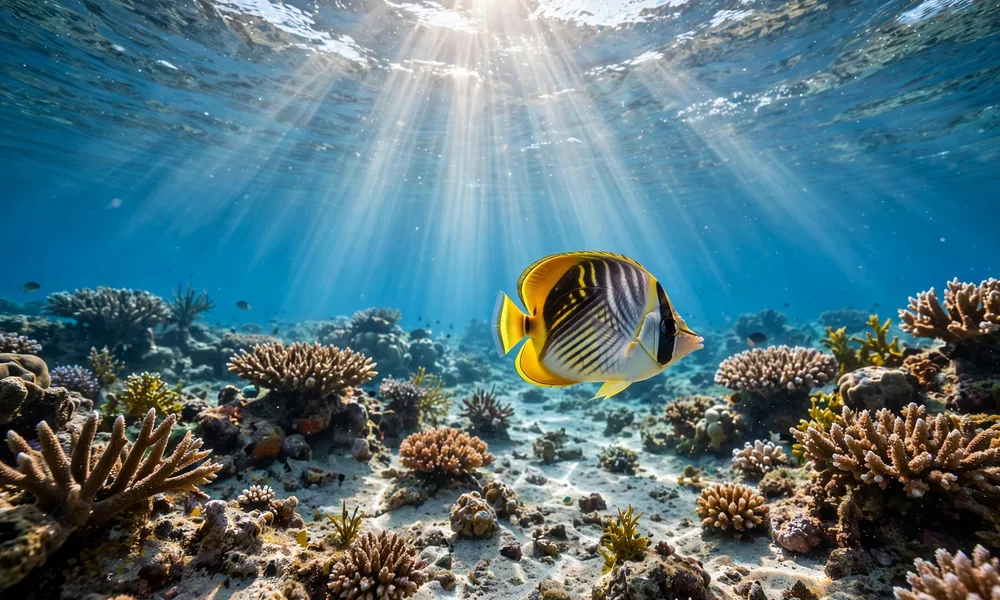
The best hours are the morning and the late afternoon, when the butterflyfish are feeding actively and the light is good for seeing them. From about eight o’clock until eleven, and again from about three until five, the pairs are out on the reef, moving from coral head to coral head, and they are at their most approachable then. A slow snorkel over a shallow reef, with the sun behind you and a mask that fits well, is all you need, and the fish will often come close enough to see the bands and the eye stripe clearly, if you move gently and keep your distance.
Staying safe around butterflyfish
A butterflyfish is not dangerous to people, and there is no safety warning that belongs to the fish itself. It has no venom, it does not bite, and it will not chase or threaten a swimmer. The safety rules for watching butterflyfish are the rules of the reef and the sea: watch the water, watch the weather, and respect the coral that the fish depends on. Never stand on coral, never touch it with your fins, and never grab at a reef to steady yourself, because a single careless kick can break coral that took decades to grow, and a broken reef is a reef that feeds fewer fish.
There are a few practical points for the water itself. Swim with a buddy, stay within your depth, and keep an eye on the current, which can be stronger on the reef edge than it looks from the surface. Wear reef-safe sunscreen, or better still a long-sleeved rash guard, so that you are not washing chemicals onto the coral you came to see. If you are snorkelling from a boat, listen to the crew about where to enter and exit the water, and keep clear of the boat’s propeller. A butterflyfish will not hurt you, but the sea can, and the sensible approach is to enjoy the fish and respect the water they live in.
Butterflyfish watching checklist
A little preparation turns a snorkel over a reef into a real chance of seeing butterflyfish at their best, feeding in pairs in clear, warm water.
- A visit in the dry season, when the seas are calm and the visibility on the reef is at its best.
- A morning or late-afternoon snorkel, when the butterflyfish are out feeding and the light is good.
- A shallow coral reef with plenty of branching and table coral, where the fish feed and shelter.
- A slow swim that follows the reef slope, watching for pairs of small, disc-shaped fish moving together.
- A mask that fits well and fins that let you move gently, without kicking the coral below you.
- Reef-safe sunscreen or a long-sleeved rash guard, so that nothing you wear harms the coral.
- Respect for the reef and its fish, keeping your distance, never touching the coral, and leaving the reef as you found it.
Frequently asked questions
How big do butterflyfish get?
Most butterflyfish measure between 12 and 22 centimetres from snout to tail, and the raccoon butterflyfish grows to about 20 centimetres. The smallest species, such as the four-eye butterflyfish of the western Atlantic, are usually 10 to 15 centimetres long, while the largest, such as the longnose butterflyfish, can reach about 22 centimetres. They are small fish by reef standards, and their deep, disc-shaped body makes them look larger than they are.
What do butterflyfish eat?
A butterflyfish eats coral polyps, small worms, tiny crustaceans, sea anemones and algae, picking its food one careful nip at a time from the reef. Some species, such as the chevron butterflyfish and the ornate butterflyfish, are obligate corallivores, which means they eat almost nothing but coral polyps, and they will starve rather than switch to another food if the coral dies. The raccoon butterflyfish is more flexible, and it will take worms and small crustaceans when coral is scarce.
Do butterflyfish stay with the same mate?
Yes, many butterflyfish form monogamous pairs, and the two fish stay together for months or years, feeding side by side, defending the same patch of reef and sleeping in the same crevice at night. If one fish of a pair is taken by a predator, the other will often stay on the same patch alone, and it may take a long time to find a new mate. Some species are solitary, and a few school in loose groups, but the pair is the classic butterflyfish arrangement.
Are butterflyfish dangerous?
No, butterflyfish are not dangerous to people. They have no venom, they do not bite, and they will not chase or threaten a swimmer. Their whole defence is built on being hard to see, hard to catch and hard to swallow, and their first response to a threat is to freeze or to dart behind the nearest coral. The safety rules for watching them are the rules of the reef itself: watch the water, watch the current, and never stand on or touch the coral.
Can you keep a butterflyfish in an aquarium?
You can, but it is hard, and most people should not try. Butterflyfish are popular in the aquarium trade, but many species feed on live coral polyps, and they will starve in a tank that cannot provide them. The raccoon butterflyfish is one of the hardier species in captivity, and it will take prepared food, but it still needs a large tank, clean water and a varied diet. Like the betta fish, a butterflyfish is a beautiful aquarium fish, but the betta is a small freshwater fish that thrives in a modest tank, while the butterflyfish is a reef fish that needs a whole slice of the ocean to do well.
How is this guide different from the bull shark guide?
This guide covers the butterflyfish, a small, gentle reef fish of 12 to 22 centimetres that feeds on coral polyps in pairs on a shallow tropical reef, while our bull shark guide covers a large, powerful shark that hunts in coastal waters and rivers and can grow to more than three metres long. One is a quiet polyp-picker you watch while snorkelling in clear water; the other is a top predator you keep a respectful distance from.
Conclusion
The butterflyfish species is a reminder that a fish does not need to be large to be unforgettable. A small, disc-shaped body, a bold eye band, a pair that stays together for years and a life spent picking coral polyps one at a time have made the butterflyfish one of the best-known fish on the reef, at home on a coral slope in the Red Sea, a lagoon in Hawaii and a reef flat in the Caribbean alike.
If you go looking for one, go on a calm, clear day in the dry season, go in the morning or the late afternoon, and swim slowly over a shallow reef with the sun behind you. Find the pair, follow them from coral head to coral head, and wait for the small, bright fish to turn sideways in the light, and you will have met the butterflyfish that turns a reef into a garden.